Peter van de Werken’s Rainbowed Rose at Keukenhof

By Shlomo Maital



  We’ve just returned from a visit to Keukenhof, the amazing Dutch park 40 minutes south of Amsterdam, where visitors from all over the world flock to see springtime bursts of color – hyacinths, tulips, amaryllis, orchids and other flowers, in acres and acres of meticulously-arranged gardens.  The Dutch are bonded to flowers through their souls – but also make a good living from them; flowers are sent to Amsterdam from all over the world, and are auctioned in an incredibly efficient Dutch-auction market, then flown to all parts of the world, all of this taking place within hours. 

   At Keukenhof, we saw an “innovation” – a multi-colored rose, known as the rainbowed rose, shown above.  No, it’s not painted.  It’s a real rose.  It’s created by introducing colored water to the rose’s stem, but in a manner that the colors reach the petals at different places.  The inventor, Peter van de Werken, keeps the process a secret. A similar process is also done for flowers similar to Gerbera, creating a startling rainbow effect.   This too is done by introducing colored water to the stem, in a secret layered fashion. 

   Nature, of course, has its own multicolored flowers, including red-and-yellow tulips, and brilliant red and white orchids.  One wonders if Man’s innovation of ‘rainbow’ flowers really does improve on Nature.  If Nature found some advantage in rainbow flowers, Nature would have already invented them.   

How to Innovate Without Invention:

Learning from Darwin

By Shlomo Maital    


 Yorkshire & Lab: Pixie and Trotsky


 Our wonderful mixed-breed mostly-Yorkshire-Terrier Pixie (shown with friend, Trotsky, a Lab) teaches us something about innovation. Yorkshire Terriers were bred for speed, toughness and for catching rats in Yorkshire textile mills. Pixie’s qualities were ‘selected’ by breeders. So were Trotsky’s.

The first chapter of Darwin’s On The Origin of Species (1859)  sets the stage for showing how Nature ‘evolves’ its species through natural selection, by showing how human beings improve upon Nature by ‘domesticating’ species.  This is done, for both plants and animals, as follows.

  • ·         Nature produces small (random) variations.
  • ·         Humans notice them and choose the ones they find useful and helpful for their own purposes.
  • ·         Human select those variations for reproduction, (through seeds, or cuttings, or by mating animals),  rejecting the rest.

  Many such random variations, Darwin notes, are almost imperceptible. But the keen eye of the gardener or farmer or breeder spots them, and patiently strengthens and magnifies them, over the years.  It is not Nature, then, that selects, but human beings, in this case. 

   Chapter One suggests another tool for successful innovation, one that requires only keen powers of observation, and no innate creativity.

   *  Observe variations in how people use products and services, often in ways the producer did not intend.  *  Replicate and standardize those variations by ‘selecting’ them and adapting them.   It is ‘natural selection’, only you, not Nature, are the selector.   

   It’s that simple. 

   Car companies locate design shops in California, and designers scout neighborhoods to see how individuals ‘customize’ their cars, in paint, trim and in other ways. Fashion designers watch trendy neighborhoods.  Intuit (makers of Quicken accounting software) followed users home, to observe how they use their product (they discovered it was used not to balance checkbooks but to run businesses – a crucial discovery).   

   This is another reason for innovators to quickly get their products to market. Only when they are being used can users help you innovate, just as Darwin proposed in Chapter One.   Watch for user-driven innovations. Adapt them.  Then, observe again. You may end up with a winning product, utterly different from the one you began with.  All, through ‘natural selection’. 

How to Land Planes – And Why America (as always) Lags

By Shlomo Maital   

 air traffic control radar – obsolete?

    It is human nature to want to do things the way they’re always done, because, well, doing things different (and better) means change, and change is often uncomfortable and requires some thinking. 

   Take, for instance, the way planes land.  With expanding air travel, and zero infrastructure investment in America, airports are congested and delays pile up. 

  The old way to land planes uses radar-based air traffic control.  Radar sweeps the air every 6 seconds.  Air controllers watch radar screens and tell pilots what to do.  A jet aircraft can go a long way in six seconds. (At 600 mph, it travels a mile in six seconds).  So air controllers keep wide buffer zones between flights.  Planes get ‘stacked’ and descend in ‘steps’, wasting expensive jet fuel.

   There is a better way.  Use satellite technology (GPS), which tracks position to within 10 meters.  Would you feel safer if your flight were tracked to  10-meter accuracy, rather than 1 mile accuracy?  Using GPS technology to land planes means far less congestion, less fuel wastage, less delay, and better use of airports and landing strips.  Planes simply reach the airport and land directly, guided precisely by GPS.  America’s Alaska Airlines will begin using GPS for landing  at Seattle-Tacoma Airport starting in June.  [Global New York Times, April 4, 2012, p. 17]. 

   Why, then, isn’t GPS landing technology adopted?  Well, of course, money.  It will take huge sums to replace radar-based air control with GPS air control – by one estimate, $42 b. by 2025.  The thing is, if you compute the rate of return, on fuel saving and safety, it’s worth it. 

   GPS landing technology is a strategic operations innovation.   Alaska Airlines is pioneering in it, because it has to land in very bad weather in small Alaska airstrips nestled between mountains.  The GPS “NextGen” technology is a battleground between Federal regulators and airlines about who will foot the bill.  New planes have this technology.  But older ones need retrofits that cost $340,000 per plane.  For fleets of thousands of planes, that’s a fortune.  As airline losses mount, reluctance to spend that cash grows. 

    Perhaps consumer pressure can help.  GPS technology is far safer, and less prone to errors, than air controllers’ radar.  Let air travelers ask their travel agents, is the plane you are booking me on GPS-equipped?  Why not?   Consumer pressure can perhaps accelerate operations innovation,  when the federal government lags.

                                            Crowd-Sourced Businesses: Innovating HOW, Not What!

By Shlomo Maital   


Threadless T-Shirt Designed by User


How do you create great innovative new products?  With a dynamic (and hugely expensive)  (and inevitably expansive) R&D department, right?

●  Not according to made.com, an online-only furniture retailer. It has no inventory, and no warehouse.  Products are crowd-sourced. Visitors to its website submit designs.  The best become prototypes and are posted. Registered made.com members then vote.  The most popular furniture pieces are then made in China, shipped in containers, and delivered to buyers directly from the Port.

● Threadless.com.  Founders Jake Nikell and Jacob DeHart launched a “thread”, asking people to post T-shirt designs.  The designer gets cash and some free T-shirts, the best of which can be made.  Ten years later, threadless.com has nearly $30 m. (2009) in revenue, 1,200 designs a week are submitted, and winners get $2,000 plus $500  in vouchers.

● Fluevog, a Canadian shoe company, launched OpenSource footwear in 2002.  Customers (known as Fluevogers) upload designs.  Winners have shoes named after them. 

   Is this cheap exploitation? Is it destroying the jobs of R&D engineers and designers?  Or is it a new wave of management innovation, one that focuses on the ‘how’ things are done, rather than on the ‘what’ is done? 

    Innovator – can YOU crowd-source a product or service, not currently designed in this way? 

    And, would you WANT to? 

Tear Down These Walls! Make Every Worker an R&D Employee!

By Shlomo Maital   


  In a speech at the Brandenburg Gate near the Berlin Wall on June 12, 1987, President Ronald Reagan spoke directly to USSR President Mikhail Gorbachev, telling  him,  “Tear down this wall!”   Two and one half years later, the Berlin Wall fell – on Nov. 9, 1989.

   Those four words, ‘tear down this wall’, apply to innovation as well.  To all CEO’s:  Tear down the wall between your R&D engineers and your employees.  Involve ALL your employees, down to the mail clerk, in coming up with winning new innovations, in products, services, processes and operations.  Innovate everywhere.  And get everyone to innovate. 

   A 15-year-old book, by Alan Robinson and Sam Stern, Corporate Creativity: How Innovation and Improvement Actually Happen (1997) is worth re-reading.  The book shows how midlevel execs and junior employees are really familiar with the work, are close to the ‘coal face’, and know what needs improvement.  If you listen to them, really listen, you can do wonders. Problem is, few CEO’s listen to them. 

   Here are a few examples.  (some are cited by Naomi Darom, The Marker, March 29, p. 11).   * American Airlines flight attendant Kathryn Kridel observed that most of the large 200-gram $250 caviar cans for First Class passengers were thrown away. She recommended 100 gram cans instead.  Nobody listened, for two years.  Finally American Airlines did listen, saved $567,000 a year and gave Kridel a check for $50,000.  Not listening cost them over $1 m., at least.   * Dr. Spencer Silver invented a pressure-sensitive adhesive, at 3M, tried to market it internally for six years (!), and failed – until co-worked Art Fry invented Post-It notes and built a machine to make them. * A Florida pilot complained that each time he took off from Miami, he had to make a huge detour around an air force base – that was abandoned, having been destroyed by a hurricane.  He was encouraged to complain to the Federal Aviation Administration – and the detour was abolished, saving $900,000 yearly in fuel. 

   Every organization needs a system that encouraged, sparks, motivates, defines, processes and sorts employee-generated suggestions, both large and small.    Above all, every organization needs to make employee-generated creativity a key part of its culture, and a part of every job description.  Tell your workers: Do what you do well!  And while you do it, see how you can change what you do, to make it better, faster, cheaper, and see if you can help fellow workers do the same.  Often, simply recognizing good ideas is sufficient reward; you don’t need to throw large sums at idea-generators. 

   So – tear down those R&D walls.  Everyone is R&D.  Workers to whom senior management listens become more committed, more energized, and more empowered. 

 Innovate: Not “What” But “How”?

Nike’s Flyknit

By Shlomo Maital  


 Nike Flyknit

So, innovators,  what is the question?

   Is it “what shall I innovate?”  That question focuses on new gadgets.

   Why not ask,  instead, “how shall I do what I do, better and different?”  That question focuses on processes and on operations.   I think it is hugely underinvested. 

   Here is an example.  (Described in Matt Townsend’s excellent innovation blog in Bloomberg BusinessWeek, March 15, 2012).  Nike tried to sell a flimsy mesh sneaker called the Sock Racer in the 1980s.  It was comfortable but not durable enough.  Nike never gave up. Now it is introducing a 5.6 ounce running shoe called the FlyKnit.  It’s made from synthetic yarn woven together by a knitting machine!  This is a totally new process for making running shoes.  The manufacturing process is computer-controlled.  The upper part of the shoe is knitted in a single piece, which is then attached to the sole.  This cuts labor costs and offers huge opportunities for personalization.  And it may even bring labor back to America.  Traditionally, shoes are assembled from pieces. This is labor intensive and ideal for China.  “This is a complete game-changer,” according to Charlie Denson, president of the Nike brand.  “Eventually we could make these shoes anywhere in the world.”  Even in America!

    The Flyknit will cost $150 and will be sold in July.  Lightweight shoes are growing in popularity, and grabbed nearly a third of the $6.5 b. U.S. running shoe market.  The lightweights are growing at a torrid 14 per cent yearly. 

   Nike’s process innovation involved, first, a decision to create a shoe that replicates a sock, then, second, mimicing how socks are made.  A team of engineers and programmers took a machine used to knit sweaters and re-engineered it to weave the upper part of sneakers.  Tiny synthetic cables are knitted into the weave around the midfood for support.  CEO Mark Parker started at Nike as a designer; he quickly saw the potential of this process innovation and pushed it.  Very smart of Nike to appoint a designer as CEO.  He gets it. 

     Shoemaking hasn’t changed for decades.  Innovative Nike has finally thought about HOW shoes are made, now only about which shoes are made.   Time to market is crucial; and the biggest time, apparently, in the life cycle of running shoes is the time the shoes spend on boats, in containers, coming from Asia.  Eliminating that ship time could give Nike a huge advantage, and even bring manufacturing jobs back to the U.S.

    Innovator:  Can you change how you make your goods and services, and not just which goods and services you make?  If so – you may just create substantial competitive advantage.  

MF Global: Now We Know Who Stole the Money

By Shlomo Maital   

 MF Global? Doubtful…

   Last December 14, I uploaded a blog about MF Global, and the $1 b. in investors’ money that was ‘missing’.  (The Inside Story About MF Global: $1 b. of Customer Money Is STILL Missing). 

    An active investigation has been ongoing since.  At the center of it is former U.S. Senator,  NJ Governor and Goldman, Sachs head Jon Corzine, who ran MF Global when it went broke.  The issue is: What was his role and responsibility, in MF Global using its investors’ funds to cover its own trading losses?

   Now, comes a tiny back page piece, reporting that U.S. Congressional investigators have uncovered evidence, that Corzine himself sent email messages telling workers to use MF Global’s investors’ personal funds (for which MF has a fiduciary responsibility) to cover its growing overdraft.  The overdraft was caused by Corzine’s taking a huge, wrongheaded $6.3 b. bet on European sovereign bonds (he bet they’d drop like a stone; they did not).   To place his bet, he leveraged his firm’s assets by as much as five times! 

    Corzine told Congress that he never ever told his workers to use investors’ personal funds to cover the overdraft.  Now, it appears that a “senior official” of MF Global sent an email to workers, in Oct. 2011, stating that Corzine himself authorized transferring $200 m. from an account of an investor, to cover an MF Global overdraft, on its account with J.P. Morgan Chase in London.  

   Now, lying to Congress is definitely a felony, that should bring a jail term, a lengthy one.  Will Corzine go to jail?  Doubtful.  Did he authorize stealing investors’ private funds?  For sure.  Did MF Global wreck the basic trust that is so essential, between investors and the investment companies that manage their money?  It did. 

    And will this tiny back-page piece about Corzine’s culpability go almost un-noticed?

    It will, and it has.  Alas. 

   Here, by the way, is the relevant section of the US penal code:  (a) Except as otherwise provided in this section, whoever, ….knowingly

and willfully – (1) falsifies, conceals, or covers up by any trick, scheme, or device a material fact;  (2) makes any materially false, fictitious, or fraudulent statement or representation; or (3) makes or uses any false writing or document knowing the same to contain any materially false, fictitious, or fraudulent statement or entry; shall be fined under this title, imprisoned not more than 5 years..”


Creativity is a Choice, NOT a Gene:


Sternberg’s “Investment” Theory of Creativity

by Shlomo Maital


  My next book will be about Building Your Creativity Muscles.  The book came about as a result of my interactions with young people in many countries.  Many of them were frustrated by boring jobs and by the total rejection their organizations provided, for any of their creative ideas.  As a result, many had simply given up.  Why bother?   And they felt they had lost the creative spark forever.

   So – my mission was to revive that spark, and to show them that creativity is a kind of muscle, that gets stronger, faster, and more flexible, as we use it.  My book will contain stories of people who have changed the world with their creativity, along with exercises to emulate them.   Creativity is YOUR choice, it is NOT some gene you inherited.   But sometimes, you need to work out really hard, to get your creative brain in shape – much as you do when you train for a marathon, especially if you’re flabby and out of shape.

   I found much support for this idea in the work of American psychologist Robert J. Sternberg, past president of the American Psychological Association, and someone who struggled in high school.  His article “Creativity is a decision” (his Presidential address) appeared in the APA journal in Nov. 2003.  In it, Sternberg says: 

     “….my colleague Todd Lubart and I proposed an investment theory of creativity,  according to which creative people are like good investors: They buy low and sell high in the world of ideas. In other words, they propose ideas that others initially reject (buy low). Then they metaphorically raise the value of their investment. When they finally have convinced others of the value of their ideas, they move on to their next, usually unpopular idea (sell high). Creative people, then, are ones who are willing to defy the crowd.  And indeed, in all domains of intellectual and other pursuits, creative people find that, rather than being rewarded for their creative ideas, they usually are punished.”

  Perhaps this is the toughest creativity “workout” of all.  Are you prepared to put forward ‘weird’ non-conforming break-the-rules ideas?  Are you prepared to struggle to implement them, despite huge opposition?  It will be like climbing a high mountain, with thin oxygen, your brain telling you to quit at every step, your muscles screaming they can’t go any farther… and still you go on.  And reach the summit.   A great many people who changed the world went through this ‘exercise’ – more than once.  Sternberg himself is one.  And he’s edited a book, Psychologists Defying the Crowd, about other psychologists who did the same. 

    Become who you are, Nietzsche wrote.  Inside every one of us, is a creative world-changing person.  Become that person.  Practice becoming him or her.  Above all, don’t ever stop with just the idea.  That’s worthless.  Follow through, at least some of the time.  Having new ideas is easy and fun. So much so, many people just live off the sweet nectar of ideation.  It’s a waste.  If you have a good idea, if it’s born in your head, it deserves to grow up to become something many people use and love. 

    Work out your creativity muscles daily. You’ll be amazed how fit you become, in no time.

Innovation Where It Counts: Save Lives, Don’t Invent Gadgets

By Shlomo Maital  


           A simple idea in economics is this: Put your money where it brings the highest marginal return.  In medical care, America is disastrously failing to do this. The result costs thousands of lives!

          According to a study by AARP (American Association of Retired Persons), published in their March 2012 Bulletin, “hospital errors cause 100,000 deaths yearly” in the U.S.”.  These are all preventable deaths, notes the author Katharine Greider!   These deaths are equivalent to a hurricane that would wipe out the entire population of South Bend, Indiana! 

     A study of Medicare found that 1 in 7 patients died or were harmed by their hospital care! How about those odds: 14.2 % you’ll be harmed or die.   “The number of patients who die each year from hospital errors is equal to four jumbo jets crashing each week,” notes the author.   U.S. surgeons operate on the WRONG BODY PART as often as 40 times a week!

     A small investment  in operations innovation could remedy this, and substantially cut the death toll.  For example: Supply each nurse and doctor with an MDA (medical digital assistant) that provides instant comprehensive information on each patient and connects to a central databank.    Some 1,500 lives were saved in 18 months in Michigan intensive care units, when a checklist was introduced for handling catheters!  Just a checklist!

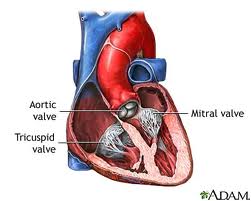
   Yet America continues to spend $8,000 a year on medical care, double that of France or Canada, investing in very very very expensive procedures instead of investing in innovations that improve operations, prevent errors and save lives.  For example:  open heart surgery costs $324,000 (!), a heart transplant, $287,000, a liver transplant, $235,000; and a heart valve procedure, $133,000.  These operations are done all the time. 

    It is true in general that there is massive underinvestment in strategic operations innovation, in companies.  But in hospitals, this costly mistake kills huge numbers of people – and it is simply ignored.

    Why?

Goldman Sachs: “Clients are ‘Muppets’”

By Shlomo Maital


 Goldman, Sachs client?

 An Op-Ed piece by former Goldman Sachs senior manager Greg Smith * has drawn enormous attention.  If you thought Wall St. had mended its ways, after nearly destroying global financial markets and after the Occupy Wall St. movement – think again.  Little has changed, according to Greg, who quit the company.  Here are a few juicy excerpts:

*  “..the environment [at Goldman Sachs] is as toxic and destructive as I have ever seen it…

*   “Culture was what made the place great for 143 years. It wasn’t just about making money. But…today I attend derivatives sales meetings where not one minute is spent asking questions about how we can help clients. It’s purely about how we can make the most possible money off them.”

* “Over the last 12 months I have seen five different managing directors refer to their own clients as “muppets”. Integrity? It is eroding.” 

*  “Goldman Sachs today has become too much about shortcuts and not enough about achievement.   People who care only about making money will not sustain this firm – or the trust of its clients – for very much longer.”   

     Actually,  I wish that Goldman Sachs clients WERE indeed Muppets.  The leading Muppet, Kermit the Frog, has down-to-earth realism that would protect him from the robber barons of Goldman.  For instance, in talking about his relationship with Miss Piggy (Goldman Sachs?) Kermit says,  “Miss Piggy and I have a professional acting relationship. I act like a professional, and she acts like we’re having a relationship.  Miss Piggy really hasn’t mellowed much. Piggy is a prima donna. And her reputation proceeds her, I’m afraid, just like her snout.”  

   Get real, Goldman Sachs.  Like Greg and Kermit say:  We’re on to you!

  • Greg Smith, Why I am quitting Goldman Sachs,  NYT March 14, 2012 

Blog entries written by Prof. Shlomo Maital

Shlomo Maital

Pages