Innovation/Global Risk

Breaking the Chains of Habit

By Shlomo Maital
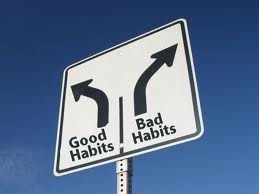


  The guru from Omaha, Warren Buffett, famously said this:  “The chains of habit are too light to be felt – until they become too heavy to be broken.”  How true!  We live not by free will and conscious choice, but by inertia and by habit. And when we come to innovate and create – again, the rutted conventional thinking of habit dominates, without our realizing it.

   In his March 7 column, in the Global NYT, David Brooks summarizes a new book by his colleague Charles Duhigg,  The Power of Habit.  Duhigg cites evidence from Duke Univ. research, showing that “more than 40 per cent of the actions we take are governed by habit, not actual decision.”  “Habit” is defined as something we do because we have done it in the past, not because we have thought about it and made a clear conscious decision.  “Habits are ingrained so deep in the brain,” observes Brooks, “that a patient with brain damage sitting in his living room can’t tell you where the kitchen is, but if he is hungry he can get a jar of peanut butter out of the pantry.”  That’s me.  I LOVE peanut butter and head for it without thinking.

    Duhigg writes about how to instill good habits, or how to remove bad habits.  And this turns out to be immensely difficult.   We are supposed to “coolly appraise our own unconscious habits, and devise oblique strategies to alter the triggers and the routines.”   The key to this is:  cue, routine, reward.  All of those three can be structured and controlled – but it is not easy.   

    I think the issue of habit is one of the toughest ones innovators face.  Some habits are good – for example, regular waking and sleeping hours, or regular (long) working hours.  Many habits are not good, just because they are habits.  How can we break unnecessary habits while retaining a few constructive ones?  How can we bring non-habitual thinking to creative endeavours, while using habitual thinking in other realms?  Can the brain be partitioned in this way? 

    The key to this tough dilemma is, I believe, awareness.  Try to make yourself aware of choices that are driven by inertia and by habit.  Once you are aware, when you seek to be creative, you can spot habitual thinking and say to yourself,  uh uh, no way,  this is what everyone does, this is what I always do,  not this time.  Try ‘reversal’ (thinking and doing the opposite).  Try the Drucker system of listing the ‘assumptions’ (especially unwritten ones) that drive habit thinking and action.  And, finally, exercise your brain.  I am writing a book titled Build Your Creativity Muscles, with 100 exercises for smashing habit-driven thinking.  More about this later….

 Innovation/Global Risk

Twitter:  When The Idea Overcomes the Chaos

By Shlomo Maital


 Dick Costolo, Twitter CEO

In the March 1 issue of Bloomberg Business Week, Brad Stone writes about “Twitter, the Startup That Wouldn’t Die”, and about how a powerful business idea that meets a true need (perhaps, even creating that need) can overcome total business chaos.

    “Life inside successful Web startups—especially the really successful ones—can be nasty, brutish, and short. As companies grow exponentially, egos clash, investors jockey for control, and business complexities rapidly exceed the managerial abilities of the founders:  ‘the violence of a startup.’  And nowhere has the violence been fiercer, or more public, than at  Twitter.”

    “Throughout its first five years of existence, Twitter always seemed on the verge of committing some excruciating form of startup seppuku [Japanese ritual suicide by the sword].  There were constant service outages (epitomized by the ubiquitous “fail whale” cartoon message), an embarrassing security breach in 2009 that released a torrent of internal documents, and nonstop departures of key employees. The pièce de résistance was the turmoil at the top: Twitter had three chief executive officers in as many years. That drama culminated with the promotion of serial entrepreneur and former Google executive Dick Costolo as CEO in 2010 and the return last year of one of Twitter’s founders, Jack Dorsey, as executive chairman and product chief.

     “Now something freakish is happening in San Francisco. Twitter, which for years treated the responsibility of earning money as an annoying distraction, may be turning into a viable business. The company has added seasoned executives, pushed its unique symbology like the hashtag (#) and at-symbol handle (@) into the mainstream, and rolled out new advertising products to the delight of big brands such as General Motors (GM) and Budweiser (BUD), which advertised heavily on the microblog service during this year’s Super Bowl. Twitter is on pace to earn $260 million in 2012, according to research firm eMarketer”.  

The key, apparently, is Costolo, who has brought superior business skills to Twitter, and none too soon.

   There is a powerful message here for startup entrepreneurs.  Great ideas and mediocre management defeat weak ideas and superior management.  Make sure your idea is powerful, meets unwanted needs (or creates such needs) and then hang on with your fingernails…and at some point, hire a great responsible adult, when you can. 

 By all odds, Twitter should have died.  But it was simply loved and used by too many people.  Study Twitter, and Stone’s article, with care.   Get your idea out there, validate it by users, and then deal with the chaos, which in fact always exists.

 Innovation/Global Risk

  Lady Gaga: She WILL Change the World!

By Shlomo Maital


 Lady Gaga, with Paul McCartney, at the Grammys

Don’t be among the many old fogies who underestimate this phenomenon called Lady Gaga!  Recently, NYT Columnist Nicholas Kristof reported interviewing her, about her Born This Way Foundation, partnered with Harvard.  The goal:  Empower kids, nurture them, and begin to deal with bullying and humiliation.  Lady Gaga herself was humiliated in high school. As a straight-A student (!) she was literally dumped into a trash can.  She was called terrible names in front of everyone.  She came through it stronger – but many adolescents don’t. Recently, here in Israel, two adolescents were found shivering and soaking wet on the Ashkelon shore.  They had tried to drown themselves because they were bullied in school; a passer-by saved them.  On the radio, responding to this, a mother told about her son, who was very short, and was bullied in school because of it.  He committed suicide. 

    Lady Gaga’s mother, Cynthia Germanotta (that name alone would get lots of bullying for Lady Gaga), will be the president of the foundation. She recalled that one of Lady Gaga’s most hurtful memories came when she was purposely excluded from a party to which everyone was invited. 

    And the situation has been made a million times worse by Facebook. As an expert reported on Israel Radio, once kids could feel safe at home, even though they were threatened in school.  (I recall running home to safety, with my way blocked by “Derek”, a really big bully, and dodging around him.  Is there anyone who does NOT have such memories?).  Now, they are not safe even at home. They can be bullied, before the whole world, on Facebook, and there is no escape.

     “Born This Way” is not restitution or revenge, Lady Gaga said. “I want to make that clear.  This is: …I want to do everything I can to become an expert in social justice…I hope I can make a difference and mobilize young people to change the world.”   

    Let’s congratulate Lady Gaga.  She is very smart. She has identified a problem that is not being tackled sufficiently, and is using her celebrity and funds to draw attention to it.   Don’t count her out just because of how she dresses.  Because that, too, is a mild form of bullying. 

 Innovation/Global Risk

  Oops!  Europe Stumbles Again! 

EU’s Version of “Days of Our Lives”

By Shlomo Maital


 Remember those terrifying three letters, CDS (credit default swaps), that destroyed AIG and hurt Citibank and nearly ruined the world?  Recall that CDS’s are not swaps at all, but ‘insurance’ against default on bonds; they bore a premium of about 2% of bond face value, but the risk turned out to be far higher than 2% and wrecked the companies that sold such ‘insurance’ mistakenly. 

  Well, CDS’s are still threatening the world. It turns out that the deal with Greece, to slash Greek debt, is in danger. The core of the deal is a ‘voluntary’ agreement on the part of the private banks holding Greek govt. bonds to forego about half of the debt and erase it.  Problem is, what does ‘voluntary’ mean?  If the banks really sign on the dotted line, agreeing to such a deal, their losses on the Greek bonds are not insured by the CDS’s.  If they don’t sign, they collect CDS insurance.

    Why? Well, if you burn your house down on purpose, you don’t get the insurance money, right?   But on the other hand, if the Greek government simply decides unilaterally not to pay half the debt, without the voluntary agreement, then the CDS insurance is indeed payable.  So the private European banks (including huge banks in Britain, France and Germany) face the terrible dilemma of agreeing to write off half the Greek debt,  and lose the CDS insurance.   And the amounts are tens of billions of euros.    You might think, who cares?  If the default is voluntary, the banks lose; if not voluntary, the banks lose too.  This is not the case. If it is involuntary, they collect insurance.  How many of us would willingly tell the insurance company not to pay us, if our insured house burns down? So the private banks have a huge incentive to let Greece default unilaterally.

   Moreover, no-one knows for sure how much the CDS insurance is worth or who holds it, because the CDS market is unregulated. (Remember: That’s why they called them ‘swaps’, because under a loophole in American law, ‘swaps’ are by definition unregulated).  So there is an enormous ‘second shoe’ waiting to drop, if Greece does default unilaterally.  It was this second shoe that caused the American credit market to freeze – banks refused to lend to other banks, because they were unsure how large the counterpart banks’ CDS debt really was.   

   Stay tuned, sports fans.  This drama is ongoing.  The European Union is a better soap opera  than Days of Our Lives..and may be longer lived, too.  (Days of Our Lives is one of the world’s longest-lived scripted TV programs,  airing nearly every weekday in the United States since November 8, 1965 – 46 years!)

    Footnote:  Good old Mario Draghi at the European Central Bank just announced round two of his “All the Money You Want” program, and 800 banks are expected to borrow $713 b. (in euros), compared with 523 banks who borrowed some $647 b. in the first round.   But remember: Draghi wants collateral.  Greek bonds probably don’t qualify. 

 Innovation/Global Risk

It’s Official: Good Emotions Are Healthy

By Shlomo Maital


 “Happy” and “Healthy”

 I’ve always had the intuitive feeling that I am healthier when I am happier. And I get ill sometimes when I am really down.  Now a new book by Harvard neuroscientists Richard Davidson and Sharon Begley, “The Emotional Life of Your Brain: How Its Unique Patterns Affect the Way You Think, Feel, and Live, and How You Can Change Them,” brings proof. 

     Says Davidson:  “There is an intuition in the popular culture that our emotions have something to do with our physical health, but we are just beginning to explore this connection. In our own research, we examined both the brain activity and peripheral biology of a group of individuals by giving them flu shots. It turns out that people who have a more resilient brain profile are the ones who actually have a bigger boost in their immune response when they get a flu vaccine. What it suggests is that more resilient individuals, when exposed to the flu virus, are conferred much greater immunity than a person with a vulnerable emotional style. It suggests that these brain circuits directly communicate with peripheral biological processes, in this case certain features of the immune system, and directly regulate them in ways that are consequential for our health”.  (from http://www.salon.com)

By “resilient”, the authors mean people whose brains adept ‘tribulation’ without depression or emotional decline. 

     Other research, along with that of Davidson, shows there is a direct physical connection between the emotional centers of our brains and other parts of our bodies that control our health and wellbeing. 

    The message here, I believe, to everyone is simple.  Be happy.  Do things that make yourself happy.  You’ll be healthier as a result.  That doesn’t mean pure selfishness. For many of us, making other people happy makes US happy too.  The effect is a ‘multiplier’ – help others, this helps you be healthier, helps others be healthier, they in turn help others…and so on.  Who knows where this powerful ‘wave’ will end?

 Innovation/Global Risk

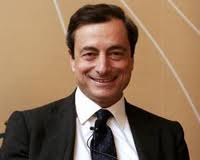
Mario Draghi: Long-Awaited European Hero:

“As Much As They Want!”

By Shlomo Maital


 Mario Draghi, ECB Head

In this blog, I have written countless words severely critical of Europe’s blundering myopic weak-kneed leadership.  Is there nothing good I can say about the EU leadership?

  There is.  Mario Draghi is the new head of the European Central Bank.  When he took over the reins from Trichet in December, he made an immensely courageous move, that saved Europe and probably saved the global economy. 

   “….in December the (European) central bank also quietly began providing emergency loans to European banks. Banks could borrow as much as they wanted provided they posted collateral. They jumped at the opportunity: 523 banks borrowed 489 billion euros, or $647 billion.  In January 2012, many of the major troubled European economies, including Spain and Italy, saw their borrowing costs fall to more affordable levels. Many challenges remained — much of the continent had fallen back into recession — but worries of a so-called Lehman Brothers meltdown subsided.”

      With Greece under fire, paralysis afflicted the European capital markets at the time. When banks can’t borrow, they won’t lend either. And businesses need credit.  A surefire deep crisis was brewing. Draghi cut through the economists’ waffling and acted decisively. True, the plan was in the works before he took over. But Draghi instantly implemented it, and with full force. Anything less would have failed.

    Europe is still in trouble, and nearly all of Europe is in recession, including Germany. Imagine, then, where we would be, had it not been for Draghi’s decisive action to turn on the liquidity tap full force.   The noteworthy part of Draghi’s action was in those five amazing words:  “As Much As they Wanted”.  Banks could borrow as much as they wanted. Unlimited credit.   Few banks borrowed massively ($647 b. is not a huge sum, compared to Bernanke’s quantitative easing); but the fact that they could was crucial. And Draghi is now considering a second round of such lending.  

   At last – an economist, and a European leader, who gets it.  And an Italian!

 Innovation/Global Risk

Innovator: If the Duckling Can Do It – You Can Too!

By Shlomo Maital


 duckling leaps into the unknown – 30 m.

A BBC nature documentary, Planet Earth, has wonderful footage of birds, animals and plant life.  In one of the episodes, a female mandarin duck nests high in a tree, 30 meters above the forest floor. Her ducklings hatch. The mother duck leaves the nest, flies to the ground – and calls to them!  The ducklings must leap from the nest, to reach their mother, and land on the forest floor, and when they do she will lead them to the lake and to food.  One by one, the ducklings take the leap into the unknown. They cannot fly.  And they land hard. But amazingly, these balls of fluff bounce up, and follow their mother.  They all make it, including the last one, who seems fearful and hesitant – but this is a leap of life, because to remain alone in the nest is to die. 

   Innovation is like the ducklings’ leap of faith.  We don’t really know what lies in store, nor can we know.  We have faith in our own abilities and in the skills of those who leap with us.  We know that others have taken the leap before us, and many have survived.  And we know that the consequences of not taking the leap is to live, in a kind of death, without ever knowing if we could have made the leap successfully – a gnawing doubt that may be worse than death. 

    Check out the leap of the flying ducklings on the Internet.  Think of them when you face a key decision.  Take the leap.  The landing is softer than you think. The ducklings land on beds of soft leaves. The mother duck knows this.  Evolution has taught her that this is her best chance to reproduce and raise live ducklings.  Evolution has taught the ducklings that the best way to survive is to trust their mother and leap. 

     The little flying duckling reminds us that in the end, life is about whom to trust – ourselves, and those we love.   I wish I had seen that little duckling’s leap much earlier in my career.    

 Innovation/Global Risk

Microsoft & Nokia: Another Desperate Comeback!

Innovation as “Rope-a-Dope”

By Shlomo  Maital  


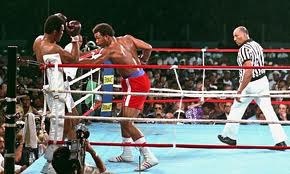
 Ali vs. Foreman: rope-a-dope

Microsoft and Nokia share one thing in common.  Both miss key trends, and both somehow manage to come back from the dead, from being ‘on the ropes’.  This time, they’ve done it together, as partners. *

     Microsoft missed the Internet.  Bill Gates rallied the troops, threw money and 20,000 development engineers at the problem, and erased Netscape, replacing its browser with Internet Explorer.  Nokia missed the smartphone, even though it led in developing it. 

   A year ago, Nokia’s head of smartphones Jo Harlow told journalists in Barcelona that Microsoft and Nokia had established an alliance to develop smartphone software to replace Symbian, the Nokia operating system for smartphones, with Windows.  The deal was done so hastily that when announced, it did not exist – there was only a verbal agreement and handshake between the two comeback companies to cooperate. Harlow’s role was appropriate. She had been captain of Duke University’s women’s basketball team in 1982-3, and engineered several great comebacks.   She promised to deliver two new Windows-based phones by year end.  And she did.

   Nokia still trails.  It has a 12 per cent market share in smartphone operating systems, behind Android (Google) with 51 per cent and Apple.  RIM (Blackberry) has 9 per cent.  Nokia’s Windows smartphone Lumia sold 1 million by end 2011, a very small number. But Nokia recently announced three new Lumia phones, including one (Lumia 900) with an amazing 41-pixel camera (best in the business) that uses Symbian (innovation in the junkyard) and one that runs on LTE (Long Term Evolution), the next cellphone technology after 4G.  Apple as yet has no iPhone that uses LTE. 

   Nokia has a long way to go, to fully recover from its disastrous defeat by Apple and Google.  But we should recall prizefighter Muhammad Ali, who fought George Foreman to regain the world heavyweight championship, in Zaire (now DRC Congo), in 1974.    Ali let Foreman pummel him for eight rounds, leaning against the ropes, until Foreman was exhausted. Then in the last rounds, he defeated Foreman to regain the title.   Nokia (and Microsoft) seem to be like Ali’s “rope a dope” strategy. Let the opponent pummel you, then fight back.  It’s a weird strategy for innovation. And unlike Ali, Nokia and Microsoft employ rope-a-dope unintentionally – they simply miss trends unintentionally.  But never count out companies with talented people, good leadership and deep pockets. Somehow, they just keep coming back.   The key for Nokia will be the big US market. Nokia has been erased in America. If it can pull a comeback there, its chances for the future are good. If not? Well… not every fighter pummeled on the ropes wins. 

  • Kevin O’Brien, “A fruitful year for Microsoft and Nokia”,  Global NYT, page 1, Feb. 28/2012

 Innovation/Global Risk

  America: Failed Welfare State

By Shlomo  Maital  

  New York Times columnists David Brooks and Paul Krugman (Economics Nobel Laureate) do not coordinate their columns. But their weekend columns (Feb. 25-26) were closely related.  Brooks’ point: American is indeed a welfare state, despite what everyone says, but it is a ‘failed’ welfare state.  Krugman’s point: Deep down, even Romney and Republicans believe that you cannot ‘austerity’ your way to prosperity. 

   Brooks’ simple point is this.  You can provide services to your citizens in two ways. The government can provide them, thus spending money. Or, it can make the private sector provide them, by offering ‘tax credits’ (e.g. huge tax credits to businesses for providing health care to their workers).  Tax credits is also known as ‘tax expenditure’, because, it makes no difference to the government budget if the governments spends another buck or reduces taxes by a buck. 

    When you include these tax credits in the picture, it turns out (according to the OECD) that America is one of the biggest welfare states in the world, behind
Sweden  but ahead of (!) Italy, Austria, Holland, Denmark, Finland and Canada, with America’s average in govt. spending above that of the OECD!  

    So, what is the problem? The problem is, tax credits are incredibly inefficient.  When you provide health care by giving tax credits to employers, health care offered by for-profit health care providers, you deprive those without jobs of health care and you make something that is basically non-profit and ‘public’ in nature into a private for-profit good – a disaster.  That is why America spends so much on health care, and gets so very little.   Some things are fundamentally ‘public’ in nature and have to be provided by government. Health care is one of them. 

     All the conservative Republic bluster  about big government and cutting spending was revealed to be hypocrisy, when Mitt Romney recently made his ‘gaffe’ (a gaffe, Krugman says, is when a politician tells the truth).  “If you just cut [spending], you’ll slow down the economy” Romney said.  Of course he later backtracked. But the cat was out of the bag. 

   So, putting Brooks and Krugman together:   The Republican worldview is hypocritical and misguided.  America IS a welfare state, that’s a good thing, but incredibly bad at it. Simplify taxes, eliminate the credits and loopholes, and provide citizens directly with what they need.  This will stimulate the economy and make people better off.  In their few honest moments, even the Republicans agree.

 Innovation/Global Risk

 America Is In Need of Social Glue

By Shlomo  Maital  


In his pathbreaking book Bowling Alone (2000), author Robert D. Putnam argued that the United States has lost much of its social glue, that once helped American society to cohere, and that we are in danger of becoming a nation of strangers to one another without adequate social bonds.

  Now comes Eric Klineburg’s book Going Solo, together with reporting in the NYT by Jason DeParle and Sabrina Tavernise.  They note that more than 50 percent of American adults are single and 28 per cent of households consist of just one person. There are more single-person households than married-with-children households. And half the births to women under 30 occur outside marriage. 

    In other words, not only general social bonds have disintegrated, but family and marriage bonds as well. 

    As I am about to turn 70, I can attest (and have evidence from many others my age as well) that the key to happiness in later life is the love of spouse, family, children, relatives and friends.  This is not only ‘social glue’, it is ‘happiness glue’.  I have seen people retire in cold Northern American cities and flee to Florida for its sun and warmth, only to realize, too late, that they have lost (at times forever) crucial social glue of friends and family.  The climate may be warm in Florida, but the society is aged, alienated and in many cases unhappy.  And moreover, because of the preponderance of older people, Florida’s state budget can’t afford to provide even minimal social benefits to the golden agers. 

     In some ways, social networks and Internet contribute to the lack of social glue. A computer screen is no substitute for face-to-face, yet many young people now seem to prefer the impersonal, non-commitment nature of screens to faces. 

     If I could share some lifelong wisdom with young people, it would be this:   Don’t undervalue your own personal ‘glue’.  It’s hard to see sometimes.  Strengthen it.  Do good for friends and families.  They will do good for you, too.   In the end, you will find that your own personal happiness rests far more on this glue than on what you own.    

Blog entries written by Prof. Shlomo Maital

Shlomo Maital

Pages