Innovation/Global Risk

Innovator: Don’t Just Complain – Do Something!

A Man. A Van. A Plan. 

By Shlomo Maital  


 Faithful reader Jeff A. draws my attention to a great Planet Money blog about the key difference between those who complain bitterly and those who do something.

  Adam Humphreys, who lives in NYC, wanted to travel to China.  He filled out a long form, downloaded from a website, and showed up at the Chinese Consulate only to learn he had filled out the wrong form.  At the nearby Internet café, where he went to get the right form, he found many others in the same predicament.

     Reaction?  #$%%%#%&*(!!!!!!!   Anger. Grumbling. And …resignation.

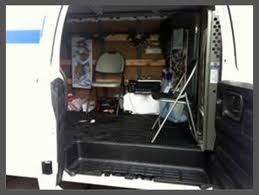
     Not this time.  Adam called his friend Steven Nelson. They rented a large Penske cargo van. They parked it in front of the Chinese consulate.  And they mounted a sign:  Lucky Dragon Mobile Visa Consultants.  Inside the fan: Two Mac laptops and a printer, an old couch, “cozy as a dorm room”.  Confused visa applicants line up outside.  Adam and Steve first charaged $10.  They were over-run.  They then charged $40.  Too high.  So they settled on $20, with a $5 discount for Buddhist monks.  Sweet spot!  Just right.  Just like Goldilocks and the Three Bears’ porridge.   

    Adam says he can make $500 a day, but, he’s cagey about disclosing real numbers.   After all, someone else can park a van next to theirs.  It’s called capitalism.

     How many times have I complained about bureaucracy, red tape, delays, incompetency, rudeness…   and stopped there, rather than finding an initiative, taking action and offering a solution or work-around?

     That, clearly, is the difference between an innovator and a complainer.   Not IQ, brains, creativity, or anything else. Simply – willingness to act, to do something.  Recall that da Vinci, that great creative brain, never actually built most of his amazing inventions, but simply drew them.  Five centuries later, we venerate him, but most of us would like to change the world a little faster. 

 URL:  http://www.npr.org/blogs/money/2012/01/04/144636898/a-man-a-van-a-surprising-business-plan  

Innovation/Global Risk 

Innovating With Junk:  

Value From Old Truck Tarpaulins 

By Shlomo Maital


   In many businesses, cost of materials is an important part of total cost; sometimes, rising material costs (e.g. when oil prices spike and drag plastic prices up with them) endanger a company’s profit model.   One solution is to use materials that are junk, discarded and available for free.  Here is a good example – the Freitag brothers, in Switzerland, who create high value from old truck tarpaulins.*

 “In a high-ceilinged factory in Zurich, old truck tarpaulins are being spread out to be cut up and stitched into idiosyncratic, colourful bags. Destined for sale across Switzerland, the rest of Europe and more recently Japan and the US, their popularity has spread far beyond the cycle couriers who first appreciated their practical stylishness and ecological appeal.”

 “People like us for various reasons,” says Daniel, at 41 the older brother by a year. “Our buyers tend to be urban types, often working in the creative industries, like advertising or graphics. They like our functional design and appreciate the quality that comes with manufacturing in Switzerland.”

 “The brothers say Freitag’s green credentials are also a crucial factor in its success. As well as the tarpaulins, almost all the materials they use are recycled, while each workspace in the factory has its own bicycle rack. “Customers know we don’t advertise or spend money on celebrity endorsements. They recognise and appreciate the honesty of our range,” Daniel says.”

“Our biggest initial investment was SFr2,300 – our combined savings at the time – for an industrial sewing machine,” says Daniel. Later, the brothers borrowed SFr20,000 from their parents to fund expansion.”  “Only twice have they resorted to a bank loan: first to finance their landmark store in Zurich, which comprises a stacked pile of freight containers, and more recently to help equip their new factory. There are now nine stores, including outlets in New York and Tokyo. Profits are a carefully guarded secret but revenues this year seem likely to approach SFr30m.”

  How in the world did they get the idea?    Here is how:  “Markus was on a course in graphic design. His shared student flat looked over the Zurich flyover that carries much of the transalpine truck traffic. Somehow, seeing all those trucks, and knowing there was a gap in the market, inspiration bloomed.”   

   Innovator!  When you see junk – do you see value and creativity?  Can you too build a powerful business, like the Freitags, out of junk?

  * Bags of cash from cast-offs  By Haig Simonian. Financial Times. January 4/2012


Innovation/Global Risk 

Nature’s Great Innovation: The Incredible Giraffe

The Power of a Powerful Process 

By Shlomo Maital    


 A courageous BBC Nature TV documentary has a team of researchers dissecting animals,  and revealing amazing details.  It’s tough to watch (all the animals died of natural causes, and the dissection is really an autopsy) but fascinating, all the same.  So far, I’ve watched dissections of crocodiles and giraffes. Both have evolved over millions of years, to adapt perfectly to their environment. 

      The lesson here for innovators is simple and powerful:  Continuous minute changes, each providing creatures with a tiny edge to survive long enough to procreate,  ultimately become a creature so perfectly adapted to its environment, that it lives for a million years essentially unchanged.    These changes often occur by accidental mutations, and most such mutations simply don’t work and disappear; but the few that do, endure and prevail, and contribute to a unique perfect design.

   Here are some of the findings revealed in the giraffe dissection:

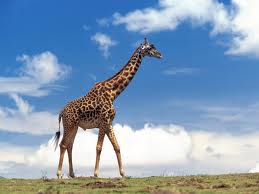
  • The giraffe’s long neck evolved not just to reach treetops. It also enables giraffes to spot predators. Giraffes’ eyes are close together, enabling them to see well directly ahead and to gain depth perception.  A powerful muscle keeps the neck erect, and relaxes to enable to giraffe to drink.
  • Giraffe’s spots, too, have a purpose.  Each spot, or mottled area, is its own temperature control area, with blood vessels that open and close. Living in the burning desert, giraffes, who feed during the heat of the day, need to be able to dissipate heat. Each ‘mottle’ area can do so. An infrared view of the giraffe shows heat differences for each ‘spot’ or mottled area.
  • Giraffes have very thin, very very long, intestines.  They eat leaves, which have little nutrition, and so have to extract every last bit of nutrition from them.  And they gain most of their water, too, from the leaves…so they need long long intestines. 
  • Giraffes have evolved incredible tongues, very long and muscular, which can wrap around leaves while avoiding thorns. 
  • Giraffes have tiny valves in the blood vessels of their neck and legs. When they stoop to drink, their high blood pressure should actually damage their brain with heavy blood flow – but stop-valves have evolved to prevent that.  One-way valves exist in their long legs as well, otherwise, blood would accumulate there, like dropsie in humans. 
  • Giraffes are NOT silent, they communicate, though not with vocal chords but with a kind of sound box. This communication, it turns out, is vital.
  • Giraffe males fight by bashing each other, swinging their long necks and bashing their head into their rivals’ ribs.  The longer the neck, the greater the force and the leverage.  Hence, males with longer necks get to mate with females…and necks get longer and longer.

   Each of these giraffe features occurred through evolution and natural selection.

     Crocodiles are even more perfect.  According to biologists, “of all the reptiles alive today, crocodiles and alligators may be the least changed from their prehistoric ancestors of the late Cretaceous period, over 65 million years ago”.  For example, they have amazing stomachs, because they have to digest their food whole, in huge chunks; a special artery (non-existent in mammals) drives blood directly from their hearts to their stomachs, and the blood contains carbon dioxide. The carbon dioxide creates acid, carbonic acid, H2CO3, which helps their digestion.  One can imagine an evolutionary accident that one time created such an artery – and those lucky few crocs who had it procreated like mad.     

            What do crocs and giraffes have to do with innovation?  Simple.  I’ve seen a great many one-shot startups, who think that creativity is like hitting a home run, or a century in cricket, only one time.  But it isn’t.  It should be a continual process, like evolution, with big and small improvements, driven by the users and the clients, constantly evolving and experimenting, changing the WAY things are done, orders are filled, customers addressed, always with everyone in the organization aware that they are vital instruments of evolution, looking for ‘mutations’, trying them, discarding the bad ones, preserving and improving the good ones, always aiming at perfection.    

    Stick pictures of a croc or a giraffe around coffee rooms and time clocks.  Tell your Board and your workers: Now, let’s create a crocodile.  Or a giraffe.  Not to eat the competition, or stomp on it – but to make it irrelevant.    

Innovation/Global Risk


 How to Live: The Universe is Unfolding as it Should


By Shlomo Maital    


  I found this discarded somewhere, put it up on my wall, and am now sharing it with my blog readers.  It has very good rules for living. 


 Go placidly amid the noise & haste; & remember what peace there may be in silence.  As far as possible withou surrender, be on good terms with all persons. Speak your truth quietly and clearly and listen to others, even the dull & ignorant; they too have their story.   ▲ Avoid loud and aggressive persons; they are vexations to the spirit. If you compare yourself with others, you may become vain and bitter; for always there will be greater and lesser persons than yourself. Enjoy your achievements as well as your plans. ▲ Keep interested in your own career, however humble; it is a real possession in the changing fortunes of time. Exercise caution in your business affairs, for the world is full of trickery. But let this not blind you to what virtue there is; many persons strive for high ideals; and everywhere life is full of heroism.  ▲Be yourself.  Especially, do not feign affection. Neither be cynical about love; for in the face of all aridity and disenchantment it is perennial as the grass.  ▲ Take kindly the counsel of the years, gracefully surrendering the things of youth.  Nurture strength of spirit to shield you in sudden misfortune. But do not distress yourself with imaginings.  Many fears are born of fatigue and loneliness.  Beyond a wholesome discipline, be gentle with yourself. ▲ You are a child of the universe, no less than the trees and the stars; you have a right to be here. And whether or not it is clear to you, no doubt the universe is unfolding as it should. ▲ Therefore be at peace with God, whatever you conceive Him to be, and whatever your labors & aspirations, in the noisy confusion of life, keep peace with your soul.  ▲ With all its sham, drudgery & broken dreams, it is still a beautiful world. Be careful. Strive to be happy.             

Innovation/Global Risk

How Businesses Hide The Money:

Profits in Dark Corners 

By Shlomo Maital


   Some successful businesses innovate not their products, processes or services, but in the way they generate crucial profits.  Here are a few examples.  After you come up with your own great innovation idea, think about how you could be equally creative in the way you leverage it, to generate sustained and sustainable profits.

  •        Walmart:   This huge retailer, the world’s largest, pays its suppliers in 90 days. However, it makes sure that the products it stocks on its shelves literally fly off the shelf, within days.  That means, Walmart uses its suppliers’ money to finance its business, gaining an interest-free 90-day loan. By investing the money from its sales, for that 90 days, it makes billions in interest on this ‘float’.  This offsets the very low profit margins on its sales.
  •        Better Place:  This company sells electric cars that have replaceable batteries.  Actually that is inaccurate. Renault/Nissan sells the cars (Renault ‘Fluence’). Better Place buys electricity wholesale, at cheap night-time rates, and sells it to its clients, in the form of charged batteries, at high retail rates. The difference between what it pays for electricity and what it charges is its business design and profit center – and it is substantial, otherwise savvy investors (including GE) would never have invested hundreds of millions of dollars.
  •         Amazon:  Ever notice those after-thought ‘S&H’ or shipping and handling charges, starting at $5.95?  Well, Amazon makes much of its money from that innocuous S&H, because generally it doesn’t really cost them $5.95 or whatever they charge..but, well, who can quibble with S&H? 
  •        Car rental firms:  Israel car rental companies are allowed by law to import new cars at substantially lower customs duties than ordinary citizens. After a year or two, they then sell the used cars at market prices.  So, they make their money not from renting cars, but from selling used cars from their fleets.  It might not even matter much if the rental companies rented cars at all, as long as they can sell them in a year or two at a profit. 
  •        Hotels:  Many hotels make most of their revenues not from room rental (occupancy rates are often so low that empty rooms offset money made from rented ones), but from F&B (food and beverage, e.g. the hotel restaurant, provided it is a popular one).  The hotel exists to support its food business. And restaurants, in turn, often make most of their money not from food but from wine and liquor – from the bar. 
  •     For years, especially during the 2001-2008 period, investment banks made money not traditionally, by matching those who have money with those who need it, but by speculating for their own accounts, using their inside information and close-to-the-market privilege to make huge profits.  Instead of money serving clients, money was used to make money for themselves.  Only rarely did outsiders get a true picture of the extent of this “nostrum” trading. The U.S. Congress tried to ban it, but had only partial success.

     Innovator:  What is your business design?  Can you find profit in dark corners?  One advantage is that competitors may try to compete with you in ways that are utterly irrelevant, when they fail to grasp where your true bottom line originates.

Innovation/Global Risk 

 Resilience: The Case of the Romanian Orphans    

By Shlomo Maital   


In 1990 the world was shocked to see TV images of Romanian orphans.  The mad dictator Nikolai Ceasescu demanded that his people have at least 5 babies.  But increasing poverty meant many Romanians could not afford to keep them. They were put into horrendous orphanages.  Ceasescu was deposed after 24 awful years in power, in Dec. 1989.  He and his wife were executed.  But the orphanages remained full of helpless babies and infants, whose caregivers had no means to care for them properly, with one caregiver often caring for 30 children.  [I chose one of the least horrendous photos, believe me!].

   Childless British parents came to Romania and adopted several hundred of the babies.  Their developmental deficits were enormous.  Cindy and Anthony Calvert were the very first British couple to travel to Romania to adopt a child, from an orphanage in Kluge, Transylvania.  [Their story is featured on BBC]. They could not believe what they saw. The children lay in filth. They had no stimulation. Some could not even stand, as they were kept in their cribs all day and all night.  And the Kluge Orphanage was far from the worst.  After an enormous struggle, eventually they did manage to bring a child, Adi, age 18 months, home to England.  Adi chose them with her huge smile, despite everything.

   Renowned psychiatrist Sir Michael Rutter has studied these children for 22 years. He returns every two years or so to study their progress.   He found initially that many were two to three standard deviations from the developmental norm, in terms of both cognitive abilities and physical abilities and growth.  These huge deficits should have implied that all the children were doomed to lives of retardation, illness and suffering.

    This was not the case.  Children, it emerges, are incredibly resilient.  They can make up developmental deficits with alacrity.  The longitudinal study by Rutter and others found that as much as two-thirds to three-fourths of the Romanian adopted children are perfectly normal.

   Adi, for instance, is a beautiful 22-year-old young woman, aiming at a career in the performing arts. 

    Resilience, in psychology,  is a person’s individual’s ability to cope with stress and adversity, and bouncing back to a previous state of normal functioning after trauma.  “Resilience is most commonly understood as a process, and not a trait of an individual”, psychologists note.   

       Rutter’s famous article in Child Development [Child Development

 73, Issue 1, pages 1–21, January/February 2002] offers much room for optimism.  It also demands that society devote greater resources to rescuing children at risk, because a) they are worth it, b) it is never too late, and c) the earlier the children are placed in normal environments, the more likely it is their resilience will succeed.

   I once surveyed a group of microprocessor engineers, and asked them what was the #1 most important factor in their creativity?   Resilience, they said, hands down.  Creativity is always a difficult process, with many setbacks.  The ability to bounce back and continue, persist and succeed is an acquired skill.  Since Rutter finds that all children are resilient, it must mean that along the way, not only to adults lose their creativity but they also seem to lose much of their resilience.

  The lesson for innovators is:  Work not only on your creativity muscles, but also work on your bounce-back resilience muscles, the quality of character that enables you to fight through setbacks and difficulties toward ultimate success. 

    Remember the Romanian orphans.  If they can do it, so can you.              

Innovation/Global Risk

Runaway Capitalism: How to Clip the Peacock’s Tail       

By Shlomo Maital


 Peacock’s Tail 


Smithian or Hayekian capitalism, and Darwinian “survival of the fittest” evolution, are closely related.  The social philosopher Herbert Spencer made the link explicit, saying that the weakest workers and businesses had to fall by the wayside, so that the strongest could thrive, gain resources and ‘reproduce’.  This has become known as Social Darwinism.

    Now, an HBR article  titled “Runaway Capitalism”, by Christopher Meyer and Julia Kirby (HBR Jan.-Feb. 2012), addresses a flaw in evolution, one that creates species NOT adapted for long-term survival, and relates this to capitalism’s similar flaw.

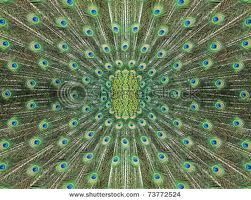
     Peacock’s tails have grown flamboyantly large and colorful, because peahens like it, and other things equal, choose cocks that have them.  This makes the peacocks more susceptible to predation and even compromises the whole species.  Capitalism, similarly, like peacocks, are obsessive in its pursuit of short-term return on equity.  Both peacocks’ tails and ROI began as valid ‘proxies’ but have now become so extreme as to “misdirect our priorities”. 

     The authors cite GE as a good example. Under legendary GE CEO Jack Welch (we must be first or second in every industry we operate in), ROI and ROE became GE’s gods.  Today GE, under Jeff Immelt, has adopted not only different rules, but a different rule book.  So for instance, GE’s new MACi electrocardiograph is priced, in developing countries, at one-tenth its price in developed countries, and is now selling well in Europe.  A business model driven by considerations of profit margin, and ROE, would never have gone this route. 

     Capitalism is still the best system.  But it became a peacock.  Evolutionary pressure, and human logic and pragmatism, will eventually moderate the peacocks’ tail effect and bring capitalism back from its lemming-like obsession with short-term profitability. 

Innovation/Global Risk 

Audacious Social Innovations for 2012: The View from HBR      

By Shlomo Maital

                               

 Bob Shiller  

Harvard Business Review’s January-February 2012 issue has a dozen audacious ideas for reinventing society.  Some of them are really great. Here are a few of them. Innovation is not just about gadgets. It is mainly about how we live, work, and love, and get along and cooperate with one another. 

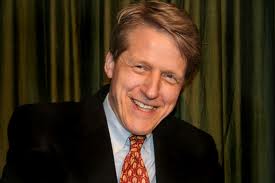
   Bob Shiller, the most creative mind in finance, suggests:  Countries should replace much of their existing national debt with shares of the ‘earnings’ of their economies, i.e. replace debt with equity, the way troubled companies reduce leverage.  “This would allow them to better manage their financial obligations”, he notes.  These national shares “trills” would function much like corporate shares traded on stock exchanges, and would pay dividends regularly.

   ●  Bruno Frey and Margit Osterloh suggest, simply, “quit tying pay to performance” (especially, for CEO’s).  The evidence is overwhelming, they note.  It doesn’t work. It doesn’t elicit the behavior that is desired. So, if we are really evidence-based: Why not stop!?

   ●  Bruce Gibney and Ken Howrey say, totally change the way Venture Capital funds invest.  They HAVE to change. In the past decade, 75 per cent of VC funds made no money! So much for that legend!   “It’s time for VCs to return to boldness. …to find and help build the revolutionary startups that generate transformational change. That is where the returns lie!”  Bravo!

  ●  Ellen Gustafson says, “regionalize the food supply”.  Eliminate the dominance of Big Food. We can no longer afford it.  90% of world coffee exports are controlled by 3 companies.  81% of beef packing in the US is handled by 4 companies.  82% of US corn exports are made by 3 companies!  By regionalizing food, we reduce monopolies and create competition. Also, cut corn production, move to more fruits and vegetables.  It’s healthier. 

●  Arun Majumdar says, “electrify the bottom of the pyramid”.  Bring electricity to the 1.5 b. people of the world who live without it.  Do it with affordable, self-contained power generation and storage systems.  Why? Evidence shows, when energy consumption per capita reaches 2,500 kwh, countries move near the top of the human development index. 

●  Gregg Easterbrook says, “send people to Mars!”.   Give NASA a new mission, he says, one that is inspirational. Find an economical way to send people to Mars.  Colonize Mars. Just as JFK’s Rice Univ. speech in 1963 energized a generation of young Americans to study engineering and science, so will “put a Man on Mars” project for NASA. 

   ●  Linda Hill and Kent Lineback say, “crowdsource management reviews”.  Use a widely available website, SpeakTruthtoBosses.com, to enable any employee to evaluate his or her boss.

   ●  Wayne Porter says, “partner with China to build Afghanistan”.  China sees countries as markets (make money).  American sees them through political eyes (build democracy).  China’s approach is what Afghanistan needs. Partner with them, because what America is doing now isn’t working.  And China has an interest in Afghanistan’s stability – it’s right on their doorstep.

●  Parag Khanna and Karan Khemka says, “enroll the world in for-profit universities”.  Why?  We need a massive increase in investment in human capital, at the higher education level. It won’t come from governments.  They are too strapped. Enlist the private sector.  For-profit universities will supply a quality product and thus attract large numbers of students.  It will bring an inflow of resources, badly needed, just as occurred in ICT and other industries. 

  ●  former Google CEO Eric Schmidt says, “pay businesses to keep people out of prisons”.  America’s prison system is badly broken.  Some 2.3 m. Americans (!), or one person in every 100 adults, are behind bars!  This costs $68 b. a year!  The government is not succeeding. Why not incentivize private industry, paying them based on reductions in recidivism, to keep people from coming back again and again to jail?  (Three-year recidivism rates are now around 6 8%! Two in three jailbirds return within three years!).  California spends more on prisons than on education!  Is this madness?

Innovation/Global Risk 

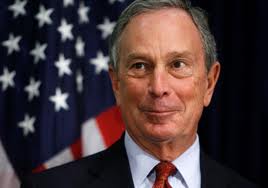
Bloomberg: The Innovator

By Shlomo Maital


 Michael Bloomberg

  Politicians worldwide are being reviled, as they prove impotent to deal with the stiff challenges posed by the global crisis and its fallout.  Approval ratings are rock bottom, and trust in government is at historical lows.

   Except, perhaps, in New York City, where Mayor Michael Bloomberg is completing his third term.  True, even his approval rating is not that high – but the one-question poll it is based on fails to capture the wide respect he enjoys through his great city. 

    What is his story?

    Michael Bloomberg was born in Boston, on Feb. 14, 1942. His father was a real estate agent, son of an immigrant, as was his mother.  He studied electrical engineering at Johns Hopkins, where he worked as a parking lot attendant to pay tuition.  Later, he got an MBA from Harvard.  In 1973, he became a general partner at the Wall St. investment bank Salomon Bros.  In 1981, his employer was acquired and Bloomberg was fired.  Ouch!  He took his $10 m. in severance pay and started a company called innovative Market Systems (later, Bloomberg L.P.), realizing that Wall St. and the financial community needed high quality business data and would pay a lot for it if delivered user-friendly and above all, fast!   His first customer was Merrill Lynch, which bought 22 Bloomberg Market Master terminals, as well as investing $30 m.    

    Bloomberg L.P.  now has over 250,000 (!) terminals worldwide. (Notice the unusual legal structure – a legal partnership, usually reserved for law or accounting firms!).   It has over a third of the $16 b. global financial information business with annual revenues of about $7 b.  And Michael Bloomberg owns 88 per cent of it shares! By bootstrapping the business, and using his own money, he has retained a vast majority of his company’s shares. 

    The lesson for innovators is simple.  Is there a service you yourself would buy?  That does not currently exist?  Then doubtless there are many others who would buy it, too.  So move fast and launch it.  

    Michael Bloomberg is said by Forbes magazine to be America’s 12th most wealthy person, with net worth of $19.5 b. 

    Bloomberg has followed the wise rule to seek new challenges.  On Jan. 1, 2002,  almost exactly a decade ago, he became New York’s 108th Mayor.  Initially his approval rating was low. Gradually, with the instincts of an entrepreneur, he won respect – and was re-elected twice. He is now completing his third (and last) term.  As New York City Mayor, Bloomberg has sought to deal with the global crisis by creating technology-based startups.  He recently announced that Technion and Cornell will partner to create NYCTech, a science and engineering campus on Roosevelt Island that ultimately will generate 600 new startups, thousands of new jobs (in construction and high-tech), and billions in new income.  Bloomberg receives the princely salary, as mayor, of $1 a year.  In a city where some previous mayors have dipped their hands deeply into the till, Bloomberg’s personal wealth makes him incorruptible, and is perceived to be so. 

    Many people wish he would run for President. Bloomberg decided against it.                                                     

Innovation/Global Risk 

Better mousetrap? Or Better Way? 

By Shlomo Maital 


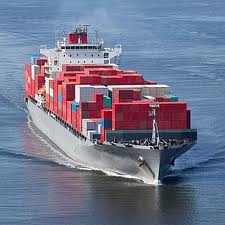
    Ever heard of an engineer named Keith W. Tantlinger?  He worked at a truck-trailer manufacturer in Spokane, Washington.  And he changed our world, through process innovation.  He died last Aug. 27 at age 92.  The title of this blog is also the title of an article about him by NYT columnist David Leonhardt.

   What did Tantlinger invent that changed the world?  Simply, “a lock that connected to the corners of containers and that crane operators could mechanically open and close from their seats.” 

   Uh…so what?    Well, the lock caused a revolution in shipping.  It led to the adoption of containers of uniform size.  This enabled mechanization of loading and unloading ships, cut time and cost of transporting goods and contributed to the boom in global trade. 

    Leonhardt quotes expert Marc Levinson, whose book The Box chronicles the history of containers:  “There was no breakthrough in terms of material…there was a breakthrough in thinking through the entire process an coming up with a neat economical solution.”   Leonhardt cites the work of economist Paul Romer, who helped us recognize the importance of processes, rules and systems as technological breakthroughs, and not only ‘mousetraps’.  You can make an argument, Leonhardt says, that “the greatest opportunitis for progress today lie with better rules and systems.  Improving schools is more about process than laptops. “   Reducing errors and expanding preventive medicine, Leonhardt cites, can arguably save more lives in the next decade than bench science, research on the genome, stem-cell therapy, cancer vaccines and all the other lab work we hear about…  

   Tatlinger held a patent, Leonhardt notes..but it is a patent for the less glamorous side of progress, the hard creative work that allows mundane objects to fill new needs.

  Innovator:  Don’t neglect processes, rules and systems.  Can you figure out a system that keeps capitalists from taking on excess risk? That keeps European governments from overspending and overborrowing?  That helps small businesses run their operations better?  Process innovation, research shows, is the most profitable and rewarding of all types of innovation.

Blog entries written by Prof. Shlomo Maital

Shlomo Maital

Pages