Innovation/Global Risk

America’s Capitalism Lacks the Capitalists 

By Shlomo Maital

   Writing in today’s Global New York Times, Chrystia Freeland (one of my favorite columnists) makes a simple point.  The destructive American brand of capitalism, that so many of us dislike, was never really capitalism. It lacks capitalists.

   Why?

    “The U.S.,” she argues, “created a system of capitalism without capitalists, of private sector companies whose owners have abdicated responsibility for the companies that belong to them.” 

    The evidence?  First, exorbitant salaries CEO’s pay to themselves, including bonuses, especially bankers.  Where are the shareholders? Why do they approve bonuses even in bad years?  Why are US managerial salaries so blown out of proportion, compared to Europe and to Japan? Where are the shareholders, represented by Board of Director members? 

    Second, perspective. Why do CEO’s constantly get away with inflating share prices by narrow short-term policies, then grab their bonus and run (WBGWIC, we’ll be gone when it crashes).  I worked this year with a company owned wholly by an Israeli kibbutz, a socialist collective community.  I asked the CEO whether he has problems when the ‘board of directors’ is the whole kibbutz membership.  Not at all, he affirmed.  He is instructed to think long-term, to plan and invest long term.  This is capitalism, run by socialism.  America?  Inflating the quarterly P&L is not capitalism at all, it surely is not what the shareholders want, when they seek to maximize shareholder value over time?

   Freeland quotes an expert, who says, “thinking about where the company should be in 10 or 12 years, these are not the discussions held in many widely held companies”. 

   No, American capitalism isn’t really capitalism.  The diffusion of ownership in publicly-listed joint stock companies has basically ceded control to senior management. They hold their jobs for 2-4 years, and have little interest in what happens beyond that. Shareholders who give up without a fight, who approve ballooning salaries, deserve what they get – myopic companies that destroy shareholder value rather than build it. 

    Freeland recommends that we look at Sweden.  Once a socialist haven, Sweden reinvented itself, with dynamic free markets coupled with strong social equality driven by high taxation of the wealthy.  Swedish companies are vigorously run by their shareholders.  It’s time America learned from the rest of the world.  America is indeed special – it is supremely great, best in class, in drinking its own Kool-Aid.  American capitalism?  Not even close.    

   Boards of Directors!  Rise up!  Do your job! Represent the shareholders who appointed you.  Fight for their interests.  Never ever approve exorbitant salaries for CEO’s who do not deserve them.  Make them think long-term.  Put their feet to the fire. Ask them what their 10-year vision is.  Never let them slash R&D investment just to glorify the quarterly P&L.  Be capitalists!   There is no worse system than capitalism, when those who run it do not act like capitalists. 
Innovation/Global Risk 

How Important Is the Name of Your Product?   

By Shlomo Maital


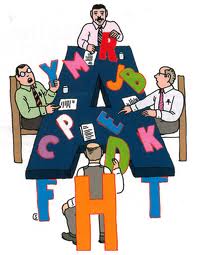
  The New Yorker’s illustration of “Lexicon”

Innovator – how important is what you call your product?  How much effort and time (and money) should you invest in choosing the right name?

   The answer, according to Lexicon, a top ‘naming’ company that came up with Febreze, BlackBerry, Pentium, PowerBook, Swiffer, and others:  Massively, hugely important.  And the key to a great name is…poetry. I’m not kidding.  Lexicon’s story is told well by John Colapinto, in the October issue of The New Yorker.  He writes at length about Lexicon founder David Placek.

      According to Colapinto, in the summer of 1998, executives from a tiny Canadian startup, Research in Motion (RIM), came to Lexicon’s California offices with a two-way pager that sent and received email. But what to call it?  Geeks and nerds always think of “mega”, “giga”, “super”, “opti”, etc.  The experts at Lexicon did a Mind Map, tendrils of words spreading out from a central concept, and came up with an unlikely name: BlackBerry.  The idea, according to Colapinto:  “short”; “consonant-vowel-consonant”; assonance, alliteration; pleasant sound; friendly, evocative, poetic:

  Naming experts agree on several universals of great names. It’s probably best to keep it short. Names that display a consonant-vowel-consonant pattern are often easiest to say. Pleasantness of sound—the use of alliteration and assonance—all play a part. The real goal, Placek says, is to determine what “story” a client wishes to tell about his product and then find a word that evokes it—and spurs the impulse to buy.  

  Lexicon came up with Swiffer, for Proctor and Gamble, and Dasani, for Coca-Cola.  Placek says that the best name brands, like poems, work by compressing into a single euphonious word an array of specific, resonant meanings and associations.

    Innovator:  After you’ve come up with your incredible, creative new product, and designed how it looks and how it works,  invest the same creativity in giving it a name.  The name makes a huge difference.  Would BlackBerry have achieved BlackBerry success, had it been named ePager? 

Innovation/Global Risk 

Was the World’s Most Beautiful Woman Also the World’s Smartest? 

By Shlomo Maital


 Hedy Lamarr 

This is one of the strangest stories I’ve encountered, in the realm of creativity and innovation.  It is about Hedy Lamarr.  Very few readers will be old enough to remember this stunning Hollywood movie star of the 1940’s, who appeared in Samson and Delilah, Ziegfield Girl, Tortilla Flat, and others.   Few know her patent forms the foundation for cell phone technology.   Here is her story.

   Hedwig Kiesler was the daughter of a Jewish Viennese banker.  She became the trophy wife of Fritz Mandl, a wealthy Austrian munitions manufacturer.  The stage director Max Reinhardt encountered her, cast her in several roles (even though her husband forbade it) and Reinhardt famously called her “the most beautiful woman in the world”.  And she was.  She escaped from Mandl, fled with her luggage and jewellery and booked passage on a liner on which movie mogul Louis B. Mayer (co-founder of Metro Goldwyn Mayer) was travelling.  When the ship docked in New York, Hedwig had a new name (given by Mayer himself, “Hedy Lamarr”, named after a silent film actress) and a contract. 

    During her stint with Mandl, she had learned a lot about technology. She had a drafting table at home, where she used all her downtime to invent things, like a bouillon-like cube that produced an instant soft drink when mixed with water.  Together with a weird musician named George Antheil, she worked on ways to help the U.S. war effort. Together they invented and patented a radio-controlled “spread spectrum” for guiding torpedos. (They also invented a “proximity fuse” anti-aircraft shell, a version of today’s smart bombs.)  U.S. Patent Office Patent No  2,292,387 showed how to synchronize transmitter (ship) and receiver (torpedo), in ways that could not be jammed, based on the idea of an 88-key player piano roll that changed frequencies according to a pre-set pattern.  The bureaucratic U.S. Navy could not believe that a movie star could invent anything worthwhile and rejected her idea. But in 1997, Hedy Lamarr, age 82 and still gorgeous, along with Antheil (posthumously),  were given a Pioneer Award by the Electronic Frontier Foundation.  The reason:  Lamarr’s patent for ‘frequency-hopping’ formed the basis of CDMA (code division multiple access), a foundation technology for cell phones.  No-one was really aware of the link between Lamarr’s invention and CDMA, until the Foundation gave her the award.  Lamarr tried to join the National Inventors Council, a body that used creativity to help the war effort (WWII), but she was told her beautiful face was more valuable than her brain, so she helped sell War Bonds.

   As a postscript:  A Canadian wireless developer Wi-LAN acquired a 49 per cent claim to the patent from Hedy Lamarr herself, in 1998,  even though the patent had expired long ago and had no economic value.  Wi-LAN paid for the worthless patent in shares.

    Hedy Lamarr was born too soon.  Had she been born 50 years later, perhaps she might have married Steve Jobs.  If she had, who knows what she might have invented?

Innovation/Global Risk 

The Euro (Non)-Leadership Sinks Again: For the 8th Time

By Shlomo Maital


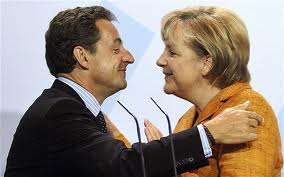
Merkozy

  It is said that drowning victims who sink below the surface for the third time rarely come up again.  Not so.  Europe’s leaders have met eight times (!), at summits of futility, to deal with the Euro problem.  Each time, they waffle, adopt half-measures, and when capital markets vote “unlike”, they meet again.  Sisyphus’ boulder was child’s play compared with what Europe’s leaders seem to be doing.  They met again, for the 8th time, sank…and don’t bet against a 9th summit. 

   At the latest European “summit” the EU agreed on FUTURE sanctions against members that overspend.  Great! But wait. What about past debt?  Well, let’s dribble an extra 200 m. euros – a tenth of the amount needed to calm capital markets.  The “Merkozy” alliance (Merkel + Sarkozy) is actually just Merkel, because Sarkozy buckled long ago in the face of German demands.  Merkozy seems to be trying to forestall future problems, rather than deal with present, intractable ones.  This is like calling a supplier to order a fire extinguisher for delivery next year, when your kitchen is burning.

  Europe, led by Germany, is behaving irresponsibly.  And it is backfiring, because Germany’s economy too is slowing. It HAS to, when Europe and the world economies slow.  As the world’s largest economy, the EU is sinking the global economic ship.  The internal European bickering is disastrous, as France’s Central Bank head blasts rating agencies for threatening to downgrade France’s debt. Downgrade Britain, he says.  They’re worse than us.   European incompetence and lack of leadership are exacting a heavy toll on the world. 

    I urge readers to write off Europe and make a personal contingency plan, in the event Greece pulls out of the 17-nation euro bloc.  Merkel’s political coalition is falling apart, so her stubborn refusal to commit funds to rescue Greece and the euro isn’t paying off anyway.  Perhaps the “optimal currency union” that Nobel Laureate Robert Mundell advocated was never that ‘optimal’. 

Innovation/Global Risk 

Rats and Husbands: Yes, There IS Proven Similarity 

By Shlomo Maital


 Today’s International Herald Tribune, page 12, has two seemingly-unrelated stories that prove what I’ve always suspected.  Rats and husbands are uniquely similar.

*   A study published in Science by U. of Chicago neuroscientist Dr. Peggy Mason reveals the first documented proof that rats are altruists. (Until now, we thought only humans and chimps had empathy and altruism).  In her experiment,  free-roaming rats had a caged rat placed in their midst. They could free the rat by nudging open the cage door.  In another cage, there was a piece of chocolate.  She found that the free rats were as likely to liberate the caged rat as they were to seek the chocolate. And when they did get the chocolate, they shared it with the ‘prison’ rats.  There is, of course, strong evolutionary logic for altruism.  Rats who collaborate are more likely to survive and reproduce than those who don’t.  Same, by the way, for humans, if only we knew it.  And I’m pretty sure that if we could ask them, the altruistic rats would say they got great happiness from freeing their imprisoned brethren – as much as, or more than, from chocolate.

   *  A study done at U. of Virginia, in its National Marriage Project, found that in marriage, generosity (the virtue of giving good things to one’s spouse freely and abundantly) conferred huge benefits.  Half the couples with above-average generosity said they were ‘very happy’ together.  Among couples with low generosity scores, only 14 per cent said they were ‘very happy’.   The study cites bringing coffee to your wife in bed in the morning as a small example.  Couples who do or say five positive things for each negative interaction tend to be far more successful. 

   In a previous life, I worked on the branch of mathematics known as game theory. A particularly virulent game known as ‘prisoner’s dilemma’ has two ‘equilibria’ (stable outcomes). One is win-win.  The second is lose-lose.  The winning long-run strategy is ‘be nice’.  But the dominant strategy is, ‘be very not-nice’.   Perhaps that’s why we dislike Wall St.

     So, the next time you call someone (your spouse?) a ‘dirty rat!’,  please, think again.  Rats are nice and helpful.  So are husbands, sometimes.  In the long run, nice rats and nice husbands win.   In that sense, they are pretty much alike. 

Innovation/Global Risk 

The Inside Story About MF Global: $1 b. of Customer Money Is STILL Missing 

By Shlomo Maital


An investigative report in the Global New York Times, by Azam Ahmed, Ben Protess and Susanne Craig, tells the full story of the shocking bankruptcy of MF Global, a hedge fund led by former US Senator , NJ Governor and Goldman Sachs head Jon Corzine. *  The report gets the back pages, but deserves the front page. When someone as visible as Corzine destroys over $1 b. in ordinary people’s money, it deserves attention and outrage.   Especially, in the age of Occupy Wall St., when regulators are supposed to be alert enough to keep such things from recurring. 

    Here is the essence of the story.  Corzine ran MF Global for 19 months.  He played an active, hands-on role, calling himself “chief risk officer”.  He pushed through a $6.3 billion bet on European debt, leveraging his firm’s capital 5 times and even though board members and MF executives protested! 

   MF Global filed for bankruptcy last Oct. 31.  But 10 days before that, facing ‘margin calls’ (losses that required it to ante up more capital to provide collateral for borrowed money), MF Global chose to dip its greedy ugly hands into the money of its customers, money it was not allowed to touch and for which it had strong fiduciary responsibility to protect.  It is one thing for a hedge fund to lose money in trading with its own money. It is another thing to cover such losses by stealing the money of customers who entrusted their money to it in good faith.  Such horrendous misdeeds destroy the entire foundation of the financial services industry, based on trust.   

   Corzine bet that Europe would not let its euro nations default on their bonds, and took on trades of $6.3 b.  He might ultimately be right – but the bond market still thought chances of default were high, and smashed down the prices of the bonds Corzine bet on.  Corzine was unable to meet margin calls as his bet turned sour. 

   According to the NY Times, Corzine “torpedoed an effort to build a new risk system, a much-needed overhaul (at MF), according to former employees, arguing it was ‘unduly expensive’.”  

   Corzine’s plan was flawless.  Borrow money. Use it to buy bonds of Italy, Ireland and other troubled nations.  Buy ‘short’ bonds that mature at the end of 2012.  Assume the bonds will be paid in full at maturity, because the EU will bail out the troubled nations.  And this is what will happen. Except, in the interim, during the recent crisis, the bond prices fell so steeply that Corzine’s MF fund did not have enough collateral to cover the loans.  If you cannot ante up enough collateral, you are forced into bankruptcy.  And even after Corzine’s MF fund stole a billion bucks worth of its customers’ money, it still wasn’t enough to forestall bankruptcy on Oct. 31.  Now, people are looking for the ‘customers’ funds’ MF Global stole.  This is pointless.  It is gone. 

    Every time an episode like this occurs, people talk about ‘rogue traders’,  ‘errant truants’, and ‘one-off mistakes’.  But they happen far too often.  And the irony is, the European debt trades Corzine initiated will ultimately be profitable – but not in time to save MF Global.  In finance, as in comedy, timing is everything.

* “The high-roller behind MF Global’s demise”,  Global NY Times, Dec. 13/2011. 

Innovation/Global Risk 

How to Combine ‘Reduction’ and ‘Nostalgia’: The case of “The Artist”

By Shlomo Maital  


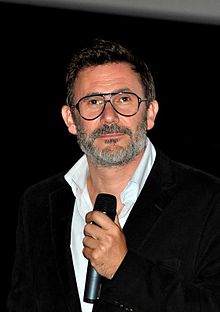
 Michel Hazanavicius

 Feature films have generated a massive amount of junk, and perhaps a less massive amount of astonishing creativity.  According to pictureshowman.com,  some 210,841 feature films were made, between 1906-99, in 51 countries, from Algeria to Yugoslavia;  tied for the lead are the U.S. and India, with 31,000 each.  From 2000-2010,  approximately 50,000 feature films were made,  with India (Bollywood) now leading  the U.S. (Hollywood) by a wide margin.  With so many feature films existing, one wonders how it is possible to come up with truly new ideas for films.

   According to columnist Maureen Dowd, writing in The New York Times, a new feature film “hit the Cannes Festival like a thunderclap”.   The film was written and directed by a French writer, Michel Hazanavicius and is called “The Artist”.  It is about a silent movie star who can’t accept talkie films and crashes and burns.  And yes, the film itself is silent.  No sound.  Silence. 

   “The Artist” merges two key principles of innovation. One is “reduction” or “subtraction” – innovate by eliminating rather than by adding.  Hazanavicius eliminates sound, but rather, adds silence, perhaps the rarest of all luxuries in modern life. (When did you last enjoy true silence? Where can you actually find true silence?).   Indeed, reducing, or subtracting, features from existing products or services actually adds to them – adding simplicity, which is also an increasingly rare attribute of modern life. 

     The second is ‘nostalgia’ – evoking something we once loved but which became obsolete.  Silent movies were made obsolete by sound tracks – just as TV replaced radio, cell phones replaced payphones, laptops replaced desktops, wireless replaced modems.  Why not think about ways to restore legacy technologies in unique creative ways? One of my early blogs was about a retro-cycle: A bicycle without brakes or gears. 

    Hazanavicius began directing in 1988.  He directed commercial advertisements, then created a feature-length film made up entirely of clips from old Warner Bros. studio films.   Making a silent film was a huge gamble, which paid off.   

    Dowd quotes Hazanavicius on silence: “I compare [silence] to the zero in mathematics. People think it’s nothing, but actually it’s not.  Silence can be very powerful”. 

Innovation/Global Risk 

Are Creative People Dishonest?

By Shlomo Maital  


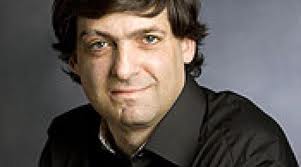
 Dan Ariely 

The latest (Dec. 7) issue of Harvard Business School’s publication Working Knowledge has a piece by editor Carmen Nobel that I found disturbing.  According to Nobel:

  In a series of studies, Francesca Gino and Dan Ariely found that inherently creative people tend to cheat more than noncreative people.    

 ● Inherently creative people tend to cheat more than noncreative types.

● Furthermore, inducing creative behavior tends to induce unethical behavior.  

   Gino and Ariely surveyed 99 employees across 17 departments at an American advertising agency, where some jobs—copywriting, for example—required much more creativity than others. In the anonymous survey, on a seven-point scale, the respondents indicated how likely they were to engage in various ethically questionable work behaviors such as “take home office supplies from work” and “inflate your business expense report.” Respondents also evaluated scenarios describing a hypothetical person who has the opportunity to behave dishonestly, and then indicated, again on a seven-point scale, how likely they would be to behave unethically in each instance. Finally, the respondents reported how much creativity was required in their respective jobs, with three managers in the executive office rating the creativity level required in each department, as well.  Overall, the researchers learned, the higher the creativity required for the job, the higher the level of self-reported dishonesty.

    Gino and Ariely note:  “As a manager, if you’re highlighting the importance of being creative and innovative, it’s important to make sure that you’re stressing the presence of ethics, too,” Gino says. “Dan and I are of the hope that managers will start thinking about how to structure the creative process in such a way that they can keep ethics in check, triggering the good behavior without triggering the bad behavior.”

   I teach my management students that innovation is breaking the rules.  I don’t mean, of course, breaking the law.  But, are those able and willing to break the ‘rules’ or ‘conventions’ also more able and willing to break the law?  This seems to be the simplest explanation of the phenomenon discovered by Gino and Ariely.

  Perhaps we need to redouble our efforts to to find effective ways to teach ethics in management courses, along with innovation.  I myself intend to do this. 

  Maybe there is some comfort in the fact that creative people are very honest about self-reported dishonesty.  Maybe creative people, who break rules all the time, are simply more honest about being dishonest than less creative people. 

Innovation/Global Risk 

Titanic’s Lesson for the World 

By Shlomo Maital  


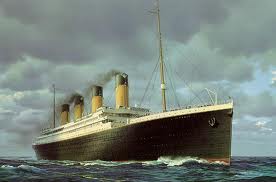
   The RMS Titanic sank almost a century ago.  Since then she has served as a sad lesson for innovators, on the consequences of arrogance.  Built to carry 3,500 people, Titanic had 2,223 people on board during its maiden voyage, and sank at 2:20 a.m., on April 14, 1912, with 1,517 people perishing in the frigid Atlantic waters.  The reason: There were lifeboats only for 1,178 people, because the Titanic was “unsinkable”. 

   But I believe there is another key lesson the Titanic conveys:  Strategic agility. Nations need to constantly evaluate where their competitive advantage lies, and adapt and reinvent it when technology and markets change and shift.

    Titanic was built in the shipyards of Harland and Wolff for the Cunard Lines, in Belfast,  Ireland.   It was the only shipyard in the world capable of building the advanced vessel, which weighed 45,000 tons (a modern aircraft carrier weighs over twice that, but recall that it has a large steel deck for launching and landing planes).  It was built by a highly skilled workforce of 15,000 workers, all men (no women were allowed to do the hard physical work).  But women also had good jobs created by Titanic – they wove the textiles needed for the 45,000 napkins and 12,000 sheets, and thousands of tablecloths used on Titanic.   One of the key skills in building Titanic was riveting. It took a riveter five years to learn the craft, driving white-hot rivets into steel plates, so that they could contract when they cooled and tighten the joints.  Many millions of such rivets went into the Titanic.  Riveters were paid according to the number of rivets they drove. 

    At the time, Ireland had a global competitive advantage in shipbuilding.  As the world changed, and as shipbuilding evolved and moved to places like Korea, Ireland lost jobs, income and exports.  In part, Ireland was preoccupied with its struggle for independence from Britain (in the end, Belfast remained in what became Northern Ireland, a part of the United Kingdom).  It took Ireland some 75 years, until a few clever officials from the Irish Industrial Development Agency figured out how to attract American companies to Ireland, to generate quality jobs like those the Titanic once supplied.  During those 75 years, many Irish emigrated abroad, because they found no work at home.  Ireland itself became not unlike the Titanic – it sank, becoming one of the poorest countries in Europe. 

    Ireland again finds itself in trouble. After a hasty government bailout of its troubled banks, the Irish people drown in debt, and the new Irish budget announced today (actually, the budget is so tough, the government will reveal it over a two-day period, to soften the blow) is severely austere.  The Prime Minister’s tough address to the nation backfired, as the Irish people seek solutions, not statements of the problem.  Unlike the Titanic, Ireland seems to be sinking ever so slowly – but surely.  The people of Ireland deserve better.   

   Today nations are sinking, in Europe and elsewhere, like Titanic.  They are unable to adapt to changing geopolitical realities.  As we mark a century since Titanic’s launch and tragic sinking, let us recall what Titanic teaches. 

Innovation/Global Risk 

How to Win a Nobel Prize II

By Shlomo Maital


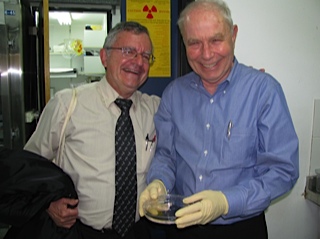
 Prof. Avram Hershko, Technion 

 In my Oct. 7 blog, I told the story of how Prof. Dan Shechtman won the Nobel Prize, for his discovery of quasi-crystalline matter.  The formula he used was: 1. Read Jules Verne and dream, and 2. Believe in yourself, and maintain your integrity, if you see something strange, insist that you saw it, despite the nay-sayers, famous ones, who tell you, that you didn’t, couldn’t, wouldn’t. 

   I recently had the privilege to interview another Nobel Prize winner from my university, Technion-Israel Institute of Technology, Prof. Avram Hershko, who won the Nobel Chemistry Prize in 2004 for his discovery of ubiquitin, which holds the key to understanding why cells die.  Based on his discovery, a new drug, Velcade, was developed, which has saved the lives of many thousands of cancer sufferers (including a close American friend of Prof. Hershko).   

  Here is Prof. Hershko’s formula for winning a Nobel, which is somewhat different from Dan Shechtman’s.

  1.  For your research, pick a problem you believe is important, but that is NOT in the mainstream of scientific research.  On his post-doc in the U.S., Hershko found that he was joining a 25-person team, who were mostly focusing on cell division (i.e. cell growth).  He chose to study why cells die, because he thought it was important and because no-body else was interested in studying it.  This is the scientific equivalent of ‘blue oceans’ – seek areas that are not crowded, because research topics already crowded are competitive and likely to be dominated by those with massive resources. 

 2.  Be patient and persistent.  If you choose a hard problem, Hershko notes, you will need to be very patient in understanding the phenomenon under study.  Hershko is a true bench scientist.  When I interviewed him, he was gracious, but in the midst of an experiment…  and he confessed to deeply loving bench work, which the Nobel Prize did not in any way interrupt (except for 6 months of travel on behalf of Technion). 

 3.  Be lucky.  Scientific breakthroughs come often through lucky breaks. But, Hershko cautioned, you need to be prepared for the luck.  When you get unexpected results, often they are tossed out.  Don’t!  Recognize your luck, and look into why those results occurred, against your expectations.  As Pasteur affirmed, “chance favors the prepared mind.”  Prepare your mind.  And keep it open.  Do not allow ‘perceptual blindness’ to prevent you from seeing what really exists.  Shechtman saw something that could not possibly be there.  Hershko saw results that were highly unexpected.  Both had minds open enough to see what was there.

  4.  Stay small.   Nobel Prizes often (though not always) bring the possibility of a flood of new research money.   Prof. Hershko has purposely, and doggedly, kept his lab research small and intimate, so that he can maintain control and his own active leadership.  Size and scale often are bitter enemies of innovation.  By keeping his lab small, Hershko maintains its agility, flexibility and manageability.  He also has maintained his own active bench research, rather than become a ‘manager’ whose name appears on scientific papers but who is not really involved.

Blog entries written by Prof. Shlomo Maital

Shlomo Maital

Pages