Global Crisis/Innovation Blog

Innovate for Defensible Jobs, Not For Margins

By Shlomo Maital

 

 Prof. Clayton Christensen

Faithful Blog reader Yoav Medan (Insightec) drew my attention to Harvard Business School Professor Clayton Christensen’s  (“disruptive innovation”) talk at a Gartner Symposium – five key areas of innovation.   Here is a summary:

1.  Disruption comes from below. “If you’re worried about what may kill you, look down,” he said. For example, Toyota came into the U.S. auto market with cars that were low-end.   Over the years, Toyota became more popular than domestic automakers and simultaneously moved upmarket with its Lexus brand. Now Kia and Hyundai are moving up the auto food chain to take on Toyota.  (Think about occupying low-margin low-end businesses, just to be where your threats may incubate).

 2. Universities are on the verge of being disrupted.    Colleges are being disrupted by online learning. “We [Harvard and other top universities] measure goodness by the research that the faculty do. The universities that have the most research published in best journals judged to be best schools,” he said. “Online learning institutions measure success by how good teachers they are. When you compare the quality of teaching at online schools vs. quality we have at Harvard, they are so much better than us even as we turn down our noses because they don’t do research.”

 3. Decentralization can reinvent health care. “Rather than expecting our hospitals to become cheap, we send people out to clinics,” he said. “We bring technology to doctor offices and then homes to begin doing the things you do in a clinic. Drive the technology to the practice, nurses and pharmacists. There are tremendous opportunities for IT in health care.” 

 4.Pursuit of profit ratios distorts innovation. Companies are driven by profits and various margin ratios — leading to the phenomenon where companies outsource low-margin businesses and ultimately entire businesses until nothing is left. That focus on profit percentages — return on assets, for instance — means we manipulate ratios instead of investing in things that grow the economy. 

 5. If you organize product strategy around a job, the business can be defended. “Products are easy to copy, but integration around a job creates defensible differentiation,” he said. One easy example: Ikea, a company built around “furnishing an apartment by tomorrow,” he said. “Everything about Ikea is about organization and making things easy and simple.” Christensen’s big worry: America has lost focus on doing truly disruptive innovations by making products that are simple and affordable. 

   All of Christensen’s five principles point to ways that nations can create defensible jobs, through its innovative businesses, rather than just make money.  Perhaps “Occupy Wall St.” should take note.

Innovation/Global Crisis Blog

  Malaria Vaccine Breakthrough – Why Microsoft Exists

By Shlomo Maital


Glaxo CEO Andrew Witty

Malaria kills nearly 800,000 African children yearly.  Microsoft founder Bill Gates has committed much of his wealth, through his and wife Melinda’s Foundation, to combating it.  Results so far have been poor. Now comes this news:

    Malaria seemed closer to being thwarted as a world menace on Tuesday with the news of clinical trial results for a vaccine that would prevent the mosquito-borne disease from killing some of the nearly 800,000 African children it claims each year.  “A vaccine is the simplest, most cost-effective way to save lives,” said billionaire Bill Gates, cochairman of the Bill & Melinda Gates Foundation, which helped fund the research and the clinical trials conducted in seven African countries with 15,460 children.     

   According to a professor of epidemiology quoted on the BBC World Service, the new vaccine provides 50 % protection.  This is far less than the 95% protection most vaccines provide, he noted, but it is the first time in history that a vaccine has proved effective against a parasitic disease, which is what malaria is (a parasite transmitted by mosquitos).    Chances are, the vaccine will be improved, once the mechanism through which it prevents parasitic infection is fully understood. 

   Kudos to Glaxo Smith Wellcome, the drug company which has partnered in this venture, and which has agreed to accept minimal 5 % profit margins on the vaccine when it is commercialized.  Glaxo’s CEO Andrew Witty said his firm would try to keep the cost under $10 per dose, and that it would re-invest all the 5% profit into research on malaria and other such diseases.  An expert at America’s National Institutes for Health noted that in the past there have been commercial vaccines with only 50% effectiveness.   

   Many of us have been critical of Microsoft’s products, monopolistic behavior and amazing lack of innovative skill.  Perhaps we now understand why G-d created Microsoft – to help combat malaria.  As the Bible says, the wheels of G-d grind slow, but exceedingly fine….    Even if the overly heavy MS software and Windows ‘kill’ us, saving all those children might be worth it.    Yet it is distressing that the $10 per dose price of the new vaccine might still be too high.  Apparently, in our world, the life of an (African) child is still not worth even ten bucks.  How sad.     

Innovation/Global Crisis Blog

Job Creation:  Let’s Help Ourselves – and Here’s How!

By Shlomo Maital


 In my travels, I’m struck by how ordinary people have lost faith in their political leaders, and in many cases, in the political system itself.  Increasingly, elected leaders in the U.S., France, Germany, Britain and Italy know what they should do, what they must do, what the PEOPLE want them to do – but don’t do it, either because their political foes block them or because they are afraid the bitter medicine they administer will cost them the next election.   As a result, a new form of direct democracy is arising – mass protests.  Starting with Tunisia, spreading all over the Arab world, then to mass social protests in tent cities in Israel, then to Wall St., then to financial districts worldwide,  large groups of people, many of them young, gather to express how unhappy they are with what their elected leaders are doing and what they would like to do differently.  And it works.  In my country, Israel, this type of mass sentiment led our Prime Minister, Netanyahu, to release 1,023 Palestinian prisoners, in order to secure the release of one soldier, Gilad Shalit, even though in a previous book Netanyahu had fiercely criticized a similar prisoner swap (the “Jibril” swap) as recklessly endangering Israeli lives. 

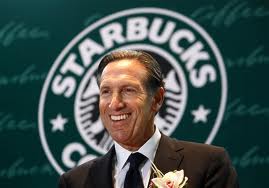
   Writing in The New York Times, Joe Nocera describes a “help ourselves” initiative of Starbucks founder and CEO Howard Schultz.  I think this is a kind of pro-active direct democracy.   OK, Starbucks coffee is indeed awful, they use Robusta instead of Arabica beans (to save money).  But on Nov. 1 Schultz and Starbucks will roll out the following idea:

    Create Jobs for USA.  Starbucks customers will make donations to this plan.  They will get a red-white-and-blue wristband in return.  The money will become equity capital for CFDI, Community Development Financial Institutions,  NGO lenders that specialize in offering credit to small businesses, under the umbrella of Opportunity Finance Network.  It is these small businesses that are dying because banks won’t lend to them, even though they are the ones that create jobs, while big business focuses on firing more and more people.  Each dollar of Starbucks-originating equity capital will be leveraged 7 to 1, i.e. each buck will support 7 dollars of lending.  And Starbucks Foundation will get the ball rolling with a $5 m. donation.  Starbucks wants other retail organizations to join. 

   I might even be willing to endure awful Starbucks coffee, just to support Schultz’s idea.    

   Nocera ends his column by saying, “with the government and banks unwilling or unable [to help create jobs], it’s time we took matters into our own hands.  At this point, who else can we count on?

Innovation/Global Crisis Blog

Sex, Drugs & Plants:  How Plants Think, And Why Flora Resemble Fauna

By Shlomo Maital


 Bee orchid — it’s NOT a bee!

 Do plants think and feel?  Are people who talk to their plants, and play Bach or Mozart for them, nutty?   Yes – and no. 

    A National Geographic documentary, Sex, Drugs and Plants, shows how plants can think, feel, camouflage…and seduce.   After you watch it, you feel badly about how humans are abusing the world of plants and trees, and how closely similar humans are, not only to apes but also to dandelions. 

  • Try this at home.  Attach a sensitive voltmeter to a plant.  Now, burn a leaf. (Don’t worry – plants are smarter than humans, we can’t grow a new leg or arm, but they can quickly regrow a damaged leaf).   Check the voltmeter. You will see a 50 millivolt current race from the leaf down to the root, signaling the root to send up the stalk important liquids and ‘food’, to help regrow the damaged leaf.  The current is stronger than that inside our brains, when neurons communicate.  This system is remarkably like a human nervous system.
  • Some plants disguise their flowers as colorful wasps or bees.  The male wasps show up and try to copulate with them.  In doing so, they of course gather pollen…which they distribute onto the next flower, when they give up and try another seductive target.  This is indeed sex, but not the kind wasps really enjoy.  Bee orchids attract pollinator bees simply by resembling them. (See photo).
  • Some flowers live in soils that lack nutrients or grow in water.  Like humans, they need protein. Where to get it?  Why not lure insects onto the plant, with sticky smelly slippery sap, then have the insects slip and fall into the bottom of the ‘pitcher’, into rain water mixed with digestive chemicals.  There, the ‘soup’ dissolves the insects and is then used by the plant for nutritional food.  Yum!

What is quite amazing is that all these incredible innovations in the plant world have occurred through evolution – through genetic accidents that just happen to work at the time.  Nature simply tries a huge variety of experiments, and then leverages those that work.  This is how we human innovators should work, too.   Innovations, like plant mutations, can only be tested in the tough competitive world of real life. 

Innovation/Global Crisis Blog

Readers: Help the Bankers See the Light

By Shlomo Maital


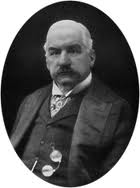
   J.P. Morgan


Here is the situation:  People have lost trust in banks, and in those who regulate them. Banks have lost trust in one another, and hesitate to lend to one another. J.P. Morgan is in trouble, because a small drop in earnings has been amplified into a sharp drop in share prices, hinting at a Lehman Bros. pattern.  (The original founder must be turning in his grave; he staunched several bank panics with his own personal capital).   Now Germany’s bankers have weighed in, blasting the EU’s intention to raise capital requirements on European banks.

    What is going on?

    Here is the core argument.  The bank regulators say, the global business environment has gotten more risky, we think banks need to have more of their own capital (equity as a per cent of risk-weighted assets),  say, 7 to 9 per cent of their assets, rather than, say, 5 per cent today.  Not a huge change, but one that will require the EU banks to raise some $580 b. in new capital.  Sounds reasonable.  Especially since “risk weighted” is very “iffy”, because banks tend to underestimate the riskiness of their assets, and conceal losses not yet realized in the market. 

   The German banks (especially the 800-pound gorilla, Deutsche Bank) say, no way Jose!  If people have lost trust in us, why would they invest in us? How can we raise capital?  It’s making the problem worse. 

    The bankers just don’t get it.  It is of no consequence if objectively, bank capital is sufficient.  If enough people THINK EU banks are undercapitalized, then they are; they will dump bank shares and create the problem they perceive.  It is all about trust, and perception.  

     Here is how the banks can easily raise capital.  They can suspend dividends and use retained earnings.  They can ask existing shareholders to buy preferred shares, on highly favorable terms.  They can sell assets.   Keep in mind that after the US and British Central Banks have flooded their respective economies with new money, there is a TON of money sitting on the sidelines, earning nothing and desperate to earn a reasonable return.  Let the banks tap into this money.  

     By their recalcitrance, the European bankers are not only endangering their own banks, they are endangering ordinary working people in the global economy.  Readers, call them to order.  Write your favorite Deutsche Bank bankers, and ask them why they are irresponsibly endangering your future. 

     In times of uncertainty and lack of trust, a bank cannot have too much equity capital. But it CAN have too little.  Facing this asymmetry – ordinary people know what to do. Why don’t the bankers? 

 Innovation/Global Crisis

 If You Liked CDS’s, You’ll LOVE ETF’s:

 Wall St.’s New WMD

 By Shlomo Maital


 The invention of “credit default swaps” (CDS) was a major cause of the 2007-9 global crisis.  CDS’s name itself is a lie.  It is not a swap at all; it was simply called that, in order to avoid any and all regulation.  A financial innovation, like a human, born in a lie, cannot bode well for the world.  And it did not – it nearly destroyed a great insurance company AIG.

    Many of us have been waiting to see the next ‘innovation’ Wall St. comes up with, to fatten its wallets and its bellies.  We didn’t have to wait long. It is called ETF – exchange traded funds.   These funds are ‘baskets’ of securities, traded on stock exchanges, mostly meant to track an index, like the S&P 500 or Dow-Jones 30 Industrials.   According to Andrew Ross Sorkin,  Reuters columnist, quoting a Wall St. veteran, named Douglas A. Kass,  ETF’s are “the new weapon of mass destruction”, echoing Warren Buffett’s description of CDS’s.  “They have turned the market into a casino on steroids”, Kass says, “They accentuate the moves in every direction – the upside and the downside”.   Sorkin quotes a study by Kauffman Foundation scholars Harold Bradley and Robert Litan, demanding that the Securities Exchange Commission pay “more attention” to the proliferation of ETF’s.   

    Why are ETF’s bad?  They generate huge volatility, which tends to keep legitimate investors on the sidelines, and which tends to create profits for insiders and losses for outsiders.  They make it possible for scoundrels like UBS’s Kweku Adoboli to take huge risky positions (ETF’s are supposed to be ‘rebalanced’ at the end of every trading day, so the basket really does match the index it is tracking – but it is tempting NOT to rebalance, because with the risk goes potential profit (sometimes) ).  They encourage leveraged trading (borrowing half the money, thus doubling the return, and of course doubling the risk).  They permit computer-driven trading, through ‘algorithms’, to create major feedback loops that can drive asset prices down for no reason. (What if all the algorithms are more or less the same, and they all decide, for the same reason, to issue ‘sell’ orders? Remember the one-day 20% drop in stocks on Oct. 19, 1987?).   

    What can be learned from ETF’s?  Regulators, give up.  You are always going to be sailing in the wake of the financial ‘innovators’.  By the time you get control of ETF’s, they will have come up with something new.   Somehow we need to change the DNA of the financial services industry.  How? Very simple.  

      For every financial innovation it invents, that hypercharges profits, make them ask one question:  Does this innovation create redeeming social value, by doing what financial services should do,  bringing those who have money together with those who need it, in a manner that builds businesses, jobs, and long-term growth and stability?   Prove it! 

  Do Exchange Traded Funds have redeeming social value?  Do they fulfill the core function of the financial services industry?  If so, let them thrive.  But the patently obvious answer is,  we have just traded one horrendous acronym, CDS, for another, ETF,  and both are WMD, weapons of mass destruction.

Innovation/Global Crisis Blog

The Lost Generation:  Blame Wall Street

By Shlomo Maital


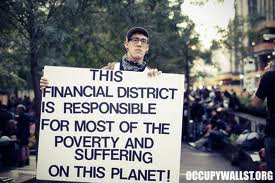
A bitter ideological battle has broken out, over the Wall St. protests, in which mainly twenty-somethings protest the greed, selfishness and reckless risk-taking Wall St. banks and speculators have shown over the past decade.  Supporters, mainly Democrats, blame the wealthy bankers for creating the financial crisis that led to the economic crisis.  Republicans shout “class war”, and claim the protesters don’t understand the true benefits of free, open markets and capitalism. 

   In all this sound and fury, the best insight is that of Boston Globe columnist James Carroll.  Here is his ‘take’ on the protests, published on Oct. 10:

  ”  ….the plight of 20-somethings is distinct. In America, their anger can seem grounded in a sense of betrayal. Having been taught a social arithmetic since childhood that education plus diligence equals fulfillment, they are now confronted with a grim subtraction. Education has all too often left them crushed by the debt of student loans, and diligence is irrelevant in a jobless market. People in their 20s take the weight of unemployment rates that can be double the national average. Not only are their present prospects bleak – management training in fast food, anyone? — but they can look forward, in their 30s, if and when the recovery comes, to being passed over by junior siblings. Youth interrupted, adulthood postponed, careers that never materialized, disappointment as a way of life. A bottomless abyss of missed opportunity yawns at the feet of an entire American generation.”

 Carroll notes that the “lost generation”, the American 20-somethings robbed of their future by the Wall St.-engendered crisis, have counterparts all over the world:

      “The phenomenon is global, and has spawned a patronizing multilingual vocabulary. In Japan, they are “freeters,’’ a word that suggests freeloading. In Britain, they are, in the argot of bureaucracy, “neets,’’ for “not in education, employment, or training.’’ In Spain, “ni-ni’s,’’ for “neither-nor’’ (neither workers nor students). In Germany, “nesthockers,’’ for nest squatters. In Italy, “bamboccioni,’’ for grown-up babies. They are “basement dwellers’’ with “status zero.’’ They are “twixters,’’ the “boomerang generation,’’ having returned to “Hotel Mama.’’ They arrived not at adulthood, but “waithood.’’  “

   In civilized countries,  the older generation hands over to the younger generation, their children and grandchildren, a better, safer, more stable, more hopeful world.  In uncivilized countries, the older generation robs the younger generation of its future, and transforms it into a ‘lost generation’.  There is no worse moral crime.   And it appears that all the nations mentioned in Carroll’s column – Britain, Japan, Germany, Italy – must be regarded as uncivilized.  And the worst part of it – instead of accepting responsibility, Wall St. enlists its business-oriented mayor to smash peaceful protests with his Police Department.    It will be truly bitter for the world if the moneyed interests succeed in electing a Republican President in 2012, elected by those who have doomed and saddened an entire generation. 

Innovation/Global Risk 

How to Win a Nobel Prize 

By Shlomo Maital


  Technion Materials Engineering Prof. Dan Shechtman is the tenth Israeli to win a Nobel prize, the fifth Israeli to win one since 2002 and the third Technion-Israel Institute of Technology scientist.  He has been short-listed for perhaps 20 years.  It is rather rare that a single scientist gets an unshared Nobel.   In each of the last three years, three scientists have shared the Nobel Prize for Chemistry. This year, Shechtman is the sole winner.

   So, how do you win a Nobel Prize?  Here is how he did it.   

   1.  Read Jules Verne and dream.    Shechtman says he read Jules Verne’s novel The Mysterious Island 25 times as a child.  The book is about how an engineer turns a desert island into a lush garden. “I wanted to be exactly that: someone who makes everything from nothing”, he says.

     To win a Nobel Prize in physics, medicine or chemistry, you need to study science or engineering.  And to choose those disciplines, you need inspiration.  How can we inspire our youth to choose science, rather than business or law?  This is far more important than higher education budgets.  

   2.  Believe in yourself.  On April 8, 1982, Shechtman was peering into an electronic microscope at the labs of the National Bureau of Standards, during a sabbatical from Technion at Johns Hopkins University in Baltimore.  His mission was to find lightweight alloys for  aircraft.  Shechtman was looking at an alloy of aluminum and manganese that had been rapidly cooled and crystallized.  “Eyn chaya kazoo!” he exclaimed!  There can be no such creature! What he saw was an arrangement of atoms that defied the known laws of nature.  Everyone knew that atoms in a crystal are arranged with perfect symmetry.  What Shechtman saw was a pattern of 10 dots, indicating “five-fold symmetry” – an arrangement in which the distances between some atoms are shorter than between others. (To understand why, try to tile your bathroom floor with five-sided tiles, without leaving spaces between the tiles. It cannot be done.)   He ran into the corridor to find someone to tell.  But the corridor was empty.  So he wrote in his lab diary, “10 fold???”  with three question marks.  Impossible.  After checking, and rechecking, Shechtman wrote up his results. His research team leader fired him from the team, after showing him a passage in a basic textbook and asking him to reread it.  His research paper was rejected for publication. He was vilified before a large audience by Nobel Laureate Linus Pauling, at a gathering Shechtman himself attended.  He was called a “quasi-scientist”, playing on the “quasi-crystal” matter he discovered. But he never gave up.  In the end, other scientists replicated and verified his findings and a new definition of “crystal” was adopted.    Shechtman has a favorite picture of a line of a dozen German Shepherds. In front of them, with perfect aplomb, walks a serene cat.   “I felt like that cat,” he recounts.  But he never yielded an inch from what he believed was scientific truth.  “A good scientist needs faith,” he told the daily Haaretz. “I believed in something and it was hard to break my spirit, despite all the hardships and criticism.”

Innovation/Global Crisis Blog

 Steve Jobs 1955-2011: Two Observations

By Shlomo Maital


 Steve Jobs as a high school student


Everything that could be said, almost, has been said about the late Steve Jobs.  Here are two brief comments about what we can learn from his life and from his work.

1.  You do not have to be born with a silver spoon in your mouth; you can be born without any spoons, in fact, and change the world. 

   Jobs’ biological parents were Abdulfattah John Jandali, a Syrian Muslim immigrant to the U.S.,   and Joanne Schieble (later Simpson), an American graduate student of Swiss and German ancestry.  Jandali says he did not want to put Jobs up for adoption, but Simpson’s family did not approve of their daughter’s marriage.    Jobs was adopted by Paul and Clara Jobs, of Mountain View, CA., who raised him.  Jobs chose not to have contact with his biological father, but later did have a close relationship with his biological sister, Mona Simpson. 

2.  If Steve Jobs and Steve Wozniak can bootstrap Apple, with $1,300,  and reach $200 m. in sales within three years – entrepreneur, so can you!

   Jobs and Wozniak founded Apple in 1976 (it was named Apple, because Jobs had an especially happy summer picking apples.  Jobs sold his microbus and Wozniak sold his calculator, to raise the cash they needed.  They bootstrapped Apple and generated cash flow by selling circuit boards, while building the prototype of their personal computer.  In their first year, 1977, they had $2.7 m. in sales. In their third year, $200 m.! 

     Jobs designed products that were innovative not in technology, but in design. They were cool. And people bought them, because to have them, and to show others you had them, was to prove you were cool.  Jobs understood the ‘why’ of cool products (why buy them?) was crucial, not so much that ‘what’.   I believe that his working-class background and adopted background gave him an insight into what ordinary people sought.   As an outsider, rather than a member of the elite, he made his own rules…and broke many of the accepted ones regarding innovation.

Innovation/Global Crisis Blog

HBS Teaches Lady Gaga: She’s No BS

By Shlomo Maital

All we hear is Radio ga ga, Radio goo goo, Radio ga ga, All we hear is Radio ga ga, Radio blah blah, Radio what’s new?   (Queen song, which inspired Lady Gaga’s name)

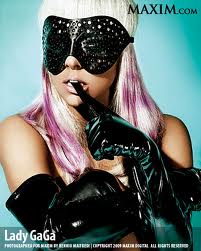
    After reviewing Stephen Law’s book on Believing BS, I guess it’s a natural to write about how HBS, Harvard Business School (is there BS in HBS?) can take a subject as gripping as Lady Gaga, and turn it into a 43-page sleeping pill (Case A and Case B) * which actually does a great job in revealing the details of Lady Gaga’s success.  For readers who won’t make it through the HBS BS, here it is in brief:

   * She’s very very smart.  Stefani Joanne Angelina Germanotta was one of only 20 students given early admission to NYU.  She quit after 18 months to focus on her music, but promised her dad she’d return to school if she failed. 

   * She’s incredibly hard-working, always has been.  Germanotta composed ballads at age 13,   did open mike nights all around New York at age 14, learned classical piano and trained with a vocal coach. 

   * She never gave up despite early failure.  A label called Def Jam offered her a recording contract, but then dropped her after only three months. “I was pretty devastated”, she said – but she never quit. 

  * She had a terrific ‘back office’ team.  Vincent Herbert, a top producer, auditioned her in LA; she told him, “I want to be the biggest pop star in the world, I’ll be the most loyal and hardworking person you ever worked with.”  She is, and she was, and she is.  He signed her on the spot.

   * Lady Gaga is great at self-marketing, especially digital (Facebook, Twitter) and at building relations with her fans.  She writes her own tweets and no-one has her password. 

   * Lady Gaga leveraged her flamboyant ‘fashion’ which she learned while performing on New York’s Lower East Side to build her brand. 

    * Lady Gaga has a small seven-person creative team that designs her clothing, make-up styles, props and sets for her live performances, a team she leads in person.  She is in charge of everything – she writes the music, video treatments, chooses her photographers, chooses the photos to be used and determines her ‘look’.

  * Lady Gaga is incredibly hard-working and energy-packed.  On her tours, which last for months, she may have as few as seven days off.   Watching her, you understand that she really loves performing.  Otherwise, like many musicians, she would fall prey to drugs and to alcohol.   

  **  Harvard Business School.  Case 9-512-016 Case A, and Case 9-512-017 Case B, by Anita Elberse and Michael Christensen.    

Blog entries written by Prof. Shlomo Maital

Shlomo Maital

Pages