Innovation Blog

Happy Bloomsday! How James Joyce Changed Novels Forever

By Shlomo Maital
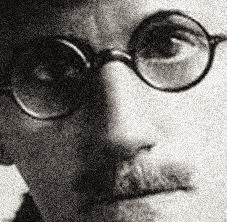
 James Joyce,  Bloomsday June 16 

Happy birthday, everyone!   Today is Bloomsday, celebrated worldwide, June 16, because June 16, 1904, is the single day that is recounted in detail in the life of Leopold Bloom and Molly Bloom, in Dublin, in James Joyce’s amazing novel Ulysses, which everyone loves but very few have read end-to-end. 

   Joyce picked June 16 for Ulysses, because on that day he and his future wife Nora Barnacle, whom he loved deeply, met, and went for a long walk. 

    Until Joyce, novels were conventional, and had plots that unfolded over time.  In Ulysses, there is really no plot, and what happens is what is known today as stream of consciousness, what goes on in Leopold’s mind. Moreover, the language is not literary, but the language and cadences of ordinary Dublin speech, including some that is very profane. (That got Ulysses banned in many places, explicitly some of the sex scenes). 

     It is still a mystery to me, why some people choose to carefully follow the rules, in art, literature, poetry, sailing, tiddlywinks or ballroom dancing, and excel, and create works of beauty, while others choose to blow the rules up, all of them, with a ton of TNT, and put years of work into their creation without being certain whether their work will be seen, read and enjoyed by anyone. (Then, and now, you need someone to publish your work, and the more radical it is, the harder it is to get a publisher).   It is these radical innovators, the ones with the TNT, who exert lasting impact on their world and on their discipline. 

    What was it that made James Joyce disregard all the rules of novel-writing, to create a masterpiece? 

   Ulysses’ last line, yes I said yes I will, is very famous.  Innovators: say it!  Yes I said yes I will… disregard the ‘rules’, break the rules, try things, yes I said yes I will.  After all, Joyce did it – and look what happened!
 Innovation Blog

When REAL Writers Write the News:  Innovating the Newspaper

By Shlomo Maital

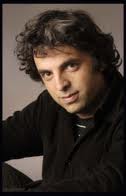
 Etgar Keret, journalist 

I read the Hebrew daily newspaper Haaretz every morning, along with the International Herald Tribune.  Usually something in Haaretz makes me angry, because it is very left-wing and highly critical of Israel’s government, army and society. 

  But today, I am in awe of what landed on my doorstep.  In honor of Israel Book Week, Haaretz’s editors had a brilliant idea. What would happen if the newspaper were written by real writers, not journalists?  What if you got the best novelists and poets to write the news, editorials and even the weather? 

   The result is truly astonishing.  Writer Etgar Keret flew to Italy with Prime Minister Benjamin Netanyahu on a state visit there, and came home with a scoop.  “Bibi” finally let the cat out of the bag.  “There’s no solution to the Israeli-Palestinian conflict,” he revealed.  No solution – ever?  Permanent state of war, forever?  Pretty depressing. Perhaps we need to find a new Prime Minister who can find a solution to the conflict that has no solution, and that in itself will be a solution.  Thanks, Etgar!

   Here is part of poet Ronny Someck’s weather forecast, translated from Hebrew by superb translator Vivien Eden:  Drops in rain language/have not yet begun to stutter in the cloud throat/ the thunder mouth is toothless/and lighting has not yet flicked the spotlights on/ in the pupil of the eye/  until the stoves are lit, sleeves will be rolled up/on the arms of the sun…..

   Maya Arad, from New York, offers a vivid and telling description of what went wrong for Dominique Strauss-Kahn: “She (the maid) refused to accept the money”.   Historical novelist Yochi Brandes, one of my favorite authors (Book of Kings 3), asks the Education Minister, “have you given up on the Bible?”  The Minister lamely puts the focus on the teachers.   And finally, Israel’s greatest living poet, Nathan Zach, writes an editorial: Gilad (Shalit) will not return.  He reminds us, “I was born in the land of the Nazis and my father committed suicide there.”  He claims, “Gilad Shalit will not return, at least not as long as our prime minister believes he has a strong majority in the coalition.”

     What an amazing, insightful, trenchant, biting, satirical, depressing, slashing, innovative, unique, and above all superbly written newspaper! How in the world will we go back to reading the dull, confusing stuff written by journalists, tomorrow and every day? 

     Hey, Haaretz.  Good job!  As the song goes, though – how ya’ gonna’ keep ‘em down on the farm, after they’ve seen Paree?! 

 Innovation Blog

Dogs Are Man’s Best Friend, and Cancer’s Worst Enemy: How Fido May Get Hossam Haick a Nobel Prize

By Shlomo Maital


  Fido:  Cancer Fighter???

Hossam Haick is an associate professor chemical engineering at Technion-Israel Institute of Technology.  He is an Israeli Arab who comes from the city of Nazareth.  Haick recounts how he read about dogs who apparently were capable of sniffing cancer – detecting cancer in people where no such cancer had been detected before by conventional means.  Dogs, of course, have super-sensitive noses.  Still the fact that the presence of cancerous tumors led to a distinctive, though faint, odor, was surprising.  A segment of the CBS program 60 Minutes documented, and demonstrated, how dogs could sniff out bladder cancer, in 2009.

   Haick set to work (with associates Abassi and Nakhoul)  to see if he could develop a sensor “nose”, like that of a dog, capable of sniffing cancer and perhaps other illnesses.  And he succeeded.  He recently won an award for his project on “a nanosensor array for easy detection of volatile biomarkers at early stages of lung cancer and related genetic mutations”.  Haick has built a highly sensitive, inexpensive, portable and fast-response array of nanosensors for detecting molecules that indicate increased risk of lung cancer, or the presence of lung cancer. Of course, it is well known that advanced lung cancer is nearly always fatal. So Haick’s “nose” could save many lives, when it is proven and available.   

   I don’t know if Prof. Haick will win a Nobel for his breakthrough, or when his ‘cancer nose’ will be widely available.  I think the lesson for innovators here is clear.  Millions of people watched 60 Minutes in amazement, as doggies  Biddie and Tangle, Oak and Dill, Bee, and a couple of pre-med rookies, Briar and Daisy, did their thing.  Other scholars replicated the study with other dogs.  Haick, in contrast, sought to improve on the dog’s cancer-sniffing noses with nano-technology.  Pushing a finding higher and farther is what creative people seek.  Dogs’ noses are truly incredible things.  They have 100 times more receptors than human noses, and are hence probably 1,000 times more sensitive.  A tough act to follow – or duplicate?  Haick tried, and apparently succeeded.

    So if you are a smoker,  pat that stray dog you see on the street and perhaps give him a treat or a drink of water.   Even if you choose not to save his or her life, indirectly he may save yours.


 Innovation Blog

Innovating Hiring:  Prior Experience Will Disqualify You!

By Shlomo Maital

 My friend and colleague Y. has no college degree. Yet he held high-level positions as a software engineer with market-leading Check Point, started a website-building company and sold it for a good price, and is now involved with two additional startups. 

  Here is his secret for success:  Hire people with no prior experience or qualifications.

  How precisely does that work?

   Y. himself is what is known as an auto-didact (self-taught).  He loved computers and taught himself programming and programming languages.  He did this out of passion and because he did not like formal classroom learning.  He then realized that there is a whole population of people like him, who are given no chance because HR officials play it by the book, hire only those who fit perfectly into the square holes of degrees, experience and training.  So Y. set out to hire ONLY people like him, with fire in their bellies, dying for an opportunity to prove themselves, rejected everywhere and grateful for a chance.  And it works wonders.  In his successful startup, he hired ONLY such people.  And the results were startling.

   So, innovators, HR managers, startup hopefuls – when you begin to hire people and build your organization, scrap your 800-page HR manual and instead, look for people who are truly passionate about what they do, who for various reasons have not acquired formal degrees and experience, who seek only a chance to prove themselves, give them a probationary period and try them.  Some may fail. Many will not.  You will save money – they’re willing to work for a lot less than MIT graduates.  Do not hire people who expect YOU to be grateful to have them, and demand company cars, perks, and on-the-job massages, but instead, hire those who are truly grateful you gave them a chance when others wouldn’t and return that gratitude in creative hard work.


  Innovation Blog

Tchaikovsky’s Pathétique:   The Delight of Surprise in Innovation

By Shlomo Maital


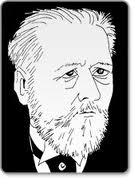
Pyotr Tchaikovsky

Last night, my wife and I heard the Israeli Philharmonic, led by conductor Yoel Levi, play Tchaikovsky’s  Symphony no. 6 in B minor (Pathétique).  We observed a tiny lesson for innovators.

   There are  four movements in this wonderful work.  The third movement is labeled “allegro molto vivace” which means “very lively”.  And very loud!  The movement ends with a flourish of timpani and bass drum, with the orchestra playing at top volume, in a closing crescendo… and the audience bursts into applause (including me – and I know the piece quite well), thinking it is the final movement. 

   The conductor and orchestra waited patiently for the applause to die down, as we looked at one another sheepishly, and then began the fourth movement. 

   The fourth movement of the symphony is labeled “adagio lamentoso” (which means plaintive, sad),  and it is very soft, quiet, somber, an elegy, with a huge gong sounding like a death knell.  And the movement, and the symphony, end, like no other symphony I know, with pianissimo (very very soft), almost inaudible  ….and the conductor holds the movement, stands motionless, the auditorium is absolutely silent, you can hear a pin drop, nobody applauds, nobody moves, the moment of utter silence is held, held, held….. and then, applause!  

    The rule is, you end symphonies like Beethoven’s Fifth, with a loud bang.  Why? said Tchaikovsky. Why not end it almost inaudibly?  Why not surprise the audience?  Why not break the rules? 

    Innovators – try to surprise.  Try to put at least something in your creation that is aimed at surprising and delighting, something unexpected.  Listen again to the Pathetique…if you wish, just to the end of the third movement, and then the end of the fourth and last movement..and find inspiration.   If everyone follows Rule #27, do the precise opposite.

    Tchaikovsky died a few days after the premiere of Pathetique.  The audience and critics received it coolly (hard to believe?).  But Tchaikovsky himself thought it was one of his greatest works – and it was.  The symphony takes 40 minutes to play – but those closing few seconds of near-silence are insightful, impressive and unforgettable.    

Global Crisis/Innovation Blog

Diamond? Who Needs Diamond?  We Have Coal! Republicans Hurt America – Again!

By Shlomo Maital

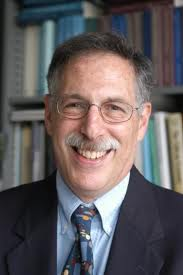
MIT Prof. Peter Diamond, Nobel Prize 2010

 There are two vacant positions on the Federal Reserve Board of Governors, out of seven. At a crucial time when Fed policy needs all the brainpower it can get, the Republicans have stymied the appointment of MIT Professor Peter Diamond, Nobel Laureate, to the Fed.  Sick of the hassle by the Senate Banking Committee, led by Republican Senator Richard Shelby, Diamond withdrew his candidacy. 

  Why were the Republicans opposed to Diamond?   Well, for one thing, he’s a dove – favors strong government intervention to strengthen labor markets.  Why did they SAY they opposed him?  He has no experience in monetary policy – he’s only one of the world’s top experts on job markets. 

   Let’s get this straight. America’s #1 problem, according to EVERYone right now, Democrats and Republicans, is jobs.  Writing in today’s Global New York Times, Crystia Freeland (“Getting by without the middle class”) notes these distressing numbers: 

* 14 m. Americans, or 9.1 % of the workforce, are unemployed;

* 8.5 m. would like to work full-time but can only find part-time work.

* Another 2.2 m. are so discouraged, they have quit looking for work altogether.

* Those actively looking for work have been unemployed for an average of 39.7 weeks. 

   Freeland argues that these data “depict an unemployment crisis that is deeper and more sustained than at any time since 1948, when records first started to be kept.”

    With America’s budget deficit out of control, the only body able to do anything about the job crisis is the Fed.  So – why appoint the world’s top expert on job markets?  Why go for Diamond?  We have ‘coal’ – Board of Governors members who only understand monetary policy, which so far has been highly ineffective.   Commenting on Britain’s Monetary Policy Board, economist David Blanchflower says, “Monetary policy committees have a huge problem of institutional groupthink. If every member is from the central bank they tend to think in narrow monetarist terms. External members bring a sense of balance, they are in touch with the world of business and work, and they question what is being said in the bank.”  (The Economist, June 7, 2011).

     Let’s salute the Republicans.  Their strategy of destroying America, so they can do better in the 2012 Presidential election by blaming Obama, is working.  What is amazing is that millions of Americans are actually going to vote for them.

Innovation Blog

A Cure for Alzheimer’s?  From the Bible to the Drugstore Shelf

By Shlomo Maital

   A new study led by Prof. Michael Ovadia, Dept. of Zoology, Tel Aviv U., isolated an ingredient of cinnamon (CEppt) and used it on mice raised with five aggressive strains of Alzheimer’s-inducing genes. 

   The results, published in PLoS ONE scientific journal, were impressive.    “Fed drinking water containing a CEppt solution over four months, researchers found that the disease’s development was delayed, with additional trials showing that existing amyloids has been dissolved.”   (Amyloids are the sticky proteins that gum up the brain, in those who have Alzheimer’s).   This may eventually result in an Alzheimer’s drug.

   Speaking today on Israeli television (Channel 1), Professor Ovadia revealed the source of his idea that cinnamon could be therapeutic.

   “As a youth I took part in a Bible quiz.  One of the questions nearly stumped me. The question was, what spices were used by the High Priests in the Holy Temple?  That was tough.  I finally remembered, one of them was cinnamon. And then, ever since, I kept wondering – why cinnamon?  What properties does cinnamon have that made it suitable for use by the High Priests?  I tried to grasp the logic.  I thought, well, the High Priests do the sacrifices of animals, animals have many pathogens, maybe the cinnamon protects them from the pathogens of animals.  So we tested cinnamon, but it did not prove anti-pathogenic.  But as we continued our research, we did find it has anti-Alzheimer’s properties!”  

   By the way, the Bible passage about cinnamon is Exodus 30:23:  “Take the following fine spices: 500 shekels of liquid myrrh, half as much (that is, 250 shekels) of fragrant cinnamon, 250 shekels of fragrant cane…”

   Prof. Ovadia says he and his students now drink a cup of tea daily, with a cinnamon stick inside

Innovation Blog

A Car That Runs on Air – Tata Pioneers Again!

By Shlomo Maital


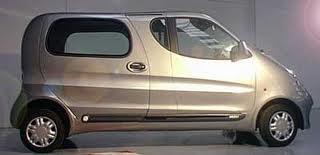
 TATA Air Car

My friend and co-author Prof. D.V.R. Seshadri relayed this information to me, which has not yet resonated in major global news sources.  Tata, global Indian conglomerate, which bought Jaguar/Land Rover and then built the world’s cheapest car, has now innovated a car that runs on air.  Really!  Here are the details.

 India’s largest automaker, Tata Motors, is set to start  producing the world’s first commercial air-powered vehicle. The Air Car, developed by ex-Formula One engineer Guy N’gre  for Luxembourg-based MDI, uses compressed air, as opposed to the gas-and-oxygen  explosions of internal-combustion models, to push its engine’s pistons.  Some 6000  zero-emissions Air Cars are scheduled to hit Indian streets by August 2011.  The Air Car, called the “MiniCAT” could cost around Rs.. 347,523/- ($8,177.00) in India and would  have a range of around 300 km between refuels. The cost of a refill would be about Rs. 85 ($2.00) The MiniCAT which is a simple, light urban car, with a tubular chassis that is glued,  not welded, and a body of fiberglass powered by compressed  air. Microcontrollers are used in every device in the car, so one tiny radio transmitter sends instructions to the lights, indicators,etc.  There are no keys –   just an access card which can be read by  the car from your pocket. According  to the designers, it costs less than 50  rupees (US$ 1) per 100 Km (about a tenth that of a  petrol car). Its mileage is about  double that of the most advanced electric  car (200 to 300 km or 10 hours of  driving), a factor which makes a perfect  choice in cities where 80% of motorists drive at  less than 60 Km. The car has a top  speed of 105 Kmph.


Refilling the car will, once the market develops, take place  at adapted petrol stations to administer compressed air. In two or three minutes,  and at a cost of approximately 100 rupees (US$ 2), the car will be ready  to go another  200-300 kilometers. As a viable alternative, the car carries a small compressor  which can be connected to the mains (220V or 380V) and  refill the tank in 3-4 hours. Due to the absence of combustion and,  consequently, of residues, changing the oil (1 litre of vegetable oil) is  necessary only every 50,000 Km). The temperature of the clean air expelled by the exhaust pipe is between 0-15 degrees below zero, which makes it suitable for use by the  internal  air conditioning system with no need for gases or loss of power.


   Tata Motors has struggled with its Nano car.  But as an innovator it is not deterred.  Look for the Air Car to enjoy greater success. 

Innovation Blog

Innovative Way to Pay for College: Human Capital Contracts

By Shlomo Maital


Student in Debtors’ Prison: Let Them Out!


Growing numbers of Americans are either giving up dreams of college, or finding themselves drowning in massive debts through student loans, as the U.S. economy continues to struggle.  Meanwhile, Britain’s austerity program includes tuition hikes, causing major unrest among students and concern among those who aspire to become students.  [In continental Europe, tuition is free, in Belgium, Holland, France, and Germany, though some fees are charged, especially for business students.]

    America’s student loan program is bankrupt.  The Student Loan Administration (“Sallie Mae”) has doggedly and fiercely pursued students, to repay their loans, whatever their reasons and circumstances.  Unlike mortgages, where home-owners can default, there is no defaulting on a student loan, even for students who are working for low pay in a developing country. 

    Is there a solution? With America’s budget deficit of 9 per cent of GDP, in the near future there is no possibility the government will come to the aid of young people wanting to go to college but unable to, and deterred by the debts it might entail.  The irony is, it has been proven beyond doubt that no public investment pays anything close to the high return paid by human capital investment, and MIT Nobel Laureate Bob Solow proved nations grow wealthy by investing in human capital, not physical capital.

     Here is a new idea proposed by New York Times blogger (“Opinionator”)  David Bornstein, called a Human Capital Contract (HCC):

If you were a student looking for financing to pursue a degree in social science, would you accept an offer of $16,000, in exchange for paying 4.5 percent of your income for 10 years after you graduate? … I wrote about a social enterprise called Lumni, which helps predominately low-income students in Colombia, Mexico, Chile and the United States finance their college educations through “human capital contracts.” In exchange for the financing they receive, the students commit to repayment schemes along the lines of the one outlined above (the terms vary). After the time period elapses — it’s always 10 years or less — the obligation expires, no matter how much has been repaid.  

  Reader reaction was sometimes fiercely opposed.   After all, it sounds a bit like slavery, some readers said.  The real test should be in the marketplace.  Offer it to potential students, ensure they understand the terms – and see their reaction.  After all, an HC contract does not impose a large absolute debt burden, but only a bearable proportional one, in proportion to income.  For students who choose low-income jobs (such as teaching), the repayment burden remains bearable.  For students who get high-paying jobs in finance or consulting, they return proportionally more, but retain 95 per cent of the benefits their education made possible.  It’s a fair deal.  If you graduate and are unemployed, and thus have zero income, you pay nothing.  An HC contract is similar to a reverse mortgage.  Take the money now, live in your house, when you die the lender gets it.  Only: take the money now, use it to build human capital, and pay back part, a small part, of your gains, to the lender. 

  It’s time to think creatively about how to avoid losing a generation of college students to the American economic downturn.  An HC contract is worth careful thought.


 Innovation Blog

Innovation CAN Create Jobs: Pratt & Whitney Shows How!

By Shlomo Maital

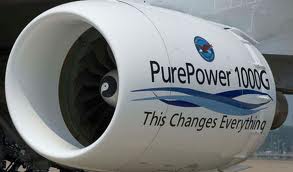
 Pratt & Whitney’s PurePower 1000G: “This Changes Everything”  

In a recent blog, I quoted Nobel Laureate Michael Spence, who explained why America’s innovation ecosystem has overall brought zero benefit to America’s middle-class workers.   Now, in a case study, I can show how innovation, in a very specific case, did indeed create a lot of well-paying U.S. jobs – the case of jet engine maker Pratt & Whitney’s geared turbofan engine. * 

     Here is the essence of this best-practice benchmark:

     Over two decades ago, Pratt & Whitney, a $12.9 b. U.S. jet-engine maker and a division of United Technologies Corp., which had sales of $54.3 b. in 2010, began to develop new engine technology known as geared turbo fan, GTF.  Despite several economic downturns (1991/2 recession, 2000/1 dot-com bubble, 2007-9 global crisis),  Pratt & Whitney doggedly moved the GTF project ahead.  Before it had a single customer for the new engine, it invested $1.5 billion in R&D.  Its proponents within the company used “guerilla funding” to scrounge R&D money and keep the project alive – not unlike the passionate developers of the Macintosh computer.   Today the GTF is winning rich beauty contests.  Facing formidable rivals GE and Rolls-Royce in three tender contests, Pratt & Whitney won all three, gaining orders from three Airbus 320neo customers, including Lufthansa, as well as from Canada’s Bombardier (regional jets) and Mitsubishi.  The GTF engine was a “bet the company” proposition for Bombardier, President David Hess admits. After losing market share in commercial aviation for years, because of tepid innovation, the new engine may well restore technological market leadership for Pratt.   As it does so, skilled American workers and engineers will find secure employment for decades.   Pratt & Whitney expects GTF to double its business (including the after-market, for maintenance).  Pratt now has orders for 1,200 engines and expects to sell – and of course, maintain —  as many as 10,000.  Assembly will be done in the U.S. and Canada, as well as elsewhere.  Some 450 jobs were created by the GTF project in the past year in the United States, and 1,000 jobs were created worldwide.  Turbine blades are a key element of any jet engine.  They are very high-precision products. Pratt has a cadre of highly talented shop workers in its Middletown, Conn., operation.  They make exotic turbine blades that combine titanium and aluminum. It takes 20 years to train a skilled worker, who can earn as much as $100,000.   Since these jobs are a key element of Pratt’s innovation, they are not moved abroad, but retained in the U.S. Some of the lower-value-added jobs have indeed been moved overseas, to Singapore, Turkey and China.  And Pratt has shifted some production from high-cost union plants in the Northeast to Georgia.   But it has found major advantages in linking its R&D to manufacturing, since jet engines need constant redesign to meet airline companies’ specifications, and constant redesign means constant retooling and changes to the manufacturing process. When R&D and manufacturing are adjacent, at least in the same region, the innovation-production link is strong and productive.

   The Bush Administration criminally gave tax incentives to U.S. firms to produce abroad, where taxes are low.  The Obama administration, typically, has done nothing to reverse this insanity. 

   The question is – why?

  • S. Maital. Case study: Make what you invent, invent what you make.  S. Neaman Institute, 2011.  Available from: smaital@mit.edu  


Blog entries written by Prof. Shlomo Maital

Shlomo Maital

Pages