Global Crisis   Blog

Bernanke Needs Eyeglasses:  He Cannot See Bubbles

By Shlomo Maital

Nov. 19/09

         “It is inherently EXTRAORDINARILY difficult to know whether an asset’s price is in line with its fundamental value”.

                                    Fed Chair Ben Bernanke,  in a speech given on Monday Nov. 15/09 

    When the Master of the Universe, the distinguished Princeton University Professor , expert on the Great Depression and the person who controls the fate of every one of the 6.8 billion people on the planet (through controlling the value of the US dollar)  says, he CANNOT tell whether there is an asset bubble or not…    well, every one of us has cause to worry.

      Professor Bernanke,   looking at the diagram below, showing the median US house price divided by median income,   is there anything in the diagram that gives you a slight clue that America was in the midst of an enormous housing bubble?   ANYTHING????

      Prof. Bernanke, I know a terrific optometrist.  He can prescribe new eyeglasses for you. You need them urgently.   Because if you cannot see the old bubble,  that means you will not see the next one either.  And that means, all of us are in deep hot water. 

 Housing Bubble

Housing Bubble

Global Crisis   Blog

Tale of 20 Losers: A Massive Failure of Leadership

By Shlomo Maital

Nov. 16/2009

      Fortune magazine publishes annually the Global 500,  a listing of the world’s 500 largest companies.  In 2008,  20 large companies (those with the dubious distinction of making the 20 Largest Losers list)  lost a massive amount of money:  $320 b. in total. (To reach that sum, Israel’s 7.2 million inhabitants would have to work for two entire years).  

Fannie Mae $58.7,  RBS $43.2, GM $30.9, Citigroup $27.7, UBS $19.3, Conoco $17 , Ford $14.7 ,  HBOS $13.8, Time Warner $13.4,  Pemex $10, Delta $8.9, Hypo $8, Hitachi $7.8, Alcatel $7.6, Credit Suisse $7.6, Bayern $7.4, Lyondell $7.3, Flextronics $6.1, Mizuho $5.9, Deutsche Bank $5.9

     Not all were banks or financial services companies.  Some were manufacturing companies, media, telecom, airlines, even oil companies!   All reflected a massive failure of CEO leadership.    

    What is the common thread uniting all of these losers — if there is one?  I believe it is the utter failure of their Boards of Directors  and CEO’s to think independently, and daily, to challenge what they were doing and how they were doing it.  Some CEO’s, like Citigroup’s, seemed unaware of their organization’s huge exposure to risk. 

      There were those that did resist the ‘herd’.  The CEO of Canadia’s Toronto Dominion Bank kept his bank out of the sub-prime mortgage market, while other huge banks like Citigroup were being swept to disaster.    

     Does your organization have leadership that thinks independently, evaluates evidence on its own, and constantly challenges the prevailing herd thinking?    Does your Board of Directors contribute to this,  and is it part of the problem (complacently rubber-stamping whatever the senior management says)?    

    If your answers are “NO”,  and “YES” —    prepare yourself to join Fortune Global 500’s list of losers in the future — perhaps, the near future.   

———–

   In the Tables below, I provide an analysis of the 20 Largest Global Losers in 2008:

 Table 1.   Industries Represented in the 20 Largest Losers

Banks & Financial Services (9 companies);  Manufacturing (3); Automobiles (2);  Oil Companies (2); Telecom Infrastructure (1); Media (1); Airlines (1); Real Estate Holding (1).

  Table 2.  Countries Represented in the 20 Largest Losers

U.S. (8 companies); Germany (3); Switzerland (2); UK (2); Japan (2); Mexico (1); Taiwan (1); France (1).

               Table 3.   Key Management Leadership Errors 

                (companies may appear more than once)

* Excess lending to poor risks, bad investments (9 companies)

* Overpriced, or badly-timed, acquisitions  (5)

* poor products unsuited to market needs (5)

* exchange-rate-induced losses, poor hedging (3)

* operational inefficiency 1


Innovation Blog

The Subject We All Know the Least About:  Ourselves

By Shlomo Maital

Nov. 13/2009

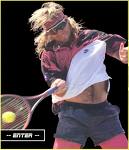
andre agassi

   Andre Agassi

   U.S. tennis great Andre Agassi has published his memoir,  “Open”.  It attracted controversy because in it he admits to using crystal meth, a banned substance, and then lying about it to tennis officials.

           Agassi was a ninth-grade dropout, with a tyrannical and abusive father who was so awful, Agassi spent much of his life trying to build an alternate family for himself.   He told his story to Pulitzer-Prize winner J.R. Moehringer, who grew up fatherless in Manhasset, NY, and found his role models in pubs. 

           Agassi spent 250 hours with Moehringer, telling his story.  He told NY Times journalist Charles McGrath, “I have a lot of capacity for pain, but I didn’t understand how hard this process would be.  I was being asked to talk about the subject I know least about:  me!”.

           What a powerful observation!   The subject that most of us know least, I believe, is indeed — ourselves.  Why?  Because the journey inward, into ourselves, is fraught with pain — and unlike Agassi, who often played through pain (as do all pro tennis players or pro athletes in general),  most of us ‘leave the court’ when in pain. 

          I believe that the hard and long journey outward, toward creative ideas, must begin with an even harder and longer journey — inward, into ourselves, to understand our deepest passions, our frailties, weaknesses, failings, and fears.    Self-awareness and self-knowledge are powerful tools, and vital ones,  if we are to persist in the bumpy road to world-changing innovation. 

          Socrates got it right.  “Know yourself,” he advised, 2,500 years ago.   

          We come to know ourselves,  usually, by looking backward at our lives and compiling ‘lessons learned’ — perhaps, too late to make effective use of that knowledge.   

          Don’t put it off.  Begin your inward journey now.  I offer this advice as someone who began it much much too late in life.     


Global Crisis Blog

Russia’s President Tells the Truth:

“Russia’s Economy is Archaic, Hollow”

By Shlomo Maital

Nov. 13/2009

     Harvard Business School Professor Chris Argyris conveys a simple, powerful message to his students and clients:  “Tell the truth!”.   Organizations that cannot face the brutal facts by definition are incapable of dealing with them.  “Tell the truth” is not a Sunday School moral lesson but a key principle of management.

      Take Russia, for instance.   It is widely assumed that former President Putin, who reinvented himself as Prime Minister, still pulls the strings.  But new President Dimitri Medvedev  (pronounced med-vye-dev,  few TV and radio broadcasters — and even George W. Bush —  take the trouble to learn to pronounce it properly)  is asserting himself and becoming a strong leader.  And he tells the truth.

      In a recent speech, he said it bluntly:  Russia’s economy is archaic and hollow.    The money pouring in from oil is highly deceptive and dangerous.  Russia can, and perhaps has,  become like an oil-rich Mideast sheikhdom,  drowning in paper but with no real economy apart from sticky black goo. 

   Here is an excerpt from an IMF report on Russia:  

GDP went from less than $1 trillion (£600bn) in 1998 to $2.1tn (£1.26tn) in 2007 but has since dropped sharply (IMF).  Exports as a portion of GDP soared from 20% in 1990 to more than 60% in 1992, but had fallen back to 33% by 2008 (World Bank).  Mineral products accounted for 70% of exports in 2008, machinery – 5% (Russian government statistics).   


Here is what Medvedev said, in his speech, according to the BBC:

   Russian President Dmitry Medvedev has called for profound reform of the economy in his annual state of the nation address.  The Soviet model no longer worked, he said, and Russia’s survival depended on rapid modernisation based on democratic institutions.  An oil and gas-based economy had to be reworked with hi-tech investments.  Inefficient state giants should be overhauled and issues of accountability and transparency addressed, he said.  “Instead of a primitive economy based on raw materials, we shall create a smart economy, producing unique knowledge, new goods and technologies, goods and technologies useful for people,” Mr Medvedev said.  “We can’t wait any longer,” Mr Medvedev said.   “We need to launch modernization of the entire industrial base. Our nation’s survival in the modern world will depend on that.”

   The BBC Moscow correspondent Richard Galpin, commented on the speech: 

    Mr Medvedev is certainly establishing more of a political identity by focusing on the modernisation theme. But there is still deep skepticism about his ability to deliver on any of the reforms he has called for because his power base is extremely limited and there will be many vested interests to overcome to bring about real change.

           Russia is for many companies a potentially rich market, but fraught with huge difficulties — corruption, bureaucracy, chaos.   We should watch Medvedev and Russia closely in the coming years.   Former IMF Deputy Director Stanley Fisher once said that the world   believed Russia, as a nuclear power, could not be allowed to collapse; yet in August 1998, it did and no-one came to the rescue.  One can imagine a failed, hollow archaic Russian economy run by Mafia — and the immense mischief it could cause to the interests of freedom and stability in the world. 

Innovation Blog

The Powerful Vision of Those Who Cannot See, The Sharp Ears Of Those Who Cannot Hear:

How Adina Tal Changed the World

By Shlomo Maital

Nov. 11/2009adina-tal
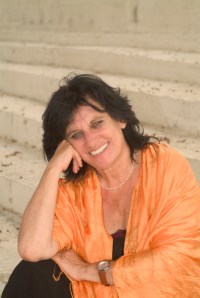
    Adina Tal


..the human spirit has no limits — except those we ourselves place upon it.”

    – Carl Jung


Part One:  Eating in the Dark

        Last night,  to celebrate my 67th birthday, my wife, son and daughter-in-law took me out to dinner.    It was, for me, an inspiring life-changing experience.   I’d like to share it in this blog, which will be longer than usual.   If you have the patience to read to the end, all 3,500 words, I believe you will find it rewarding.


         We ate at “Na La’ga-at” (Hebrew for “Please touch”),  a center in Jaffa (south of Tel Aviv)  that hosts thousands of visitors yearly to its theatre show, restaurant BlackOut, Café Kapish and special events.   

       Let me describe the meal first, at BlackOut, and then, the Center and its founder.

       We remove watches with glowing dials, cell phones and anything else that glows.  We enter a pitch-black room, guided by our waitress whom I will call “Dalya” —  walking in file, one person’s hands on the shoulders of the person ahead.  Dalya seats us.  The blackness is perfect.   Earlier,  in the light, we ordered.  I choose “surprise” –dishes chosen by the chef. 

       Dalya has no problem serving us in the dark, because she is blind.   She was born with failing vision, which later worsened.  She can see light and dark, but no more.  Dalya is indomitable.  She works at BlackOut, and is a guide at the Holon Children’s Museum, which has a “blackout” room to enable visitors to experience blindness.  She travels, has friends, and uses her computer.  She was widowed five years ago.  Despite everything, her voice has a cheerful lilt, her face is luminous and she is boundlessly optimistic.   And she knows my wife’s blind student, at Haifa Univ., whom she identifies through the name of the student’s guide dog.   Dalya, too, had a guide dog, who died of cancer some years ago, a wrenching loss for her.  Since then she has not had the heart to seek a new one, and moreover, since she travels, she would have to leave the dog with friends, perhaps burdensome for them.

       Our son Yochai mentions to Dalya that he saw a film about a blind person who climbed Everest.   Yes, Dalya says, he’s here!  He  is a waiter here!   And she invites him to our table.  Ethiopian in origin,  he talks about the extreme cold and altitude.    He runs distances, with a friend, and he too has a happy lilt to his voice.   Listening to him, I am thinking about what psychoanalyst Carl Jung once wrote, how the only thing limiting what we can do is the constraints we place on ourselves. 

     The meal is outstanding:  asparagus in tomato sauce with smoked salmon,  salmon-stuffed crepes, baked salmon with a spicy crumb topping, fresh-baked bread, Chardonnay wine, chocolate ice cream with cardamom seeds — all eaten in pitch black, using hands, fingers, fork.    I find my eyes closing, as the dark acts like a warm blanket, wrapping us, enfolding us,  relaxing the senses, focusing attention on the taste of the food (no visual cues to distract me), and the conversation too is wonderful, because again, our eyes are not  constantly shifting and distracting as we talk and listen.    I ask Dalya endless questions,  fascinated by her spirit.

      What one thing would make your life better? I ask.   Accessibility, she says.  Bus drivers should announce the number of the bus.  Often, she recounts, I get on buses and find it’s the wrong one, get off, and lose much time.  Dalya gets around with a cane, and her memory is sharp — she remembers streets, curbs, and where things are in her home.  And her hearing is intense.   The brain compensates for one missing sense, vision,  by sharpening the others.

     As we leave, Dalya gives me her email address and we agree to correspond.   Her face is radiant.   I resolve to explore more deeply who innovated this remarkable Center and restaurant.          


Part Two:  Adina Tal Changes the World

      Seven years ago, the curtain in the Na La-ga’at Center rises on “Light Is Heard in Zig Zag”,  written and directed by Adina Tal.    The actors?  Twelve deaf-blind individuals, suffering from Usher’s Syndrome, a progressive genetic disease,  who until then lived in darkness and silence.   

    In 2004 the company tours North America, gains rave reviews in Toronto, Montreal, Boston and New York, and is sold out.  Adina and the company do workshops for deaf-blind groups in Boston. 

    In 2005 rehearsals begin in a snowy village in Switzerland for a new production, “Not by Bread Alone”, with actors learning to knead Challah for Shabbat.   Actors learn to sense the vibrations of a drum, incorporated as cues in the show. 

     In September 2005 the group performs at New York City’s Lincoln Center.   A new dream emerges:  Building a center of its own for the group, in Israel.   A rundown hangar is located in Jaffa Port.   Eran Gur and a dedicated team renovate the place, assisted by the National Insurance Institute and the Ministry of Welfare, along with private donors and foundations (including the Blechs).   Deaf waiters are recruited for the Café Kapish coffee shop; blind waiters, for the BlackOut restaurant. 

    In 2008  Adina Tal is awarded  the Chesed (Grace) Award at Israel’s Knesset (Parliament).     

      Here is the story of how Adina innovated this remarkable play and center.[1]

     In late 2002, Adina Tal did not plan on founding a theatre company and a non-profit organization.  She was already running a successful theatre company, busy writing, directing, and even acting, and felt that she had reached a point in life where “I understood what life was about.”    But underneath the satisfaction with her accomplishments buzzed a small desire to do something new, and when members of a non-profit organization that had just received a grant asked her if she would do theatre workshops with a group of deaf/blind people, to her surprise she found herself saying “yes.”

     When she walked into the room she noticed that none of the dozen people there noticed her because they had no way of knowing she had entered the room, “and this was my introduction into what being deaf/blind means.” It also marked the beginning of a phenomenal story about theatre-making, human inventiveness, and the power of personal narrative. The surprise was genuine.

    “No one in my family suffers from blindness or deafness,” she said, and while she had seen her share of theatre done by disabled people, going to see it felt like “doing a good deed,” and she never felt any need to go beyond that level. Yet there she was, driving from Jerusalem to Tel Aviv for her first meeting, partly hoping that something would happen to postpone or cancel this commitment about which she was having second thoughts.   

      Not that this beginning was easy or clear.   A primary problem involved how to communicate with her participants. Each of them had an assigned interpreter/social worker, and the interpreter would talk to his or her charge by signing into that person’s hands. Shouting, gesturing, demonstrating, conversational interplay, the usual tools of a theatre director — Ms. Tal could not use them. So on that first day she formed them into a circle and simply began with physical movements — hand-waving, foot-stomping, and so on — to get them to feel their bodies in space and in relation to one another.   On the drive back to Jerusalem, the initial sense of surprise had morphed into something else: she found that she had fallen in love with them. 

      After three months, events took a funny but decisive shift. Yuri Tevordovsky, from the Soviet Union, stated categorically that everything they were doing was “stupid.”

     “Why are we doing all this pantomime?” he complained.

      Ms. Tal asked him what he wanted to do.

     “Gorky,” he replied immediately.

       And how are we going to that? she persisted.

      “That’s your problem,” Yuri shot back, “you’re the director.”

      She answered that the problem was his, too, since he was blind and deaf.

     “Okay,” he agreed, in a tone of voice that said, “Well, let’s do something together about this.”

       This “something” became Nalaga’at.   During those three months, in talking with their interpreters before, during, and after their weekly meetings, Ms. Tal got the sense that while they genuinely cared about these people, these caregivers were often cautious — perhaps too cautious — in letting them engage with the world. When Yuri spoke out, and the others concurred that they would like to do something more than what they were doing, Ms. Tal realized that they felt good in being pushed and not just accommodated. Just as any other artist would. Including herself.

     But as the idea of making theatre with them began to crystallize, she thought that while she wanted to do serious work, she didn’t want to do Shakespeare or Brecht, or have them resemble a deaf/blind version of a hearing/seeing company.   The source of their theatre would have to come from themselves, from their lives and their dreams.  

     And that was the spark that led to gathering material, writing, rehearsing, and eventually performing their signature piece known as “Light Is Heard In Zig Zag.” Along the way, Ms. Tal and the others who worked with the troupe learned and unlearned a great deal about the (dis)abilities of their actors. For one, “I had always had this fantasy,” she states, “that deaf/blind people were more sensitive to the world” and thus had greater insights and intuitions.

     But she found that, at least with sufferers of Usher’s Syndrome, who are not born deaf and/or blind but whose hearing and seeing decay over time, they were not entirely used to their own afflictions and were often still learning after many years how to cope with the world. In other words, they had their own “blind spots” just like the rest of us.  But their sensory deficits did not make them feel like victims or pawns, or even necessarily handicapped.

     One of the actors, Gadi Ouliel, has the desire to one day drive a bus. When Ms. Tal learned this, she asked everyone else to board Gadi’s bus in a way that showed something about themselves. When Yuri Tevordovsky got on, he did so with a limp. When she asked him why he did that, he said he did it so that he could get the fare-reduction given out to disabled people. Obviously he didn’t consider being deaf/blind a proper “disability”; it was so much a fact of his life that he felt he had to add something on it to make himself appear more eligible for the rebate — something even a crafty sighted/hearing person might do.  

    Another lesson, more pertinent to the making of theatre, came from Ms. Tal’s realization that they lack an essential actorly skill: mimicry.  In one exercise, she had each person take an actual grape and eat it. Then, using that sense memory, she wanted them to eat a pretend grape — and she was astonished to see one dozen different ways of eating a grape. Since none of them could see each other, they also could not copy each other — so each had to invent wholesale his or her singular grape-eating style. This excited the director in her because it made the act of acting fresh and innovative.

     Unlike with seeing/hearing actors, who can rely upon past gesture-memories (and thus become lazy or derivative), Ms. Tal saw that they had to “re-invent the world all the time,” and in re-inventing it, see it anew.

     “There is an energy,” she explains, “that I have never felt with any professional actor. I was discovering a whole new world.”   She also realized something new about noise, that is, the noise that usually accompanies any kind of theatrical process. “I’m sensitive to noise,” she confesses, “and even though I myself always talk loudly, my concentration can get thrown off if there is too much of it in the room.” In working with the company members, noise was not obviously not a problem since communication had to be by touch. Thus, everybody could become much more concentrated on the work at hand, leading to a level of focus and deliberateness rarely achieved in more “normal” rehearsals.   But perhaps the greatest challenge came with trying to find a way to establish with deaf/blind actors what is taken for granted in more usual theatrical circumstances: the umbilical relationship between actors and audience.

     “Theatre,” she explains, “is about creating a moment of meeting between actors and audience.” But with deaf/blind people, “their sense of stage-presence is completely different.” Until there is a touch of some kind — actor to actor or interpreter to actor — they exist in something of a limbo because they do not have access to any visual or auditory cues that place them in time and space. Only touch puts them in the present moment. The challenge, then, was to create some form of virtual touch that linked the present momentness of the actors on stage with the being-in-the-present-moment of the audience.   

     The problem solved itself in an unexpected and unforced way. For the actors, the more they worked and performed, the more able they were able to build a sense of audience responses (which Ms. Tal labels as nothing short of “magical”). After performances, they would tell her that they felt that the audience that night was “dry” or “non-responsive” or “warm.” She didn’t know how they knew this, but she knew their assessments usually hit the mark.   In turn, the force of their confidence on stage spilled into the audience, which prompted the audience to react to the stage-action differently. Normally, the audience looking through the “fourth wall” of a play is an eavesdropper, a voyeur, at something of a distance. But watching and responding to a troupe of deaf/blind actors who cannot, in turn, respond to the audience’s responding to them, forces the audience to rely less on the “outer” and to move more inside themselves, and this inward journey, in some “primary” way (to use Ms. Tal’s word), blends with the actors’ energies coming off the stage to create that umbilical so unique and essential to the act of theatre.

       “I am not a mystical person,” she avers, “but I also can’t deny what I’ve seen — it is magical.”   (And another small but important discovery about applause.  Ms. Tal realized that the actors would have no way to know when the audience applauded them. So she devised a way of having the interpreters taps the actors’ knees to indicate when the audience was clapping, and each actor would pass this tap down the line, hand to knee, hand to knee, until everyone got the message.)   It took about a year to create the first performance of “Light Is Heard In Zig Zag,” which puts the actors on stage with their interpreters as guides.

       Since then the production has changed a great deal without losing its core focus on the personal dreams of the actors. And these dreams, as Ms. Tal points out, are no different than the dreams “normal” people have about what they would like to accomplish in their lives.

  • · There is Gadi Ouliel’s desire to drive a bus.  
  • ·  Yuri Tevordovsky “dreams that one morning he will wake up and take a look at the sky, and if the sky is blue, he will go fishing.”
  • ·  Bat Sheva Ravenseri wants to become a famous actress and singer,
  • ·  Shoshana Segal would like someone to make her a birthday party,
  • ·  Zipora Malks wants to be a chief-of-staff in the army (“a particularly Israeli dream,” Ms. Tal notes dryly),
  • ·   Marc Yarosky dreams of walking into a local pub, ordering a drink, “and being treated like a king.”   

     After each show, actors and audience have a chance to mingle and talk, and on a promotional DVD about the show, an audience member, during one of these post-show meetings, states that “I’m bewildered by the capabilities, how far humans can reach.” And this sentiment of wonder and respect is echoed without exception by the audience members. As Ms. Tal says, “A lot of people are coming to see and hear us and want to be part of the group because they want to be near these people who had the courage to get up and do something.”   But current realities press in on these moments of revelation and acceptance.

     “We are working on a new production,” she points out, “that will use drumming extensively.” Drums, she has found, have been an excellent way to build communication in the group because the actors respond well to the vibrations as cues for action. And this new production will risk more than “Light Is Heard In Zig Zag” because there will be no interpreters on the stage with the actors, as there are now. “Only drums,” she says, “and cooking.” During the performance, the actors will prepare and bake bread; the show’s length will be the time it takes to complete that process. And, of course, at the end of the show, everyone will break bread with everyone else.   (THIS NEW PRODUCTION WAS TO BECOME ‘NOT BY BREAD ALONE’ — HIGHLY PRAISED!)


Part Three.  “Light is Heard in Zig Zag”

       A review by Michael Bettencourt of “Light is Heard in Zig Zag” , performed on September 15, 2005, at Lincoln Center’s Frederick P. Rose Hall:   

    The stage in darkness. A double row of chairs. A voice — male, reverberant — speaks to the audience.  Stage right a young man steps into the light, and his hands carve the air with signing. The stage brightens, and from stage left, in double single-file, the dozen actors enter, the one behind with a hand on the left shoulder of the one in front, guided in by the interpreters. They take their chairs. The performance begins.

     It is a great performance, by turns mad-cap and touching, always committed and clean and direct. Each actor gets to tell his or her story — simple stories about simple wants and desires — and the staging of the stories, like the actors themselves, uses broad strokes to convey meaning: balloons, bubbles, blond wigs, blue cloth for the surface of a lake, over-sized foam-board cut-outs of flower bouquets, a pair of drums, and, at the end of the show, a sing-along. All of this is good the way good theatre is good: vaudevillian, unmawkish, inviting, unheady, clued-in — the jadedness cleansed away, critical distance cracked. 

     The most powerful pieces, to me at least, came when, at various times, one of the actors, stepping forward on the stage, the person signing to his or her left, the interpreter to the right at a microphone voicing a translation for us, “spoke” directly about being blind and deaf in a world not built for the sightless and soundless. We “able-bodied” in the audience, in an interstice between the rush-rush of our important day and how we have to get home after the show lets out to prepare for the next important day, are allowed to enter the space of “the other” and both forget about ourselves and remember ourselves, that is, drop the armor of ego and recover the power of a primary human-to-human connection by way of a shared frailty of being. We are all alike, like it or not, when it comes down to the struggle to make it all make sense.

    This performance also has a second show just as spectacular as the first: when the actors and audience mingle afterwards. The lobby is jam-packed. The interpreters, umbilicaled to their actors, sign furiously into the actors’ hands as person after person comes up to offer praise and congratulations. Many in the crowd sign themselves, so while the usual post-show verbal buzz fills the air, pockets of gesturing humans create a kind of post-show physical buzz as well, the audience member singing to the interpreter who signs to the actor who signs back to the interpreter who passes it on to the audience member, all of this speeding along the way flocks of startled starlings wheel and spin through a cloudless sky.

    We should support theatre like this — not because it’s “feel-good” or because we want to soothe ourselves as “do-gooders,” but because it is good theatre, that is, theatre that not only satisfies our aesthetic demands for craft and pleasure but also is enmeshed in, and drawing sustainable inspiration from, the world that faces it. Nalaga’at is embodied theatre, theatre from the body — not just from the bodies of the actors and their shepherding interpreters but from our bodies as well, a call to us to bind ourselves each to each, since that is the only salvation we have as humans, and the only salvation worth having.


[1] Taken from  an interview by American  playwright Michael Bettencourt,   www.m-bettencourt.com

Global Crisis Blog

Can We Trust the Intuition of Experts?

By Shlomo Maital

Nov. 10/2009


    An article in the latest American Psychologist, by Daniel Kahneman and Gary Klein, addresses the key issue:  When can we trust the intuitive judgment of experts? [1]

    Kahneman is identified with the HB (heuristic bias) approach.  His work, some of it done with the late Amos Tversky, shows how flawed our judgment is and how non-rational our decisions often are.[2]  Kahneman won the Nobel Prize in Economics for his research.

    Klein is identified with the NDM (naturalistic decision making) approach, which chronicles often-amazing successes of intuitive judgment.  The article is an interesting dialogue between the two approaches, ending in “a failure to disagree”, i.e. broad agreement.

     Here is what the two scholars agree upon:

  • · An environment of high validity is a necessary condition for the development of skilled intuitions. Other necessary conditions include adequate opportunities for learning the environment (prolonged practice and feedback that is both rapid and unequivocal).If an environment provides valid cues and good feedback, skill and expert intuition will eventually develop in individuals of sufficient talent.

  Although true skill cannot develop in irregular or unpredictable environments, individuals will sometimes make judgments and decisions that are successful by chance. These “lucky” individuals will be susceptible to an illusion of skill and to overconfidence.   The financial industry is a rich source of examples.

    Let me translate.   If the ‘environment’ of decision-making is stable and predictable (i.e. that of a chess game),  experts develop startlingly accurate intuitive judgment.  Chess grandmasters, for instance, can choose the best move quickly in complex situations when amateurs fail to even consider that move.  But if the environment is unstable and unpredictable,  expert intuition is flawed.  True, such judgment will be right part of the time.  But this is solely through chance.   Those who ‘hit it’ by chance become overconfident, take excessive risk — and destroy their own businesses and the capital of others. 

      If “the financial industry is a rich source of examples” of flawed intuition,  then those enormous bonuses the industry is again paying itself are not justified.  Nor can we put our faith in investment advisors with superior rates of return over the past year.  Probably, an accident.   We can, however, better understand Warren Buffett’s surprisingly accurate intuition.  It is based on investing from the outset ONLY in stable environments, i.e. basic products like food, drink, machine tools or railroads, and holding on to the equities for decades.  

      Kahneman and Tversky once investigated the phenomenon of the ‘hot hand’ in basketball (streaks of baskets, without misses, by star players) and showed statistically that there was no such thing — it was simply random.  (Toss enough coins, and you will eventually get a dozen straight ‘heads’).   Why, then, do we still believe in ‘hot hands’ among financial advisors?   And why have they returned to paying themselves obscene bonuses? And why do we the people agree to it?   

       And finally, why in the world would anyone believe, in a world of overconfidence in flawed intuition in the financial services industry,  that the 2007-9 global crisis will not recur? 


[1] “Conditions for Intuitive Expertise: A Failure to Disagree”,  American Psychologist, Sept. 2009.

[2] See S. Maital, “Daniel Kahneman: on redefining rationality”, J. of Socioeconomics, 2004.

      berlin wall dominos              Global Crisis Blog

Fall of the Wall:  20 Years Later

By Shlomo Maital


  As I write this, I am watching German Chancellor Angela Merkel on CNN, in a sea of Germans, speaking informally about the extraordinary events two decades ago — events she personally witnessed and took part in, when she, then a young scientist crossed from East to West.   Merkel chose not to create a formal diplomatic event with stuffy speeches, but simply stood elbow-to-elbow with thousands of Germans, some of whom had crossed with her on Nov. 9, 1989,  after symbolically crossing from East to West again, as she did in 1989.   Merkel thanked Mikhail Gorbachev, who was with her, for his policies that made the Fall of the Wall possible and eventually, on Dec. 25, 1991, led to the dissolution of the Soviet Union.  When Poland’s Solidarity movement won the June 4, 1989, election,  the Russian ambassador to Poland called the Kremlin in panic and asked,  what shall I do?   what shall we do?   Gorbachev had a simple answer.  Do nothing.  Let the election stand.   It was in part Gorbachev’s non-intervention policy that enabled the Wall to fall. 

     The Berlin Wall was erected in June 1961, after some 3.5 million Germans fled East Germany to the West.   The Wall had concrete walls, barbed wire, guard towers and a death strip that had anti-vehicle trenches, spikes and other types of defense.  Between 1961 and 1989 some 5,000 people tried to escape over the Wall;  an estimated 150 people died.

     Those most surprised at the fall of the Wall were the Germans themselves.  Most of them who witnessed the dramatic events of Nov. 9, 1989, said they never believed the monolithic German Democratic Republic would crumble so rapidly.  

     Today we know that British Prime Minister Margaret Thatcher and French Prime Minister Francois Mitterand were both worried and displeased by the fall of the Wall,  understanding that it would bring German reunification and create Europe’s largest and most powerful economy.    Indeed, unification came quickly.  On Oct. 30, 1990,   the new reunited Germany was announced.  West  Germany was in such a rush to implement the unification, that it offered to buy East German marks at a price of one such mark for a West German mark — at a time when the buying power was about eight to one.   The resulting flood of marks into the system caused inflation, led the Bundesbank to raise interest rates —  and ultimately, caused Britain to leave the European Monetary System, as the British wanted to free themselves from the straitjacket of high European interest rates and float the pound.  (On Sept. 16, 1992, George Soros’ massive sales of pounds caused Britain to leave the European Exchange Rate Mechanism).    So ironically, the fall of the Wall may have ultimately been responsible for keeping Britain out of the euro system.

     These events, from 1989 through 1992 and beyond, show how appropriate is the initiative taken by German students  to visually demonstrate the impact of the fall of the Wall.  The students created 1,000 styrofoam dominos, each three meters high, and placed them along the path of those who fled from East to West.   As one domino toppled another, we saw clearly how the Fall of the Wall led to a chain of remarkable events that forever changed history.  

    Congratulations to those innovative German students!


Innovation Blog

Poetry & Innovation: Mommy, Daddy, Tell Me a Story!

By Shlomo Maital

Nov. 4/2009

  Do you want to build a powerful business innovation? I ask my students.

  If you do — tell me a story.  Build a powerful narrative that has real people in it, a plot, conflict, a story line, and above all, a happy end.   These are all elements of  every great children’s book, stories we all grew up on,   Good Night, Moon,    Where the Wild Things Are,  and so on.  Children make meaning out of the world through stories.  So do we adults, it seems.   War and Peace, Anna Karenina — great novels are all great stories.   

     So — I ask my students to write a great narrative, rather than a dull-as-dust business plan with a huge spreadsheet.  Tell me a story.  Tell me how you will build a prototype, sell to one customer, scale up — and change the world.   And make sure there is a vivid photographic happy end.

    Who is the main client for such a story?  Investors?  VC’s?  No.  The main is client  is YOU yourself!    Does your story excite you, does it reflect your deepest passions? If so, you have a business idea with potential to succeed. If not — you’re wasting your time.  If you cannot energize yourself, you will not energize others that you will need on your team, in order to succeed. 

    Great stories create meaning.  They are memorable.  They inspire.  No-one ever joined a business venture because of an inspiring spreadsheet.  They do join because of a powerful change-the-world visionary narrative.

    To tell the absolute truth — many of my students do not ‘get it’.  They have been polluted by follow-the-rules here-is-how-to-do-it MBA course formulas for writing conventional business plans.  Do it this way, students learn in their MBA studies.  Is it not ironic that we teach entrepreneurship and innovation, by instructing our students to avoid innovation (in business plans) like the plague?

    I find badly-needed moral support in last week’s New York Times column by Thomas Friedman, titled “More Poetry Please”.   Here is what Friedman says:

      “President Obama has not tied all his programs into a single narrative that shows the links [among all his ideas and initiatives].  …such a narrative would…evoke the kind of popular excitement that got him elected.   Without it, the President’s eloquence is lost in a thicket of technocratic details.  OBAMA NEEDS TO ENERGIZE THE PROSE  of his Presidency by recapturing the poetry of his campaign!”

     [Yesterday’s (Tuesday) elections in the US prove the point.  The Democrats lost two key races for Governor (New Jersey and Virginia), despite Obama’s intervention there.]

     Precisely!  Every innovator, including Mr. “Yes, we can”,  must energize the prose of his or her idea (the feet-on-the-ground business details)  with head-in-the-clouds narrative poetry, to excite himself or herself and to energize the team, the investors, and even the clients.

    But innovators, beware!  Building such a narrative is extraordinarily difficult.   Entrepreneurs are not supposed to be poets!   Many innovators are engineers;  engineers are trained to understand the Second Law of Thermodynamics, not the First Law of Rhetoric and Narrative. 

     Here is a suggestion.  Do you have a business idea?   Tell it to a six-year-old.  Make it into a story.  If you can hold their interest, and elicit questions,  maybe you have a good business idea.  If you cannot,  if you cannot respond to “Mommy, Daddy, tell me a story”,  with a good one —  go back to the drawing board.  


Innovation Blog

How to Say “I Love You”  Without Saying “I Love You”!

By Shlomo Maital

Nov. 4/2009

      A BBC World Service program on the songs of Irving Berlin and  George and Ira Gershwin, American Jewish songwriters and musicians who lived in the 1930’s,  reveals a key innovation principle:

     Often, thinking IN the box [i.e. within difficult binding constraints or limitations] spurs enormous creativity.

     In the 1930’s composer George Gershwin (Rhapsody in Blue, An American in Paris] and his brother Ira, who wrote the words (lyrics), wrote wonderful love songs.  They did so, however, without using the words “I love you”, because those words were overused and tired.

     How do you say I love You without saying I Love You?  Wow, here are two great examples:  Gershwin’s Let’s Call the Whole Thing Off, and Irving Berlin’s  How Deep is the Ocean?

Let’s Call the Whole Thing Off

This song was written for the 1937 movie musical Shall We Dance?  By Ira and George Gershwin.  It was sung by Fred Astaire and Ginger Rogers, who did an innovative dance while singing it,  on …. roller skates!   It is pure magic!   Compare these lyrics with today’s rap!

Things have come to a pretty pass
Our romance is growing flat,
For you like this and the other
While I go for this and that,
Goodness knows what the end will be
Oh I don’t know where I’m at
It looks as if we two will never be one
Something must be done:
You say either and I say either,
You say neither and I say neither
Either, either
Neither, neither
Let’s call the whole thing off.

You like potato and I like potahto
You like tomato and I like tomahto
Potato, potahto,
Tomato, tomahto.
Let’s call the whole thing of
But oh, if we call the whole thing off
Then we must part
and oh, if we ever part, then that might break my heart

So if you like pyjamas
and I like pyjahmas,
I’ll wear pyjamas
and give up pyjahmas
for we know we need each other so
we better call the whole thing off
let’s call the whole thing off.

You say laughter and I say larfter
You say after and I say arfter
Laughter, larfter
after arfter
Let’s call the whole thing off,
You like vanilla and I say vanella
you saspiralla, and I saspirella
vanilla vanella
chocolate strawberry
let’s call the whole thing of
but oh if we call the whole thing off
then we must part
and oh, if we ever part,
then that might break my heart

So if you go for oysters
and I go for ersters
I’ll order oysters
and cancel the ersters
for we know we need each other
we better call the calling off off,
let’s call the whole thing off.

I say father, and you say pater,
I saw mother and you say mater
Pater, mater
Uncle, auntie
let’s call the whole thing off.

I like bananas and you like banahnahs
I say Havana and I get Havahnah
Bananas, banahnahs
Havana, Havahnah
Go your way, I’ll go mine

So if I go for scallops
and you go for lobsters,
So all right no contest
we’ll order lobseter
For we know we need each other
we better call the calling off off,
let’s call the whole thing off.


How Deep is the Ocean?

  Irving Berlin’s 1936 song, to which he wrote both words and music, conveys the deepest feelings of love , using I love you only twice, but as a question….


How can I tell you what is in my heart?
How can I measure each and every part?
How can I tell you how much I love you?
How can I measure just how much I do?

How much do I love you?
I’ll tell you no lie
How deep is the ocean?
How high is the sky?

How many times a day do I think of you?
How many roses are sprinkled with dew?

How far would I travel
To be where you are?
How far is the journey
From here to a star?

And if I ever lost you
How much would I cry?
How deep is the ocean?
How high is the sky?


 Global Crisis Blog

Three Global Scenarios: Take Your Pick, Share Your Wisdom

By Shlomo Maital

Nov. 3/2009

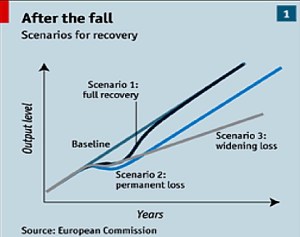
      In The Economist’s Oct. 1 issue,  a special report on The World Economy has an excellent and insightful lead article.   The question addressed: 

     *** Will the world economy recoup its huge losses from the 2007-9 global crisis, catch up to the pre-crisis trajectory, and return to the original baseline growth (a large but one-time loss)?  This is Scenario 1. (See Chart).    (Prof. Milton Friedman believes this has been the case in every American recession, for instance).

     ***   Will the world incur a permanent loss in output, returning to the original global growth rate but NOT recouping fully the losses in wealth and output. This is Scenario 2.

    ***   Will the world incur a permanent and growing loss in output, with global output growth emerging SLOWER than pre-crisis and never regaining its original rate.  This is Scenario 3.

      It makes a huge difference for every single manager, business, family, government — everyone! — which of these scenarios will actually occur.  If forewarned is forearmed, we all need to be forewarned. But as usual, our economists disagree and are of little help.

   If you have insights into which of these scenarios you believe is most likely, and why, please share them with us and submit a comment.

 Picture1


Blog entries written by Prof. Shlomo Maital

Shlomo Maital

Pages