Breakthroughs often occur, both in research and product innovation, when innovative pioneers succeed in combining two disciplines, or technologies, not previously integrated. For example: The Japanese engineer who combined digital photography with cell phones. Or, in the early 1970s, when Israeli scholars Amos Tversky (z’l) and Daniel Kahneman brought models and methods of psychology to economics. 

A new breakthrough is occurring, as neuroscience (which uses the imaging of brain activity to infer details about how the brain works) combines with economics and decision science, to create “neuro-economics*.”     

Innovators can learn much from neuroeconomics. Here is one small example.

Neuroscientists have found that there is a specialized area in the brain (possibly, in the prefrontal area known as Brodman 10) where ‘theory of mind’ (i.e. knowing how another person thinks, and how another person thinks about you) is processed. Neuroscientists believe that some people have this ability innately, genetically. Their Brodman 10 brain centers become very active (as shown by the color red on function MRI images) when, for instance, some subjects play strategic games, requiring them to assess other players’ moves. For other people, the same brain center remains cold, color blue. 

Successful innovation management requires innovators to predict how competitors will react when our innovation is introduced to the marketplace, and to prepare strategic responses. What are our competitors likely to do? they ask. This is the business context of ‘theory of mind’ and Brodman 10.

Innovators should ask themselves:
• Am I good at accurately anticipating the responses of other people? Or am I very poor at this? If poor, can I strengthen this skill through practice?
• If I am poor at it – How will I find others, and make them part of my team, who are good at it?
You can successfully complete 9 of the 10 innovation stages, but fail at the 10th (market launch), if you lack “theory of mind”. Analyze yourself – and prepare in advance. 
______________________________________________

*Colin Camerer, George Loewenstein & Drazen Prelec, “Neuroeconomics: How neuroscience can inform economics”, in: S. Maital, ed., Recent Advances in Behavioral Economics (Edward Elgar: Cheltenham, UK, 2007). 
**Special thanks to Ben Gilad, author of the forthcoming book Business War Games, for providing the insight described in this blog. 
University of Chicago economist Gary Becker won the Nobel Prize for economics in 1992, in part for his remarkable insights into the economics of the family. Becker showed how families are small production units in which family members engage in trading services, for mutual gain*. 
   
But if families are production units, they can also be innovative units. 

In your family, at the dinner table, raise these questions:

• What changes could we make, in the way our family organizes its life, that would make things better for everyone?
• What is the one thing that most bothers each family member, about how the family is organized and operated?
• What are the core competencies of each family member, and how can these be better utilized for the benefit and gain of all?
• What new things can be done, as a family, that will enrich our lives?
• How can our family share its many blessings, with other people, in ways that enrich the family’s life as well as the lives of others?

A family, someone once said, is the ‘we’ of me. If there is creativity in ‘me’, why not spread it to ‘we’? And indeed, is Tolstoy right, that ‘happy families are all alike’**? Or are happy families all different, because they find unique innovative ways to enrich their lives and broaden their horizons? 

__________________________________
*Gary Becker. The Economic Approach to Human Behavior. Paperback: 320 pages. University Of Chicago Press (September 15, 1978.
**Anna Karenina.

What the New York Times called “one of the greatest tennis matches ever played” between Rafael Nadal and Roger Federer ended last night, with Nadal winning a five-hour match (in near darkness)  6-4, 6-4, 6-7 (5), 6-7 (8), 9-7. It was the longest singles final in Wimbledon history, and without doubt the best. Nadal took the first two sets. Federer fought back doggedly to win the next two, in tie-breakers. The fifth and deciding set was tied 6-6. Normally there would be another tie-breaker. But not at Wimbledon, where strict rules prevail (players without exception must wear all-white clothing, for instance). There, the final set is played out, even in doubles, until one of the players leads by two sets – even if it means playing to 17-15. 

Picture: Rafael Nadal

What can innovators learn from this amazing final – apart from courage, stamina, persistence, will to win, character and fierce determination, shown by both players? 

On Israel’s Channel 55, the commentary (in Hebrew) was awful. Both commentators kept saying, “lo ye-amen” (unbelievable) or simply Wow! But one commentator did note a key fact.  

“Nadal’s advantage was not only his physical athletic ability,” he said. “He has mental strength. He does not think about the past. He does not think about the future. He is totally focused in the point he is playing NOW. This is a huge advantage.”

For instance, the umpire chastised Nadal for taking too long with his service. This might have rattled many players. But Nadal remained totally focused. He had a game strategy, he stuck to it, and did not change it even when he lost two sets. He was completely immersed in the present.

In his best-selling book The Power of Now  (Thomson Press, Delhi, India, 2001), Eckhart Tolle notes, “most people are always trying to escape from the present moment and are seeing some kind of salvation in the future.”   

This is true of innovators. They are fueled by dreams of some outstandingly successful future. This of course is important; an energizing vision is crucial. But it is far more important, after the vision is established, to shelve it and focus intensely on the present – on what is required at the present moment in order to implement the future vision. Forget past failures. Forget future dreams. Focus on the practical things you need to do today, now, to succeed. 

That is what Nadal did. And because he did it so well, it helped him fulfill his childhood dream – playing at Wimbledon, and ultimately, winning at Wimbledon. 

Can innovators help get the stalled Mideast peace negotiations back on track?

For certain!

There are two types of innovation: radical ‘blue oceans’, that create breakthrough innovations, and incremental ‘red oceans’, that create significant incremental improvements to existing products.

At present, Israeli and Palestinian teams are negotiating a ‘blue oceans’ radical final settlement agreement. There is little hope it will be achieved, despite visits by U.S. Secretary of State Condoleeza Rice and even President Bush himself. The gap between the two sides is too large, and the degree of trust between the two is very low. Moreover, leaders of both sides, Ehud Olmert and  Mahmoud Abbas, appear to have little support from their own people.  

Is there another way?

In our forthcoming book*, my friend and co-author Gen. (ret.) Robert Dilworth and I propose what we call IRDI’s (‘immediately reciprocal diplomatic initiatives’). These are small incremental measures, in which one side ‘trades’ a trust-building initiative (e.g. removing a checkpoint barrier) in return for a quid pro quo (e.g. removal of a hateful message from a Grade One textbook). Over time, a series of these IRDI’s can build trust and build peacemaking momentum. 

I believe this approach to peacemaking is analogous to Nokia’s Finnish R&D strategy. Nokia invests substantial sums to develop incremental improvements to its existing products, eschewing, in general, blue ocean breakthroughs. As a result Nokia often misses technological ‘leaps’ – but quickly regains market leadership by its skill in focused incremental innovation. We see this happening now as Nokia takes on Apple’s iPod. Finland as a whole follows the Nokia strategy in its national R&D policy.

Final settlement? We tried that at Madrid, Oslo and Geneva. Incremental steps toward a settlement? Isn’t it worth a try? We have little to lose.  


*Robert L. Dilworth and Shlomo Maital. Fogs of War and Peace: A Midstream Analysis of World War III. Praeger Security (with A-USA Books), forthcoming: Washington, DC. October 2008.


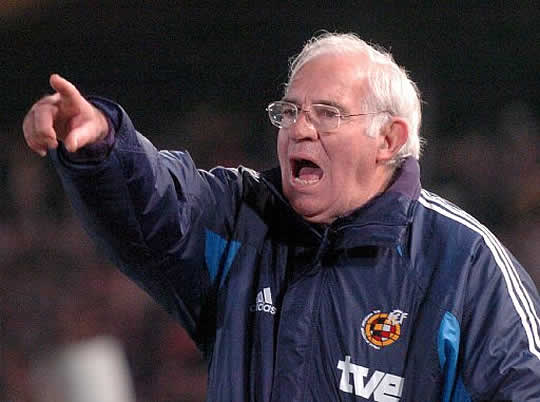
Picture: Luis Aragones,
manager of Spain’s European champion football team

Last Sunday Spain’s talented speedy football team won the European championship, with a 1-0 victory over Germany. 

What can innovators learn from Spain’s victory, its first European championship in 44 years?

  • In entrepreneurship, as in football,  the winning formula is: Chose talented motivated ‘players’, give them a strong vision, align them all with the vision – and then turn them loose to give full expression to their creativity. Aragones, Spain’s 70-year-old manager (the oldest manager in history to win the European championship), calls himself ‘manager’ not coach – for a reason. His style is to pick great players, tell them what he wants – and then let them play with full creativity and freedom. This does not mean that Aragones is passive – he ran up and down the touch line for the entire game, exhorting his players. But – he does not over-manage, as do many football managers. As Jim Collins says: Get the right people on the bus. Tell the driver where to go.  And then – let them roll… Aragones wanted fast, attacking possession football, picked the players who could implement it – and let them fulfill their creativity.
  • Aragones instilled in his players the unshakeable belief that they could indeed win the championship.  Even when Germany opened the championship final strongly, and Spain looked bad, this rock-solid belief never wavered. Eventually, Spain’s foot-to-foot passing tired Germany – and Spain triumphed.  Winning entrepreneurs, too, never cease believing that they will ultimately triumph, through hardship and defeat.  
  • In entrepreneurship, as in football, speed (not defense) wins. Football fans for years have suffered from boring dull teams from Italy, and Germany as well, who build their victories on solid defensive walls and mediocre attack. Italy, especially (the national team, as well as Inter, and AC Milan) has chosen this route. Along comes Euro 2008,  bringing a speed-of-light Russian team with players able to run for 120 minutes (90 minutes plus a 30-minute overtime), who sprint as fast at the 120th minute as they do in the first minute,  and suddenly attacking football and speed are back. Russian surprisingly made it to the semi-final round, losing to Spain.

Aragone chose speedy players, taught them ‘possession football’ (precision passing) – and turned them loose. In entrepreneurship, too, speed is crucial. Do you have a great idea? I will bet any sum that someone in the world has had the same idea and is working on it, too. Who will win? Usually, though not always, the fastest – the first to market and to patent.  

Spain’s talented speedy young striker Fernando Torres raced German defender Phillip Lahm (his names means “lame” in German, but he is far from that) to the ball, started a yard behind him, managed to overtake him, and flipped the ball over the desperate keeper to score Spain’s only goal. Entrepreneurs, too, score ‘wins’ in this way. By instilling urgency in their team, they get to market fast, ahead of their slower competitors. 

  • As I am about to turn 66, I deeply relate to the grey-haired Aragones’ victory. I felt it was me the players were tossing into the air, not just Aragones. Aragones’ players say they related to their manager as to a father. How many players love their managers, as a father? Virtually none – because the manager himself is a media star, often, and competes with his players for attention and fame.  (Ever heard of Juan Maurinho?) Entrepreneurs, like Aragones, who lead with strength, but above all with humility, will create the motivation needed for continued success. Share the credit fairly with your ‘players’ – and watch them win championships.

Know the old saying, nature abhors a vacuum? 

Well, when it comes to creativity and ideas, it is not true. Nature truly loves a vacuum. Innovators create lots of them. Here is what I mean.

This morning, on my way to the bus stop, I noticed that my bus was already at the stop. As an addicted jogger, I chose to sprint to catch the bus. I ran about 30 yards and made it in time. But the driver refused to open the door and pulled out into traffic. Of course I was angry. In my mind, I began writing letters to the bus company, to the Ministry of Transportation and to the whole world.

And then, in a calmer moment, I had an insight. Wait one second, Maital. You are now on your way to jog along the beach. This is a time when ideas flood into your head. When you jog, there is a lovely vacuum  of peace and serenity in your mind. When that vacuum is created, all kinds of great ideas flood into your head. Most people have experienced this – in hikes, and in the shower in the morning. 

But when the vacuum is destroyed by negative thoughts – how to get even with the bus company – the creativity is ruined. I could easily have allowed this to happen this morning during my run. But at the bus stop, I made an instant decision simply to forget it – and to let the idea vacuum happen. 

It worked. The Evidence? This blog. 

My advice is to treat the space in your mind – what psychologists call cognitive resources – as your scarcest most valuable resource, even more than your financial resources. Treasure it, protect it, and above all, never never waste it. Simply, cancel all thinking that will not lead to positive results. 

This takes practice. You need to work at managing your schedule, to create opportunities for creativity vacuums to happen. And you need to practice focusing thoughts on constructive positive areas rather than negative ones. It is not easy. 

But once you master this, the results will surprise you. Try it!

David Wendorsky works for 3M in its labs. He also goes out to universities to speak to students about innovation.

On one of his visits, he noticed that students were reading books and making passages with highlight pens.  He also noticed that some of them were flagging pages with Post-It notes. 

Wendorsky put 2 and 2 together – and came up with 3M’s latest hit, a highlight pen that has little Post-It flag notes attached to it. By combining the highlight pen with the Post-It sticky notes, it is far easier both to highlight and to flag.   

This is an example of an innovation ‘formula’ known as X+Y. Take two existing products. Combine them, in a manner that creates new value.  

In my book Innovation Management, I describe the X+Y innovation of Lucky Goldstar (the early incarnation of today’s Korean giant LG). A brilliant engineer thought of combining a TV with a VCR, in the same box, using a single tuner, and called in a Viewmax.  It was a hit.  Stores bought it for counter-top displays. Students bought it for dorm rooms.  

Another example is the cell phone with digital camera built in. 

If you can add, you can innovate. Try this exercise: write a list of products you use daily, on the left hand side of the page. Now write the same list on the left hand side. Randomly, join products. See if you come up with something that makes sense and creates value.

Susan and Donald Sutherland, who lived in Tempe Arizona with their five daughters, thought they might like to start an ice cream business. They talked to a friend, bought some equipment – and 20 years later, Cold Stone Creamery is a $ 500 m. empire with 1,400 franchised stores across the United States.  

What is their secret?

They asked, as Harvard Business School professor Ted Levitt counseled, what business are we in? Ice cream?  No. Fun. Entertainment. Cold Stone personnel let customers design their own ice cream, choosing the ‘base’ ice cream flavor (French vanilla, pumpkin) and combining it with a huge variety of things like raspberries, M&M’s, Oreo cookies, etc. The ice cream is mixed with the flavorings on a cold granite slab. No two servings are the same. 

When a customer gives a small tip to the Cold Stone personnel, they get a mini-performance: A spirited song and dance by the ice cream servers. According to Wikipedia: “In the spirit of joviality, and to encourage customers to give tips, Cold Stone instructs employees to sing a Cold Stone song, usually to the tune of recognizable melodies such as “Take Me Out to the Ball Game” or “Bingo,” when a customer places money in the tip jar. Lyrics include short, catchy phrases, such as, “This is our Cold Stone song, it isn’t very long.””

Like other franchises, Cold Stone strives to provide similar service at every store by supplying instructional material and training videos to franchise owners. The founders have intuitively applied the principles outlined by B. Joseph Pine in his book The Experience Economy. Cold Stone customers get, with their ice cream, a memorable experience. Chances are, they come back for more.

The Sutherland’s five daughters all grew up in the business. When the Sutherlands began to franchise it, they were opposed – they liked the “Mom and Pop” business they grew up in. But recently on the Oprah Show, they seemed to be enjoying the success and attention the booming franchise generates. 

Cold Stone Creamery is now the sixth-best-selling brand of ice cream in the U.S. and now operates stores in Japan, Taiwan, South Korea, Puerto Rico, Indonesia, Guam, China, and Mexico. The company was also named the 11th fastest-growing franchise by Entrepreneur Magazine in January 2006.

Not everything is rosy. Richard Gibson recently wrote an article about Cold Stone in The Wall Street Journal, about how not to run a growing franchise.

It is a sad fact: Many startups and established companies run into trouble, when their innovative development projects go awry, exceed their budgets, miss their time targets and fail to achieve their goals.

Why? Most project managers are well-trained, experienced, diligent and hard-working. What goes wrong?

Former TIM Board Member Prof. Alex Laufer, past Dean of Technion’s Civil Engineering Faculty, has a theory.  The classical discipline of Project Management assumes a world of certainty and provides finely-detailed planning tools, like Gant charts, that specify every detail. Most project managers use those tools in one form or another.

But the real world is chaotic, uncertain and stochastic in nature. Planning tools tend to be static, while projects they plan are highly dynamic. The conventional wisdom is misleading and even harmful. A dynamic project requires a dynamic approach to planning. Successful project managers are flexible, adaptive and quick to improvise solutions to unexpected problems that arise. 

This brings to mind the early days of rockets and guided missiles. A branch of mathematics known as optimal control was used, to plot the optimal trajectory. But it was quickly discovered that rockets and missiles are constantly buffeted by unexpected forces – winds, humidity, temperature. You cannot plan the rocket’s trajectory just once and expect it to reach its planned destination. You have to recalculate the trajectory every millisecond. This is known as adaptive control.   

In project management, a set-in-concrete project plan is often built. But almost invariably it quickly becomes irrelevant. You need an adaptive dynamic approach in order for your project ‘rocket’ to hit its target.
I recently had the privilege of evaluating a Ph.D. dissertation written by Laufer’s student, Zvi Zilick. Zilick has some grey hair and has long experience in managing projects. His thesis was unusual – it comprised 10 detailed case studies of successful dynamic project management, including a highly unusual story of an emergency heart operation to repair damaged heart valves. I wish every project manager could read these fine case studies. They combine both Zvi’s experience and the insightful experience of those whose stories he recounts. 

In two books (and a new forthcoming one) Laufer explains his own principles of dynamic project management that contradict the current conventional wisdom. I recommend that every innovator read his 2000 book, co-authored by E. Hoffman, Project Management Success Stories (Wiley, NY). You learn more from successes than failures, Laufer notes, because there are millions of wrong ways to run projects (and fail), but only a few successful right ways. 

How can you improve your own project management? First, read case-studies of successful project management. Second, drop your set-in-stone project models. Third, build in to your project plans buffers and ‘shock absorbers’ that permit flexibility. Fourth, remember that managing projects is not about steel girders or transistors, but rather it is about people. Laufer finds that ‘soft’ behavioral variables like interpersonal trust are far more important than ‘hard’ engineering variables. For example, do team members tell the truth? If they are slipping in their timetable, will they tell the project leader in time?   

Projects are dynamic. Managing them, therefore, must also be dynamic. Why has it taken the discipline of project management so long to realize this?

Remember the hype about the New Economy? Companies with no revenue at all, without a real business model and without any grounding in reality launched Initial Public Offerings and raised millions, from 1995-2000 – solely because they had three letters, .com, after their name. After the crash, the words “New Economy” crashed even deeper than the NASDAQ. 

Guess what? The new economy is real, powerful and is changing our lives. What the new economy really is, is the Digital Economy – converting knowledge, information, services and products into bytes, to sell, transform, transmit and store. The dot.com crash was just a minor and temporary setback, as almost always happens during enormous life-changing revolutions.

What is the key to business success in the New Economy?

Let me try to simplify it, in about 112 words.

Economists tell us there are two kinds of costs: VARIABLE (directly related to costs of production, such as raw materials, components, labor), and FIXED (not related to production, such as management, marketing, rent).

In the Old Economy, VARIABLE costs were dominant – the cost of making products.

In the New Economy, FIXED costs are dominant, because once you build the mobile network, or website, the marginal ‘production’ costs of adding another subscriber or customer are zero. In fact, they are negative!   The digital economy has zero or negative marginal costs. Because for a network, the more people there are, the more valuable it is and the more people want to join it.

What does this mean? Take, for instance, Sprint, who spent $1 b. to build America’s first fiberoptic network.  Once that network was in place, the name of the game was innovation – how to innovate new services, based on the network, that people would want and would pay money for? And innovation, not only in services, but in pricing. Pricing innovation is crucial.

Why?

Because economists teach that to maximize profit, companies need to equate price with marginal cost. This works in the Old Economy. But in the New? When marginal costs are negative? Negative prices? Pay customers for using our service???

Pricing policy is the most underutilized area for innovation. The New Economy requires innovative pricing for success – zero prices with subscription fees, zero prices with service contracts, zero prices just to gain eyeballs for advertising – all are pricing formulas that have created billion-dollar businesses, including Google.  

If you want to launch a New Economy business in the new Digital Economy, don’t think pricing is Old Hat.  Find ways to make money with clever pricing systems. Find ways to build demand and utilization for platforms that have nearly infinite capacity. 

The New Economy is actually pretty old. We have always had platform businesses based on utilizing expensive platforms (copper-wire phone systems, for instance). The difference is, today, far more new service innovations are digital in nature. The digital revolution is spreading to huge industries, such as music and publishing, which for the most part simply do not see the revolution coming and have been trampled by it. 

So, innovators: If your innovation is digital in nature: How does your innovative business model answer this question – how can I build a clever pricing model, when the cost of an additional customer is zero or negative? How will I find customers, sell to them, and retain their business, to boost utilization of my expensive platform?      

Blog entries written by Prof. Shlomo Maital

Shlomo Maital

Pages