
You are currently browsing the tag archive for the ‘bible’ tag.
The Secret of Happiness: Hiding in Plain Sight
By Shlomo Maital
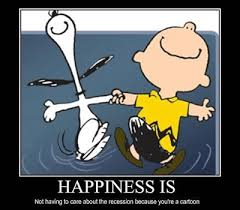
Happiness is… a warm puppy? It is for me. Our mixed-breed Yorky snuggles at my feet at night, after a flurry of good-night face licks.
Susan Dominus has written a great magazine piece for the New York Times magazine, on decades of research on what makes people happy. Thousands of people, interviews, questionnaires, longitudinal studies tracking people almost from birth to death, observations….. [1]
Hey! Scholars! It is hiding in plain view. Honest.
Last week, in the Parshah (chapter) of the Bible Jewish people read in synagogue on the Sabbath, we read in Leviticus 18:19: Love thy neighbor as yourself. The Golden Rule. But importantly, this has an important context. For 18 verses before the Golden Rule, we are told to help the poor, pay fair wages, tell the truth, not to lie, leave gleanings in the wheat field for the needy, …. In other words, how to be kind, compassionate, helpful, loving, loving, to others – ALL others, not just our loved ones.
The final editing of the Hebrew Bible, the five books of Moses, probably took place during the Jewish exile in Babylon, 6th to 5th century B.C.E. (Deepy religious Jews believe the Torah, Bible, was given in totum to Moses at Mount Sinai).
So, what did the Harvard happiness studies find? Happiness is….healthy, vibrant relationships with other people. Love thy neighbor.
Not for a moment am I denigrating this research that ended up finding what we knew, or should have known. As an economist, I spent 40 years reading and even writing research that involved truly unimportant questions. Happiness is a worthy topic. We owe thanks to Professor Martin Seligman, who as President of the American Psychological Association years ago, used his bully pulpit to refocus psychological research, from mental illness to mental wellness. Positive psychology.
So, yes, happiness is a warm puppy – and a warm relationship with friends, family, and everyone else.
Here is a small example. In Israel, when people dismount from public transportation (buses), we almost always say thanks to the driver. I did this morning. Try it sometime.
Another example. I bought some take-out food, waited quite long for it, and then, instead of rebuking the cashier or grumbling, smiled at her and said thanks. She smiled back. Have you noticed? If you smile at someone, they will almost automatically smile back. And then, you have reciprocal smiles, rather than frowns.
Love your neighbor. It’s not an abstract theory. It’s an action item. And it works!
[1] Susan Dominus. “How nearly a century of happiness research led to one big finding!”. New York Times magazine, May 1, 2025. “Decades of happiness studies have identified a formula for happiness, but you won’t figure it out alone.”
What We Jews Learned from Pope Francis
By Shlomo Maital
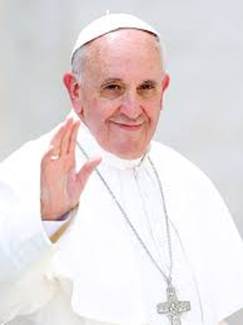
Pope Francis died on Monday. He was 88.
The Catholic Church has done the Jewish people considerable harm in the past. But this Pope was different.
As Cardinal of Buenos Aires, he daily took the bus to his headquarters. A master of the meaningful gesture, he wanted to show his flock that he was one of them, not above them. As New York Times Vatican correspondent Jason Horowitz (Jewish) noted, Francis hated ‘clericalism’ above all – defined as “the formal, church-based dominant leadership or opinion of ordained clergy in matters of the church”, or in other words, we the clergy are above you all.
We Jews learned – or should have learned – a lot from Francis. In Israel, our Ultra-Orthodox clerics, rabbis, cloistered in halls of study called ‘yeshivas’, instruct their students never to agree to do army service, as the law requires, even when our country is under attack and many reserve soldiers are serving for 200 or more days a year, ruining their businesses, away from their wives and children, and risking their lives.
This is clericalism. Religious leaders who do not live as Francis counseled among the people, listening to the people, empathic with them, feeling their pain and suffering.
Iran is led exclusively by an 85-year-old cleric. It will not end well.
The rabbis of the Talmud all had trades – carpenters, shoemakers, bakers – because they had to, to earn a living. They lived among the people and the 2,000 pages of the Talmud reflects this. They ‘took the bus’, as did Francis. (He used to drive around Rome in a Ford Focus. A meaningful gesture).
Today, the Ultra-Orthodox Jewish rabbis support an anti-democratic government, filch many many millions of shekels of taxpayer money to support their life of study, without jobs or army service, and now demand a law enabling them to legally evade what every other citizen must do, serve their country.
We Jews can learn from Pope Francis. In the Conclave of cardinals (only those under 80; if you’re over 80, you don’t get to vote), in 2013, Pope Francis like many other cardinals made a short speech. As Jason Horowitz reports, you are not allowed to campaign for yourself in the Conclave – but you can give a speech about the priorities you think are vital for the Church, which is of course a campaign speech. Francis spoke about getting the priests out of the cloistered churches and into the field, among the people, into the “periphery”, as his speech became known. It gained him the papacy.
Let us hope and pray the Conclave Cardinals choose a worthy successor to Pope Francis – one who in spirit and in mindset is one of the people, not one of the autocratic clerics who live in splendor and have no idea how the vast majority of their flock lives. The chances are good. Many of the current Cardinals were appointed by him and share his world view.
Is the World Aleatoric? Or Epistemic?
By Shlomo Maital

Question: What is your view of the world? Is the world “aleatoric”? Or “epistemic”?
Sorry for the two-dollar words. Aleatoric means random, uncertain. Epistemic means unexpected things occur, but only because we have not yet acquired sufficient knowledge. In short, is the world inherently random, unpredictable, or is the world full of the unknown BUT KNOWABLE eventually?
I spent my life working in Academe. People I work with are epistemic. Academics believe that their research will turn the unknown into the knowable. And a great deal of scientific research does that. One possible (though not inevitable) result, is that those with higher education believe in a distant God, or none at all, as we ourselves become God, in the sense of understanding scientific causality, rather than divine intervention. Academe is epistemic.
But what if the world is really aleatoric? Divinely aleatoric? That is – events are random, but the Divine hand is present in ways we do not understand, nor will we ever. This is a variation on purely random, aleatoric world.
Example? In 1945 US Secretary of War Henry Stimson persuaded President Harry Truman NOT to bomb Kyoto with the first US atom bomb. Experts felt that destroying Japan’s cultural capital and historic priceless treasures would strike a war-ending blow. But as a 19 year old, Stimson had visited Kyoto and loved it. He argued vehemently in two long meetings with Truman NOT to bomb Kyoto. Result: Hiroshima was chosen instead.
Is this epistemic? Or aleatoric? Moreover — US B-29 bombers with the second A-bomb arrived at their second target – and found it covered with clouds. They had to divert to an alternate: Nagasaki. So both Hiroshima and Nagasaki were destroyed, and their inhabitants decimated, by a virtually random cause – a trip by a teenager, and the vagaries of weather. Aleatoric? Epistemic?
Scientists reported yesterday that they have models that can predict crowd movements, that today seem random. Really? Will we humans one day know EVERYthing? Einstein fought quantum mechanics of Bohr, saying God does not play dice with the universe. Some of us may believe, true – but it LOOKS like he does, and because we will never truly understand divine intervention, we might as well treat the world as divinely aleatoric, with God in the background (e.g. Bette Middler’s wonderful song “God is Watching Us ….At A Distance”.
What is your own view?
Incidentally: Quantum computers are proving many times more powerful than conventional ones, based on the fact that a piece of information (bit) can be either zero, or one, or some probability inbetween, and the probability is an infinite set of fractions… making that ‘bit’ many times more powerful than its being either zero or one (as in conventional computing).
Quantum computing uses the aleatoric world in an epistemic manner (we figured out how to USE IT!).
A head scratcher.

 TIMnovate