
You are currently browsing the tag archive for the ‘Big Pharma’ tag.
Understanding Chronic Pain
By Shlomo Maital

[Warning: Long wordy blog, 1,200 words.]
“Conservative estimates suggest that chronic pain affects over one and a half billion people, or 20% of the world’s population.”
Typically, chronic pain is treated with pain relievers. “The global market for analgesics was valued at $53.5 billion in 2024 and is projected to reach $72.8 billion by 2030.” This is big business. And rather risky.
The main painkiller medicine is comprised of opioids (from ‘opium’), such as OxyContin. They are addictive and overdoses kill. OxyContin is the trade name for oxycodone, produced and sold by Purdue, and the Sackler family.
“The number of annual opioid overdose deaths remains more than six times higher than it was in 1999; There were approximately 81,806 opioid overdose deaths in 2022 and 90% involved synthetic opioids other than methadone.”
So if you have chronic pain — is there an alternative way to deal with it, other than opoids? Here is what I learned from a great episode of a podcast, Science Friday:
Chronic pain is remarkably common: Roughly 20% of adults in the US live with it. And people with chronic pain are more likely to have depression, anxiety, and substance abuse disorders. But this relationship between physical and mental health is not as straightforward as you might think, and there’s still a stigma attached to neuro-psychological causes of chronic pain.
“The latest research suggests that untangling the connections between mind and body is a key part of developing better treatments for people with chronic pain. Now, a new psychological treatment called pain reprocessing therapy has shown initial success in eliminating back pain in research participants
Guests: Dr. Lauren Heathcote is a Senior Lecturer in Health Psychology in the Institute of Psychiatry, Psychology & Neuroscience at King’s College London in London, England. Dr. Yoni Ashar is an assistant professor and Co-Director of the Pain Science Program at University of Colorado Anschutz Medical Campus in Aurora, Colorado.
Flora Lichtman (SciFri contributor): “Roughly 20% of adults in the US live with it. And people with chronic pain are more likely to have depression, anxiety, and substance abuse disorders. But this relationship between physical and mental health is not as straightforward as you might think. And the latest research suggests that untangling the connections between mind and body is a key part of developing better treatments for people who have chronic pain.
Expert guest Dr. Lauren Heathcote: “In the case of chronic pain, it’s more the case that the brain is getting it a bit wrong. So it might be that there was some sort of initial injury, but that that has now healed, or potentially that there is still some ongoing inflammation in the body, some kind of bodily damage in some way, but the brain is still producing a pain signal even when it’s not particularly helpful anymore.”
Expert guest Dr. Yoni Ashar: “The way pain is processed in the brain is quite complex. There’s no one region that’s the pain region. Pain is processed, everywhere and nowhere. And we see changes along all parts of the pain processing pathways. ….a lot of people come to us thinking that their bulging disk or their arthritis or et cetera, that’s the cause of their pain. And the major step is education, that actually bulging disks and arthritis are highly prevalent in people who have no pain whatsoever, and they’re typically not related to the pain… And that education to help people shift their thinking to this pain is actually not a sign of tissue injury. This pain is an indication that my pain system has gotten sensitized.”
Science Friday producer, Shoshannah Buxbaum: “One of the new treatments is called pain reprocessing therapy. It’s designed specifically for people who have pain that’s primarily due to changes in the mind and brain. The goal is to have patients unlearn the pain pathways that their brain has formed, which are, in turn, causing them to experience pain. So step one is educating patients on the science of chronic pain and what’s actually going on in their bodies.”
“The first study testing the efficacy of pain reprocessing therapy was in patients with chronic back pain. And back pain is among the most common chronic pain conditions in the US. Severe chronic back pain affects over 8% of adults in the US, and lower back pain, specifically, is the most frequent cause of job-related disability in the country.
“I wanted to understand what going through this type of therapy was actually like. So I talked to Sal, who is a participant in that first study. We’re just using Sal’s first name to respect their privacy. So I started off by asking them about when their pain first started.
SAL: I mean, I first noticed my back pain beginning in high school around when I was 15. I’m in my 30s now. So it’s been probably more than half my life at this point. It was a daily thing. It’s something I woke up with every day. And I think I just almost resigned myself of, like, this is just how my body feels, right. So I met with John. He does pain reprocessing therapy. And he himself had also benefited from the treatment greatly. We met for an hour once a week for six or eight weeks. Part of the treatment itself is acknowledging, from the cognitive standpoint, of reminding yourself that you’re safe and that your body doesn’t need to be feeling fight or flight.
“ Learning about the research and learning about how pain works in the brain and the body is part of the treatment. And I told John, throughout the whole process– I said, this is really dumb. And he’s like, I know. Because it almost feels like there was nothing intensive. There was nothing that I radically learned that was different. So it would just be breathing exercises and focusing specifically in this spot in my right shoulder that feels uncomfortable or feels pain.
“And what is the quality of the pain? Does it feel tingly? Does it feel sharp? Does it feel cold? Does it feel hot? So noticing on the actual sensation of pain, and trying to spread that out or dissolve it a little bit, or just focusing on it and taking a deep breath while focusing on it. And so just taking a moment to remind yourself and your body that you’re safe and that you don’t have to carry that tension or that pain. And just even the small act of doing that provides relief.
“I would say I went from a daily, waking up, six or a seven pain, and just chronic all day, and increasing or decreasing, depending on my stress. But I’m at a zero or one. And even now I’m skeptical. I’m like, oh, really? I don’t wake up with pain anymore? That’s cool.”
Expert guest Dr. Yoni Ashar: “When we started this work, I was concerned that people would storm out of our offices and feel dismissed and invalidated. But more often it’s the opposite of people telling us, wow, now things make sense. I saw 10 different doctors before this who had 10 different stories, and none of it really made sense or could explain all my symptoms. And now, for the first time, things are falling into place. Things are clicking.”
“For some people with chronic pain, there’s a big component of trauma and history of deeply entrenched patterns of self-criticism. These make it a lot harder to just try to treat the pain in isolation. What we’re finding is that for a number of people you can’t just talk about the pain and expect everything to get better, but it will require a deeper dive into what’s making them feel unsafe more broadly. And trying to help people resolve those other mental health challenges will be the key to helping their pain.”
Perhaps one day, alternative approaches to chronic pain relief will put the Big Pharma big bucks out of business. And fewer people will die of overdoses.
Fighting Cancer: Open Source Drug Discovery
By Shlomo Maital

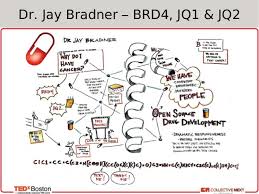
Here is how drug discovery works. Big Pharma companies invest big bucks, fail with many promising drugs, find one that works – and then charge fortunes for it to recoup their original investment. This model, quintessential capitalism, is not working too well, because many illnesses are under-researched, when the nascent business model does not indicate big profits. Alzheimer’s is an example. (Biogen’s stock, however, shot up when it announced a promising Alzheimer’s Drug… an exception to the rule).
Along comes young Jay Bradner, with a new idea, described in his TED talk and in the TED Radio hour on WBUR.
“In 2010, Bradner secured his reputation as an innovator when, rather than guarding his discovery of a breakthrough small molecule, he began sharing the compound with other scientists in the field. The molecule, JQ1, inhibited a family of proteins known as bromodomians, and showed promise for blocking the growth of certain cancer cells. Since 2010, the Bradner lab has shared 15 different compounds with more than 450 laboratories worldwide. This month, Bradner unveiled his latest breakthrough: a new chemical technology platform to destroy proteins in cancer cells. The finding, published online in Science Express, could pave the way for new inhibitors for previously “undruggable” targets.”
Let’s get this straight. Bradner makes a discovery that could make him and his lab (Dana Farber) wealthy. Instead of patenting the molecule – he publishes his results and offers samples of it to anyone who asks!
Could this disrupt the Big Pharma Big Greed industry as a whole? And wait – didn’t his employer the wonderful Dana Farber Cancer Research institute in Boston, hassle Dr. Bradner?
To Dana-Farber’s credit, there was little resistance. The profound burden of cancer and the complexity of cancer genetics both call not only for new therapeutic technologies but also new strategies for therapeutic discovery.
The advantage of Bradner’s approach? Many many more researchers will work on these molecules, test them, and perhaps modify and improve them. As a result, drugs that work on a variety of forms of cancer may reach ill people much sooner. Lives will be saved.
There are two key points here.
One is – Innovation is not just about WHAT you discover, it is about how you go about making breakthrough discoveries. Discover, test and patent? How about, discover, and give it away to all who ask! I sometimes teach my students that they should put their ‘baby’ (their wonderful idea) up for adoption and give it away. Give it to someone who has the means and ability to implement it, and even make them believe it was their idea. If you really want to change the world, sometimes, that is the only way.
Needless to say — I have a very hard time selling this idea. Investors want ‘intellectual property’ – even though the knowledge and skills that give birth to them often come from universities funded by public money. And some universities want to patent anything that breathes, if it breathes on their physical grounds.
How well has this open-source model worked? (Note: For some types of software, it has worked exceedingly well. Ever heard of Linux?):
Second: Open Source speeds research and gets faster results. Here is what Bradner reports: “It’s funny – there is no obligation for recipient laboratories to report research findings, but almost everyone does. Labs may reach out to request more material, perhaps for in vivo studies, but most write or call just to share their incredible findings. We’ve also experienced how powerful chemical probes are in target validation. In response to a questionnaire we sent laboratories that received JQ1, 50% of investigators responded that their work with the compound led to a disease-specific clinical opportunity. Finally, we learned that compounds are powerful vehicles of experimental reproducibility, a major issue in science today. In two research areas, two or more groups have simultaneously published mutually supportive stories on BET bromodomain biology using JQ1. Beyond these lessons, the open-source strategy has been a wonderful introduction to research fields that I might not have otherwise had an opportunity to access. We have fantastic collaborators in cardiovascular disease, tissue remodeling and fibrosis, and reproductive biology. Though my group focuses on chromatin and chemical biology largely in the area of cancer, these collaborations have broadened our research horizons significantly.”
And just to show that ‘open source’ is truly a part of Bradner’s DNA, the name of the key molecule JQ1 comes from the researcher in his lab who first discovered it, a scientist named Jun Qi. Not JB1. JQ1. Well done, Dr. Bradner.
If only more labs, and more inventors, could learn the key principle, that creativity is like love – the more of it you give (away), the more of it you (and society) get back.
Cultivate More Stress! Really!
By Shlomo Maital
Tiger Woods is one of the world’s greatest golfers ever, in a league with Palmer, Niklaus, Snead, and Bobby Jones. He has had personal problems, a messy divorce, back injuries, surgery, and lately hasn’t made the first cut in tournaments.
Woods was stopped by police, in his car, near his home in Florida, and failed a breathalyzer test. But he had no alcohol in his blood. He had simply taken tranquilizers and fallen asleep; he took enough of them, so that he could not walk a straight line.
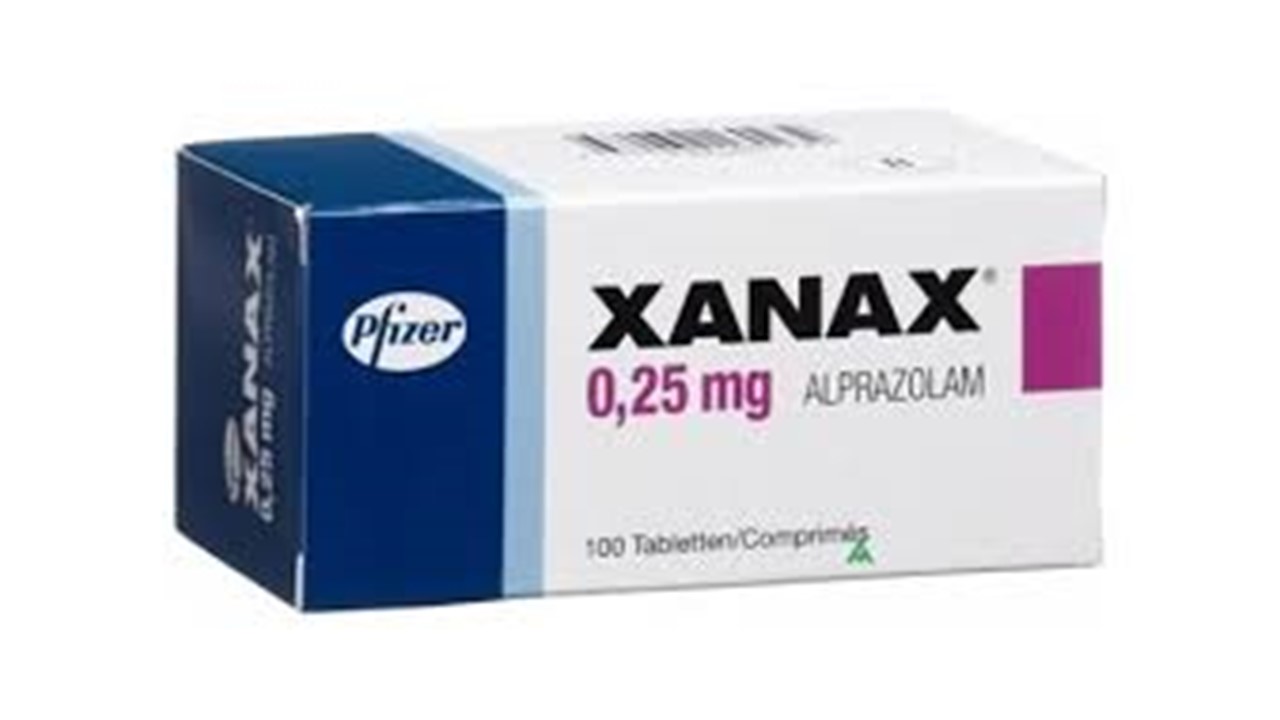
Let’s get this straight. No game has more stress than golf. That final putt? Make it and you win a major. Miss it and you finish second or third – not good. Stress? You bet. Yet doctors have doped up Tiger with Xanax (a blockbuster tranquilizer, making billions for Pfizer), Vicoden, Vioxx and who knows what else. Was he taking Xanax while playing? If so – no wonder he missed the cut.
Be clear – Xanax is a wonder drug for those who suffer extreme anxiety attacks. Yet it is according to US Food and Drug the most abused tranquilizer, prescribed for millions who do not need it. Why? Because we’ve been taught by Big Pharma and others, that stress is harmful, terrible, to be avoided at all costs, by popping a pill. So pop away…. and help that bottom line of Pfizer.
I argue here that we need more stress, not less. What is stress? Stress is “a state of mental or emotional strain or tension resulting from adverse or very demanding circumstances.” Simply put — We have an unsolved problem, and it bothers us. Let’s redefine stress. “…a challenge, that when we solve it (not if), boosts our self-esteem, self-efficacy and our sense of wellbeing”. Need a pill for that? No. You need to take on the challenge and crack it. Creativity is widening the range of choices. To meet unsolved problems, we can come up a large range of possible solutions. Zoom in, pick one – and go for it. Sometimes you will fail. That’s part of life. Sometimes you’ll succeed. But if you Xanax the stress, you’ll never get even the chance to succeed. When you tackle a stressful state, you change your mental outlook from anxiety to action….it’s that simple.
And – keep in practice. Purposely seek out hard things to do every day, and do them, and feel good about it. This is super-important for us seniors. It is so easy to pamper yourself, when you’re over 65, just because you have grey hair. Why? Take on challenges. Your body may not be as strong, but your mind sure is.
Do not be manipulated by Big Pharma. Welcome stress. Cultivate it. Tackle those big challenges – and crack them. You can do it. Popping a Xanax smothers the stress, temporarily, but doesn’t deal with it. It’s not a solution.
Pop a Pill? No! There’s a Better Way
By Shlomo Maital
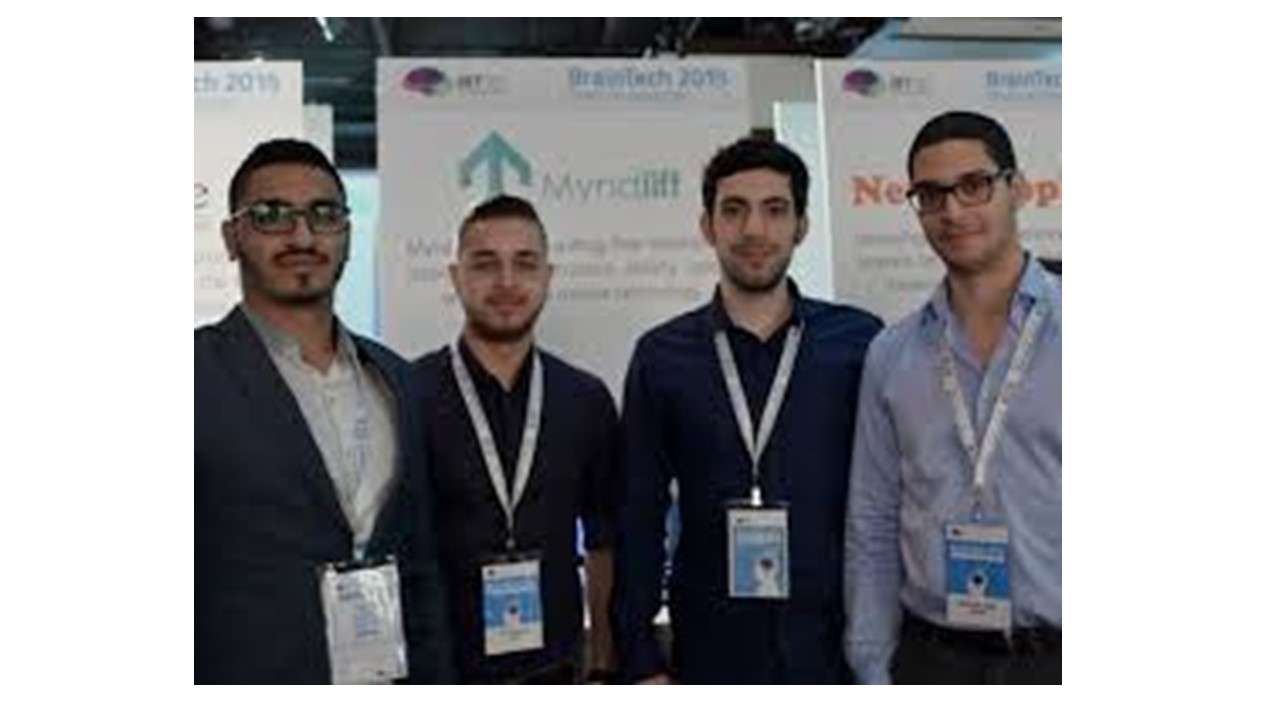
Aziz Kaddan, Amir Khalaily, Hilal Diab, Anas Abu-Mukh
Arab culture is highly entrepreneurial. Given the right opportunities, Arab entrepreneurs could transform the Arab world, shifting Western attention from ISIS and its vicious violence to IS (Innovation Startups). Here is an example (thanks to Sharona, my wife, who drew my attention to this story).
ADHD attention deficit hyperactivity disorder is widely treated with a drug, Ritalin. Novartis sells $350 m. worth of methylphenidate (Ritalin) each quarter. When kids have problems in school, it’s super easy for teachers to demand that they pop a pill – even if the problems could be addressed differently, with a little effort. In general, our pop-a-pill society plays into the hands of Big Pharma, and sometimes does immense harm to us all. Ritalin is now used widely as a recreational drug, too. For Big Pharma, it’s all just money.
NASA developed a computer-based technique to improve attention, focus and learning. Now, Aziz Kaddan, age 22, an Israeli Arab, and three friends have launched a startup, Myndlift, that uses biofeedback to deal with ADHD. It’s an app-based wearable solution, together with mobile games that work only through attention, and boost attention levels with only 10 minutes of play time a day. Kaddan is the son of a neurologist, and got a computer science degree at the age of 19.
Friends urged Kaddan to up the price of his app (it’s only $15 for the premium version), but he and the founders believe that to keep this solution accessible, it has to be quite cheap. (Big Pharma – don’t you just love it?).
Over the years, I’ve taught many students with ADHD. Most of them avoided Ritalin, and instead developed their own personal unique ways to focus and deal with their challenges. Sometimes, the ADHD was even a blessing, because it appears that those with ADHD happen to be very creative.
Next time you have a problem, and someone tells you to pop a pill, think about it for a while. Sometimes you really do need that pill. Sometimes, you can manage better without it.
Thanks to Aziz and his friends for showing us another way, other than pill popping. I hope their story will inspire other Israeli Arab entrepreneurs.
Vaccines: Time for Legislation
By Shlomo Maital

New York Times report Elisabeth Rosenthal reveals to us another Big Pharma ripoff – this time related to vaccines. When in the world will the U.S. Congress act to end this travesty?
According to Rosenthal, Big Pharma uses the ‘new improved yogurt’ trick to fatten profits and hurt the middle class and the poor. If you sell price-regulated yogurt, change the package, add something (fermented kiwi juice) – and claim it is a new product, hence not subject to the old price controls.
In vaccines Rosenthal writes:
“Old vaccines have been reformulated with higher costs. New ones have entered the market at once-unthinkable prices. Together, since 1986, they have pushed up the average cost to fully vaccinate a child with private insurance to the age of 18 to $2,192 from $100, according to data from the Centers for Disease Control and Prevention. Even with deep discounts, the costs for the federal government, which buys half of all vaccines for the nation’s children, have increased 15-fold during that period. The most expensive shot for young children in Dr. Irvin’s refrigerator is Prevnar 13, which prevents diseases caused by pneumococcal bacteria, from ear infections to pneumonia. Like many vaccines, Prevnar requires multiple jabs. Each shot is priced at $136, and every child in the United States is required to get four doses before entering school. Pfizer, the sole manufacturer, had revenues of nearly $4 billion from its Prevnar vaccine line last year, about double what it made from high-profile drugs like Lipitor and Viagra, which now face generic competitors.”
Let’s see that again. A price rise from $100 to $2,192??? And remember vaccination is not optional; it is essential for the lifetime health and wellbeing of every child.
Half of all vaccines are bought by the U.S. federal government. Their costs have risen 15-fold! Why is it that when we ordinary folks get ripped off, we scream – but when Big Pharma rips off the government, there is silence?? At a time when deep budget cuts are hurting everyone?
When one company, Pfizer, makes $4 billion from ONE vaccine, Prevnar, double what it makes from a high-profile blockbuster drug, something is radically wrong. Wake up America!

 TIMnovate