
You are currently browsing the tag archive for the ‘climate change’ tag.
Key Future Technologies: The View from McKinsey
By Shlomo Maital
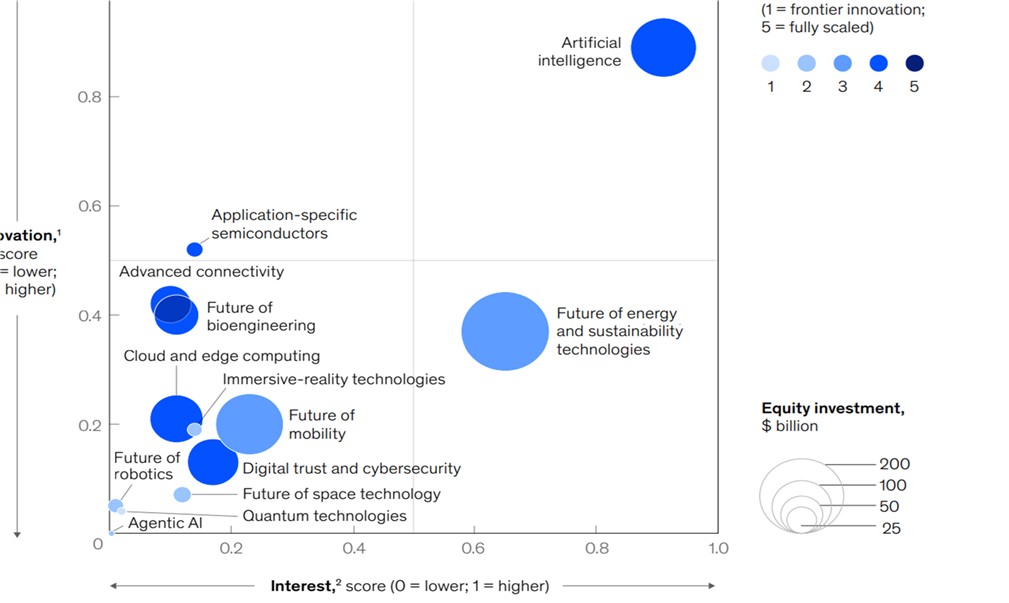
Innovation Score (Y axis) vs. Interest (Investment) (X axis)
In the global consulting company McKinsey’s latest survey of technology trends for 2025, the above graph caught my eye. On the X Axis: a measure of interest, as measured by total investment. On the Y axis, a measure of the degree of innovation.
Normally, graphs for previous years showed a scattering of interest among several key topics. This is natural. Hi-tech is risky and businesses generally do not ‘play poker’ by putting all their chips on one single new technology.
Except for now. The graph shows Artificial Intelligence as leading by far in both innovation and in resource bets, globally.
But take a look at #2. Future of energy and sustainable technologies. Less innovation, far more resources. Globally.
The cost of solar energy is today the cheapest of the varied forms of energy.
Can one understand how the Trump administration is single-mindedly revoking tax credits, laws, regulations, everything, designed to promote solar and wind energy? Yes – as a short-sighted political deal based on the huge contributions of Big Oil to the Trump PACs. Big Oil spent $445 million (nearly half a billion dollars) on contributions to Trump, in the last election.
A terrific investment, given how Trump has repaid it. The McKinsey graph for the US would show it as a backward, lagging outlier in energy.
In this, as well as in science, healthcare, social services, education, research, vaccines, and global aid programs, Trump has set America back decades, in a very short time. The damage can be repaired – but the road to do so will be long and hard.
Joanne Chory: Be Bold!
By Shlomo Maital

Joanne Chory
Be bold!
This is the advice to young people by the late Joanne Chory, a plant scientist, whose creative out-of-the-box thinking has changed forever how we view plants. She died a few years ago of Parkinson’s.
Geneticists made breakthroughs by focusing on fruit flies. They have a very short life cycle, so it is possible to make genetic changes and study their impact with quick results. Chory had a similar idea. Let us plant scientists focus on a single ‘fruit fly’ plant, and learn everything there is to know about plants in general. Among other things, she managed to mutate a plant so that somehow, it grew in darkness – defying the assumption that all plants need light for photosynthesis.
Prof. Chory had a vision for saving the planet from global warming: Here is how a colleague explained it, on the The Leap podcast, with Flora Licthman:
“…. she had this inspiring thought that what we have done in the last 150, 200 years or so, we have dug up dead plants. And we have burned dead plants. And that’s why there is a lot more CO2 out there. And Joanne said, well, let’s just reverse the process. Let’s put the CO2 back into the plants.”
Chory explained, that “as our world edges closer to a crisis of sustainability. I hope it will catalyze greater awareness of the positive impact that plants can have in the quality of human life.”
Lichtman explains, “Plants vacuum CO2 out of the air and store it. But when plants die or decompose, that CO2 goes back into the atmosphere. So Joanne thought, what if we could engineer plants, specifically crops that we’re planting already, to store carbon more permanently by making their roots bigger and deeper and better at holding carbon underground?”
Simple. Revolutionary. Feasible. Why didn’t we think of this before?
Be bold, Chory advised young scientists. Or just don’t bother doing it.
As a professor, I learned early on that the path to success was incremental baby-steps, elucidating what others had done, so that as referents, they would approve and get you published. I tried a different approach, and sought with my wife to incorporate psychology into economics. And, at the same time, to try to explain economics to non-economists, baffled by the jargon and math. My rejection letters tore strips off me, for ‘populizing’.
Take the road less travelled. Here is how poet Robert Frost said it: I shall be telling this with a sigh Somewhere ages and ages hence: Two roads diverged in a wood, and I— I took the one less traveled by, And that has made all the difference.
Maybe some day, we will cover the earth with CO2 hungry plants, who swallow billions of tons of it and bury it deep in their roots, in the ground, to halt or even reverse climate change. Because – one iconoclast plant scientist took the road less travelled.
2047: We Were Warned
By Shlomo Maital

Twelve years ago, the leading science journal Nature published an unusual article. It was the result of a class project, led by Dr. Camilo Mora, University of Hawaii. Mora and students did this:
“They divided the earth into a grid, with each cell representing 386 square miles. Averaging the results from the 39 climate models, they calculated a date they called “climate departure” for each location — the date after which all future years were predicted to be warmer than any year in the historical record for that spot on the globe. The results suggest that if emissions of greenhouse gases remain high, then after 2047, more than half the earth’s surface will experience annual climates hotter than anything that occurred between 1860 and 2005, the years for which historical temperature data and reconstructions are available.”
The students used models operated by 21 research centers in 12 countries, all of them publicly available.
The New York Times’ Justin Gillis wrote about it, under the headline: “By 2047, Coldest Years May be Warmer than Hottest in Past, Scientists Say”.#
My wife and I have five great-grandchildren. By 2047, they will be graduating from college, finding a spouse, and beginning their working lives. The planet in which they do this will be hotter than hell. The coldest day will be warmer than the hottest in the past. The hottest day? Words fail me.
Most attention now is being paid to the melting of the Arctic icecap. But the 2013 paper showed that the greatest impact of global warming will occur in the tropics, near the equator.
The tropics constitute 40% of Earth’s surface area and contain 36% of Earth’s landmass. It is home to 40% of the world’s population, projected to reach 50% by 2047.
The tropics are also where I and our great-grandchildren live – in Israel, only some 2,000 miles north of the equator.
The generations, including mine, that did this to our planet and to our descendants can no longer prevent it, but only mitigate it, maybe slightly. And the Big Oil big bucks that pump the media use the fossil fuel billions to perpetuate the problem.
It we truly love our children, grandchildren and great-grandchildren – how in the world have we done this to them?
# New York Times, Oct. 10, 2013, Section A, Page 10.
How to Get to the Root of the Problem
By Shlomo Maital

Let’s say you have a tough problem. You want to get to the root of the cause.
But how?
Ask a five-year old.
Really. Ask a kid. Because – they get to the root of things, by the method of ‘rood cause analysis’, RCA, used widely by systems experts diagnosing crashes, by computer engineers designing software… in general, by the hi-tech experts.
The method was used eons ago by kids, long before silicon. It’s called “the 7 Question Path to Enlightenment”.
Here’s a fictional conversation with one of my grandchildren.
Why are there people on Earth? Because they descended from primates, monkeys and apes. Why are there primates? They too descended, from other mammals, through evolution. Why are there other mammals? Well, see, this fish figured out how to move from the sea, breathing oxygen through its gills, to the land, breathing air through lungs. Where did the fish come from? It began with single cell living things, created by a combination of the right chemicals in a warm sea. Where did those single cell things come from? From the oceans, created when the Earth cooled from boiling, and when rain began to fall. Why didn’t the oceans just evaporate, as they did on Mars? Gravity. What causes gravity? And what is it? … Uh….
There we have it. The root cause. Life on Earth, because of…gravity. But..what in the world is gravity? Truth is, we do not truly know how gravity works or what it really is – Einstein’s theory of relativity is a start.
Root cause? Overweight? Out of shape? Tired? Financial problems? Ask why. And then again. And again. Either you get to a dead end…or the root cause. And even dead ends sometimes are very helpful, right? They tell us what we need to explore in depth more thoroughly.
Why Rip van Winkle and the Climate Crisis Are Closely Connected?!
By Shlomo Maital
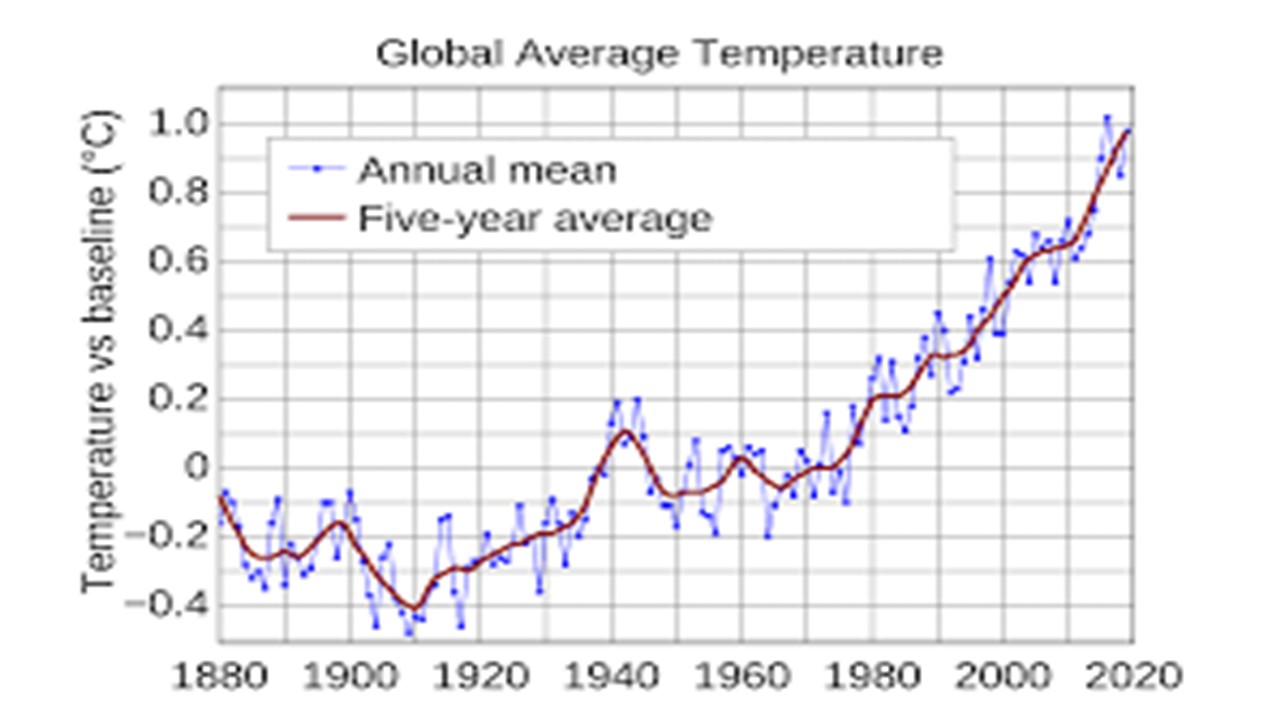
I recently spoke at a climate crisis conference. In my remarks, I asked, when did we have the earliest data about greenhouse gases and global warming?
A lot lot earlier than you might think. Indeed – in author Washington Irving’s famous story, “Rip Van Winkle”, the protagonist, a Dutch-American villager in colonial America, falls asleep in the Catskill Mountains and wakes up 20 years later.
Well, we the people are Rip Van Winkle. Except — we overslept a whole lot longer.

Eunice Newton Foote
An American woman scientist named Eunice Newton Foote (highly unusual for her time) published a paper in The American Journal of Science & Arts, in 1856: 163 years ago. (Van Winkle would have been awake for 143 years already). She filled glass jars with a) water vapor, b) carbon dioxide and c) air, and compared how much they heated up in the sun.
She concluded: “The highest effect of the sun’s rays I have found to be in carbonic acid gas [CO2]”
In August 1908 Henry Ford produced the first of his 15 million Model T Ford cars. The age of vehicle emissions began…and we knew from Eunice Foote what the ultimate result would be. We knew that burning fossil fuels would spew CO2 into the air.
In 1899, almost a century before the December 1997 Kyoto Protocol was signed (in which nations promised to limit emissions), Thomas Chamberlin published a book stating that “changes in climate could result from changes in the concentration of atmospheric carbon dioxide.” Footnote: The Kyoto Protocol was largely ignored.
So, when did global warming actually begin? It started more or less when that Model T Ford rolled off the line – in 1905. (See graph). That is, 114 years ago. Almost 6 times longer than Rip Van Winkle slept.
We as a society are asleep. We failed to see the nose in front of our face. And to see the results, and the reason we now use the phrase “climate crisis”, look closely at Australia, once a serene paradise, now a place in which a fifth of its forests have burned, a billion mammals died, and now disastrous floods occur (because the dry hard-packed ground cannot absorb the rain).
And Rip? Well, at least he woke up. We, society, are still largely asleep.
Greta Thunberg – Tells It Like It Is
By Shlomo Maital
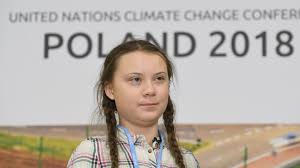
Three years ago, Greta Thunberg, a Swedish schoolgirl, skipped school on Friday and with a home-made sign, demonstrated outside the Swedish Parliament. Her request: Get Sweden back on track with the Paris Agreement to mitigate greenhouse gases and halt climate change.
One young schoolgirl – what could she possibly do? Every Friday, she showed up again at the Swedish Parliament.
Now, three years later, her single act has snowballed into a massive strike-from-school movement among school children all over the world, on March 15.
Greta spoke to a climate change conference in Poland last year. She really stuck it to the old guys there. She got a tiny smattering of applause, showing their disapproval. She was far more warmly received when she spoke to the European Parliament later.
Take a moment and read what she said in Poland. Believe me – it’s a wow!
“My name is Greta Thunberg. I am 15 years old. I am from Sweden. I speak on behalf of Climate Justice Now. Many people say that Sweden is just a small country and it doesn’t matter what we do. But I’ve learned you are never too small to make a difference. And if a few children can get headlines all over the world just by not going to school, then imagine what we could all do together if we really wanted to.
“But to do that, we have to speak clearly, no matter how uncomfortable that may be. You only speak of green eternal economic growth because you are too scared of being unpopular. You only talk about moving forward with the same bad ideas that got us into this mess, even when the only sensible thing to do is pull the emergency brake. You are not mature enough to tell it like is. Even that burden you leave to us children. But I don’t care about being popular. I care about climate justice and the living planet. Our civilization is being sacrificed for the opportunity of a very small number of people to continue making enormous amounts of money. Our biosphere is being sacrificed so that rich people in countries like mine can live in luxury. It is the sufferings of the many which pay for the luxuries of the few.
“The year 2078, I will celebrate my 75th birthday. If I have children maybe they will spend that day with me. Maybe they will ask me about you. Maybe they will ask why you didn’t do anything while there still was time to act. You say you love your children above all else, and yet you are stealing their future in front of their very eyes.
“Until you start focusing on what needs to be done rather than what is politically possible, there is no hope. We can’t solve a crisis without treating it as a crisis. We need to keep the fossil fuels in the ground, and we need to focus on equity. And if solutions within the system are so impossible to find, maybe we should change the system itself. We have not come here to beg world leaders to care. You have ignored us in the past and you will ignore us again. We have run out of excuses and we are running out of time. We have come here to let you know that change is coming, whether you like it or not. The real power belongs to the people. Thank you”.
Distraction – Our Greatest Threat
By Shlomo Maital

It is easy to identify a lot of things that have gone wrong in the world. Britain is in a deadly stalemate, facing an urgent decision and with no majority for anything. Right wing governments threaten democracy in Venezuela, Poland, Hungary and even Italy. America is stuck in a stupid conflict between a stubborn President and stubborn Democrats. Israel goes to elections on April 9 that according to polls will change absolutely nothing.
But underlying all this is a little-noted problem. Distraction. Small children are easy to distract; parents do it all the time. Apparently world leaders are also easy to distract.
Trump obsesses over a wall, while America’s economy slows, and its infrastructure crumble. Israel faces threats on its borders, but its Prime Minister obsesses about his impending indictment for bribery. Europe struggles with migrants, and debt, but is totally distracted by Brexit and will be for months. China and the US grapple over Huawei and cell phone technology, while their trade war causes the entire world economy to slow.
The world has lost focus. The 30-second news cycle has led to massive myopia, neglecting longer term problems. Elections focus on personalities. Try to find a comprehensive well-designed political platform for any political party anywhere.
I think the distraction of non-news and personalities is a major threat – if it continues, we will never even begin to grapple with the real major problems the world faces.
So, let’s decide – Just because our leaders are distracted, and purposely try to distract all of us with pipsqueak inconsequential matters, we don’t have to play. Where possible, let’s find ways to refocus the political system on the things that really matter – saving, education, investment, schools, roads, corruption, equality, and overall creating a better world.
Make America Make the World Great Again.
Life Below Ground – at 250 Degrees!
By Shlomo Maital
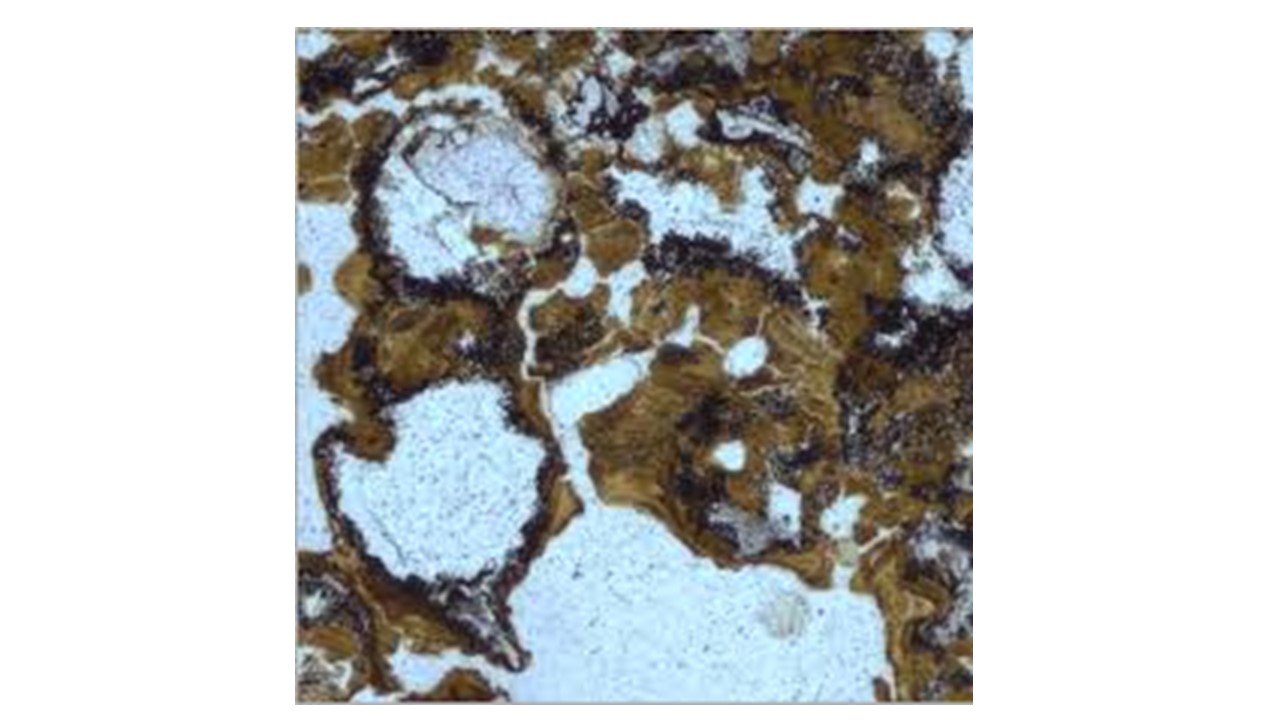
A lot of money is being spent looking for life on Mars.
What about looking for life on Earth – in unexplored places. It’s called “deep life”.
A fascinating report by AFP, a global news agency, informs us:
“Scientists have drilled a mile and a half (2.5 kilometers) beneath the seabed and found vast underground forests of “deep life,” including microbes that persist for thousands, maybe millions of years, researchers said Monday. Feeding on nothing but the energy from rocks, and existing in a slow-motion, even zombie-like state, previously unknown forms of life are abundant beneath the Earth despite extreme temperatures and pressure. About 70 percent of Earth’s bacteria and archaea — single-celled organisms with no nucleus — live underground, according to the latest findings of an international collaboration involving hundreds of experts, known as the Deep Carbon Observatory, were released at the American Geophysical Union meeting in Washington. This “deep life” amounts to between 15 and 23 billion tons of carbon, said the DCO, launched in 2009, as it nears the end of its 10-year mission to reveal Earth’s inner secrets. The deep biosphere of Earth is massive,” said Rick Colwell, who teaches astrobiology and oceanography at Oregon State University.
A Japanese scientist who led the study said the following:
“Most of deep life is very distinct from life on the surface,” said Fumio Inagaki, of the Japan Agency for Marine-Earth Science and Technology. Using the Japanese scientific vessel Chikyu, researchers have drilled far beneath the seabed and removed cores that have given scientists a detailed look at deep life. “The microbes are just sitting there and live for very, very long periods of time,” he told AFP. He described the team’s findings so far as a “very exciting, extreme ecosystem.” Among them may be Earth’s hottest living creature, Geogemma barossii, a single-celled organism found in hydrothermal vents on the seafloor. Its microscopic cells grow and replicate at 250 degrees Fahrenheit (121 Celsius). [This is well above the boiling point of water!] “There is genetic diversity of life below the surface that is at least equal to but perhaps exceeds that which is at the surface and we don’t know much about it,” Colwell said.
Brought up from these ancient coal beds and fed glucose in the lab, researchers have seen some microbes, bacteria and fungi slowly waking up. “That was amazing,” said Inagaki. Scientists have found life in continental mines and boreholes more than three miles (five kilometers) deep, and have not yet identified the boundary where life no longer exists, he added.
These microbes way underground are important, because they have captured huge amounts of carbon, leaving the oxygen we humans breathe.
And perhaps they hold the key to removing the carbon spewed into the atmosphere from burning fossil fuels, causing climate change and global warming.
Kids Sue Elders: Is This What We’ve Come To??
By Shlomo Maital

I recently wrote a column in the fortnightly magazine Jerusalem Report, titled “Waging War on our Children”. The title was a direct quote from Professor Larry Kotlikoff, Boston University. Kotlikoff pioneered economic studies of “intergenerational equity” – how one generation passes on a better (or a worse) economy and society to the younger generation.
Today, Kotlikoff’s meticulous studies show, it is …worse! Much much worse. Because, when you take the present value of US spending obligations (education, health, pensions), and the present value of US tax revenues, there is an enormous fiscal gap of $200 trillion, or 10 times US GDP. This is the debt burden the US is dumping on its young people. And this is true of other countries too, including my own, Israel. (see Kotlikoff.net)
In the latest issue of NATURE magazine (Nov. 8), I spotted this amazing short article. American ‘kids’ (young people) are suing the government (older generation), for ruining the climate and leaving them with a bloody mess.
This is a serious suit. Of course the Trump administration seeks to have it dismissed. But the Supreme Court will debate it seriously.
Is this where we’re at? Is this how low we’ve sunk? Our kids have to sue us, to get us to do something about the god-awful mess we’ve left them?
Hey kids. It’s not just the climate. It’s the toxic volatile divisive angry political situation, the hollowed-out economy (industry sent abroad), the spend-and-borrow society, the crummy schools, and much more. Broaden your suit. Sue us for the mess in general, not just climate change. Maybe that will wake us up?!
How to Explain Global Warming to Donald Trump
By Shlomo Maital

Ocean Temperature 1880-2017
Dear President Donald Trump,
Donald, sir, I have a problem. How do I explain global warming and climate change to someone like yourself, with the attention span just a bit less than a goldfish ? Who does not read anything, and gets information from Fox News? To someone with untreated attention deficit disorder from childhood ?
Hmmm.
Here is my best shot.
Suppose this next sentence is a Tweet, Donald. Read it as such. I mean no disrespect.
93 per cent of the added heat generated by global warming is absorbed by the oceans; only 7 per cent, by the air.
That’s only 23 words. Well within 140 characters.
Don’t believe it? Please, look at the graph. OK?
Why is warmer ocean temperature a problem? Why do we care that up to 30% of the Great Barrier Reef has already disappeared, because the coral can’t stand the warmer temperatures?
Well, Donald, let’s take your own body. Uh, rephrase that. YOU take your own body. Suppose you are running a temperature. Say, two degrees. Instead of 98.6 F., 100.6 F.? Would you go to a doctor? Feel ill? Take medicine?
Well, the ocean is like our human bodies. It is feeling unwell. And it has been running a fever for quite a while. And it is getting worse. Your decision to leave the Paris Agreement made the oceans feel sicker.
So while we think global warming is about, say, heat waves, it is really about destroying the ecology of our oceans and melting the ice caps. The oceans are huge heat sinks. And they just don’t like it all, nor do the creatures who live there.
Oops. 286 words. Too long. I’ve lost your interest.
Can anyone help? Maybe – the Russian spooks you seem to love?
 TIMnovate