
You are currently browsing the tag archive for the ‘critical thinking’ tag.
The Educational Tower of PISA is leaning—dangerously!
By Shlomo Maital
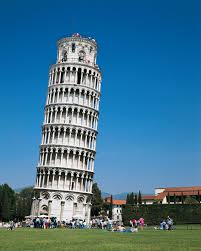
The Leaning Tower of Pisa
PISA 2018 (Programme for International Student Assessment) is a report on the educational attainments of 15-year-olds globally. As expected, China leads, followed by Singapore, in math, reading and other skills. Overall, scores declined. Israel especially did poorly, leading the world in the spread between top and bottom in schooling achievements.
But one key point emerged, that is especially disturbing. A British educator, Kevin Courtney, made this observation:
“…globally fewer than 1 in 10 students were able to distinguish between fact and opinion…[this] is extremely worrying in an era of fake news.”
Fewer than one in 10 know the difference between fact and opinion. This means that more than 9 in 10 15-year-olds believe that when someone states, “I think that…”, that is indistinguishable from when someone says, “it is a fact that…”.
Fact and opinion. This implies the death of truth, globally. And it indicates we are failing to teach our kids how to engage in critical thinking, which is simply the skill at knowing what is fact and what is not and hence needs checking and verification.
We should not be surprised, then, when wild unsubstantiated rumors take on a life of their own, and fanciful conspiracy theories, once stated, are widely believed.
Learning math, reading, science, these are all important. Telling fact from fiction is more important. It is time we taught this to our kids. If they don’t get it in school, perhaps we can give it to them at home?
The Era of False News: Why We All Must Think Critically
By Shlomo Maital

Today’s New York Times (“False News Really Does Spread Like Wildfire”, by Steve Lohr) asks a tough question: “What if the scourge of false news …is not …[Russians or bots]? What if the main problem is us?”
People are the principle culprits. You and me. This is the result of extensive MIT research of false news (they prefer that term to Trump’s ‘fake news’). “True stories were rarely retweeted by more than 1,000 people, but the top 1 % of false stories were routinely shared by 1,000 to 100,000 people. And it took true stories about six times as long as false ones to reach 1,500 people”.
We humans are responsible. Because false news is almost always more sensational, more livid, than true. So we rush to share it. The research of Sinan Aral, MIT Sloan School of Management, appeared in Science magazine.
So what can you and I, what MUST you and I, do? I think it is simple. Back to basics. Back to John Dewey. Back to Einstein. We have to learn again how to think.
I have been a college professor for over 50 years. In that time, did I teach my students, facts, concepts, tools? Or did I teach them how to think critically, including about what I am telling them? I don’t think I did a very job in training them in one of today’s most crucial skills, knowing to tell truth from falsehood.
Knowledge today has a short half-life. And in any case, knowledge can be found quickly, by anyone, using digital tools. But the ability to think, to sort fact from fiction, truth from lies — that has a very long half life. And that skill is the pillar of any democratic system. Because otherwise , scoundrels can get elected by telling us lies – and they do it all the time now.
Increasingly, people watch media, conventional and social, only when they agree with what it tells them. Critical thinking is anesthetized. This has to stop. We have to teach our kids to analyze, weigh, criticize, critique, challenge. We have to teach ourselves. In a world where this skill is more widespread, the Russians will simply draw a blank – and give up. And in a world where Trump says to Canada’s PM: “US has a trade deficit with Canada” (false), and later gloats that he just made it up (US has an overall trade surplus with Canada, it takes 3 seconds to check this), when the leader of the Free World doesn’t care if what he says is true or false, not does his base, it is incumbent upon us, every human being, to care a whole lot more.

 TIMnovate