
You are currently browsing the tag archive for the ‘David Brooks’ tag.
The Purpose of Life? Little Things Mean A Lot
By Shlomo Maital

In a recent blog, “Disney Theory of Life” (April 14), I referred to David Brooks’ New York Times column about the purpose of life. I offered my own theory, based on the Disney World mantra, “Make People Happy”.
In today’s New York Times, Brooks returns to this theme and quotes emails he received from readers. “I expected most contributors would follow the commencement-speech clichés of our high-achieving culture: dream big; set ambitious goals; try to change the world. In fact,” notes Brooks, “a surprising number of people found their purpose by going the other way, by pursuing the small, happy life.”
Examples? Kim (apparently a therapist): “Now my purpose is simply to be the person who can pick up the phone and give you 30 minutes in your time of crisis”. Terence: “big decisions have less impact on a life as a whole than the myriad of small seemingly insignificant ones.” Hans: “At age 85, …I am thankful to be alive. If there is one thing that keeps me focused, it’s the garden. Lots of plants died during the harsh winter, but, amazingly, the clematises and the roses are back, and lettuce, spinach and tomatoes are thriving in the new greenhouse.”
So, bottom line? Follow the wise advice of a woman I read about (probably in the excellent AARP retired persons’ magazine): “Ask yourself each morning, when you wake: what will I do for others today? And what will I do for myself?” And, as you fall asleep at night, ask yourself, “what did I do for others today? And what did I do for myself?”
A kind word? A helping hand? A smile? Little things, tiny things. They add up to something really big. They give real meaning to our lives, one day at a time.
Here are the words to the lovely song, Little Things Mean a Lot,
Blow me a kiss from across the room
Say I look nice when I’m not
Touch my hair as you pass my chair
Little things mean a lot
Give me your arm as we cross the street
Call me at six on the dot
A line a day when you’re far away
Little things mean a lot
Don’t have to buy me diamonds and pearls
Champagne, sables or such
I never cared much for diamonds and pearls
’cause honestly, honey, they just cost money
Give me your hand when I’ve lost the way
Give me a shoulder to cry on
Whether the day is bright or gray
Give me your heart to rely on
Send me the warmth of a secret smile
To show me you haven’t forgot
For always and ever, now and forever
Little things mean a lot
Give me your hand when I’ve lost the way
Give me your shoulder to cry on
Whether the day is bright or gray
Give my your heart to rely on
Send me the warmth of a secret smile
To show me you haven’t forgot
That always and ever, now and forever
Little things mean a lot
And, here is the link to Kitty Kallen’s lovely rendition of it. http://www.oldielyrics.com/lyrics/kitty_kallen/little_things_mean_a_lot.html
Feeling Empathy for Others: It’s Not Enough!
By Shlomo Maital
In a recent blog, I recounted NYT columnist Nicholas Kristof’s story about his high school chum, Kevin, who died recently after sinking into poverty and despair:
In his Op-Ed piece, Nicholas Kristof mourns the death of his school chum Kevin Green. They grew up together in Yamhill, Oregon, and ran cross-country together. Kevin lost a good job, went on welfare, got divorced, became obese, lived on food stamps, got diabetes, and died at age 54. Tea Party Republicans say he “had it easy because he got government benefits without doing anything”. Kristof notes that Kevin collected cans and bottles by the roadside, to make $20 a day for subsistence. Easy? Want to trade places? Did Republican wealth “trickle down” to Kevin and help him get a good job? Not a chance.
Kristof, in a later column, reports that he got immense flack from readers for this column. They said, it was Kevin’s own fault. He brought it on himself. Those hard-hearted readers lacked empathy, he notes.
So do our leaders. It’s no wonder. Did you know that half of all members of the U.S. Congress (House and Senate) are millionaires? How can they feel our pain, our middle-class pain?
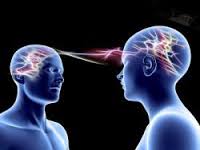
We need leaders with empathy. Empathy – feeling the pain of others – is built-in to our physiology. We have ‘mirror neurons’ that enable us to feel what our counterpart is feeling at a given moment, not just pain, but joy, embarrassment, grief, happiness. But over time, we can easily turn off those empathy neurons, and rationalize them away.
But even strong feelings of empathy, I feel, is not enough. I found David Brooks’ NYT column, written over three years ago, in Sept. 2011:
Empathy orients you toward moral action, but it doesn’t seem to help much when that action comes at a personal cost. You may feel a pang for the homeless guy on the other side of the street, but the odds are that you are not going to cross the street to give him a dollar. There have been piles of studies investigating the link between empathy and moral action. Different scholars come to different conclusions, but, in a recent paper, Jesse Prinz, a philosopher at City University of New York, summarized the research this way: “These studies suggest that empathy is not a major player when it comes to moral motivation. Its contribution is negligible in children, modest in adults, and nonexistent when costs are significant.” Other scholars have called empathy a “fragile flower,” easily crushed by self-concern.
In other words: It’s not enough to feel empathy toward others. You have to ACT on your feelings and do something about it, even something small and symbolic, at least once in a while, so that your empathy muscles do not wither.
In our recent book Cracking the Creativity Code, we list 10 brain exercises to develop creativity. The first of the 10, and most important, is “Act, Don’t Gripe”. If you see something wrong, injustice, try to fix it, take action, at least once in a while. I know a friend, who always, as a matter of principle, gives small change to homeless and those who beg on the streets, even ones who are clearly running a scam.
I wish we had political leaders who were middle class working people. We really don’t. Until we do, it’s up to us. Sharpen your feelings toward others. Develop your empathy. But don’t leave it at that. Try to act on it. If more people did that, maybe we wouldn’t even need to bother with those millionaires in Congress.
Why Capitalism is (Not) Committing Suicide
By Shlomo Maital

David Brooks has another superb column in the weekend new York Times. Titled: The Ambition Explosion, he quotes work by sociologist Daniel Bell, who wrote in 1976 that “capitalism undermines itself because it nurtures a population of ever more self-gratifying consumers. These people may start out as industrious, but they soon get addicted to affluence, spending, credit and pleasure and stop being the sort of hard workers capitalism requires.”
Add to that capitalism’s tendency to concentrate wealth, corrupting democracy with it, and you have two huge reasons for its demise. Right?
Perhaps not. My wife and I are returning home today from a long trip, which included mainland China. There, I found highly ambitious young people, full of aspiration and amibition, some working as waiters while studying, and one, who started a vending machine business while working one of seven jobs and studying for his B.A. “For instance” is not a proof, as the Yiddish saying goes, but it sure convinced us.
Brooks cites what he thinks is the real Achilles Heel of capitalism – not the lack of ambition, or even wealth concentration, but the lack of real meaning!
“The real contradiction of capitalism is that it arouses enormous ambition, but it doesn’t help you define where you should focus it. It doesn’t define an end to which you should devote your life. It nurtures the illusion that career and economic success can lead to fulfillment, which is the central illusion of our time.”
In the end, the ‘toys’ you buy with great wealth – like Lamborghini’s, we saw a dealership for them in Hong Kong and it was active and profitable — do not in themselves provide meaning or satisfaction or fulfilment. So what does? Some try philanthropy. Others, social entrepreneurship.
Make meaning, not money, counsels Guy Kawasaki, serial entrepreneur, venture capitalist and Macintosh guru. For young people — at the start of your career, define your legacy and your life goals, goals that will at the latter end of your life give you satisfaction and make your life meaningful. THAT will make your boundless talent and ambition focused and directed toward a worthy goal. It will also keep capitalism from committing suicide through sheer boredom. Listen to what Brooks counsels: “Capitalist ambition is an energizing gale force. If there’s not an equally fervent counterculture to direct it, the wind uproots the tender foliage that makes life sweet.“

 TIMnovate