
You are currently browsing the tag archive for the ‘dogs’ tag.
If Valerie, a 10 lb. mini-dachshund can survive for over 500 days in the Australian wilderness – so can we endure hardship and overcome challenges that seem insurmountable
By Shlomo Maital
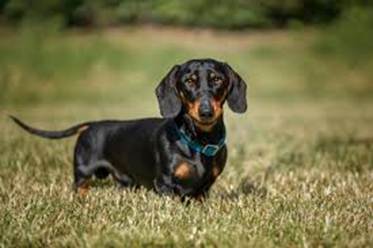
Valerie
If a little 4 kg. (10 pound) mini-dachshund named Valere, a pampered well-cared-for little dog, highly domestic, can survive alone for 529 days in the Australian wilderness – well, you and I, my friends, can overcome hardship as well, including things that seem insurmountable.
Here is the story, by Brandon Drenon, BBC News:
“A miniature dachshund has been found alive and well after spending more than 500 days in the Australian wilderness. Kangala Wildlife Rescue said it had been working “around the clock” to find the dog, Valerie, on Kangaroo Island, off the coast of Australia. She was last seen by her owners on a camping trip in November 2023.
Georgia Gardner and her boyfriend, Joshua Fishlock, had momentarily left Valerie in a playpen at their campsite while the couple went fishing. When they returned, she was gone. Valerie’s 529 days in the wilderness – surviving intense heat and avoiding venomous snakes – was brought to an end in part through using Ms Gardner’s t-shirt to create a “scent trail” to a trap. “After weeks of tireless efforts Valerie has been safely rescued and is fit and well,” Kangala said in a social media post. The charity said volunteers spent more than 1,000 hours searching for Valerie, covering more than 5,000 km (3,109 miles).”
Valerie was found in good health, and even had gained some weight. What did she eat? Where did she find water? How did she keep up her spirits?
I learn from our little mixed breed Yorkie, Pixie, also 4 kgs., every single day, about patience, affection, loyalty, love and stoic determination. We humans may think we are at the top of the food chain – but maybe little Valerie ranks a bit higher, in the survival chain?
The Big Winners: Dogs
By Shlomo Maital

SAMSUNG
There is one big winner in the COVID-19 “shelter at home”: Our dogs. Like Pixie, our mixed-breed part-Yorkshire. We’re always at home, so any time is play time, and she brings us her rope and her weasel, to throw and play fetch. Then it’s walk time – it’s legal under partial ‘shelter at home’ to walk dogs, so she gets many daily walks, and we benefit from the fresh air.
When it’s TV time, she curls up on our laps, and as an equal opportunity dog, divides her presence between myself and my wife. She does her little circle – legacy of her wolf origins, who circle before lying down to sleep – and tucks in at our feet, her right ear straight in the air, alert and listening even when she sleeps. All this, in 4 kilograms (8.8 pounds).
Dog cognition expert Alexandra Horowitz, Barnard College, writing in today’s New York Times, observes, “[Dogs’] simple presence, and their willingness to be touched, is viscerally satisfying. Time spent reading on the couch is massively improved by a dog’s head resting on my leg, a warm snuffling muzzle directed at me is instantly calming. …there are some 90 million dogs in the US and in some ways we have treated dogs as quasi-people all along. “.
Horowitz notes that normally dogs experience social isolation, as the owners are at work. They stay alone for most of their days. Now that WE are in ‘social isolation’, we are giving dogs ‘more of what they deserved all along – our companionship’.
One of the benefits of COVID-19 is a major rise in dog adoption. “…shelters that recently put out calls seeking foster care for homeless animals reported being inundated with applicants…”.
Concludes Horowitz: “I hope we will maintain some of our current abnormal condition, giving our dogs the companionship they need. I hope we will come out of this with a fuller appreciation of the privilege that it is to keep the company of animals.”
Pixie: Thanks! We love and need you.

 TIMnovate