
You are currently browsing the tag archive for the ‘environment’ tag.
Joanne Chory: Be Bold!
By Shlomo Maital
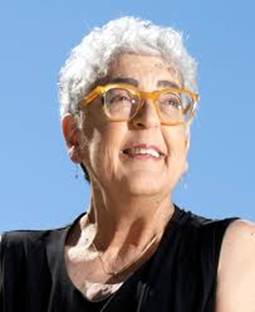
Joanne Chory
Be bold!
This is the advice to young people by the late Joanne Chory, a plant scientist, whose creative out-of-the-box thinking has changed forever how we view plants. She died a few years ago of Parkinson’s.
Geneticists made breakthroughs by focusing on fruit flies. They have a very short life cycle, so it is possible to make genetic changes and study their impact with quick results. Chory had a similar idea. Let us plant scientists focus on a single ‘fruit fly’ plant, and learn everything there is to know about plants in general. Among other things, she managed to mutate a plant so that somehow, it grew in darkness – defying the assumption that all plants need light for photosynthesis.
Prof. Chory had a vision for saving the planet from global warming: Here is how a colleague explained it, on the The Leap podcast, with Flora Licthman:
“…. she had this inspiring thought that what we have done in the last 150, 200 years or so, we have dug up dead plants. And we have burned dead plants. And that’s why there is a lot more CO2 out there. And Joanne said, well, let’s just reverse the process. Let’s put the CO2 back into the plants.”
Chory explained, that “as our world edges closer to a crisis of sustainability. I hope it will catalyze greater awareness of the positive impact that plants can have in the quality of human life.”
Lichtman explains, “Plants vacuum CO2 out of the air and store it. But when plants die or decompose, that CO2 goes back into the atmosphere. So Joanne thought, what if we could engineer plants, specifically crops that we’re planting already, to store carbon more permanently by making their roots bigger and deeper and better at holding carbon underground?”
Simple. Revolutionary. Feasible. Why didn’t we think of this before?
Be bold, Chory advised young scientists. Or just don’t bother doing it.
As a professor, I learned early on that the path to success was incremental baby-steps, elucidating what others had done, so that as referents, they would approve and get you published. I tried a different approach, and sought with my wife to incorporate psychology into economics. And, at the same time, to try to explain economics to non-economists, baffled by the jargon and math. My rejection letters tore strips off me, for ‘populizing’.
Take the road less travelled. Here is how poet Robert Frost said it: I shall be telling this with a sigh Somewhere ages and ages hence: Two roads diverged in a wood, and I— I took the one less traveled by, And that has made all the difference.
Maybe some day, we will cover the earth with CO2 hungry plants, who swallow billions of tons of it and bury it deep in their roots, in the ground, to halt or even reverse climate change. Because – one iconoclast plant scientist took the road less travelled.
2047: We Were Warned
By Shlomo Maital

Twelve years ago, the leading science journal Nature published an unusual article. It was the result of a class project, led by Dr. Camilo Mora, University of Hawaii. Mora and students did this:
“They divided the earth into a grid, with each cell representing 386 square miles. Averaging the results from the 39 climate models, they calculated a date they called “climate departure” for each location — the date after which all future years were predicted to be warmer than any year in the historical record for that spot on the globe. The results suggest that if emissions of greenhouse gases remain high, then after 2047, more than half the earth’s surface will experience annual climates hotter than anything that occurred between 1860 and 2005, the years for which historical temperature data and reconstructions are available.”
The students used models operated by 21 research centers in 12 countries, all of them publicly available.
The New York Times’ Justin Gillis wrote about it, under the headline: “By 2047, Coldest Years May be Warmer than Hottest in Past, Scientists Say”.#
My wife and I have five great-grandchildren. By 2047, they will be graduating from college, finding a spouse, and beginning their working lives. The planet in which they do this will be hotter than hell. The coldest day will be warmer than the hottest in the past. The hottest day? Words fail me.
Most attention now is being paid to the melting of the Arctic icecap. But the 2013 paper showed that the greatest impact of global warming will occur in the tropics, near the equator.
The tropics constitute 40% of Earth’s surface area and contain 36% of Earth’s landmass. It is home to 40% of the world’s population, projected to reach 50% by 2047.
The tropics are also where I and our great-grandchildren live – in Israel, only some 2,000 miles north of the equator.
The generations, including mine, that did this to our planet and to our descendants can no longer prevent it, but only mitigate it, maybe slightly. And the Big Oil big bucks that pump the media use the fossil fuel billions to perpetuate the problem.
It we truly love our children, grandchildren and great-grandchildren – how in the world have we done this to them?
# New York Times, Oct. 10, 2013, Section A, Page 10.
Laudato Si: Worth Careful Reading
By Shlomo Maital
“Our common home is like a sister with whom we share our life and a beautiful mother who opens her arms to embrace us. This sister now cries out to us because of the harm we have inflicted on her by our irresponsible use and abuse of the goods with which G-d has endowed her. We have come to see ourselves as lords and masters, entitled to plunder her at will. … This is why the Earth itself, burdened and laid waste, is among the most abandoned and maltreated of our poor…she ‘groans in travail’.
These are the eloquent opening words of Pope Francis’ new encyclical, Laudato Si, “Praise the Lord…”. Yesterday was the Jewish holy day Yom Kippur, Day of Atonement. My sister in law Rabbi Suri led a discussion of Laudato Si, as we read excerpts, and discussed the Jewish and Catholic views on ecology and ethics. I plan to read the entire document. Meanwhile, based on excerpts, I urge you to read it all. Most Papal encyclicals are dense and scholarly. This one is written in Pope Francis style, clear, well-reasoned, with beautiful metaphors and sharp admonishments.
We have indeed laid waste to our earth. The 15th COP Conference of Parties (the UN’s euphemism for impotent political gatherings) will take place in November in Paris. But there is a groundswell that holds out hope. Rather than ineffective top-down political leadership to deal with global warming, we now are seeing increasing bottom-up activism, with each individual everywhere asking, what can I do to use less water, waste less, plunder less, in order to be a moral human being, as Pope Francis counsels? If each of us acted on our beliefs, even in small ways, the aggregate effect would be immense.
Perhaps Laudato Si will ignite such a groundswell of rebellion and action world-wide. We will listen carefully to Pope Francis’ address to Congress today, and to the UN tomorrow.

 TIMnovate