
You are currently browsing the tag archive for the ‘football’ tag.
Travis Hunter Goes Both Ways
By Shlomo Maital
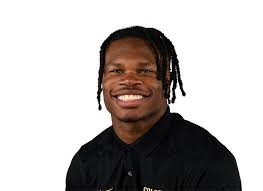
Travis Hunter
Travis Hunter has just won the Heisman Trophy, for the outstanding college football player of the year. Usually it goes to quarterbacks. But not this year.
Hunter is unusual. Most highly-paid football players play either offense or defense. That alone is hard enough. Football players suffer injuries constantly, and many end their careers with CTE — chronic traumatic encephalopathy — brain damage incurred through repeated blows to the head and concussions.
Travis plays both offense and defense. The 21-year-old athlete played for Colorado. He caught 92 passes for 1,152 yards on offense, with 14 touchdowns. On defense, as a corner linebacker, he made 32 tackles, 4 interceptions and 7 pass breakups. He helped his team shift from a big time loser to a 9-3 record this year, under coach Deion Sanders. In the season finale, his team routed Oklahoma State 52-0, and Hunter caught three touchdown passes.
Once upon a time, football players played both offense and defense. No longer, In fact, many players are platooned – they play one down, then are taken out to rest. A typical NFL team has 53 players on the roster – divided into three groups, offense, defense and special teams (who handle kickoffs and punts).
Travis Hunter broke the mold. When he is drafted for the professional NFL, I doubt he will be allowed to play both ways. He calls to mind the incredible Shohei Ohtani, Japanese baseball player who both pitches and hits and excels at both for the Los Angeles Dodgers.
Barcelona Competes By Helping the Competition
By Shlomo Maital
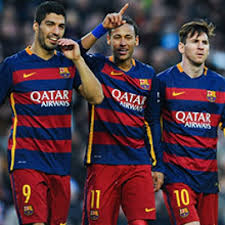
Rob Hughes covers soccer (football) for the Global New York Times, and his writing is always insightful and interesting. In his article yesterday (March 2), “Barcelona’s goal? A stronger Liga”, he describes the behavior of those who lead Barcelona’s remarkable football club, one of Europe’s best, perhaps soon to break the Spanish record for most consecutive games without a loss (34, set by Real Madrid in 1989-90).
Barca’s ownership structure is unique. It is not owned by a billionaire sheikh, Russian or Asian oligarch, or American billionaire. It is owned by 140,000 “socios” who pay annual fees in order to own a piece of the club. Like most clubs Barca gets most of its revenue from television fees. Until now Barca and Real Madrid have cut television deals separate from the rest of the league, known as La Liga, that gave them huge resources. But starting this summer, the two main Spanish clubs will sacrifice significant financial advantage. In a three-year agreement, Real Madrid and Barca will get 17 per cent of TV revenue, or 160 million euros each annually; the other teams, will receive far more money than they get today.
Why in the world would two rich clubs give up revenue just to help the other teams?
Josep Maria Bartomeu, Barca’s president, explained: Giving up revenues to other clubs is a short-term pain for long-term gain…an investment. “We have to make La Liga more competitive”, he said.
The logic is impeccable. The more competitive La Liga, the more people will watch the games, and the more revenue all clubs will get, including Barca.
Is this true capitalism? Is it more enlightened than the distorted short-run capitalism that tries to destroy competitors at all cost?
What We Learn from Sir Alex Ferguson
By Shlomo Maital
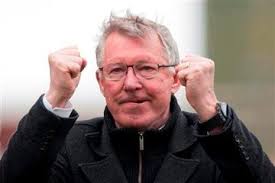
Manchester United manager Sir Alex Ferguson has just announced his retirement, after 27 years at the helm of the great British football team. Ferguson is 71.
What can we learn from his career, and unparalleled success (48 titles, including 2 European championships, 13 British championships, 5 English cups, 4 English league cups, 3 Scottish championships, 4 Scottish cups, 1 Scottish league cup, …and more)?
What odds would you have given that the following manager would become the great football coach in history?
* He was born in poverty, son of a plasterer’s helper in the shipbuilding industry;
* as a player, he was unsuccessful, signed by Rangers but dumped when he failed to mark Celtic captain Billy McNeill in the Cup final;
* he began to manage at age 32, at St. Mirren, who sacked him after four years because he ‘intimidated his office secretary’; Ferguson had “no managerial ability”, said St. Mirren Chairman Willie Todd.
What I learn from Sir Alex is the enormous importance of two key qualities: Fierce stubborn persistence, and the ability to learn continually, especially from failure. His persistence, he may have gained from his lower-working-class Scottish origins. According to Rob Hughes, Global New York Times soccer writer, perhaps the best of his kind, Sir Alex rebuilt Manchester United’s team five times, each time successfully, often building on local home-grown talent from the youth organization. He could have moved on to another club. Instead he stayed and rebuilt.
I had the privilege of bringing a group of managers to Manchester United on a benchmarking trip. We heard from the CEO, toured the amazing facility, and learned why Manchester United, together with Real Madrid, is valued at $3.1 b., with about $500 m. in annual revenues. It is a superbly managed business, where everything runs like clockwork, and is owned by the Glazer family, Americans. Unlike the Russian and Arabian oligarchs who own a third of the English Premier League clubs, the Glazers more or less keep their hands off ManU operations.
What I learn from Sir Alex is the life lesson of simply not giving up, facing reality, learning from failure and building it into success. Ferguson had his eye on Dutch striker Robin Van Persie (Arsenal), and lured him to ManUnited despite more lucrative offers. Von Persie’s goals brought ManU the league title this year. (He scored three in the first half of the recent game against Aston Villa; the second goal was ‘the goal of the century’, a cannon-shot volley, according to Sir Alex).
Sir Alex teaches us, do what you love doing with passion and stubborn stick-to-it-iveness, pick yourself up after failure, be loyal, always always learn, and try again, and again, and again…and if you do it long enough, you too will be the greatest in the world at what you do, like Sir Alex.
 TIMnovate