
You are currently browsing the tag archive for the ‘health’ tag.
My New Eyes: Thanks to Patricia Bath
By Shlomo Maital

Dr. Patricia Bath
On December 22 and again on January 19, I got new eyes.
A skilled surgeon removed the clouded lenses in my eyes, and replaced them with new plastic ones. The anasthesia was local, so I watched the whole thing in real time. It was fascinating.
A little laser robot carefully approached my eye, made a tiny incision in the cornea (the cells of the cornea are unique, they are made to grow back quickly, in case the cornea is scratched or damaged – a gift from evolution) and inserted a small collapsed lens, which then unfolds. The laser robot is very precise and rarely, very rarely, errs.
Later, I learned whom to thank – apart from the brilliant and experienced surgeon, Dr. Avi A. Thank you, Dr. Patricia Bath, a pioneering African-American ophthalmologist, surgeon, and inventor. Here is her story, from Wikipedia:
“In 1986, Bath conducted research in the laboratory of Danièle Aron-Rosa, a pioneer researcher in lasers and ophthalmology at Rothschild Eye Institute of Paris and then at the Laser Medical Center in Berlin, where she was able to begin early studies in laser cataract surgery, including her first experiment with excimer laser photoablation using human eye bank eyes. Bath coined the term “laser phaco” for the process, short for laser photo-ablative cataract surgery and developed the laser phaco probe, a medical device that improves on the use of lasers to remove cataracts, and “for ablating and removing cataract lenses”. Bath first had the idea for this type of device in 1981, but did not apply for a patent until several years later. The device was completed in 1986 after Bath conducted research on lasers in Berlin and patented in 1988, making her the first African-American woman to receive a patent for a medical purpose.”
I need not recount the many many ceilings Dr. Bath had to break through, to achieve success.
Wish I could thank her in person. And so do millions of people. Cataract surgery is the most routinely performed surgical procedure of all, with 7 million surgeries performed per year in Europe, 3.7 million in the United States, and 20 million worldwide. Since its first introduction, phacoemulsification cataract surgery (PCS) has become the standard of care, mainly done by laser.
If you are elderly and your vision is becoming poor, see an ophthalmologist – and if cataract surgery is recommended, don’t be afraid. In many cases, it is life changing. In order for our brains to continue to function well, we need good vision. 20 million people worldwide testify to this. That little robot laser is really really good at what it does.
I wish this expensive device could be provided widely to poor countries. One study in northern India showed that between 53% and 60% of those with cataracts are untreated.
Social Media Harm Young Girls & Young Women
By Shlomo Maital
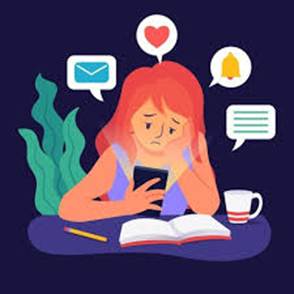
The American Psychological Association’s journal, Monitor, publishes annually the top 10 research papers published in the 89 APA journals, based on downloads by psychologists. The results for 2024 show what problems US psychologists are dealing with and what is on their minds most.
You guessed it. The harmful impact of social media, especially on young girls and young women.
The #1 article, “Living for the likes” finds that “women who use social media more than others experience more fear of missing out (FOMO), social comparison and appearance anxiety.
#2: “Viewing images of ‘thin-ideal’ body shapes lowers personal body images for women of all ages and self-esteem levels.” You might call this a “Barbie” effect.
Both these two articles were published in Psychology of Popular Media, vol 13, no. 3.
I recall as a youth how intensely sensitive I was about how I looked (and I am a male!), to the point where I refused to wear eyeglasses for almost two years (those who wore spectacles were called four-eyes). And this was long before Tik-Tok. Social media greatly amplify sensitivity to body image.
#3. “Limiting social media use decreases depression, anxiety and fear of missing out in youth with emotional distress.” The title of this article tells it all. Limiting social media use to one hour per day for 3 weeks was highly beneficial. This paper too appeared in Psychology of Popular Media (advance publication).
Wise parents are finding ways to limit use of social media among their kids. But the resistance is strong, because the algorithms used by the media are purposely insidious, fostering dependence and constant use, simply to make more money.
In August 2023, Associated Press reported this: BEIJING (AP) — The Cyberspace Administration of China on Wednesday published the draft guidelines on its site, stating that minors would not be allowed to use most internet services on mobile devices from 10 p.m. to 6 a.m., and that children between the ages of 16 and 18 would only be able to use the internet for two hours a day.”
China is an undemocratic big-brother society that limits its citizens’ freedom relentlessly. But perhaps this regulation does make a lot of sense.
And last year, Australia, a highly democratic society, “…passed one of the strictest internet crackdowns in the world last month, banning children under 16 from being on social media or opening new accounts. The law, which takes effect a year from now, holds social media companies responsible for verifying kids’ ages. Not complying could trigger fines up to nearly $50 million.”
The evidence is clear. Social media harm the young, and not only the young. It is up to us adults to protect them, even against themselves. But I think we are failing.
Freed Hostage Gadi Mozes: Walks 7 kms. Daily In a 2 sq meter cell
By Shlomo Maital

80-year-old Gadi Mozes, held hostage by Hamas for 14 months, agronomist, leading member of Kibbutz Nir Oz – has been released. Held in darkness, without his glasses for 70 days (broken), he recounted on his release that he walked 7 kilometers daily, despite being held in a tiny cell. How? He counted the floor tiles, knew the dimensions of each tile (about four to a meter) — and daily, made sure to walk 7 kilometers, keeping track by counting the tiles and pacing back and forth over the tiny floor area.
Why did he do this? I am roughly his age. I get it. I would have tried to do the same. Maybe with pushups as well.
Elderly men and women tend to suffer from sarcopenia: “a type of muscle loss that occurs with aging and/or immobility. It is characterized by the degenerative loss of skeletal muscle mass, quality, and strength. The rate of muscle loss is dependent on exercise level, co-morbidities, nutrition and other factors.”
In short: Seniors, use it or lose it. And all around us, well-meaning family and friends are solicitous of us, e.g. offering me seats on the train. Even when I choose to stand.
Sarcopenia is insidious. After you lose muscle mass, getting it back is really hard. I just now walked several kilometers, half of it uphill, and it was pretty hard, after a doctor-prescribed pause following cataract surgery.
So, seniors. Work out. Walk. Lift things (with bent knees). Resist pampering yourself. Use those muscles. You need them. Hard to get ‘em back when they weaken.
And, for Gadi Mozes. Incredible admiration for his resilience. First thing he said on returning: I will rebuild (my kibbutz) Nir Oz.
And he will. Anyone who can walk 7 kms. daily in a tiny dark cell can do anything.
We Think Too Fast
By Shlomo Maital
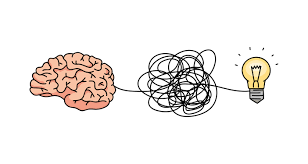
We think too slow. This is a conclusion of a lovely article in the New York Times by Carl Zimmer. *
Streaming a high-definition video takes about 25 million bps (a ‘bps’ is bit per second, and ‘bib’ is a unit of information, say, zero or one). The typical download rate, engineers have found, in a US household is 262 million bps.
OK, that’s the Internet. Now, how fast is the ‘download’ rate in the human brain? How fast does information flow from our brain to our bodies?
Caltech neuroscientist Markus Meister has published a study in Neuron, according to Zimmer, and speaks about the endless hyperbole about how incredibly complex and powerful the human brain.
Actually, it’s pretty slow, Meister says. He and colleagues estimate the flow of information ‘downloaded’ from the brain to the body is…. “just 10 bps”. Ten bits per second. The title of their article? “The unbearable slowness of being”. This is a clever play on the 1984 novel by Czech writer Milan Kundera, The unbearable lightness of being. At 10 bps, you couldn’t begin to download even a silent black and white movie from 1920.
Just 10 bps. Not even enough to download a high definition vide. Huh!
Let me make an opposing argument. Even 10 bps is far too fast. Have you ever said things you wish you hadn’t? Yes? Many times? Reacted too fast?
Radio stations have a kill button. What you hear is delayed by a second or two, before it is aired. This is just in case someone calling in uses a profanity, not allowed by FCC rules, and the host hits the kill button to avoid broadcasting it.
I find I need a delay/kill button. Think something. Think if it really needs to be said. Is it hurtful? False? Emotionally disturbing? Hit the delay before you send it out into the air. I wish I had done this more often – before I invented my own ‘kill button’ — think it, listen to it as if you are saying it, and only then, actually say it.
No, scientists, the brain is not too slow. If anything, it may be too fast. Slow it down a bit. Believe me – it will keep you out of hot water, especially with your partner or spouse.
- Carl Zimmer. “The speed of human thought lags far behind your internet connection, study finds”. New York Times, December 26, 2024.
The Tragedy of Okinawa: A Lesson for the World
By Shlomo Maital

Consider Okinawa, a Japanese island. A sad natural experiment is underway. A natural experiment is when without intervention of scholars, changes occur that enable us to gain major insights.
Once, Okinawa was a ‘blue zone’, a region where the elderly lived very long lives in good health. But… no longer. As a scholar reports to the German Deutsche Welt website: “An influx of foreign influences, ranging from fast food to less exercise, the stress of modern life, as well as a loss of the traditional sense of ‘ikigai’ in younger people are all to blame.”
“For generations, the people of Okinawa prefecture in Japan have enjoyed the reputation of being among the longest-lived humans on the planet. Medical experts and gerontologists have flocked to these semi-tropical islands off southern Japan in search of the secret to the local population’s longevity, with most concluding it was a combination of a nutritious diet, regular exercise and the support of family and the broader community.”
But then? US military bases in Okinawa began exposing young people to fast food and American diets. And then…
“The life expectancy of the people of Okinawa is coming down quite rapidly and we believe the problem is that younger people have failed to follow in the footsteps of earlier generations,” said a part time as a clinical cardiologist and is joint-founder of the Naha-based Okinawa Research Center for Longevity Sciences. “The people of Okinawa have been influenced by the food and lifestyle choices of other societies, particularly that of the United States.”
“Since Japan’s surrender at the end of World War II in 1945, Okinawa has remained home to a large number of US military bases and tens of thousands of troops. A culture of fast food and television over physical exercise has rubbed off on local people, he said, and the results can now be seen.”
And “ikigai”? An 89-year-old Japanese man, Suzuki, recounts: “”I believe the concept of ‘ikigai’ is important to our lives, especially in older people,” Suzuki said, referring to the traditional idea of the reason a person has for living. “My job at the hospital is very busy and that is my ikigai,” he said. “It is important for me to help people who are sick and I do not consider them my patients, I see them as my friends. But being with them also helps me as isolation and loneliness are very dangerous for old people.
Diet. Activity. Exercise. Purpose in life. As Okinawa replaces its own culture with that of the US and the West – people live shorter lives, and perhaps, less fulfilled ones.
Is there a lesson here?
Mapping every human cell
By Shlomo Maital
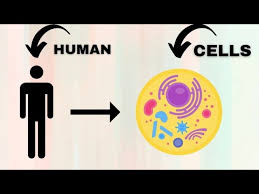
Two important developments in cell biology, published this week, suggest major breakthroughs in how healthcare is provided.
- Preventing disease is always superior to treating it, though Big Pharma loves selling billion dollar drugs. One approach to this has been through use of CAR-T cells.
Chimeric antigen receptor (CAR) T-cell therapy is a way to get immune cells called T cells (a type of white blood cell) to fight cancer by changing them in the lab so they can find and destroy cancer cells. Up to now, this approach has been used by modifying the cancer patient’s own cells. Published work by Chinese researchers, joined by Americans, suggests that donor CAR-T cells can be used as well. This is hugely important – because modifying each cancer patient’s CAR-T cells is expensive and takes time. Using modified donor cells means that large stocks of CAR-T cells can be placed ‘on the shelf’ – though it is unclear whether Big Pharma would be willing to cut down the branch their huge profits rests on.
2. Writing in The Economist, Geoffrey Carr explains how the Human Atlas Project may also change our lives.
“One thing that is now being done is the Human Cell Atlas, a project made possible by the Human Genome Project’s identification of the 20,000 or so protein-coding genes that can determine a cell’s nature. And what a thing it is. The endeavour has involved thousands of researchers spread over all six inhabited continents proposing to track down every type of cell in the body, where each is located, what their jobs are, how they form in a developing embryo, how they collaborate, how they cause diseases when they go wrong and so on.
“The long-term goal is to create something akin to a human digital twin—or, rather, a whole series of twins covering the spectrum of human sexes, ages and geographical backgrounds that can be poked and prodded digitally to see how they react. This will help researchers understand how actual bodies behave, decide which experiments are worth doing in the real world and, perhaps, provoke ideas that might not otherwise have had their lightbulb moment.
It is a huge endeavour, dwarfing the HGP in size and scope, but cleverly keeping costs down by piggybacking on and co-ordinating the efforts of people already working in established laboratories, rather than starting (as many genome-project efforts did) from scratch. Like the genome project, though, it makes its data available immediately, for any and all to use.
“However, unlike the genome project, which was frequently in the news up until that triumphant announcement at the White House in June 2000, the Human Cell Atlas has stayed largely under the radar. As we reported almost two years ago, the contrast is partly a result of the genome project having had well-run PR, a clear end goal, a competitor in the form of a private venture which aimed to beat the public one, and the (ahem) rather large egos of some of those involved (on both the public and private sides).”
= = = = =
It’s pretty simple. Our 20,000 genes (some of them) lead to expression of proteins. Proteins run our lives, keep us well and fight invading germs. Mapping our 30 trillion cells in the human body (!), linking proteins to cells, is an enormous project, requiring global cooperation among cell biologists. But it can yield huge benefits in preventive medicine.
The atlases that showed detailed geographies enabled seafarers to explore the world, and they changed our world. An atlas of the cells in the human body may do the same, for our preventive medicine.
Choosing Breakfast Cereal: Help!!!!
By Shlomo Maital
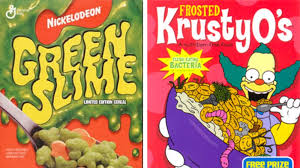
Remember the days when the choice of breakfast cereals was, basically, Corn Flakes or Rice Krispies?
Well, let’s do the math. An average supermarket these days allocates at least 35 linear feet of shelf space to breakfast cereals, comprised of 5 shelves each 12 inches high, or 60 inches in total in height, times 84 inches (7 feet) long. That is, 7 feet long times 5 shelves.
An average cereal box is 12 inches high and 8 inches in width. That means a 7 ft. shelf can hold up to 10 boxes per shelf, times 5 shelves, or 50 boxes. Some could be the same type and brand – say, half. So, there can be 25 different types of breakfast cereal on the shelf.
And this is a huge underestimate. 25 different cereals to choose from! Worldwide, there are an estimated 1,000 types of breakfast cereals. Perhaps half of those in the US alone.
Do we really NEED 25 different breakfast cereals on the shelf? Do we need KrustyO’s and Green Slime? (those two didn’t last long, for good reason!).
The breakfast cereal shelf in a supermarket is a microcosm of capitalism gone wild. It offers us a vast range of choices, that long ago ceased creating real value. Part of the breakfast cereal dynamic is the use of ‘sharp elbows’ to gain more shelf space, because that means selling more product. So, companies have a keen interest in proliferating brands, just to get more space on the shelf.
Let’s say, like me, you prefer Corn Flakes. You still have to search through 25 different kinds of cereal, just to find the one you usually like and buy. And it may be hard to find – because the sugary ones are the most profitable. So Corn Flakes may get the bottom far right shelf…Siberia. The science of product placement on shelves is very well developed.
So, if you shop at the same supermarket each week, can you get to know the placement of what you usually buy – and save cognitive energy? Sure – except, those diabolical shelf stockers keep mixing things up and changing locations. Mainly, to feature prominently more profitable, or newer, products. Sometimes, the stocking is done by the companies’ sales reps themselves…and they are diabolical!
The New York Times just published a neat article by Kashmir Hill, who used AI to help her make daily choices and simplify life. Worth reading… but, alas, not much help when it comes to finding Corn Flakes hiding under big boxes of Green Slime. *
Kashmir Hill. “I took a decision holiday and put AI in charge of my life”. NYT Nov. 1 2024.
The Secret of Life: 3 Proteins
By Shlomo Maital

Have you ever wondered: How in the world do those little sperms – cells with big heads and wriggly tails – manage to get into the ovum, the female cell produced by the ovaries? Cells have thick walls. They have to – otherwise, really bad stuff could get int. COVID, for instance, gets into cells, because it has a huge long spike, a spear, and it pokes its way into the cell, and ‘persuades’ the cells in our body to produce copies of itself. But the little sperm? They have no spike.
But what DO they have? Writing in the New York Times, October 17, Elizabeth Preston explains clearly and movingly a new finding, that solves the mystery.[1]
A Google company, DeepMind, developed software, AlphaFold, whose principal developers shared the Nobel Prize this year for chemistry – a rare event in which the Nobel for science is given to a group of researchers from a business, rather than to scholars from a university or lab. Using AlphaFold, scientists at a research institute in Vienna have discovered the nature and structure of the three key proteins in the head of the sperm, that act as ‘keys’ to combine with a protein in the ovum cell wall and ‘unlock’ it, to enter, fertilize it – and generate a zygote, a fertilized ovum ready to reproduce. Proteins are driven by genes, and they control our lives. They have very complex ‘folded’ structures that are really hard to decipher — until now.
And – here’s the clincher. Those 3 proteins – they are shared by a huge variety of living things – humans, yes, and ….zebrafish. Those lovely striped black and white fish. Same 3 proteins on their testes (sex organs).
Does this make you think, that we humans are not really at the head of the food chain, but instead, PART of an amazing ecosystem with which we living things share many things, including those key (double meaning) proteins? Does this make you feel a bit humble, as it does me?
Picture that obstreperous sperm, outracing a million rivals, reaching the ovum, knocking politely on the door – no answer. Knocks again. No answer. Whips out the keys (3 proteins), turns the key in the lock, wriggles inside – and creates a new life, or the start of it. And then? Those two helixes of interlocked DNA, they separate, one stays, the other moves on to the divided cell… and the process continues.
There is incredible beauty in the creation of life – and those 3 proteins have unlocked only a very tiny part of it.
[1] Elizabeth Preston. “Sperm can’t unlock an egg without the ancient molecular key”. NYT Oct. 17.
TB Vaccine Prevents Alzheimers
By Shlomo Maital
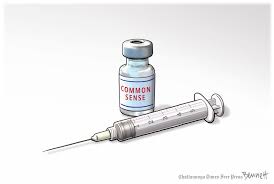
Science reporter Ruth Schuster, writing in the daily Haaretz, reports on new research, showing that a Tuberculosis vaccine – an old one – may prevent dementia! This is promising, hopeful – and crucial, because we don’t know how to reverse Alzheimer’s, or cure it, nor even diagnose it for certain until autopsy (after death).
What is the vaccine? It is called BCG – Bacillus Calmette-Guerin, developed to fight tuberculosis in the early 1900’s! It is a live vaccine, a weakened strain of bovine (non-human) TB. The vaccine has generalized immune-system-stimulating characteristics and is even used today for treating superficial bladder cancer. Researchers have found that bladder cancer survivors treated with BCG had lower rates of Alzheimer’s and even Parkinson’s.
Dementia is a huge problem. The WHO says 55 million people were diagnosed with dementia as of 2020 – and that’s a huge underestimate. It may double by 2050.
Two researchers – Prof. emeritus Charles Greenblatt, Hebrew University of Jerusalem, and Prof. Richard Lathe, Univ. of Edinburgh Medical School, have published two key papers in the Journal of Alzheimer’s Disease (so far, just the abstracts have been in print).
The authors review research and state: “Once one gets a BCG shot against TB as a kiddie, one has diminished risk of Alzheimer’s in old age”.
Think prevention! the authors state. Apparently, the weakened bacillus sticks around in our brains, from childhood, and helps the body fight off the amyloid plaque that gums up our brains and causes dementia. A small piece of evidence: Alzheimer’s rates are lower in the developing world, where the BCG vaccine is still widely used, than in the developed world, where BCG has been replaced by more modern TB vaccines.

 TIMnovate