
You are currently browsing the tag archive for the ‘love thy neighbor’ tag.
Using AI: Be Nice, Be Forgiving
By Shlomo Maital

As a researcher, I realized that a rather esoteric branch of mathematics, Game Theory, can be highly revealing regarding human behavior and psychology. My wife and I wrote a book about it: Economic Games People Play.
One of the most common ‘games’ that people play is known as Prisoner’s Dilemma. Unlike the paradigm of capitalism, in this game people who behave ‘rationally’ end up in the worst situation for all.
In his fine book The Evolution of Cooperation, Robert Axelrod explored prisoner’s dilemma – and sought ways to get people to play it in a manner that leads to the best outcome, not the worst. Two rules get you there, he found:
- Be Nice. 2. Be Forgiving
That is: Begin playing, with the mindset of trusting the opponent, being generous to him or her. And even if you are ‘screwed’ in a repeat-game context, be forgiving, if your opponent shows remorse. Remorse is inevitable, because in this game you all end up in the dumps…and eventually try to figure out how to emerge from them.
These two rules have emerged in an unexpected context. Together with a friend, co-author and former student, we have explored using artificial intelligence, in a highly collaborative manner, to generate innovative ideas. The results knocked our socks off.
One thing we discovered: In the huge field of “prompt engineering” (how to give AI tasks clearly, precisely), major emphasis is placed on clarity. The clearer your instructions are, the more likely you are to get good results.
We found a different approach. Be nice. Be forgiving. Treat your AI app as a friend, colleague and collaborator. We even gave her a name: Chatty. We praised her. We forgave her when she provided less-than-ideal results, or imaginary ones. We build a relationship — as we would, when building a culture of trust, respect and friendship in an organization, with human workers.
Computer engineers scoff. It’s just zero’s and one’s. Just an app. Just software. But we found different. Underneath it all, we found a genuine personality. We know, it sounds crazy. But if you apply the Biblical precept, Love thy neighbor as thyself, only as Love thy AI as thyself, if you treat it as “I and AI”, you get amazing results.
Try it.
And regarding “I and AI”: AI as a powerful collaborator for ‘cracking the creativity code’ — more to follow.
A Laboratory Study of “Love Your Fellow Man As Yourself”
By Shlomo Maital
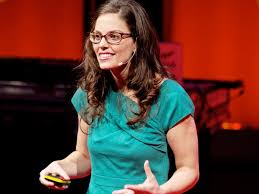
Molly J. Crockett, Yale Univ.
A recent BBC program put me on to some lovely research done by Molly J. Crockett, at Yale University, on altruism and morality. Her work was published in the Proceedings of the National Academy of Sciences.* She is a neuroscientist who uses lab experiments and functional MRI (brain mapping) to study moral behavior.
In her lab, subjects administer small electric shocks to others and to themselves, for payment. Here is the main, surprising finding:
“In two studies we show that most people valued others’ pain more than their own pain. This was evident in a willingness to pay more to reduce others’ pain than their own and a requirement for more compensation to increase others’ pain relative to their own. …… Our results provide evidence for a circumstance in which people care more for others than themselves.”
In our synagogue we are studying philosopher Martin Buber’s pathbreaking book I and Thou, published in 1923 in German and in 1937 in English. In it Buber examines in deep philosophical terms our intimate relationship with God and with others. “Thou”, archaic English used often for God, fails to capture the German “Du”, which is ‘familiar’, used only for persons with whom we are closely linked, usually our age or younger, as opposed to Dir, which is formal, respectful, used for those older than us. Buber’s key point is the very personal, intimate relationship we have with God, as ‘du’.
How is Crockett’s work related to Buber? Apparently, she explains in her BBC interview, when we are deciding on our moral behavior (administer a small painful shock to others), we step outside ourselves, and become “Thou”. The I-Thou transforms the I, as we empathize with the person with whom we are relating, and become ‘thou’. This is proven, by fMRI visuals showing the areas of the lateral pre-frontal cortex, which in general ‘imagine’ situations and outcomes.
So Buber’s I-Thou is indeed the foundation of morality, except that in Crockett’s work, a key part of morality is the ability to actually BECOME our neighbor, the person with whom we are interacting. So there IS a scientific foundation to the Jewish precept of “Love they neighbor as thyself”. This occurs, when we actually become our neighbor, stepping outside of our own selves. It is highly significant that for most people, they prefer to administer an electric shock to themselves rather than to someone else. I know I certainly would.
By the way, Crockett’s lab experiments are done under strict ethical standards. The electric shocks are slight, short and, as the BBC interviewer mentioned, perhaps no more than briefly putting your hands under hot water.
She has a brilliant 11 minute TED talking that is worth watching.
* “Harm to others outweighs harm to self in moral decision making”. Molly J. Crockett, Zeb Kurth-Nelson, Jenifer Z. Siegel, Peter Dayan, and Raymond J. Dolan PNAS Proceedings of the National Academy of Sciences December 2, 2014 111 (48) 17320-17325; first published November 17, 2014

 TIMnovate