
You are currently browsing the tag archive for the ‘medicine’ tag.
Replaceable You! Virtual You!
By Shlomo Maital
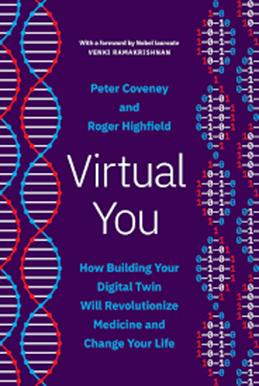
Virtual You: How Building Your Digital Twin Will Revolutionize Medicine and Change Your Life. Peter Coveney, Roger Highfield, Venki Ramakrishnan. 2023 Princeton University Press
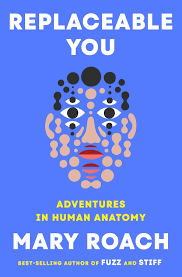
Replaceable You: Adventures in Human Anatomy. Mary Roach. Random House, 2025.
One of my never-miss podcasts is Ira Flatow’s Science Friday. This week two wonderful books were reviewed: Virtual You, and Replaceable You. Virtual You reviews how creating a digital copy of each person’s bodily mechanisms and organisms (each of us has a bodily organism unlike any other) can advance medicine by light years, at a time when identical drugs are prescribed for everyone, even though we are all different. This is particularly true of women, at a time when most clinical trials are done on white males. Personalized medicine has been long discussed; digital twin technology may make it feasible and cost-effective. “… your digital twin can help predict your risk of disease, participate in virtual drug trials, shed light on the diet and lifestyle changes that are best for you, and help identify therapies to enhance your well-being and extend your lifespan”, write the authors.
Replaceable You is about the spare parts business – how we are replacing hearts, lungs, livers, knees, hips, eye lenses, and hair follicles, among others, with ‘spare parts’. This too is revolutionizing medicine. It is also a source of heartache, literally – many people wait in long queues for, e.g., kidney transplants. One approach the author describes is the ‘body shop’ approach — hearts for transplant have to be used within four to six hours of removal from the dead donor, and many such hearts are not up to par and are not usable. Scientists look for ways to ‘repair’ defective hearts, and to prolong the time after which they become unusable, to expand the supply – currently, with huge excess demand and long queues.
Science Friday this week discusses how AI has shown promise in speeding development of new drugs – but so far has failed. The current model of drug development, involving mice (very poor representations of human anatomy) and then people (long, expensive, and often misleading) is costly and cumbersome. It was hoped that AI could analyze billions of molecules, to find the right one to block a ‘bad protein’ that causes illness. But so far – it has not happened.
One of the fascinating frontiers of research for ‘spare parts’ is 3D biological printing of organs – corpuscles, cells, etc. This is incredibly complex. But – one day, perhaps, a 3D printer will be able to print a heart – perhaps using key cells from one’s own body to forestall immune rejection.
Nobel for Physiology: How We Rise and Shine!
By Shlomo Maital
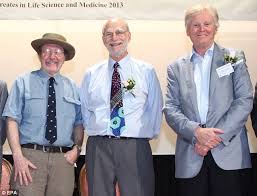
The Nobel Prize season is upon us! The first prize, for physiology or medicine, was awarded to three researchers who discovered how living things tell the difference between night and day (the 24-hour body clock):
According to the Nobel committee’s citation, Jeffrey C Hall, Michael Rosbash and Michael W Young were recognised for their discoveries explaining “how plants, animals and humans adapt their biological rhythm so that it is synchronised with the Earth’s revolutions.” The team identified a gene within fruit flies that controls the creatures’ daily rhythm, known as the “period” gene. This gene encodes a protein within the cell during the night which then degrades during the day.
According to Paul Nurse, at the British Crick Institute:
“Every living organism on this planet responds to the sun …. All plant and animal behaviour is determined by the light-dark cycle. We on this planet are slaves to the sun. The circadian clock is embedded in our mechanisms of working, our metabolism, it’s embedded everywhere, it’s a real core feature for understanding life.”
This Nobel Prize highlights the competitive nature of science:
“While all three laboured to isolate the period gene, publishing was something of a race. While Hall and Rosbash collaborated, Young was working on the puzzle independently. Both teams reported their findings in 1984.”
Experts tell us that it is wise to rise and retire at the same time each day, to regulate our biological clock. I like to rise at 5 a.m. Now I know that somewhere, a gene is turning on a protein that gets me going. The experts say, “Our [internal] timer is constantly struggling to reset to what environment people are exposed to. If you shift your clock every week by six hours or three hours, that puts an enormous pressure on your body.”
What kind of personality does it take to win a Nobel? Well – crazy, eccentric, nose-to-the-grindwheel, obsessive-compulsive, super-nice? Yes, all of the above.
Bambos Kyriacou, professor of behavioural genetics at the University of Leicester, who is friends with all three winners and a former colleague of two, said the trio were very different people. “Jeff [Hall] is eccentric … brilliant but eccentric,” he said. “Michael [Rosbash], there is no stopping him – he is just going 100%, he will die with his boots on in the lab, and Michael Young is the most charming, nicest one of them because he is polite and pleasant, whereas the other two aren’t like that, they are just crazy,” Kyriacou added.
Nobel Prizes 2016
By Shlomo Maital
This year’s Nobel Prize winners:
Medicine/Physiology: Yoshinori Ohsumi, Japanese cell biologist. He discovered how cells recycle their wastes – an amazing and complex process that keeps cells from choking on garbage. Ohsumi asked a question that intrigued him, but that interested few others…
Economics: Oliver Hart (Harvard) and Bengt Holmstrom (MIT): contract theory. Especially “incomplete contracts”. See Hart’s American Economic Review 2001 article on financial contracting — enlightening, especially for Venture Capital.
Physics: David Thouless, F. Duncan Haldane, J. Michael Kosterlitz. Their mathematics (based on topology) revealed insights into ‘extreme state’ matter (e.g. very low temperatures, super-cooled, etc.), and may lead to important new products, perhaps in semiconductors and computing.
Chemistry: Jean-Pierre Sauvage, J. Fraser Stoddart, Bernard Feringa: synthesis of molecular machines. These tiny machines, the size of a single molecule, can do actual mechanical work. Also may lead to important innovations one day.
Note the common denominator: Willingness to ask really good questions, questions others aren’t asking, ability to take risks in research, tackle very challenging hard problems, and in some cases, defy the establishment by choosing a research direction others think is a dead end.
And the Peace Prize? To Colombian President Santos, and the peace agreement that ended 50 years of senseless civil war. We learn from Colombia what we already know, from Britain’s Brexit vote – beware of referendums, you cannot be sure what they will yield. Colombia will revote its peace agreement, narrowly defeated in a referendum, and gain approval. But Britain? Britain will leave the EU, for certain, a result very few expected, with major consequences for Europe and the world.
The ORIGINAL GPS: Our Brain
By Shlomo Maital

The 2014 Nobel Prize for Physiology & Medicine has been announced. It is shared between John O’Keefe, American-born scientist at University College, London; and a husband and wife team, May-Britt and Edvard Moser, at the Norwegian University of Science and Technology in Trondheim, Norway.
Here is what they discovered:
O’Keefe: How do we know where we are? How can we find the way from one place to another? And how can we store this information in such a way that we can immediately find the way the next time we trace the same path? This year´s Nobel Laureates have discovered a positioning system, an “inner GPS” in the brain that makes it possible to orient ourselves in space, demonstrating a cellular basis for higher cognitive function. In 1971, John O´Keefe discovered the first component of this positioning system. He found that a type of nerve cell in an area of the brain called the hippocampus that was always activated when a rat was at a certain place in a room. Other nerve cells were activated when the rat was at other places. O´Keefe concluded that these “place cells” formed a map of the room.
In other words: many many centuries before GPS technology was invented, our BRAINS developed their own internal GPS mapping system. Amazing?
Moser’s: More than three decades later, in 2005, May-Britt and Edvard Moser discovered another key component of the brain’s positioning system. They identified another type of nerve cell, which they called “grid cells”, that generate a coordinate system and allow for precise positioning and pathfinding. Their subsequent research showed how place and grid cells make it possible to determine position and to navigate.
The discoveries of John O´Keefe, May-Britt Moser and Edvard Moser have solved a problem that has occupied philosophers and scientists for centuries – how does the brain create a map of the space surrounding us and how can we navigate our way through a complex environment?
For those who are religious and believe in the Creator, this amazing capability of the brain to orient us using specialized brain cells, and creating grids, GPS coordinates and maps, is a fine example of the miraculous nature of the human brain. Congratulations to these scientists for helping us understand how this works!

 TIMnovate