
You are currently browsing the tag archive for the ‘mental health’ tag.
The Pleasure Loop: Key to Understanding Addiction
By Shlomo Maital
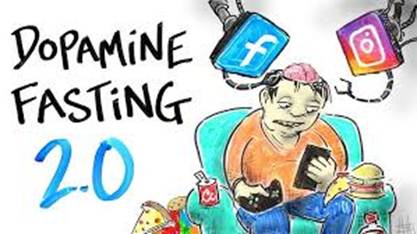
There are few tragedies in life greater than seeing loved ones suffer from addiction. Consider for instance the terrible addiction of Rob and Michelle Reiner’s son – and the horrible consequence. Yet we seem to be unable to crack the problem or solve it.
A recent edition of the Hidden Brain, headed by Shankar Vedante, offers a persuasive explanation. It is the dopaminc pleasure loop.
“Dopamine is a crucial chemical messenger (neurotransmitter) in the brain and body, acting as both a neurotransmitter and hormone that regulates pleasure, motivation, movement, mood, learning, and focus. It’s often called the “happy hormone””. It is a crucial hormone.
Some 50,000 years ago, when humans struggled to find enough food to stay live. Dopamine rewarded each such find. Today, when food is largely ample, or excessive, dopamine continues to reward us excessively. Result: obesity.
But the same is true with addiction. A narcotic triggers dopamine. But we become habituated. Less and less dopamine. The feedback loop seeks more and more drug, to generate the same dopamine high…and consumption rises, until, often, overdose or death or psychosis.
It is an example of how evolution generally improves survivability and viability – but in this case, a rare but terrible one, it leads to annihilation at times. Add to that the enormous drug profits the cartels earn and generate.
The pleasure-loop feedback is immensely hard to change. Once it gets rolling. I think we are all somewhat addicted to something… complete this sentence, “I find it hard to wean myself from my favorite….???”.
There is no easy solution. Dopamine is an insidious, terrible foe, when it becomes an enemy. I loved running – in part because my brain always rewarded it with a jolt of dopamine. Runners know what I mean.
Can we replace bad dopamine pleasure loops with positive ones? Facile, shallow, too easy.. but, we absolutely have to crack this terrible pleasure loop. Understanding it more deeply can help.
Nature Heals – And Helps Us Think
By Shlomo Maital

In the latest episode of the psychological podcast Hidden Brain, with Shankar Vedante, the theme is how Nature Heals. It is based on a conversation with psychologist Mark Berman, U. of Chicago, who researched the subject.
Vedante opens with these startling statistics: “The share of American adults reporting they took prescription drugs for mental health conditions stood at 19% in 2022. … That’s millions of people taking drugs for anxiety, for depression, for attention deficit disorder. Millions more are in therapy, working through their challenges with a counselor. For many people, such measures are enormously helpful, even essential. At the same time, it may be the case that we are overlooking a potential source of relief that is literally right outside our door. This remedy costs nothing, has no known side effects, and is often delightfully pleasant. We are talking about spending time in nature. The capacity of the natural world to soothe and refresh our sensibilities has been known for centuries. But it’s only recently that scientists have begun to identify exactly what it is about the outdoors that has such a powerful effect on our moods and our minds.”
Berman and other scholars have shown what virtually all of us know – a stroll or hike or jog through Nature is calming, refreshing, relaxing … and can heal the mind, at least in part. And there is an additional benefit.
In daily life, our brains are attentive to what we are doing and what needs to be done. In other words, our brains are very busy. In Nature, as we stroll along, our brains relax, and have nothing more to do than to breathe and take in the beauty. And then, things pop in to our minds – ideas, solutions, Plan B’s…. These ideas are always there, but our brains are busy and we don’t have time or attention to hear them.
Berman explains that in Nature, we no longer have focused attention, enabling our brains rest, relaxation and ideation.
We all know this, right? Why don’t we use this more often? I find that our two doggies help a lot – they need walks four times a day, especially the elderly Yorkie, who is 14. We are blessed to live among beauty, among old trees and blooming flowers. Even a short walk can be therapeutic. And it’s right under our noses.
Sharks Don’t Sink – Neither Must We!
By Shlomo Maital

Consider sharks. They have been around on this earth for 400 million years – far older than dinosaurs, older than even trees. And evolution has made them superbly adapted to their environment, to survive and thrive. Sharks have survived five mass extinctions — and are currently struggling with their sixth, as humans kill sharks with fishing nets and overfishing, depriving them of food.
We can learn a lot from them – despite Steven Spielberg’s 1975 film Jaws, which inspired enormous fear of sharks.
First, consider fish. They have swim bladders — gas-filled organs that provide them with buoyancy without having to expend energy by swimming. Fish can sleep, thanks to swim bladders – watch your goldfish do it sometime. Darwin wrote that lungs of some fish evolved from these swim bladders.
Sharks, in contrast, have no swim bladders. If they stop swimming, they sink – because they have negative buoyancy. So, sharks cannot, may not, stop swimming. Ever. Sharks don’t sink – because they are continually moving forward. They even sleep while swimming – though never with closed eyes.
What does this have to do with people?
Sometimes, people sink. They sink into despondency and depression. And they don’t have mental ‘swim bladders’ to keep them afloat.
We can perhaps avoid this – by learning from sharks. Keep moving forward.
Keep learning new things. Keep making new friends. Keep trying to bring value, create value, by helping friends and families and strangers. Keep being curious. Keep trying new skills. New foods. New music. Stagnate – and you sink. All too common among us seniors.
Sharks don’t sink. Neither must we. Human beings have been around for 50,000 years. Sharks survived – and mostly thrived — around 80 times longer! Maybe they know something we can use?!
I recommend Jasmin Graham’s new book Sharks Don’t Sink: Adventures of a Rogue Shark Scientist, just out – subject of an On Point podcast episode.
Understanding Chronic Pain
By Shlomo Maital

[Warning: Long wordy blog, 1,200 words.]
“Conservative estimates suggest that chronic pain affects over one and a half billion people, or 20% of the world’s population.”
Typically, chronic pain is treated with pain relievers. “The global market for analgesics was valued at $53.5 billion in 2024 and is projected to reach $72.8 billion by 2030.” This is big business. And rather risky.
The main painkiller medicine is comprised of opioids (from ‘opium’), such as OxyContin. They are addictive and overdoses kill. OxyContin is the trade name for oxycodone, produced and sold by Purdue, and the Sackler family.
“The number of annual opioid overdose deaths remains more than six times higher than it was in 1999; There were approximately 81,806 opioid overdose deaths in 2022 and 90% involved synthetic opioids other than methadone.”
So if you have chronic pain — is there an alternative way to deal with it, other than opoids? Here is what I learned from a great episode of a podcast, Science Friday:
Chronic pain is remarkably common: Roughly 20% of adults in the US live with it. And people with chronic pain are more likely to have depression, anxiety, and substance abuse disorders. But this relationship between physical and mental health is not as straightforward as you might think, and there’s still a stigma attached to neuro-psychological causes of chronic pain.
“The latest research suggests that untangling the connections between mind and body is a key part of developing better treatments for people with chronic pain. Now, a new psychological treatment called pain reprocessing therapy has shown initial success in eliminating back pain in research participants
Guests: Dr. Lauren Heathcote is a Senior Lecturer in Health Psychology in the Institute of Psychiatry, Psychology & Neuroscience at King’s College London in London, England. Dr. Yoni Ashar is an assistant professor and Co-Director of the Pain Science Program at University of Colorado Anschutz Medical Campus in Aurora, Colorado.
Flora Lichtman (SciFri contributor): “Roughly 20% of adults in the US live with it. And people with chronic pain are more likely to have depression, anxiety, and substance abuse disorders. But this relationship between physical and mental health is not as straightforward as you might think. And the latest research suggests that untangling the connections between mind and body is a key part of developing better treatments for people who have chronic pain.
Expert guest Dr. Lauren Heathcote: “In the case of chronic pain, it’s more the case that the brain is getting it a bit wrong. So it might be that there was some sort of initial injury, but that that has now healed, or potentially that there is still some ongoing inflammation in the body, some kind of bodily damage in some way, but the brain is still producing a pain signal even when it’s not particularly helpful anymore.”
Expert guest Dr. Yoni Ashar: “The way pain is processed in the brain is quite complex. There’s no one region that’s the pain region. Pain is processed, everywhere and nowhere. And we see changes along all parts of the pain processing pathways. ….a lot of people come to us thinking that their bulging disk or their arthritis or et cetera, that’s the cause of their pain. And the major step is education, that actually bulging disks and arthritis are highly prevalent in people who have no pain whatsoever, and they’re typically not related to the pain… And that education to help people shift their thinking to this pain is actually not a sign of tissue injury. This pain is an indication that my pain system has gotten sensitized.”
Science Friday producer, Shoshannah Buxbaum: “One of the new treatments is called pain reprocessing therapy. It’s designed specifically for people who have pain that’s primarily due to changes in the mind and brain. The goal is to have patients unlearn the pain pathways that their brain has formed, which are, in turn, causing them to experience pain. So step one is educating patients on the science of chronic pain and what’s actually going on in their bodies.”
“The first study testing the efficacy of pain reprocessing therapy was in patients with chronic back pain. And back pain is among the most common chronic pain conditions in the US. Severe chronic back pain affects over 8% of adults in the US, and lower back pain, specifically, is the most frequent cause of job-related disability in the country.
“I wanted to understand what going through this type of therapy was actually like. So I talked to Sal, who is a participant in that first study. We’re just using Sal’s first name to respect their privacy. So I started off by asking them about when their pain first started.
SAL: I mean, I first noticed my back pain beginning in high school around when I was 15. I’m in my 30s now. So it’s been probably more than half my life at this point. It was a daily thing. It’s something I woke up with every day. And I think I just almost resigned myself of, like, this is just how my body feels, right. So I met with John. He does pain reprocessing therapy. And he himself had also benefited from the treatment greatly. We met for an hour once a week for six or eight weeks. Part of the treatment itself is acknowledging, from the cognitive standpoint, of reminding yourself that you’re safe and that your body doesn’t need to be feeling fight or flight.
“ Learning about the research and learning about how pain works in the brain and the body is part of the treatment. And I told John, throughout the whole process– I said, this is really dumb. And he’s like, I know. Because it almost feels like there was nothing intensive. There was nothing that I radically learned that was different. So it would just be breathing exercises and focusing specifically in this spot in my right shoulder that feels uncomfortable or feels pain.
“And what is the quality of the pain? Does it feel tingly? Does it feel sharp? Does it feel cold? Does it feel hot? So noticing on the actual sensation of pain, and trying to spread that out or dissolve it a little bit, or just focusing on it and taking a deep breath while focusing on it. And so just taking a moment to remind yourself and your body that you’re safe and that you don’t have to carry that tension or that pain. And just even the small act of doing that provides relief.
“I would say I went from a daily, waking up, six or a seven pain, and just chronic all day, and increasing or decreasing, depending on my stress. But I’m at a zero or one. And even now I’m skeptical. I’m like, oh, really? I don’t wake up with pain anymore? That’s cool.”
Expert guest Dr. Yoni Ashar: “When we started this work, I was concerned that people would storm out of our offices and feel dismissed and invalidated. But more often it’s the opposite of people telling us, wow, now things make sense. I saw 10 different doctors before this who had 10 different stories, and none of it really made sense or could explain all my symptoms. And now, for the first time, things are falling into place. Things are clicking.”
“For some people with chronic pain, there’s a big component of trauma and history of deeply entrenched patterns of self-criticism. These make it a lot harder to just try to treat the pain in isolation. What we’re finding is that for a number of people you can’t just talk about the pain and expect everything to get better, but it will require a deeper dive into what’s making them feel unsafe more broadly. And trying to help people resolve those other mental health challenges will be the key to helping their pain.”
Perhaps one day, alternative approaches to chronic pain relief will put the Big Pharma big bucks out of business. And fewer people will die of overdoses.
Do Viruses Cause Alzheimer’s?
By Shlomo Maital
A third of those age 85 and over contract Alzheimer’s. I am 82 — hence, I have a keen personal interest in this disease. Despite massive research funding, very little progress in treatment and understanding the root cause has been made. And 32 million people worldwide now have Alzheimer’s.
But a stubborn, persistent and courageous woman named Ruth Itzchaki is at last being heard – according to The Economist. She has longed claimed that viruses causes Alzheimer’s. Scientists ridiculed the idea. But she may be right. She is in her 90’s – and still tireless in her research.
This is from the March 17 issue of The Economist:
“For years, most research into Alzheimer’s disease—the most common cause of dementia—has been laser-focused on two proteins, known as amyloid and tau. These build up in the brains of people with the disease, forming plaques and tangles that prevent neurons from functioning properly.
Most scientists assumed that these proteins are the primary cause of Alzheimer’s disease. But the shingles studies published in 2024, along with a host of new papers, add weight to an alternative decades-old idea—that viruses trigger the disease. Per this theory, plaques and tangles of proteins could, instead, be the body’s response to an underlying viral infection. If that is true, then eliminating the virus could prevent or treat Alzheimer’s.
Ruth Itzhaki, formerly of Manchester University and now a visiting professor at the University of Oxford, has championed this idea for almost 40 years. The bulk of her work has focused on herpes simplex virus 1, best known for giving people cold sores, which infects around 70% of people, most without symptoms. The virus normally lives outside the brain, where it can lie dormant for years. It is flare-ups that can lead to cold sores.
In rare cases, the virus can also lead to massive inflammation in the same brain areas that are most affected by Alzheimer’s. In experiments conducted in the early 2000s, Professor Itzhaki found that if she infected lab-grown human brain cells with HSV1, amyloid levels inside the cells increased dramatically. That led her to suspect a causal connection.
For decades she struggled to get her ideas accepted by the rest of the scientific community. “It was considered a left-field, crazy hypothesis,” says Or Shemesh, who researches viruses and Alzheimer’s at the Hebrew University of Jerusalem. Most scientists were focused on the role of amyloid and tau, assuming that they were the primary cause of the disease. Critics argued that the virus theory was hard to reconcile with the fact that Alzheimer’s has a strong genetic basis or occurs in almost all people with Down’s syndrome.
But growing disillusionment with the leading hypothesis for the cause of Alzheimer’s has led scientists to cast around for alternatives, such as viruses. Over many decades, for example, tens of billions of dollars have been poured into efforts to develop treatments to reduce the levels of amyloid and tau in the brain but the results have been underwhelming—existing amyloid-targeting drugs only have a modest effect on the disease. The discovery that pathogens can trigger other neurological diseases, such as the connection between Epstein-Barr virus and multiple sclerosis, has made the link yet more plausible.
In a bid to push forward Professor Itzhaki’s theory, a group of 25 scientists and entrepreneurs from around the world have assembled themselves into the Alzheimer’s Pathobiome Initiative (AlzPI). Their mission is to provide formal proof that infection plays a central role in triggering the disease. In recent years their work detailing how viruses trigger the build up of proteins linked to Alzheimer’s has been published in top scientific journals.
One new idea, supported by some AlzPI members, is that amyloid and tau may actually be the brain’s first line of defence against pathogens. These proteins are sticky, so they can grab hold of viruses or bacteria to slow their spread before more sophisticated immune responses kick in, says William Eimer at Harvard University. In small quantities, therefore, the proteins seem to boost brain health. The presence of active HSV1 or other pathogens, however, may send the immune system into overdrive, causing the proteins to stick to each other and create the plaques and tangles that damage neurons in Alzheimer’s.
What’s more, in 1997 Professor Itzhaki found that people with a genetic variant known to increase Alzheimer’s risk, ApoE4, were only more likely to get the disease if they also had herpex virus in their brain. In 2020 a group of French scientists showed that repeated activations of the virus … more than tripled the chance of developing Alzheimer’s in those with it.
Researchers at Tufts University, working with Professor Itzhaki, have probed why such reactivation occurs. In 2022 they found that infection with a second pathogen, the shingles virus, could awaken the dormant herpes virus and trigger the accumulation of plaques and tangles. This may explain why shingles vaccination appears to be protective against dementia. In another study published in January, the Tufts researchers also showed that a traumatic brain injury—a known risk factor for Alzheimer’s—could also rouse HSV1 and start the aggregation of proteins in brain cells grown in a dish.
The viral theory has promising implications for treatment. Current therapies for Alzheimer’s, which attempt to reduce levels of amyloid in brain cells, merely work to slow the progression of the disease. If viruses are a trigger, though, then vaccination or antiviral drugs could prevent future cases.
Around 32m people around the world are living with Alzheimer’s disease. If antiviral treatments can indeed slow, delay or prevent even a small subset of these cases, the impact could be tremendous.”
Social Media Harm Young Girls & Young Women
By Shlomo Maital
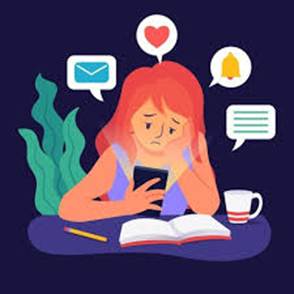
The American Psychological Association’s journal, Monitor, publishes annually the top 10 research papers published in the 89 APA journals, based on downloads by psychologists. The results for 2024 show what problems US psychologists are dealing with and what is on their minds most.
You guessed it. The harmful impact of social media, especially on young girls and young women.
The #1 article, “Living for the likes” finds that “women who use social media more than others experience more fear of missing out (FOMO), social comparison and appearance anxiety.
#2: “Viewing images of ‘thin-ideal’ body shapes lowers personal body images for women of all ages and self-esteem levels.” You might call this a “Barbie” effect.
Both these two articles were published in Psychology of Popular Media, vol 13, no. 3.
I recall as a youth how intensely sensitive I was about how I looked (and I am a male!), to the point where I refused to wear eyeglasses for almost two years (those who wore spectacles were called four-eyes). And this was long before Tik-Tok. Social media greatly amplify sensitivity to body image.
#3. “Limiting social media use decreases depression, anxiety and fear of missing out in youth with emotional distress.” The title of this article tells it all. Limiting social media use to one hour per day for 3 weeks was highly beneficial. This paper too appeared in Psychology of Popular Media (advance publication).
Wise parents are finding ways to limit use of social media among their kids. But the resistance is strong, because the algorithms used by the media are purposely insidious, fostering dependence and constant use, simply to make more money.
In August 2023, Associated Press reported this: BEIJING (AP) — The Cyberspace Administration of China on Wednesday published the draft guidelines on its site, stating that minors would not be allowed to use most internet services on mobile devices from 10 p.m. to 6 a.m., and that children between the ages of 16 and 18 would only be able to use the internet for two hours a day.”
China is an undemocratic big-brother society that limits its citizens’ freedom relentlessly. But perhaps this regulation does make a lot of sense.
And last year, Australia, a highly democratic society, “…passed one of the strictest internet crackdowns in the world last month, banning children under 16 from being on social media or opening new accounts. The law, which takes effect a year from now, holds social media companies responsible for verifying kids’ ages. Not complying could trigger fines up to nearly $50 million.”
The evidence is clear. Social media harm the young, and not only the young. It is up to us adults to protect them, even against themselves. But I think we are failing.
A Key Skill for Kids’ Success
By Shlomo Maital

What is the one key skill that is most important for children’s success?
Writing on inc.com, Jessica Stillman reports that “a team of dedicated psychologists who have been following and intimately recording the lives of more than 1,000 kids from the New Zealand town of Dunedin since 1972,” That’s 40 years of research!
What they found, summarized, is this: “What is the most useful [skill] for parents hoping to give their kids the best shot at a good life? Perhaps the incredible importance of building kids’ emotional intelligence for later-in-life success. The best predictor of kids’ success? Emotional intelligence.
Emotional intelligence — EQ — is “the ability to perceive, use, understand, manage, and handle emotions.” It was popularized by psychologist Daniel Goleman, in a 1995 book.
Years ago, I ran a management workshop for Intel engineers and managers, in Ireland. A very brief one-hour session, out of a four-day workshop, was devoted to EQ. At the end of the workshop, we asked participants, what did you find most valuable? EQ won, hands-down, despite the very brief session. It was a skill that unlike thermodynamics or calculus, was not taught or even noted.
Success requires that we interact, engage and collaborate with others. Doing this well requires the ability to read others’ emotions and deal with our own. In my own experience, I recall occasions when I spoke harshly to colleagues – and sealed my fate as a team player.
We teach kids lots of things – but self-awareness, a key first step to high EQ, may not be one of them. For me – I gained some self-awareness rather late in life, doing basic training in the military, running a marathon (at age 42) and climbing Kilimanjaro.
I find that young parents have become really good at instilling EQ. They encourage their kids to express their feelings in words. Recognizing emotions, giving them a name, is a key initial step toward managing them. I think this is partly why speech is so important for child development. Prior to gaining the ability to speak, when young children can’t express their needs and communicate them in words, frustration results ..and some supersonic tantrums.
We all know many adults who have low EQ. They can be very unpleasant. As grandparents, we can play a role, in helping our grandchildren to hone their EQ. Such as, when we play games with them – and they lose. I think one key reason EQ is so vital, is that the way we deal with failure and frustration is crucial in later success. Strong EQ can help us navigate the perils of failure and despair.
J
We Think Too Fast
By Shlomo Maital
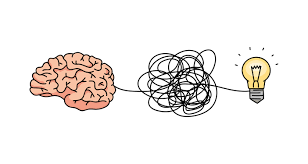
We think too slow. This is a conclusion of a lovely article in the New York Times by Carl Zimmer. *
Streaming a high-definition video takes about 25 million bps (a ‘bps’ is bit per second, and ‘bib’ is a unit of information, say, zero or one). The typical download rate, engineers have found, in a US household is 262 million bps.
OK, that’s the Internet. Now, how fast is the ‘download’ rate in the human brain? How fast does information flow from our brain to our bodies?
Caltech neuroscientist Markus Meister has published a study in Neuron, according to Zimmer, and speaks about the endless hyperbole about how incredibly complex and powerful the human brain.
Actually, it’s pretty slow, Meister says. He and colleagues estimate the flow of information ‘downloaded’ from the brain to the body is…. “just 10 bps”. Ten bits per second. The title of their article? “The unbearable slowness of being”. This is a clever play on the 1984 novel by Czech writer Milan Kundera, The unbearable lightness of being. At 10 bps, you couldn’t begin to download even a silent black and white movie from 1920.
Just 10 bps. Not even enough to download a high definition vide. Huh!
Let me make an opposing argument. Even 10 bps is far too fast. Have you ever said things you wish you hadn’t? Yes? Many times? Reacted too fast?
Radio stations have a kill button. What you hear is delayed by a second or two, before it is aired. This is just in case someone calling in uses a profanity, not allowed by FCC rules, and the host hits the kill button to avoid broadcasting it.
I find I need a delay/kill button. Think something. Think if it really needs to be said. Is it hurtful? False? Emotionally disturbing? Hit the delay before you send it out into the air. I wish I had done this more often – before I invented my own ‘kill button’ — think it, listen to it as if you are saying it, and only then, actually say it.
No, scientists, the brain is not too slow. If anything, it may be too fast. Slow it down a bit. Believe me – it will keep you out of hot water, especially with your partner or spouse.
- Carl Zimmer. “The speed of human thought lags far behind your internet connection, study finds”. New York Times, December 26, 2024.
The Cost of Losing Human Interaction
By Shlomo Maital

Last night on Israeli TV news, three small children were shown sitting in kindergarten chairs next to one another; each was playing a game on his or her tablet. Someone came in with a tray of their favorite candy and put it on the table right in front of them. None of the three lifted their eyes from the tablet. When they were invited to come to the table and enjoy the candy (with their tablets), they were told that they had to turn off their tablets in order to partake. Two of the three refused, choosing to continue playing with their tablets rather than enjoy the candy. Normally, three kids sitting together begin to talk and interact. Not these three, absorbed with their plasma screens.
Do we really understand the hypnotic power that plasma screens have over us?
In today’s New York Times, Jessica Grose reports on some disturbing research. The title is: Human Interaction is now a luxury good. The key point: As AI and digital software are increasingly employed to boost productivity and cut costs, human services become a high cost luxury item only the wealthy can afford.
Grose cites a new book “The Last Human Job,” by the sociologist Allison Pugh. She spent five years following teachers, doctors, community organizers and hairdressers — more than 100 people in total who perform what she calls “connective labor,” which is work that requires an “emotional understanding” with another person. Even when human services are indeed offered and provided, the bureaucratic tangle that requires them to account for what they do digitally, constantly, is a huge butden and interferes with human interaction. (Ask doctors who fill out Medicare forms).
“Pugh explains that increasingly, people in these jobs have to use technology to obsessively monitor and standardize their work, so that they might be more productive and theoretically have better (or at least more profitable) outcomes.”
A vivid example in Pugh’s book was the hospital chaplain, who provided crucial spiritual comfort – but still had to report online, endlessly, in detail — because God too is an accounting cost.
Conclusion: A paradox. As we are addicted to plasma screens at an early age, we come both to rely on them and to distrust them, because …. The services they provide are inhuman, non-human. And it is this, perhaps, that can help account for the collapse in trust in such institutions as doctors, public health, police, judges, and more than ever, the political democratic system. Real human interaction becomes a luxury good only the rich can afford.
I don’t know how to escape this quandary. As far right politicians ascend, and attack government and slash budgets, evermore services will be digitized and non-humanized, leading to further loss of trust.
Something has to break this spiral.
If You Want To Be Happy For the Rest of Your Life…
By Shlomo Maital

The 1963 hit song by Jimmy Soul (“If you wanta be happy for the rest of your life, never make a pretty woman your wife…”) is so offensive and politically incorrect, it would die today long before reaching the airwaves.
Moreover, it is dead wrong…as I will explain later.
But there is research that DOES complete the sentence, “if you want to be happy for the rest of your life…”… and it says: find a soul mate. Find a GOOD wife. And yes, she CAN be pretty.
Massive research just published in Nature – Human Behavior [1] finds this:
“Depression represents a significant global public health challenge, and marital status has been recognized as a potential risk factor. However, previous investigations of this association have primarily focused on Western samples with substantial heterogeneity. Our study aimed to examine the association between marital status and depressive symptoms across countries with diverse cultural backgrounds using a large-scale, two-stage, cross-country analysis.
“We used nationally representative, de-identified individual-level data from seven countries, including the USA, the UK, Mexico, Ireland, Korea, China and Indonesia (106,556 cross-sectional and 20,865 longitudinal participants), representing approximately 541 million adults.
“The follow-up duration ranged from 4 to 18 years. Our analysis revealed that unmarried individuals had a higher risk of depressive symptoms than their married counterparts across all countries.”
The other day, I saw a dentist (periodontist). She asked my age. I said 81.98 (five days to my birthday). She noted that I looked healthy and happy. I am. I said, unprompted, I have a secret. I have a good wife.
Indeed I do. My wife of 57 years is beautiful, interesting, supportive, and keeps me in line. There are reasons to be unhappy these days in our little country Israel – but at home, none at all. Having a spouse to love and care for is a major blessing and a significant reason to get out of bed in the morning.
The research I cited involved N=541,000,000! My life is N=1. But that N=1 is for me significant. How about you?
[1] Xiaobing Zhai, Henry H. Y. Tong, Chi Kin Lam, Abao Xing, Yuyang Sha, Gang Luo, Weiyu Meng, Junfeng Li, Miao Zhou, Yangxi Huang, Ling Shing Wong, Cuicui Wang & Kefeng Li. ” Association and causal mediation between marital status and depression in seven countries”. Nature — Human Behaviour. (2024)

 TIMnovate