
You are currently browsing the tag archive for the ‘nature’ tag.
Why Birds Sing So Loud at Dawn
By Shlomo Maital

I rise early and walk our two little dogs, often at 5:00 or 5:30 a.m. These days, it is usually dark, well before dawn. Nonetheless, the songbirds are there, filling the air with their song, competing loudly one with another, with enormous energy.
Why? Why do birds sing to loudly even before the sun rises?
Writing in the New Scientist (a terrific magazine and website), James Woodford recounts research done by scientists/ornithologists, on zebra finches. Their theory: Birds rest at night, and their rapid metabolisms slow and accumulate energy. When they wake at dawn, they express that energy with a burst of song. When other birds do it, too, it turns into a kind of competition, with one songbird stimulating the other.
Woodford writes: “The dawn chorus of birdsong has inspired poets and nature lovers for thousands of years, but the reason why birds all over the world start the day this way is an enduring mystery. Now, a series of experiments in zebra finches (Taeniopygia guttata) suggests that while darkness inhibits singing, birds build up a stronger motivation to sing in the night that causes them to burst into song when the dawn breaks. The study also hints that a morning workout for the vocal muscles helps birds finesse their songs.
Of course. It’s the birds’ morning workout for their vocal chords. Ever heard a chazan (Jewish prayer leader) or opera singer warming up their voices? The birds are doing their hour of practice, before …well, before performing.
Try rising early, one of these mornings…just once, not every day! The birdies’ concert will make it worth your while.
Nature Heals – And Helps Us Think
By Shlomo Maital

In the latest episode of the psychological podcast Hidden Brain, with Shankar Vedante, the theme is how Nature Heals. It is based on a conversation with psychologist Mark Berman, U. of Chicago, who researched the subject.
Vedante opens with these startling statistics: “The share of American adults reporting they took prescription drugs for mental health conditions stood at 19% in 2022. … That’s millions of people taking drugs for anxiety, for depression, for attention deficit disorder. Millions more are in therapy, working through their challenges with a counselor. For many people, such measures are enormously helpful, even essential. At the same time, it may be the case that we are overlooking a potential source of relief that is literally right outside our door. This remedy costs nothing, has no known side effects, and is often delightfully pleasant. We are talking about spending time in nature. The capacity of the natural world to soothe and refresh our sensibilities has been known for centuries. But it’s only recently that scientists have begun to identify exactly what it is about the outdoors that has such a powerful effect on our moods and our minds.”
Berman and other scholars have shown what virtually all of us know – a stroll or hike or jog through Nature is calming, refreshing, relaxing … and can heal the mind, at least in part. And there is an additional benefit.
In daily life, our brains are attentive to what we are doing and what needs to be done. In other words, our brains are very busy. In Nature, as we stroll along, our brains relax, and have nothing more to do than to breathe and take in the beauty. And then, things pop in to our minds – ideas, solutions, Plan B’s…. These ideas are always there, but our brains are busy and we don’t have time or attention to hear them.
Berman explains that in Nature, we no longer have focused attention, enabling our brains rest, relaxation and ideation.
We all know this, right? Why don’t we use this more often? I find that our two doggies help a lot – they need walks four times a day, especially the elderly Yorkie, who is 14. We are blessed to live among beauty, among old trees and blooming flowers. Even a short walk can be therapeutic. And it’s right under our noses.
The Role of Lithium in Alzheimer’s: Breakthrough?
By Shlomo Maital
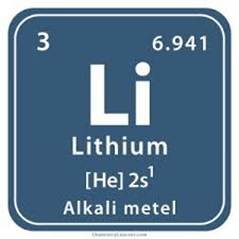
A paper just published in Nature (August 6, 2025) reports: “New hope for Alzheimer’s: lithium supplement reverses memory loss in mice. Studies in rodents and humans suggest that low levels of the metal contribute to cognitive decline.” Here is a summary:
“Replenishing the brain’s natural stores of lithium can protect against and even reverse Alzheimer’s disease, suggests a paper published today in Nature. The paper reports that analyses of human brain tissue and a series of mouse experiments point to a consistent pattern: when lithium concentrations in the brain decline, memory loss tends to develop, as do neurological hallmarks of Alzheimer’s disease called amyloid plaques and tau tangles. The study also found evidence in mice that a specific type of lithium supplement undoes these neurological changes and rolls back memory loss, restoring the brain to a younger, healthier state.”
“If confirmed in clinical trials, the implications could be profound. Dementia affects more than 55 million people globally; most have Alzheimer’s disease. Anti-amyloid therapies on the market slow cognitive decline, but “they don’t stop it. They don’t restore function,” says co-author Bruce Yankner, a geneticist at Harvard Medical School in Boston, Massachusetts.”
Alzheimer’s has been researched for decades. It has been “a tough nut to crack”, say the researchers – a vast understatement. If lithium holds the key, it would be a huge surprise. What in the world is lithium, a metal, doing in the brain? What role does it play anyway? What irony, if the world that runs on lithium iron batteries should find that our brains run on lithium, too!
And a postscript: Co-author Bruce Yankner’s research grant has been slashed by actions of the President of the United States.
Brunfelsia: Nature Works Its Magic
By Shlomo Maital

Each early morning, when I take our little mixed-breed Yorkie for her walk, I say hello to our blossoming hedge.
And it’s magical.
Brunfelsia pauciflora. An unassuming little hedge that does an incredible magic trick.
When it blossoms in Spring, as it does now, its flowers emerge in day one as violet in color. By day three, the flowers are purple and some of them have turned white.
Nature has figured out how to turn purple flowers into white.
Naturally, scientists had to figure out why and how. It has to do with “anthocyanin degradation”. Anthocyanin is a protein in the flowers’ pigment. Water, temperature, light and pollinating bees and insects act to degrade this protein, and as it degrades, the purple turns white.
Things in Nature don’t just happen. It must be evolution at work here. But why? I think that this sleight of hand magic trick gives Brunfelsia an advantage. Some pollinators are more attracted to the blue flowers. Some are more attracted to white flowers. The combination gets more pollinators than just blue or white alone.
Brunfelsia originated in Brazil and is also known as Brazil raintree. Other names for it (you could look it up) are: today, tomorrow, together; morning, noon and night; kiss me quick.
Take your pick! Any flowering hedge that turns purple to white deserves a catchy name.
A Little Bird that LOVES Summer – and flies 40,000 miles a year to enjoy it
By Shlomo Maital

Arctic tern
So – we humans love summer, right. In normal times: vacation, hiking, Nature, beaches, ocean, sunshine… But there is a little bird, that weighs 100 grams, that REALLY loves summer. I mean, LOVES! And it flies 40,000 miles round trip, or more, just to enjoy permanent year-round summer.
But how?
So, Arctic terns breed during the summer, in the Arctic and northern temperate regions, in May-June. Then later in July they begin their migration south– far south, 12,000 miles to Antarctica. And they arrive in time for the Antarctic summer. Before winter again returns to the Antarctic, they fly back to the Arctic, another 12,000 miles.
25,000 miles round trip – the distance around the Earth, at the equator. All this, for a little bird that weighs 100 grams.
And if this is not amazing enough — baby birds do it too. Fledglings are born, and within three months, they do the long migratory flight from the Arctic to the Antarctic and back.
But wait. We do not do it justice. Arctic terns do not fly in a straight line, North Pole to South Pole and back. Tracking devices show this:
Eleven birds that bred in Greenland or Iceland covered 70,900 km (44,100 mi) on average in a year, with a maximum of 81,600 km (50,700 mi). The difference from previous estimates is due to the birds’ taking meandering courses rather than following a straight route as was previously assumed. The birds follow a somewhat convoluted course in order to take advantage of prevailing winds.
And consider this:
The average Arctic tern lives about thirty years, and will, based on …. research, travel some 2.4 million km (1.5 million mi) during its lifetime, the equivalent of a roundtrip from Earth to the Moon over 3 times.
There are so many wonders on our beautiful planet — I wish more people would support Green Planet programs — and respect the Arctic tern and other miraculous creatures that share the Earth with us.
It is not fanatical to claim that indirectly, this awful pandemic reflects our deep lack of respect for Nature, in all its facets, and our arrogant underestimation of Nature’s value and power. If a little bird that weighs one-fifth of a pound can travel a distance equal to the Moon and back over three times in its lifetime — maybe we humans should be a tad more humble.
By the way – we know all this, partly because experts place high-tech tags on the Arctic terns’ legs – the tag weighs only 1 gram, has a GPS chip on it, does not burden the bird and helps us understand its habits. Few people see the bird, because it always flies over water.
The Creativity of Nature:
How One Creative Scientist Harnessed It
By Shlomo Maital
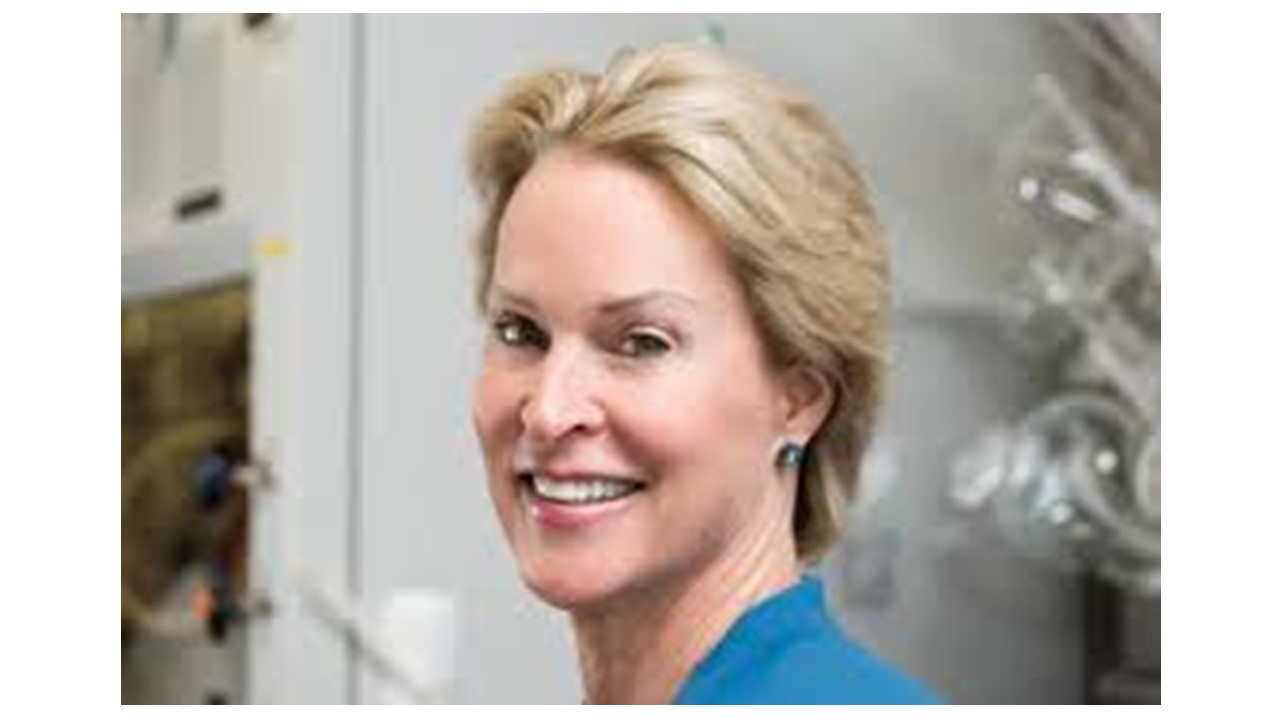
Prof. Frances Arnold, Caltech
Frances Arnold is a professor of chemical engineering at California Institute of Technology, in Pasadena, CA. She won the 2018 Nobel Prize for chemistry, along with two others. She is only the fifth woman in history to win the Chemistry Nobel.
Prof. Arnold has had numerous personal tragedies. She has overcome all the grief – and not a small amount of gender discrimination. UK border police interrogated her for over two hours, when she told them she was “coming to meet the Queen” (she was – but a lot of nutty people say that, apparently).
Prof. Arnold won the Nobel for finding a creative way to leverage the powerful creative force of evolution. Instead of designing new chemicals from scratch, to fight crop-eating pests, remove laundry stains or clean up oil spills, Arnold figured out how to get Nature to do it.
“You start with a protein that already has some features you’re interested in”, she said, “ and use standard lab techniques to randomly mutate the gene that encodes the protein. Then you look for slight improvement in the resulting protein, in the direction you seek. You mutate the improved version again and again and screen the output. You do this with a bacterial workhorse, like E. coli….. you encourage the microbes to rise to the challenge, adapt, survive.”
In Dr. Arnold’s lab, organisms have been ‘mutated’ to stitch together carbon and silicon, or carbon and boron. “We’re discovering that nature can do chemistry, in the lab, we never dreamed was possible”, Dr. Arnold said. Arnold has invented the new field of evolutionary chemistry – using Nature’s incredibly creative system known as evolution and ‘survival of the fittest’, to create random mutations, select the ones that work, perfect them – and change the world. Nature is creative, in much the same way that humans are – try things, fail, try again, find something that does work and run with it. That is how we humans were created – and according to Darwin, all the millions of species on earth.
Arnold has launched a number of startups, including one that synthesizes insect pheromones and fends off agricultural pests by simply driving them crazy and confusing them.
Much of Dr. Arnold’s pioneering research was done while she fought breast cancer that had spread to her lymph nodes. She underwent surgery, radiation and chemo, all while raising three young boys and working day and night in her lab. And in 2010 her husband Andrew Lange killed himself; her middle son William, 20, died in an accident in 2016.
“Why would I give up?” said Arnold. “First you learn you have no control. Then you straighten up, fetch your invitation and go to meet the Queen.”
[This is based on an excellent New York Times article, by Natalie Angier, who writes for the Science Times].
Who Are You?
By Shlomo Maital

William Revelle, Northwestern University
For years, psychologist William Revelle battled the idea that you can pigeon-hole people into “personality types” or traits. With colleagues, he did a very large study, believing he would find evidence contradicting the five-personality-trait idea. To his surprise, he found the opposite.
Martin Gerlach, Beatrice Farb, William Revelle & Luís A. Nunes Amaral “A robust data-driven approach identifies four personality types across four large data sets”. Nature – Human Behaviour (2018)
Here is a part of the abstract of this article, published in the leading scientific journal Nature:
Here we develop an alternative approach to the identification of personality types, which we apply to four large data sets comprising more than 1.5 million participants. We find robust evidence for at least four distinct personality types, extending and refining previously suggested typologies. We show that these types appear as a small subset of a much more numerous set of spurious solutions in typical clustering approaches, highlighting principal limitations in the blind application of unsupervised machine learning methods to the analysis of big data.
And – here are the four types.
Average
Average people are high in neuroticism and extraversion, while low in openness. This is the most common personality type.
Reserved
The Reserved type is emotionally stable but not open or neurotic. They are not particularly extraverted but are somewhat agreeable and conscientious.
Role models
Role models score low in neuroticism and high in all the other traits. They are good leaders, dependable and open to new ideas.
Self-centered
Self-Centered people score very high in extraversion and below average in openness, agreeableness, and conscientiousness.
Hand on your heart – which are you? Or do you think this is just spurious research?
Thinking in the Bubble: How to Detect Land Mines
By Shlomo Maital

Writing in the Hebrew daily Haaretz, today, Ruth Schuster reports on a clever creative invention by Hebrew University scientists.
The problem: undetected land mines.
“Land mines are the scourge of the survivor. They lurk in the soil for years and even generations after the fighting ends. Up to 20,000 people a year are wounded or killed after stumbling on hidden mines, and there has been no safe way for man or beast to detect them. According to Hebrew University, more than 100 million land mines remain buried around the world. Metal detectors do fine with traditional mines, but plastic ones elude them.”
A huge number of ideas to detect and clear mines have been tried. Here are a few:
Mine detection techniques have remained as pedestrian as they were in World War II: soldiers with sticks and serendipity; dogs, who do get killed; and pigs (a talent discovered by a kibbutznik in Israel). The most noteworthy advance in decades had been recognizing the mine-sniffing talents of the African pouched rat.
Now come Hebrew University of Jerusalem scientists, with a truly creative idea, thinking out of the box, or in the bubble or beads: Bubbles with bacteria that glow blue when they detect vapors emitted by land mines.. even tiny amounts of the gas, and all mines emit such vapors.
“Inspired by an idea that was first conceptualized in 1999, the scientists engineered bacteria that fluoresce when they come into contact with these vapors. The human mine detectors don’t have to keep the bacteria on a leash: they can monitor and react remotely. Nor are the bacteria free-range: they are encapsulated in beads that are scattered across the suspect land. The scientists tested the system with a laser-based scanning system, and the mines were found.”
Prof. Shimshon Belkin was responsible for genetically engineering the bacterial sensors. The research was published recently in the leading journal Nature.
The World’s Most Incredible Invention
By Shlomo Maital

Thanks to an outstanding BBC World Service program, “Discovery”, I have new appreciation for what must be the greatest invention ever: Nature’s invention of photosynthesis, as a lucky accident through evolution.
The word itself comes from two Greek roots meaning “light” (phos) and “putting together” (“synthesis”). Plants use light energy from the sun, together with water and carbon dioxide, to produce two vital things: carbohydrates, e.g. glucose, and oxygen. The process is mediated and catalyzed by green chlorophyll. What happens is: six carbon dioxide molecules combine with six water molecules, using solar energy aided by chlorophyll, to make one glucose molecule and six oxygen molecules:
6CO2 + 6H2O = C6H12O6 + 6O2
Photosynthesis does two things for life on earth: It provides all the organic compounds, and most of the food energy needed for life, and it maintains atmospheric oxygen levels.
The rate at which photosynthesis captures solar energy is incredible: 130 terawatts, which is six times greater than the total power consumption of the human race.
We humans are incredibly arrogant. But to date, we have nothing that comes close to photosynthesis, as a way of capturing solar energy and storing it as food energy. Photovoltaic cells are a joke in comparison. If we humans could store energy as plants can, we could produce power at night, when usage is nil, and use it during the day, thus almost halving our daytime production capacity. But we can’t. Only Nature can.
And just think – photosynthesis originated as an accident of evolution, one that just happened to work nicely, and that made possible life on earth.
Now, THAT’s an innovation!
 TIMnovate