
You are currently browsing the tag archive for the ‘physics’ tag.
Andre Geim: Scientist with a Sense of Humor
By Shlomo Maital

I have taught in a leading science and engineering university for many years. The brilliant people here work hard, do great research – and they take their work very very seriously – even when it’s not.
Consider Andre Geim, British-Dutch-Russian Nobel Laureate 2010 for discovering graphene, a form of carbon one atom thick, that forms a strong light lattice and has infinite uses.
Andre Geim is the only person to have won both a Nobel Prize and an Ig Nobel Prize. He received the 2010 Nobel Prize in Physics for his groundbreaking work on graphene. In 2000, he received an Ig Nobel Prize for his work on magnetic levitation, specifically using magnets to levitate a frog.
The Ig Nobel Prize is awarded annually at Harvard, and it recognizes research that…well, makes you laugh. Geim won his Ig Nobel prize for ‘levitating a frog’!? What is that? It is based on diamagnetization – materials that have had their magnetic properties removed. Here is how Google explains it:
“By placing a frog in a strong magnetic field, Geim induced a weak magnetic field in the frog’s body that repelled the external field, causing it to float. This phenomenon is due to the diamagnetic properties of water, which makes up a significant portion of a frog’s body.” Like poles repel, unlike poles attract.
The Harvard Ig Nobel people asked Geim if he would accept the prize. He responded positively, with a smile. Sure, why not? Self-deprecation is not a known quality of Nobel scientists. And his feat, levitating a frog, was very difficult and had important implications. But – it does make us smile. And Geim was happy with that.
Let’s salute Andre Geim – and protest.
Geim is Russian and emigrated to Netherlands where he became a professor. He is / was a Dutch citizen. He later moved to a British university. He now heads a UK Graphene Research Center. When England knighted him for his Nobel achievement, he was told he had to accept British citizenship to become Sir Andre Geim. He agreed – unaware that Dutch law rescinds Dutch citizenship the moment a Dutch person accepts a foreign passport. Netherlands revoked the Dutch citizenship of Andrew Geim, Nobel Laureate – and this greatly upset him, because he truly loves and is grateful to his Dutch adopted country.
Andre Geim has a sense of humor. The Dutch foreign ministry does not. Nor does it have a sense of proportion. The law is the law? Do laws have exceptions? Is this case worthy of an exception? You bet.
Kudos to Andre Geim – the only scientist with both an Ig Nobel and a real Nobel Prize.
Dark Matter: The Dark Mystery
By Shlomo Maital
Think about it. There could be an entire cosmos, universe, co-existing with our own, but – entirely invisible to us, because its own laws of nature are utterly different from ours, and the stuff it is made of does not interact in any way with the stuff WE are made of.
This is not science fiction. It comes from a leading theoretical physicist at Cal Tech (California Institute of Technology, in Pasadena), Kathryn M. Zurek, writing in The Economist (March 18).
Here is an excerpt: “.dark matter might not be one particular particle – it may be a whole hidden sector of dark particles and forces. In this dark sector, particles would interact through their own independent forces and dynamics, creating a hidden world of cosmology running parallel to our own. There could be dark atoms…held together by dark electromagnetism. [there might be] huge dark atomic nuclei…helping form supermassive black holes in the centers of galaxies. [Note: There is such a huge black hole in the center of our galazy, the Milky Way].”
Professor Zurek concludes: “The fundamental nature of the dark matter that pervades our universe is still unresolved.”
Conclusion: We don’t really know what the universe, i.e. we, the people, is made of. We know 5%. One in twenty. 70% is dark energy. 25% is dark matter. So our ignorance embraces 95% of our universe.
So – I am an economist. We claim to know everything, while knowing basically zero.
The physicists happily, gleefully, joyfully, admit to knowing almost nothing.
If I were starting college again, I would probably become a physicist. It is better to know some of the key questions, James Thurber wrote, than to pretend you know all the answers.
Dark Matter Is Changing & Evolving
By Shlomo Maital
What do we know about our 13.8-billion-year-old universe? A lot – and very little.
We know that 5 per cent of it is comprised of atomic matter – particles. They interact with us, and we can see them, study them, smash them to pieces and examine what comes out. 25 per cent is dark matter – matter that we cannot see, that does not interact with other particles and is invisible. 70 per cent is dark energy – energy that also does not interact with existing matter and so is invisible.
Conclusion: 95% of the universe is a total dark mystery to us. We know this, because if the universe comprised only the matter we observe, its rate of expansion should be slowing as cosmic bodies grow more and more distant from one another and gravity weakens.
Instead, we observed that the universe is expanding – at a faster and faster rate! Only dark matter and dark energy can explain this.
Projecting dozens and hundreds of billions of years into the future, at the current rate the universe goes dark – because objects become too far apart for us to see, and the sun has long ago gone dark, using up its helium.
But wait! There is new evidence, from DESI, dark energy spectroscopic instrument, atop an observatory in Arizona’s desert. Dark energy, it was found, is evolving, changing. It is not constant. So, we could well NOT have the cosmos go dark, but rather, stop expanding, and collapse inward, implode – and cause a new Big Bang.
I envy the physicists. They have the world’s biggest mystery to solve — and I sense their energy and joy at not yet knowing in the least what the universe really is and how it works.
And we humans? Who think we know everything? Not even close.
How to Get to the Root of the Problem
By Shlomo Maital

Let’s say you have a tough problem. You want to get to the root of the cause.
But how?
Ask a five-year old.
Really. Ask a kid. Because – they get to the root of things, by the method of ‘rood cause analysis’, RCA, used widely by systems experts diagnosing crashes, by computer engineers designing software… in general, by the hi-tech experts.
The method was used eons ago by kids, long before silicon. It’s called “the 7 Question Path to Enlightenment”.
Here’s a fictional conversation with one of my grandchildren.
Why are there people on Earth? Because they descended from primates, monkeys and apes. Why are there primates? They too descended, from other mammals, through evolution. Why are there other mammals? Well, see, this fish figured out how to move from the sea, breathing oxygen through its gills, to the land, breathing air through lungs. Where did the fish come from? It began with single cell living things, created by a combination of the right chemicals in a warm sea. Where did those single cell things come from? From the oceans, created when the Earth cooled from boiling, and when rain began to fall. Why didn’t the oceans just evaporate, as they did on Mars? Gravity. What causes gravity? And what is it? … Uh….
There we have it. The root cause. Life on Earth, because of…gravity. But..what in the world is gravity? Truth is, we do not truly know how gravity works or what it really is – Einstein’s theory of relativity is a start.
Root cause? Overweight? Out of shape? Tired? Financial problems? Ask why. And then again. And again. Either you get to a dead end…or the root cause. And even dead ends sometimes are very helpful, right? They tell us what we need to explore in depth more thoroughly.
Rethinking Dark Matter & Dark Energy
By Shlomo Maital

Adam Riess is a Johns Hopkins U. professor of astrophysics and 2011 Nobel Laureate. His research showed that the universe is expanding (Hubble found that years ago), at an increasing rate – which defies the standard laws of gravity, that suggest that as cosmic bodies grow more distant, the force of gravity weakens. This means that there is unobserved dark matter and dark energy out there, which does not interact with conventional matter and energy, and it must be some 95% of existing energy and matter (63% dark energy, 32 percent dark energy).
Riess is part of a team researching the cosmos using the DESI, dark energy spectroscopic instrument. It is located in the Sonora Desert, atop Kitt Peak, in Arizona. It is creating a 3D map of the positions and velocities of 40 million galaxies across 11 billion years of time. The first map just released covers six million galaxies. The director of DESI, Michael Levi, said that “we’re seeing some potentially interesting differences that could indicate that dark energy is evolving with time’.
Riess said about the results that “it may be the first real clue we have gotten about the nature of dark energy in 25 years!”. His words were reported by Dennis Overbye, in the New York Times. Overby covers astrophysics and brilliantly explains complex subjects in a lucid understandable manner.
If the current standard model is true, then the universe will grow darker and darker, as cosmic bodies grow more distant one from another – and eventually, even atoms will rip apart and everything will disintegrate, billions of years from now. But if dark matter and dark energy are evolving, changing in a dynamic manner, well – maybe not.
Perhaps one day, we will actually find a way to observe and understand dark matter and dark energy.
Meanwhile, it is exhilarating to see how astrophysicists are eager and willing to admit that what they thought they knew is not the case. Would that all of us would be so wise.
Thermodynamics and the State of the World
By Shlomo Maital

The second law of thermodynamics states that entropy always increases with time. Entropy is lack of order or predictability; or gradual decline into disorder.
What does that have to do with the state of the world?
At present, entropy is the defining word. Disorder. Trump wins the presidency in the US and threatens mayhem. Russia drags North Korean soldiers to the front in Ukraine. Iran threatens Israel with drones, rockets and who knows what. The Gaza/Lebanon War drags on. (This morning, many Israelis again were sent to bomb shelters). In Amsterdam, crowds of angry Muslims assault Israelis there for a basketball game; several are injured. China employs ‘wolf warrior diplomacy’, challenging US leadership. Israel’s PM fires the defense minister in the midst of an existential war and appoints a party hack in his place.
The entropy list is long and broad and deep.
It does seem that at the moment, entropy is not only increasing in the world, but soaring, spiking.
So?
Can we take comfort in knowing that entropy is not all bad. Static. Frozen order. Nothing really good comes from a system that is unchanging; it isn’t broken but it is not so great either.
Our world system is broken. Including democracy. But out of the entropy, there will emerge a new dynamic functional order. This happened in July 1944, when at Bretton Woods the US and its allies reinvented the global economic and financial system, in the midst of a terrible war. It will happen again. The process is painful – entropy is awfully stressful, especially when our perspective is day-to-day and we only see the tips of our noses, if that.
Good will emerge from the world entropy that prevails today. And as the Book of Genesis notes, in the very first sentences, the world emerged from chaos. Disruption is a vital component of world-changing hi-tech and innovation. It is not always a good thing. But sometimes, incredibly good things do emerge.
Can we take some comfort in this?
Mildred Dresselhaus, 1930-2017
By Shlomo Maital

Mildred Dresselhaus
On Feb. 20, MIT Professor of physics and electrical engineering, Mildred Dresselhaus, passed away at her home in Cambridge, MA. She was 86. Born Mildred Spiewak, she was the very first female Institute Professor at MIT (an Institute Professor is a super-distinguished professor).
Dresselhaus was known as the Queen of Carbon, in scientific circles. She used magnetic fields and lasers to map out the electric structure of carbon and found that by stitching in alkali materials, carbon can become a superconductor. She pioneered in researching “buckyballs” (fullerenes), soccer-ball shaped cages of carbon atoms, widely used for drug delivery, lubricants and catalysts. She also had the idea of rolling a single layer of carbon atoms into a hollow tube, the nanotube, making a structure with the strength of steel but just 1/10,000th the width of a human hair.
Dresselhaus published over 1,700 scientific papers. Her life was one of struggle and perseverance. She was the daughter of poor Jewish immigrants from Poland, and grew up in the Bronx. She went through university on scholarship.
She once recounted, according to the New York Times, “my early years were spent in a dangerous multiracial low-income neighborhood. My early elementary school memories up through ninth grade are of teachers struggling to maintain class discipline with occasional coverage of academics”. From age 6, she travelled long distances on the subway. She got in to Hunter High School, in Manhattan, and then Hunter College. Her lifelong mentor was Nobel Laureate Rosalyn Yalow, from whom she took an elementary physics course.
Why did she choose to study carbon? Because it was unpopular and considered uninteresting, she observed. She and her husband were hired by MIT in 1960, because MIT was one of the few places that would hire a husband and wife team. At Lincoln Labs, she was one of only two women, out of a scientific staff of 1,000.
She is survived by her husband Gene, and four children, Marianne, Carl, Paul and Eliot, and five grandchildren. She will be remembered as the first woman to secure a full professorship at MIT, in 1968, and she worked “very vigorously to ensure she would not be the last”, observed Natalie Angier, in the New York Times.
How Technion Physicists Cracked a Mystery of Biology
By Shlomo Maital
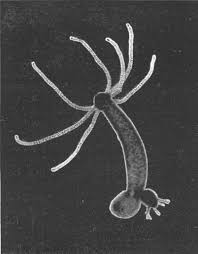
Hydra
A team of Technion-Israel Institute of Technology physicists (led by Profs. Kinneret Keren and Erez Braun, with a group of students) has published breakthrough research in the journal Cell Reports. It is unusual for physicists to publish in a biology journal. Here is the story.
The subject of the research was the amazing ability of the “hydra”, a tiny fresh water animal, 1 cm. in size (about half an inch), to regenerate itself. The hydra’s skeleton has a built-in memory that enables it to regenerate. If you take a piece of hydra tissue, it can soon regenerate the entire animal. But how? Until now, it was thought that this worked through chemical signals that guided the tissue on how to create a head, tentacles and a foot.
But the new Technion study finds a different explanation. It is done with thin protein fibers. The skeleton of the protein fibers survive, and they instruct cells how to arrange themselves to create an adult body. First, the pieces of tissue severed from the hydra form a small ball. This forces the protein fibers to balance the preservation of the old skeleton structure and adaptation to the new ball. New body parts develop, based on the pattern information stored in the skeleton. The ball soon sprouts a mouth and a whole new animal. The physicist researchers used their science to understand the physical role of the “ball”.
Could this one day lead to a technology that enables humans to regenerate their body parts? Far fetched? Indeed. But it could happen.
The fruitful research of physicists in biology reminds me of a meeting I had with a distinguished Indian scientist, during a recent visit, who decades ago pioneered in biophysics, which has since yielded huge bounties.
Innovator – if you can link two fields that are heretofore unconnected, you may come up with change-the-world ideas.
Lighting Up Our World with LED: 2014 Nobel in Physics
By Shlomo Maital
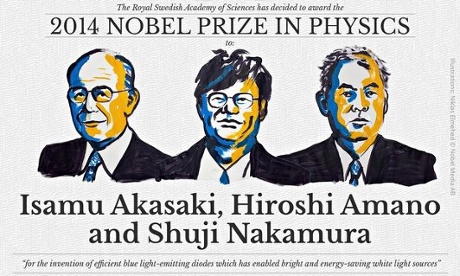
Three Japanese scientists have won the 2014 Nobel Prize for Physics, for their contribution – lighting up the world with LED – light emitting diode technology.
According to today’s New York Times: The three scientists, working together and separately, found a way to produce blue light beams from semiconductors in the early 1990s. Others had produced red and green diodes, but without blue diodes, white light could not be produced, the Royal Swedish Academy of Sciences said in its prize citation. “They succeeded where everyone else had failed.” The Nobel committee said that light-emitting diodes, or LEDs, would be the lighting source of the 21st century, just as the incandescent bulb illuminated the 20th.
The New York Times noted: “The LED lamp holds great promise for increasing the quality of life for over 1.5 billion people around the world who lack access to electricity grids,” the Nobel committee said. “Due to low power requirements, it can be powered by cheap local solar power.”
According to Wikipedia, “a light-emitting diode (LED) is a two-lead semiconductor light source: basic … diode, which emits light when activated. When a voltage is applied to the leads, electrons are able to recombine with electron holes within the device, releasing energy in the form of photons. This effect is called electroluminescence, and the color of the light (corresponding to the energy of the photon) is determined by the energy band gap of the semiconductor.”
The three Japanese scientists managed to achieve “the invention of efficient blue light-emitting diodes, which has enabled bright and energy-saving white light sources.” Previously, light was created with LED technology, but in colors that did not enable replacement of the Edison incandescent bulbs.
Nakamura worked for a time for a Japanese company, Nichia. Nichia awarded him…$200 for his invention. Nakamura left the company in 1999 to join U. of California, Santa Barbara, and sued the company for a fair share of the immense royalties. He settled for $8.1 million.
The Three Intersecting Circles of Innovation
By Shlomo Maital
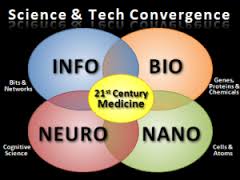
My attention was recently drawn to a three-year-old report, done by MIT scholars, for the health science research community. The report is The Thid Revolution: The Convergence of the Life Sciences, Physical Sciences and Engineering. The authors, which include stellar figures like Profs. Phillip Sharp and Robert Langer, argue that “convergence will be the emerging paradigm for how medical research will be conducted in the future.”
In order for this convergence to happen, they say, we will not “not simply collaboration between disciplines but true disciplinary integration.”
Today, the structure of nearly all the universities in the world is obsolete, ancient, creaky and counterproductive. It is based on faculties, which are silos that work in direct opposition to convergence. The exceptions are research institutes that are cross-disciplinary, specifically nanotechnology. My university has a Nanotechnology Center that draws scholars from many disciplines, and the resulting integration has been tremendously productive. A small example: Prof. Hossam Haick, whose discipline is chemical engineering, but who has harnessed nanotechnology, electronics, chemistry, physics and engineering to produce an ‘electronic nose’, which can sniff cancer molecules, for instance. He recently delivered the first course in Arabic, on Coursera, on nanotechnology.
Structure is not strategy, it is sometimes said. But, sometimes it is. Let’s change the structure of universities. Let’s find a way to restructure them, so that each faculty member has a very clear area of expertise, a clearly-defined discipline, but also has broad knowledge of other fields and above all, works as part of a convergence interdisciplinary team. And for this to work, their offices have to be adjacent…. Despite IT and networking, nothing beats face-to-face conversations over coffee.
Convergence poses a big challenge to those who would innovate. You need to achieve two conflicting goals, both of which are highly challenging.
First, as Nobel Laureate Dan Shechtman repeatedly urges, you must become expert, truly expert, at SOMEthing…. his expertise was in electron microscopy, and it enabled him to overcome fierce opposition to his discoveries, and ultimately win the big prize. You need deep knowledge in at least one field or sub-field.
Second, you need to become curious and learn a great many things about a great many fields, not in depth but sufficient to understand them. You need wide knowledge, surface knowledge, in just about everything. Even if you have team members who have deep knowledge, it still helps a lot to innovate if you have basic understanding of other, distant disciplines.
In future, all the major breakthroughs will occur at the point of convergence among several disciplines. In order for you, innovator, to be there, you need to acquire depth, and breadth.
Good luck!

 TIMnovate