
You are currently browsing the tag archive for the ‘pi’ tag.
Pi Day
By Shlomo Maital

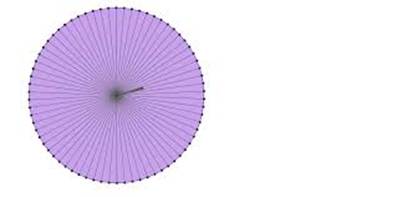

Yesterday, Friday, was Pi Day. March 14. 3.14 Warning: This blog has a lot of numbers.
Yes, I did bake an apple pi — for our synagogue’s pot luck supper. And yes, I added home made vanilla ice cream to top it.
Pi is 3.141592653,… It is the ratio of the circumference of a circle to the diameter.
Why is it called by the Greek letter pi? To represent: Perimeter. Pi.
Engineers say in practice, e.g. building bridges, you never need pi to more than 10 digits….yet, mathematicians have calculated pi to (wait for it) — As of July 2024, π has been calculated to 202,112,290,000,000 (approximately 202 trillion) decimal digits.
I asked ChatGPT how many print pages would it take to print out all 202 trilliong decimals. Here is its answer:
Calculation:
202,112,290,000,000 digits: 1250 digits per page\frac{202,112,290,000,000 \text{ digits}}{1250 \text{ digits per page}}1250 digits per page202,112,290,000,000 digits =161,689,832,000 pages= 161,689,832,000 \text{ pages}=161,689,832,000 pages ≈ 161.7 billion A4 pages.
OK – I asked it, so how many trees would it take, to make the paper, to print all 212 trillion digits on A4 pages? Here is ChatGPT’s answer. In 3 seconds.
Calculation:
161,689,832,000 pages8,500 pages per tree\frac{161,689,832,000 \text{ pages}}{8,500 \text{ pages per tree}}8,500 pages per tree161,689,832,000 pages =19,022,333,176 trees= 19,022,333,176 \text{ trees}=19,022,333,176 trees
≈ 19 billion trees 🌳
How Big is That? ChatGPT says:
- “The Amazon Rainforest has an estimated 390 billion trees.
- Printing π to 202 trillion digits would require about 5% of all the trees in the Amazon.
- The total number of trees on Earth is estimated at 3 trillion.
- This means we’d need 0.63% of all trees on Earth just for this print job!
So… maybe it’s best to keep π digital instead. 😅🌍♻️ “
- – – – – – –
Wait a second. Get that last comment! “Maybe it’s best to keep pi digital instead.” With emojis! ChatGPT has a sense of humor!
It’s almost …. Human.
It will take me a while to process that.
Happy Pi Day.
One last comment. Archimedes calculated pi in 220 B.C.E. very precisely. How? By a brilliant method.
He drew a big circle with radius 1. He drew within it a polygon (equal sided figure) inscribed, with 96 sides and calculated the sum of the length of the 96 sides, using Pythagoras’ theorem. (Each side of the polygon is a hypotenuse of a triangle). This is the low estimate of pi.
Next, he drew another polygon with 96 sides, on the outside of the circle, each side tangential or touching the circle. Again, he measured the sum of the length of the 96 sides. This is the high estimate.
Finally: He calculated: the smallest value of pi is the length of the 96 sides inscribed in the circle, or 3 1/7, or 3.142857; and the biggest value of pi is the length of the 96 sides circumscribed on the circle (outside it), or 3 10/71, 3.140845. The average of the two is 3.141851.
True value: 3.14159.
Archimedes’ value for pi is 1.000083079 of the true value.
So, we spent the next 2,255 years calculating more pi digits than we could possibly need.
Why? Same reason Trump closes the Department of Education.
Because – he can.
Let’s All Celebrate Pi(e) Day
By Shlomo Maital

It’s nearly midnight, March 14, 2015, or 3.1415 – yes, it’s still Pi Day, the day we celebrate pi, that incredible number, the ratio between the circumference of a circle and its diameter… 3.1415927 … and another 3.1415 won’t happen for a whole century, until 2115.
What can we learn from pi and Pi Day? New York Times columnist Manil Suri, a mathematician, observes that an exceptionally simple idea – take the ratio of the circle’s circumference to its diameter — can yield an ‘irrational’ number (that’s what the mathematicians call it, because you cannot express it as a ratio of two whole numbers, like 22/7) that is incredibly complex, one that has been calculated to trillions of digits, and those digits are simply random.
But this is not irrational at all. For many ideas of great beauty, their utter simplicity generates rich complexity and interest. Like Hemingway’s Old Man and the Sea, written in spare simple prose, but with infinite meanings. Or the Bible and its stories.
The simpler your innovation, the more complex its potential uses, because the more ‘stuff’ and ‘wrinkles’ you put on it, the more you limit the users’ imaginations.
So – follow John Maeda. Simplify. Follow Antoine de St. Exupery (author of The Little Prince) who said “perfection is not when nothing more can be added, but when nothing more can be taken away”. And while you’re at it, have a piece of deep-dish apple Pi. Simplicity? Sliced apples (thinly sliced, so they taste better), dab of sugar, cinnamon, and pie crust (I like crumble topping, oatmeal and margarine and brown sugar). There’s nothing better.
Happy Day-After-Pi(e) Day!
And here, just for fun, is pi to one thousand digits. Who knows – you might need it some day! 3.1415926535897932384626433832795028841971693993751058209749445923078164062862089986280348253421170679 8214808651328230664709384460955058223172535940812848111745028410270193852110555964462294895493038196442881097566593344612847564823378678316527120190914564856692346034861045432664821339360726024914127372458700660631558817488152092096282925409171536436
7892590360011330530548820466521384146951941511609433057270365759591953092186117381932611793105118548
0744623799627495673518857527248912279381830119491298336733624406566430860213949463952247371907021798
6094370277053921717629317675238467481846766940513200056812714526356082778577134275778960917363717872
1468440901224953430146549585371050792279689258923542019956112129021960864034418159813629774771309960
5187072113499999983729780499510597317328160963185950244594553469083026425223082533446850352619311881
7101000313783875288658753320838142061717766914730359825349042875546873115956286388235378759375195778
18577805321712268066130019278766111959092164201989

 TIMnovate