
You are currently browsing the tag archive for the ‘psychology’ tag.
Social Media Harm Young Girls & Young Women
By Shlomo Maital

The American Psychological Association’s journal, Monitor, publishes annually the top 10 research papers published in the 89 APA journals, based on downloads by psychologists. The results for 2024 show what problems US psychologists are dealing with and what is on their minds most.
You guessed it. The harmful impact of social media, especially on young girls and young women.
The #1 article, “Living for the likes” finds that “women who use social media more than others experience more fear of missing out (FOMO), social comparison and appearance anxiety.
#2: “Viewing images of ‘thin-ideal’ body shapes lowers personal body images for women of all ages and self-esteem levels.” You might call this a “Barbie” effect.
Both these two articles were published in Psychology of Popular Media, vol 13, no. 3.
I recall as a youth how intensely sensitive I was about how I looked (and I am a male!), to the point where I refused to wear eyeglasses for almost two years (those who wore spectacles were called four-eyes). And this was long before Tik-Tok. Social media greatly amplify sensitivity to body image.
#3. “Limiting social media use decreases depression, anxiety and fear of missing out in youth with emotional distress.” The title of this article tells it all. Limiting social media use to one hour per day for 3 weeks was highly beneficial. This paper too appeared in Psychology of Popular Media (advance publication).
Wise parents are finding ways to limit use of social media among their kids. But the resistance is strong, because the algorithms used by the media are purposely insidious, fostering dependence and constant use, simply to make more money.
In August 2023, Associated Press reported this: BEIJING (AP) — The Cyberspace Administration of China on Wednesday published the draft guidelines on its site, stating that minors would not be allowed to use most internet services on mobile devices from 10 p.m. to 6 a.m., and that children between the ages of 16 and 18 would only be able to use the internet for two hours a day.”
China is an undemocratic big-brother society that limits its citizens’ freedom relentlessly. But perhaps this regulation does make a lot of sense.
And last year, Australia, a highly democratic society, “…passed one of the strictest internet crackdowns in the world last month, banning children under 16 from being on social media or opening new accounts. The law, which takes effect a year from now, holds social media companies responsible for verifying kids’ ages. Not complying could trigger fines up to nearly $50 million.”
The evidence is clear. Social media harm the young, and not only the young. It is up to us adults to protect them, even against themselves. But I think we are failing.
We Think Too Fast
By Shlomo Maital
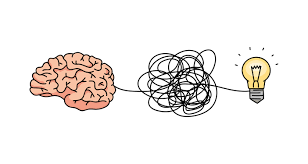
We think too slow. This is a conclusion of a lovely article in the New York Times by Carl Zimmer. *
Streaming a high-definition video takes about 25 million bps (a ‘bps’ is bit per second, and ‘bib’ is a unit of information, say, zero or one). The typical download rate, engineers have found, in a US household is 262 million bps.
OK, that’s the Internet. Now, how fast is the ‘download’ rate in the human brain? How fast does information flow from our brain to our bodies?
Caltech neuroscientist Markus Meister has published a study in Neuron, according to Zimmer, and speaks about the endless hyperbole about how incredibly complex and powerful the human brain.
Actually, it’s pretty slow, Meister says. He and colleagues estimate the flow of information ‘downloaded’ from the brain to the body is…. “just 10 bps”. Ten bits per second. The title of their article? “The unbearable slowness of being”. This is a clever play on the 1984 novel by Czech writer Milan Kundera, The unbearable lightness of being. At 10 bps, you couldn’t begin to download even a silent black and white movie from 1920.
Just 10 bps. Not even enough to download a high definition vide. Huh!
Let me make an opposing argument. Even 10 bps is far too fast. Have you ever said things you wish you hadn’t? Yes? Many times? Reacted too fast?
Radio stations have a kill button. What you hear is delayed by a second or two, before it is aired. This is just in case someone calling in uses a profanity, not allowed by FCC rules, and the host hits the kill button to avoid broadcasting it.
I find I need a delay/kill button. Think something. Think if it really needs to be said. Is it hurtful? False? Emotionally disturbing? Hit the delay before you send it out into the air. I wish I had done this more often – before I invented my own ‘kill button’ — think it, listen to it as if you are saying it, and only then, actually say it.
No, scientists, the brain is not too slow. If anything, it may be too fast. Slow it down a bit. Believe me – it will keep you out of hot water, especially with your partner or spouse.
- Carl Zimmer. “The speed of human thought lags far behind your internet connection, study finds”. New York Times, December 26, 2024.
How Psychologists Define Innovation
By Shlomo Maital

“In the physical realm, a behavioral innovation is a new, useful, and potentially transmitted learned behavior, arising from asocial learning (innovation by independent invention) or a combination of asocial and social learning (innovation by modification), that is produced so as to successfully solve a novel problem or an existing problem in a novel manner”. *
The Latin root of the word “innovation” is “nova”, or novel. This is of course a necessary condition for something to be called an innovation, though novel is definitely moderated by geography — I tell my students that if they introduce an idea proven successful elsewhere, but that does not exist in their town, city, region or country, it is still an innovation. But child development experts have offered a new dimension to innovation – that of social learning. The definition above appears in a recent article in Child Development. (My wife drew my attention to it). I think it contains a hugely significant point.
Innovation can be ‘asocial’, or non-social. (Note, this is NOT anti-social!). That is, an individual comes up with a powerful innovation, on their own. A “eureka” moment. But I believe most innovations are a combination of asocial and social learning – once you have an idea, you need to share it, discuss it, test it, build a team… this is a social process.
Innovations solve problems. This too is an essential part of the definition. An innovation that is brilliant, complex, technical – and solves no problem, or creates no value, is not an innovation.
A key point emerging from this article: Global benchmarking. Countries share social problems. E.g. aging, poverty, inequality, corruption, …. They tackle problems in different ways. Some are innovative and successful. Some are innovative but fail ultimately. Countries do not sufficiently learn from one another. For instance: The world faces a huge problem with job creation, as robots emerge to do much of our daily work. How to deal with it? Finland is trying an experiment, in Oulu, a far-north city with a great university. They are paying a monthly sum to everyone, to encourage them to take risky jobs, with startups, without worrying about the salary. The world should watch this experiment closely.
Countries everywhere, and cities, and regions, and towns, should be trying social experiments… tackling tough social problems with creative innovative approaches. Many will fail. Some will work. There should be a global network of such experimenters. This is evolution put to work in the service of humanity. Yet in my experience, countries try hard to invent their own wheels.. and mainly do it badly.
Social learning is not just an individual process, it is also a process in which whole countries can learn from one another. But do they? Not nearly enough.
* “Eureka!: What Is Innovation, How Does It Develop, and Who Does It?” Kayleigh Carr, Rachel L. Kendal, and Emma G. Flynn, Durham University. Child Development, Sept.-Oct. 2016
Jerome Bruner: Possible Worlds
By Shlomo Maital
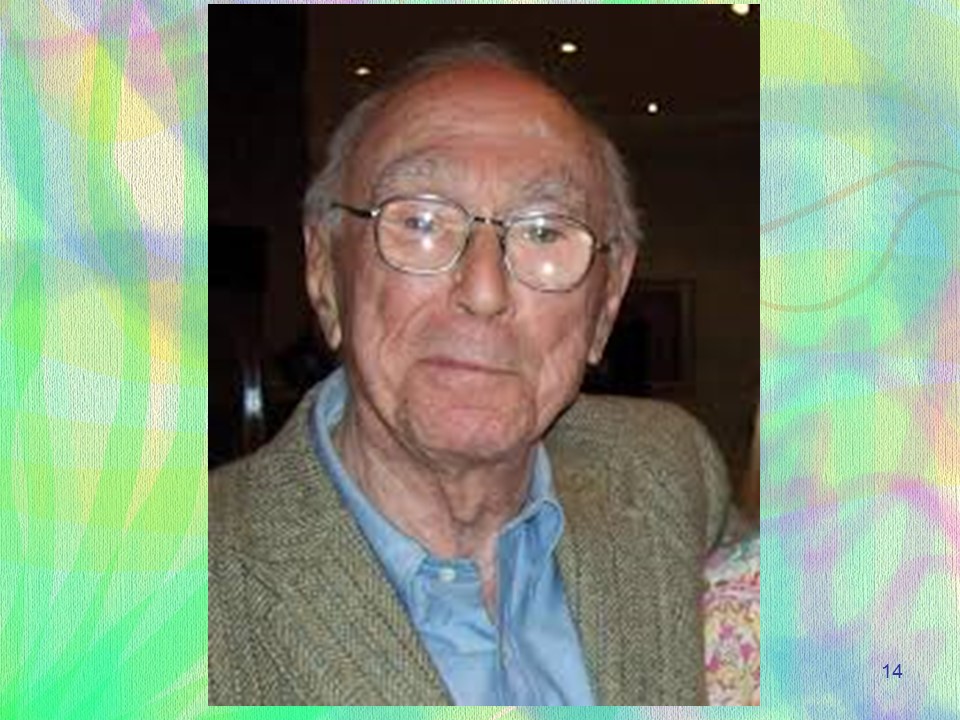
Jerome Bruner just passed away. He was 100 years old.
Bruner changed forever the way we see the world and the way we understand human thinking. As a pioneer cognitive psychologist, he helped us rethink the mind as what he calls a “hypothesis generator” – the human can envision “possible worlds” (the title of one of his most famous books.
As a child he recalls being influenced by one of his teachers, Ms McNamara, who taught him that “the world is an open question”. And that is how Bruner viewed psychology. If you deal only with what exists, he noted, then psychology has nothing to do with life. In giving advice to young psychologists, he urged them, “get out of your office and get into the real world.”
His older sister Alice influenced him strongly. She was smarter than me, he recalls, and asked him, “why are you always guessing?” But Bruner saw the mind as a “hypothesis generator” – as something that asks questions, rather than spews out answers.
He had a lifelong love of sailing. Sailing for him was a metaphor of life. You sail in an unpredictable environment, when the wind can change at any moment, and you have the illusion of control, adjusting the sails, etc., but it’s only an illusion.
I personally embrace Bruner’s landmark article The Narrative Construction of Reality (1991), because I’ve come to believe, as Bruner showed, that we understand reality by telling ourselves stories – about ourselves, about others, about how things work. And some of those stories are fiction, made-up, “possible worlds”, this is called creativity and entrepreneurship. Entrepreneurs make up a possible world and then make it happen.
My colleague Arie Ruttenberg defines creativity as “widening the range of choices”. That is, imaging new possibilities, possible worlds. Bruner supports this.
From childhood, Bruner had limited vision. But it never hampered him. He brought common sense and a spirit of rebellion to his discipline, and embraced all other disciplines that he felt were related. We will miss him.

 TIMnovate