
You are currently browsing the tag archive for the ‘religion’ tag.

God as a Working Hypothesis
By Shlomo Maital
Claude is an AI large language model (LLM) by a 2021 startup, Anthropic, launched by entrepreneurs who left OpenAI. Amazon invested $4 billion in Anthropic.
I have done a small experiment. I decided to write a blog on “God as a Working Hypothesis”. I hesitated, because matters of faith are very personal and individual.
I framed a few sentences in my mind. Then, I asked Claure to write 300 words on the subject. And the truth is: Claude did this task far far better than I did.
Here is what Claude wrote. Judge for yourself:
“God as a working hypothesis” is a concept that has intrigued theologians, philosophers, and scientists for centuries. It suggests approaching the idea of God not as an absolute certainty, but as a provisional assumption that can be used to explore and understand various aspects of existence, morality, and the human experience.
“This perspective allows for a more flexible and open-minded approach to discussions about faith and spirituality. Rather than demanding unwavering belief or outright rejection, it invites individuals to consider the implications and potential benefits of accepting God’s existence as a starting point for further inquiry and reflection.
“As a working hypothesis, the concept of God can serve as a framework for addressing fundamental questions about the origin of the universe, the nature of consciousness, and the purpose of human life. It provides a lens through which to examine ethical dilemmas, explore the boundaries of human knowledge, and contemplate the mysteries of existence that science has yet to fully explain.
“Proponents of this approach argue that it allows for a more nuanced and intellectually honest engagement with religious and philosophical ideas. By treating God as a hypothesis rather than an irrefutable fact, individuals can critically examine religious teachings, cultural traditions, and personal experiences without feeling constrained by dogma or the fear of blasphemy.
“Critics, however, may argue that reducing God to a mere hypothesis diminishes the profound spiritual experiences and deeply held convictions of believers. They might contend that faith, by its very nature, transcends empirical evidence and rational argumentation.
“Nevertheless, viewing God as a working hypothesis can foster dialogue between believers and non-believers, as well as between different religious traditions. It creates a common ground for discussion, allowing individuals to explore the implications of divine existence without necessarily committing to a particular belief system.”
“This approach also aligns with the scientific method, which relies on hypotheses to advance knowledge and understanding. Just as scientists formulate and test hypotheses to explain natural phenomena, individuals can use the God hypothesis to explore existential questions and evaluate its explanatory power in various contexts.
“Ultimately, treating God as a working hypothesis encourages intellectual curiosity, promotes open-mindedness, and allows for a more inclusive conversation about spirituality and the nature of reality. It acknowledges the limitations of human knowledge while still engaging with the profound questions that have captivated humanity throughout history.”
What We Jews Learned from Pope Francis
By Shlomo Maital
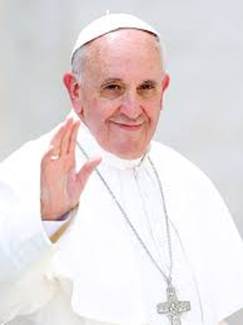
Pope Francis died on Monday. He was 88.
The Catholic Church has done the Jewish people considerable harm in the past. But this Pope was different.
As Cardinal of Buenos Aires, he daily took the bus to his headquarters. A master of the meaningful gesture, he wanted to show his flock that he was one of them, not above them. As New York Times Vatican correspondent Jason Horowitz (Jewish) noted, Francis hated ‘clericalism’ above all – defined as “the formal, church-based dominant leadership or opinion of ordained clergy in matters of the church”, or in other words, we the clergy are above you all.
We Jews learned – or should have learned – a lot from Francis. In Israel, our Ultra-Orthodox clerics, rabbis, cloistered in halls of study called ‘yeshivas’, instruct their students never to agree to do army service, as the law requires, even when our country is under attack and many reserve soldiers are serving for 200 or more days a year, ruining their businesses, away from their wives and children, and risking their lives.
This is clericalism. Religious leaders who do not live as Francis counseled among the people, listening to the people, empathic with them, feeling their pain and suffering.
Iran is led exclusively by an 85-year-old cleric. It will not end well.
The rabbis of the Talmud all had trades – carpenters, shoemakers, bakers – because they had to, to earn a living. They lived among the people and the 2,000 pages of the Talmud reflects this. They ‘took the bus’, as did Francis. (He used to drive around Rome in a Ford Focus. A meaningful gesture).
Today, the Ultra-Orthodox Jewish rabbis support an anti-democratic government, filch many many millions of shekels of taxpayer money to support their life of study, without jobs or army service, and now demand a law enabling them to legally evade what every other citizen must do, serve their country.
We Jews can learn from Pope Francis. In the Conclave of cardinals (only those under 80; if you’re over 80, you don’t get to vote), in 2013, Pope Francis like many other cardinals made a short speech. As Jason Horowitz reports, you are not allowed to campaign for yourself in the Conclave – but you can give a speech about the priorities you think are vital for the Church, which is of course a campaign speech. Francis spoke about getting the priests out of the cloistered churches and into the field, among the people, into the “periphery”, as his speech became known. It gained him the papacy.
Let us hope and pray the Conclave Cardinals choose a worthy successor to Pope Francis – one who in spirit and in mindset is one of the people, not one of the autocratic clerics who live in splendor and have no idea how the vast majority of their flock lives. The chances are good. Many of the current Cardinals were appointed by him and share his world view.
Is the World Aleatoric? Or Epistemic?
By Shlomo Maital

Question: What is your view of the world? Is the world “aleatoric”? Or “epistemic”?
Sorry for the two-dollar words. Aleatoric means random, uncertain. Epistemic means unexpected things occur, but only because we have not yet acquired sufficient knowledge. In short, is the world inherently random, unpredictable, or is the world full of the unknown BUT KNOWABLE eventually?
I spent my life working in Academe. People I work with are epistemic. Academics believe that their research will turn the unknown into the knowable. And a great deal of scientific research does that. One possible (though not inevitable) result, is that those with higher education believe in a distant God, or none at all, as we ourselves become God, in the sense of understanding scientific causality, rather than divine intervention. Academe is epistemic.
But what if the world is really aleatoric? Divinely aleatoric? That is – events are random, but the Divine hand is present in ways we do not understand, nor will we ever. This is a variation on purely random, aleatoric world.
Example? In 1945 US Secretary of War Henry Stimson persuaded President Harry Truman NOT to bomb Kyoto with the first US atom bomb. Experts felt that destroying Japan’s cultural capital and historic priceless treasures would strike a war-ending blow. But as a 19 year old, Stimson had visited Kyoto and loved it. He argued vehemently in two long meetings with Truman NOT to bomb Kyoto. Result: Hiroshima was chosen instead.
Is this epistemic? Or aleatoric? Moreover — US B-29 bombers with the second A-bomb arrived at their second target – and found it covered with clouds. They had to divert to an alternate: Nagasaki. So both Hiroshima and Nagasaki were destroyed, and their inhabitants decimated, by a virtually random cause – a trip by a teenager, and the vagaries of weather. Aleatoric? Epistemic?
Scientists reported yesterday that they have models that can predict crowd movements, that today seem random. Really? Will we humans one day know EVERYthing? Einstein fought quantum mechanics of Bohr, saying God does not play dice with the universe. Some of us may believe, true – but it LOOKS like he does, and because we will never truly understand divine intervention, we might as well treat the world as divinely aleatoric, with God in the background (e.g. Bette Middler’s wonderful song “God is Watching Us ….At A Distance”.
What is your own view?
Incidentally: Quantum computers are proving many times more powerful than conventional ones, based on the fact that a piece of information (bit) can be either zero, or one, or some probability inbetween, and the probability is an infinite set of fractions… making that ‘bit’ many times more powerful than its being either zero or one (as in conventional computing).
Quantum computing uses the aleatoric world in an epistemic manner (we figured out how to USE IT!).
A head scratcher.
 TIMnovate