
You are currently browsing the tag archive for the ‘science’ tag.
Global Chaos: Is Snails-Pace Evolution to Blame?
By Shlomo Maital

Evolution is an ongoing nonstop race against an ever-changing world. But it appears to be too slow to be helpful lately. Global chaos? The pace of social and technological change outraces the ability of evolution to deal with it well.
This is my conclusion from a new study * from the University of Michigan.
- The Neutral Theory of Molecular Evolution. Jianzi Zhang et al. Nature Ecology and Evolution. 2025.
“For decades, many evolutionary biologists have believed that most genetic changes shaping genes and proteins are neutral. Under this view, mutations are usually neither helpful nor harmful, allowing them to spread quietly without being strongly favored or rejected by natural selection. A new study from the University of Michigan challenges that long-standing assumption and suggests evolution may work very differently than once thought.
“As species evolve, random genetic mutations arise. Some of these mutations become fixed, meaning they spread until every individual in a population carries the change. The Neutral Theory of Molecular Evolution argues that most mutations that reach this stage are neutral. Harmful mutations are quickly eliminated, while helpful ones are assumed to be extremely rare, explains evolutionary biologist Jianzhi Zhang.”
“Zhang and his colleagues set out to test whether this idea holds up when examined more closely. Their results pointed to a major problem. The researchers found that beneficial mutations occur far more often than the Neutral Theory allows. At the same time, they observed that the overall rate at which mutations become fixed in populations is much lower than would be expected if so many helpful mutations were taking hold.”
But beneficial mutations often don’t last! Why? A mutation that provides an advantage in one setting may become harmful once conditions shift, the researchers note.
There are lots of terrific ‘idea mutations’ emerging all over the world. But they are not numerous enough, powerful enough, and full-blown enough, to help much with the global chaos we face. The pace of change is outstripping the pace of evolutionary progress.
Example: Democracy is a social ‘mutation’. Dates back to Greece, 2,500 years ago, but it has evolved nicely. Ooops…capitalism, too, a mutation, generates billionaires. They buy political influence and push political systems to the autocratic right. Harmful evolutionary mutation. Solution? Regulate, tax, etc.? Too slow.
What should be done? Let’s help Nature. Let’s foster creativity, and use artificial intelligence as a full collaborator to generate powerful mutative solutions to global chaos and global crises.
Evolution has created us humans and our intelligence. Can we speed it up, to bail us out? It’s worth a try!
Replaceable You! Virtual You!
By Shlomo Maital
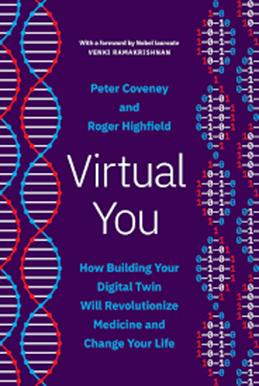
Virtual You: How Building Your Digital Twin Will Revolutionize Medicine and Change Your Life. Peter Coveney, Roger Highfield, Venki Ramakrishnan. 2023 Princeton University Press
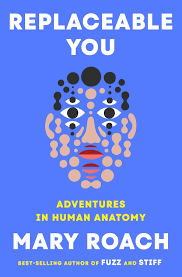
Replaceable You: Adventures in Human Anatomy. Mary Roach. Random House, 2025.
One of my never-miss podcasts is Ira Flatow’s Science Friday. This week two wonderful books were reviewed: Virtual You, and Replaceable You. Virtual You reviews how creating a digital copy of each person’s bodily mechanisms and organisms (each of us has a bodily organism unlike any other) can advance medicine by light years, at a time when identical drugs are prescribed for everyone, even though we are all different. This is particularly true of women, at a time when most clinical trials are done on white males. Personalized medicine has been long discussed; digital twin technology may make it feasible and cost-effective. “… your digital twin can help predict your risk of disease, participate in virtual drug trials, shed light on the diet and lifestyle changes that are best for you, and help identify therapies to enhance your well-being and extend your lifespan”, write the authors.
Replaceable You is about the spare parts business – how we are replacing hearts, lungs, livers, knees, hips, eye lenses, and hair follicles, among others, with ‘spare parts’. This too is revolutionizing medicine. It is also a source of heartache, literally – many people wait in long queues for, e.g., kidney transplants. One approach the author describes is the ‘body shop’ approach — hearts for transplant have to be used within four to six hours of removal from the dead donor, and many such hearts are not up to par and are not usable. Scientists look for ways to ‘repair’ defective hearts, and to prolong the time after which they become unusable, to expand the supply – currently, with huge excess demand and long queues.
Science Friday this week discusses how AI has shown promise in speeding development of new drugs – but so far has failed. The current model of drug development, involving mice (very poor representations of human anatomy) and then people (long, expensive, and often misleading) is costly and cumbersome. It was hoped that AI could analyze billions of molecules, to find the right one to block a ‘bad protein’ that causes illness. But so far – it has not happened.
One of the fascinating frontiers of research for ‘spare parts’ is 3D biological printing of organs – corpuscles, cells, etc. This is incredibly complex. But – one day, perhaps, a 3D printer will be able to print a heart – perhaps using key cells from one’s own body to forestall immune rejection.
Origami – in Space
By Shlomo Maital

Recently, my grandson and I followed YouTube instructions and built an origami military tank that shoots paper pellets, with the help of an elastic band. It was challenging and took a second try.
Origami originated in Japan, following the 7th century CE when paper was brought to Japan – and the art of folding paper quickly ensued. A brilliant New York Times article by Kenneth Chang describes ‘bloom pattern’ origami — ‘rotationally symmetric, around the center’, like petals of a flower.
Bloom pattern origami creates truly beautiful paper folding. But – is that all?
Consider the James Webb Space Telescope, that brings us almost daily incredible photographs from space. The whole telescope had to be folded compactly in order to fit inside the 5.4 meter space in the Ariane 5 rocket that launched it. Once in space, the telescope would unfold, like the petals of a very complex flower. The crucial sunshade of the telescope is 21 meters! Four times as big. As big as 11 tall men stretched end to end, head to heel – and a six-year-old to boot.
But how to do this?
Origami. It is an origami problem, in reverse. Take the final telescope. Then, calculate how to fold it, to fit neatly into the launch rocket. Like origami.
The telescope and its crucial sunshade were folded 12 times.
The skill in calculating how to do this involved bloom pattern symmetry.
One of the key principles of creative innovation is X + Y. That is, combining two things that seem unrelated.
Space telescope, = X. Origami bloom symmetry = Y. X + Y. Presto. Folded and unfolded space telescope.
Some pretty smart people figured this out. Well done!
Andre Geim: Scientist with a Sense of Humor
By Shlomo Maital

I have taught in a leading science and engineering university for many years. The brilliant people here work hard, do great research – and they take their work very very seriously – even when it’s not.
Consider Andre Geim, British-Dutch-Russian Nobel Laureate 2010 for discovering graphene, a form of carbon one atom thick, that forms a strong light lattice and has infinite uses.
Andre Geim is the only person to have won both a Nobel Prize and an Ig Nobel Prize. He received the 2010 Nobel Prize in Physics for his groundbreaking work on graphene. In 2000, he received an Ig Nobel Prize for his work on magnetic levitation, specifically using magnets to levitate a frog.
The Ig Nobel Prize is awarded annually at Harvard, and it recognizes research that…well, makes you laugh. Geim won his Ig Nobel prize for ‘levitating a frog’!? What is that? It is based on diamagnetization – materials that have had their magnetic properties removed. Here is how Google explains it:
“By placing a frog in a strong magnetic field, Geim induced a weak magnetic field in the frog’s body that repelled the external field, causing it to float. This phenomenon is due to the diamagnetic properties of water, which makes up a significant portion of a frog’s body.” Like poles repel, unlike poles attract.
The Harvard Ig Nobel people asked Geim if he would accept the prize. He responded positively, with a smile. Sure, why not? Self-deprecation is not a known quality of Nobel scientists. And his feat, levitating a frog, was very difficult and had important implications. But – it does make us smile. And Geim was happy with that.
Let’s salute Andre Geim – and protest.
Geim is Russian and emigrated to Netherlands where he became a professor. He is / was a Dutch citizen. He later moved to a British university. He now heads a UK Graphene Research Center. When England knighted him for his Nobel achievement, he was told he had to accept British citizenship to become Sir Andre Geim. He agreed – unaware that Dutch law rescinds Dutch citizenship the moment a Dutch person accepts a foreign passport. Netherlands revoked the Dutch citizenship of Andrew Geim, Nobel Laureate – and this greatly upset him, because he truly loves and is grateful to his Dutch adopted country.
Andre Geim has a sense of humor. The Dutch foreign ministry does not. Nor does it have a sense of proportion. The law is the law? Do laws have exceptions? Is this case worthy of an exception? You bet.
Kudos to Andre Geim – the only scientist with both an Ig Nobel and a real Nobel Prize.

God as a Working Hypothesis
By Shlomo Maital
Claude is an AI large language model (LLM) by a 2021 startup, Anthropic, launched by entrepreneurs who left OpenAI. Amazon invested $4 billion in Anthropic.
I have done a small experiment. I decided to write a blog on “God as a Working Hypothesis”. I hesitated, because matters of faith are very personal and individual.
I framed a few sentences in my mind. Then, I asked Claure to write 300 words on the subject. And the truth is: Claude did this task far far better than I did.
Here is what Claude wrote. Judge for yourself:
“God as a working hypothesis” is a concept that has intrigued theologians, philosophers, and scientists for centuries. It suggests approaching the idea of God not as an absolute certainty, but as a provisional assumption that can be used to explore and understand various aspects of existence, morality, and the human experience.
“This perspective allows for a more flexible and open-minded approach to discussions about faith and spirituality. Rather than demanding unwavering belief or outright rejection, it invites individuals to consider the implications and potential benefits of accepting God’s existence as a starting point for further inquiry and reflection.
“As a working hypothesis, the concept of God can serve as a framework for addressing fundamental questions about the origin of the universe, the nature of consciousness, and the purpose of human life. It provides a lens through which to examine ethical dilemmas, explore the boundaries of human knowledge, and contemplate the mysteries of existence that science has yet to fully explain.
“Proponents of this approach argue that it allows for a more nuanced and intellectually honest engagement with religious and philosophical ideas. By treating God as a hypothesis rather than an irrefutable fact, individuals can critically examine religious teachings, cultural traditions, and personal experiences without feeling constrained by dogma or the fear of blasphemy.
“Critics, however, may argue that reducing God to a mere hypothesis diminishes the profound spiritual experiences and deeply held convictions of believers. They might contend that faith, by its very nature, transcends empirical evidence and rational argumentation.
“Nevertheless, viewing God as a working hypothesis can foster dialogue between believers and non-believers, as well as between different religious traditions. It creates a common ground for discussion, allowing individuals to explore the implications of divine existence without necessarily committing to a particular belief system.”
“This approach also aligns with the scientific method, which relies on hypotheses to advance knowledge and understanding. Just as scientists formulate and test hypotheses to explain natural phenomena, individuals can use the God hypothesis to explore existential questions and evaluate its explanatory power in various contexts.
“Ultimately, treating God as a working hypothesis encourages intellectual curiosity, promotes open-mindedness, and allows for a more inclusive conversation about spirituality and the nature of reality. It acknowledges the limitations of human knowledge while still engaging with the profound questions that have captivated humanity throughout history.”
Dark Matter: The Dark Mystery
By Shlomo Maital
Think about it. There could be an entire cosmos, universe, co-existing with our own, but – entirely invisible to us, because its own laws of nature are utterly different from ours, and the stuff it is made of does not interact in any way with the stuff WE are made of.
This is not science fiction. It comes from a leading theoretical physicist at Cal Tech (California Institute of Technology, in Pasadena), Kathryn M. Zurek, writing in The Economist (March 18).
Here is an excerpt: “.dark matter might not be one particular particle – it may be a whole hidden sector of dark particles and forces. In this dark sector, particles would interact through their own independent forces and dynamics, creating a hidden world of cosmology running parallel to our own. There could be dark atoms…held together by dark electromagnetism. [there might be] huge dark atomic nuclei…helping form supermassive black holes in the centers of galaxies. [Note: There is such a huge black hole in the center of our galazy, the Milky Way].”
Professor Zurek concludes: “The fundamental nature of the dark matter that pervades our universe is still unresolved.”
Conclusion: We don’t really know what the universe, i.e. we, the people, is made of. We know 5%. One in twenty. 70% is dark energy. 25% is dark matter. So our ignorance embraces 95% of our universe.
So – I am an economist. We claim to know everything, while knowing basically zero.
The physicists happily, gleefully, joyfully, admit to knowing almost nothing.
If I were starting college again, I would probably become a physicist. It is better to know some of the key questions, James Thurber wrote, than to pretend you know all the answers.
Dark Matter Is Changing & Evolving
By Shlomo Maital
What do we know about our 13.8-billion-year-old universe? A lot – and very little.
We know that 5 per cent of it is comprised of atomic matter – particles. They interact with us, and we can see them, study them, smash them to pieces and examine what comes out. 25 per cent is dark matter – matter that we cannot see, that does not interact with other particles and is invisible. 70 per cent is dark energy – energy that also does not interact with existing matter and so is invisible.
Conclusion: 95% of the universe is a total dark mystery to us. We know this, because if the universe comprised only the matter we observe, its rate of expansion should be slowing as cosmic bodies grow more and more distant from one another and gravity weakens.
Instead, we observed that the universe is expanding – at a faster and faster rate! Only dark matter and dark energy can explain this.
Projecting dozens and hundreds of billions of years into the future, at the current rate the universe goes dark – because objects become too far apart for us to see, and the sun has long ago gone dark, using up its helium.
But wait! There is new evidence, from DESI, dark energy spectroscopic instrument, atop an observatory in Arizona’s desert. Dark energy, it was found, is evolving, changing. It is not constant. So, we could well NOT have the cosmos go dark, but rather, stop expanding, and collapse inward, implode – and cause a new Big Bang.
I envy the physicists. They have the world’s biggest mystery to solve — and I sense their energy and joy at not yet knowing in the least what the universe really is and how it works.
And we humans? Who think we know everything? Not even close.
2047: We Were Warned
By Shlomo Maital

Twelve years ago, the leading science journal Nature published an unusual article. It was the result of a class project, led by Dr. Camilo Mora, University of Hawaii. Mora and students did this:
“They divided the earth into a grid, with each cell representing 386 square miles. Averaging the results from the 39 climate models, they calculated a date they called “climate departure” for each location — the date after which all future years were predicted to be warmer than any year in the historical record for that spot on the globe. The results suggest that if emissions of greenhouse gases remain high, then after 2047, more than half the earth’s surface will experience annual climates hotter than anything that occurred between 1860 and 2005, the years for which historical temperature data and reconstructions are available.”
The students used models operated by 21 research centers in 12 countries, all of them publicly available.
The New York Times’ Justin Gillis wrote about it, under the headline: “By 2047, Coldest Years May be Warmer than Hottest in Past, Scientists Say”.#
My wife and I have five great-grandchildren. By 2047, they will be graduating from college, finding a spouse, and beginning their working lives. The planet in which they do this will be hotter than hell. The coldest day will be warmer than the hottest in the past. The hottest day? Words fail me.
Most attention now is being paid to the melting of the Arctic icecap. But the 2013 paper showed that the greatest impact of global warming will occur in the tropics, near the equator.
The tropics constitute 40% of Earth’s surface area and contain 36% of Earth’s landmass. It is home to 40% of the world’s population, projected to reach 50% by 2047.
The tropics are also where I and our great-grandchildren live – in Israel, only some 2,000 miles north of the equator.
The generations, including mine, that did this to our planet and to our descendants can no longer prevent it, but only mitigate it, maybe slightly. And the Big Oil big bucks that pump the media use the fossil fuel billions to perpetuate the problem.
It we truly love our children, grandchildren and great-grandchildren – how in the world have we done this to them?
# New York Times, Oct. 10, 2013, Section A, Page 10.
Rosalind Franklin: DNA Pioneer
By Shlomo Maital
Photo 51: The Structure of DNA
Rosalind Franklin.
Rosalind …who?
This, below, is from King’s College, London:
“The discovery of the structure of DNA in 1953 was enabled by Dr Rosalind Franklin’s X-ray diffraction work at King’s. Dr Franklin joined the laboratory of John Randall at King’s in 1950 with a PhD from Cambridge and X-ray diffraction experience in Paris.
“At King’s, by controlling the water content of the DNA specimens, she showed that the molecule could exist in two forms (A and B). In May 1952 she and PhD student Ray Gosling captured the image of the B form that supported the modelling of DNA – ‘photo 51’.
“Photo 51 is one of the world’s most important photographs, demonstrating the double-helix structure of deoxyribonucleic acid: the molecule containing the genetic instructions for the development of all living organisms. Franklin’s image confirmed James Watson and Francis Crick of the University of Cambridge’s hypothesis that DNA had a double helical structure, enabling them to build the first correct model of the DNA molecule in 1953.”
“A paper by Franklin and Gosling, together with one by Dr Maurice Wilkins and colleagues from King’s, accompanied the announcement of Watson and Crick’s momentous discovery in Nature in May 1953.”
Franklin’s paper was largely ignored. Watson and Crick’s discovery was a sensation.
But it was Franklin’s amazing photograph that was crucial. Photo 51 showed a clear X-ray diffraction pattern of DNA, and revealed structural features of DNA vital for understanding DNA´s three-dimensional structure. She managed to produce the sharp photograph shown above by figuring out how to control the amount of water in the DNA sample – water blurred the photograph.
As a woman, as a very young woman, and as a scientist very early in her career, she was marginalized by the powerful male scientists who dominated the field. True, the Nobel citation for Crick and Watson mentioned her contribution – but she died of ovarian cancer four years before Watson/Crick’s Nobel. And it is Watson and Crick who have reaped the glory.
In the history of the Nobel Prize, 894 men have won it and 64 women. Even though women are half the population. Women are 50% of the population, and won 6% of the Nobels.
Science is a demanding field of research, largely dominated by men. Fewer women choose this field, and those that do are often marginalized by the men who run and rule the labs. Like Rosalind Franklin.
Things are changing… but not fast enough.
How to Get to the Root of the Problem
By Shlomo Maital

Let’s say you have a tough problem. You want to get to the root of the cause.
But how?
Ask a five-year old.
Really. Ask a kid. Because – they get to the root of things, by the method of ‘rood cause analysis’, RCA, used widely by systems experts diagnosing crashes, by computer engineers designing software… in general, by the hi-tech experts.
The method was used eons ago by kids, long before silicon. It’s called “the 7 Question Path to Enlightenment”.
Here’s a fictional conversation with one of my grandchildren.
Why are there people on Earth? Because they descended from primates, monkeys and apes. Why are there primates? They too descended, from other mammals, through evolution. Why are there other mammals? Well, see, this fish figured out how to move from the sea, breathing oxygen through its gills, to the land, breathing air through lungs. Where did the fish come from? It began with single cell living things, created by a combination of the right chemicals in a warm sea. Where did those single cell things come from? From the oceans, created when the Earth cooled from boiling, and when rain began to fall. Why didn’t the oceans just evaporate, as they did on Mars? Gravity. What causes gravity? And what is it? … Uh….
There we have it. The root cause. Life on Earth, because of…gravity. But..what in the world is gravity? Truth is, we do not truly know how gravity works or what it really is – Einstein’s theory of relativity is a start.
Root cause? Overweight? Out of shape? Tired? Financial problems? Ask why. And then again. And again. Either you get to a dead end…or the root cause. And even dead ends sometimes are very helpful, right? They tell us what we need to explore in depth more thoroughly.
 TIMnovate