
You are currently browsing the tag archive for the ‘science’ tag.
Is the World Aleatoric? Or Epistemic?
By Shlomo Maital

Question: What is your view of the world? Is the world “aleatoric”? Or “epistemic”?
Sorry for the two-dollar words. Aleatoric means random, uncertain. Epistemic means unexpected things occur, but only because we have not yet acquired sufficient knowledge. In short, is the world inherently random, unpredictable, or is the world full of the unknown BUT KNOWABLE eventually?
I spent my life working in Academe. People I work with are epistemic. Academics believe that their research will turn the unknown into the knowable. And a great deal of scientific research does that. One possible (though not inevitable) result, is that those with higher education believe in a distant God, or none at all, as we ourselves become God, in the sense of understanding scientific causality, rather than divine intervention. Academe is epistemic.
But what if the world is really aleatoric? Divinely aleatoric? That is – events are random, but the Divine hand is present in ways we do not understand, nor will we ever. This is a variation on purely random, aleatoric world.
Example? In 1945 US Secretary of War Henry Stimson persuaded President Harry Truman NOT to bomb Kyoto with the first US atom bomb. Experts felt that destroying Japan’s cultural capital and historic priceless treasures would strike a war-ending blow. But as a 19 year old, Stimson had visited Kyoto and loved it. He argued vehemently in two long meetings with Truman NOT to bomb Kyoto. Result: Hiroshima was chosen instead.
Is this epistemic? Or aleatoric? Moreover — US B-29 bombers with the second A-bomb arrived at their second target – and found it covered with clouds. They had to divert to an alternate: Nagasaki. So both Hiroshima and Nagasaki were destroyed, and their inhabitants decimated, by a virtually random cause – a trip by a teenager, and the vagaries of weather. Aleatoric? Epistemic?
Scientists reported yesterday that they have models that can predict crowd movements, that today seem random. Really? Will we humans one day know EVERYthing? Einstein fought quantum mechanics of Bohr, saying God does not play dice with the universe. Some of us may believe, true – but it LOOKS like he does, and because we will never truly understand divine intervention, we might as well treat the world as divinely aleatoric, with God in the background (e.g. Bette Middler’s wonderful song “God is Watching Us ….At A Distance”.
What is your own view?
Incidentally: Quantum computers are proving many times more powerful than conventional ones, based on the fact that a piece of information (bit) can be either zero, or one, or some probability inbetween, and the probability is an infinite set of fractions… making that ‘bit’ many times more powerful than its being either zero or one (as in conventional computing).
Quantum computing uses the aleatoric world in an epistemic manner (we figured out how to USE IT!).
A head scratcher.
Rethinking Dark Matter & Dark Energy
By Shlomo Maital

Adam Riess is a Johns Hopkins U. professor of astrophysics and 2011 Nobel Laureate. His research showed that the universe is expanding (Hubble found that years ago), at an increasing rate – which defies the standard laws of gravity, that suggest that as cosmic bodies grow more distant, the force of gravity weakens. This means that there is unobserved dark matter and dark energy out there, which does not interact with conventional matter and energy, and it must be some 95% of existing energy and matter (63% dark energy, 32 percent dark energy).
Riess is part of a team researching the cosmos using the DESI, dark energy spectroscopic instrument. It is located in the Sonora Desert, atop Kitt Peak, in Arizona. It is creating a 3D map of the positions and velocities of 40 million galaxies across 11 billion years of time. The first map just released covers six million galaxies. The director of DESI, Michael Levi, said that “we’re seeing some potentially interesting differences that could indicate that dark energy is evolving with time’.
Riess said about the results that “it may be the first real clue we have gotten about the nature of dark energy in 25 years!”. His words were reported by Dennis Overbye, in the New York Times. Overby covers astrophysics and brilliantly explains complex subjects in a lucid understandable manner.
If the current standard model is true, then the universe will grow darker and darker, as cosmic bodies grow more distant one from another – and eventually, even atoms will rip apart and everything will disintegrate, billions of years from now. But if dark matter and dark energy are evolving, changing in a dynamic manner, well – maybe not.
Perhaps one day, we will actually find a way to observe and understand dark matter and dark energy.
Meanwhile, it is exhilarating to see how astrophysicists are eager and willing to admit that what they thought they knew is not the case. Would that all of us would be so wise.
Mapping every human cell
By Shlomo Maital
Two important developments in cell biology, published this week, suggest major breakthroughs in how healthcare is provided.
- Preventing disease is always superior to treating it, though Big Pharma loves selling billion dollar drugs. One approach to this has been through use of CAR-T cells.
Chimeric antigen receptor (CAR) T-cell therapy is a way to get immune cells called T cells (a type of white blood cell) to fight cancer by changing them in the lab so they can find and destroy cancer cells. Up to now, this approach has been used by modifying the cancer patient’s own cells. Published work by Chinese researchers, joined by Americans, suggests that donor CAR-T cells can be used as well. This is hugely important – because modifying each cancer patient’s CAR-T cells is expensive and takes time. Using modified donor cells means that large stocks of CAR-T cells can be placed ‘on the shelf’ – though it is unclear whether Big Pharma would be willing to cut down the branch their huge profits rests on.
2. Writing in The Economist, Geoffrey Carr explains how the Human Atlas Project may also change our lives.
“One thing that is now being done is the Human Cell Atlas, a project made possible by the Human Genome Project’s identification of the 20,000 or so protein-coding genes that can determine a cell’s nature. And what a thing it is. The endeavour has involved thousands of researchers spread over all six inhabited continents proposing to track down every type of cell in the body, where each is located, what their jobs are, how they form in a developing embryo, how they collaborate, how they cause diseases when they go wrong and so on.
“The long-term goal is to create something akin to a human digital twin—or, rather, a whole series of twins covering the spectrum of human sexes, ages and geographical backgrounds that can be poked and prodded digitally to see how they react. This will help researchers understand how actual bodies behave, decide which experiments are worth doing in the real world and, perhaps, provoke ideas that might not otherwise have had their lightbulb moment.
It is a huge endeavour, dwarfing the HGP in size and scope, but cleverly keeping costs down by piggybacking on and co-ordinating the efforts of people already working in established laboratories, rather than starting (as many genome-project efforts did) from scratch. Like the genome project, though, it makes its data available immediately, for any and all to use.
“However, unlike the genome project, which was frequently in the news up until that triumphant announcement at the White House in June 2000, the Human Cell Atlas has stayed largely under the radar. As we reported almost two years ago, the contrast is partly a result of the genome project having had well-run PR, a clear end goal, a competitor in the form of a private venture which aimed to beat the public one, and the (ahem) rather large egos of some of those involved (on both the public and private sides).”
= = = = =
It’s pretty simple. Our 20,000 genes (some of them) lead to expression of proteins. Proteins run our lives, keep us well and fight invading germs. Mapping our 30 trillion cells in the human body (!), linking proteins to cells, is an enormous project, requiring global cooperation among cell biologists. But it can yield huge benefits in preventive medicine.
The atlases that showed detailed geographies enabled seafarers to explore the world, and they changed our world. An atlas of the cells in the human body may do the same, for our preventive medicine.
In Science, One Thing Leads to Another…
By Shlomo Maital

Lawrence Livermore Labs fusion
For decades, scientists have pursued the goal of replicating the virtually endless source of energy found in our Sun – fusion, the fusing of hydrogen atoms, producing helium and releasing vast amounts of energy. H-bombs do this, of course – but use fusion for destruction, not for construction. Fusion is clean energy par excellence and infinite in quantity.
Scientists at Lawrence Livermore National Laboratoy in the US have finally succeeded in a key first step – ignition. Using powerful lasers to focus an energy beam at hydrogen, they have created fusion – and most important, gotten (in one experiment) twice as much energy created by the fusion, as the energy they needed to ignite it, by powering the lasers. This is a big deal.
But in a TED talk, Livermore scientist Tammy Ma said just in passing, that the laser technology developed for this purpose actually led to another unexpected, unplanned, unanticipated benefit – more powerful, smaller computer chips, through extreme ultraviolet lithography.
How come?
“Extreme ultraviolet lithography is a technology used in the semiconductor industry for manufacturing integrated circuits (ICs). It is a type of photolithography that uses 13.5 nanometer extreme ultraviolet (EUV) light from a laser-pulsed tin plasma to create intricate patterns on semiconductor substrates. ASML Holding is the only company that produces and sells such systems for chip production, targeting 5 nanometer (nm) and 3 nm process nodes.”
Note: A single atom is between 0.1 and 0.5 nanometers in width. So, the EUV technology, originating from fusion research, is now creating chips with detail down to the width of 6 individual atoms!
In life, and especially in science, one thing leads to another. The EUV technology arose because at Lawrence Livermore, it was necessary to focus the laser beam on a very very very small space, hydrogen atoms. And, whoops…turns out to be useful in etching transistors on silicon.
Who knew!?
Thermodynamics and the State of the World
By Shlomo Maital
The second law of thermodynamics states that entropy always increases with time. Entropy is lack of order or predictability; or gradual decline into disorder.
What does that have to do with the state of the world?
At present, entropy is the defining word. Disorder. Trump wins the presidency in the US and threatens mayhem. Russia drags North Korean soldiers to the front in Ukraine. Iran threatens Israel with drones, rockets and who knows what. The Gaza/Lebanon War drags on. (This morning, many Israelis again were sent to bomb shelters). In Amsterdam, crowds of angry Muslims assault Israelis there for a basketball game; several are injured. China employs ‘wolf warrior diplomacy’, challenging US leadership. Israel’s PM fires the defense minister in the midst of an existential war and appoints a party hack in his place.
The entropy list is long and broad and deep.
It does seem that at the moment, entropy is not only increasing in the world, but soaring, spiking.
So?
Can we take comfort in knowing that entropy is not all bad. Static. Frozen order. Nothing really good comes from a system that is unchanging; it isn’t broken but it is not so great either.
Our world system is broken. Including democracy. But out of the entropy, there will emerge a new dynamic functional order. This happened in July 1944, when at Bretton Woods the US and its allies reinvented the global economic and financial system, in the midst of a terrible war. It will happen again. The process is painful – entropy is awfully stressful, especially when our perspective is day-to-day and we only see the tips of our noses, if that.
Good will emerge from the world entropy that prevails today. And as the Book of Genesis notes, in the very first sentences, the world emerged from chaos. Disruption is a vital component of world-changing hi-tech and innovation. It is not always a good thing. But sometimes, incredibly good things do emerge.
Can we take some comfort in this?
The Secret of Life: 3 Proteins
By Shlomo Maital
Have you ever wondered: How in the world do those little sperms – cells with big heads and wriggly tails – manage to get into the ovum, the female cell produced by the ovaries? Cells have thick walls. They have to – otherwise, really bad stuff could get int. COVID, for instance, gets into cells, because it has a huge long spike, a spear, and it pokes its way into the cell, and ‘persuades’ the cells in our body to produce copies of itself. But the little sperm? They have no spike.
But what DO they have? Writing in the New York Times, October 17, Elizabeth Preston explains clearly and movingly a new finding, that solves the mystery.[1]
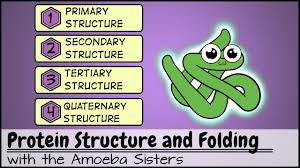
A Google company, DeepMind, developed software, AlphaFold, whose principal developers shared the Nobel Prize this year for chemistry – a rare event in which the Nobel for science is given to a group of researchers from a business, rather than to scholars from a university or lab. Using AlphaFold, scientists at a research institute in Vienna have discovered the nature and structure of the three key proteins in the head of the sperm, that act as ‘keys’ to combine with a protein in the ovum cell wall and ‘unlock’ it, to enter, fertilize it – and generate a zygote, a fertilized ovum ready to reproduce. Proteins are driven by genes, and they control our lives. They have very complex ‘folded’ structures that are really hard to decipher — until now.
And – here’s the clincher. Those 3 proteins – they are shared by a huge variety of living things – humans, yes, and ….zebrafish. Those lovely striped black and white fish. Same 3 proteins on their testes (sex organs).
Does this make you think, that we humans are not really at the head of the food chain, but instead, PART of an amazing ecosystem with which we living things share many things, including those key (double meaning) proteins? Does this make you feel a bit humble, as it does me?
Picture that obstreperous sperm, outracing a million rivals, reaching the ovum, knocking politely on the door – no answer. Knocks again. No answer. Whips out the keys (3 proteins), turns the key in the lock, wriggles inside – and creates a new life, or the start of it. And then? Those two helixes of interlocked DNA, they separate, one stays, the other moves on to the divided cell… and the process continues.
There is incredible beauty in the creation of life – and those 3 proteins have unlocked only a very tiny part of it.
[1] Elizabeth Preston. “Sperm can’t unlock an egg without the ancient molecular key”. NYT Oct. 17.
Nobel 2024: Take Chances
By Shlomo Maital

Alfred Nobel
The Nobel Prizes 2024 for physics, chemistry and medicine have been awarded. Here they are:
Physics: John Hopfield, “for foundational discoveries and inventions that enable machine learning with artificial neural networks”, Geoffrey Hinton“for foundational discoveries and inventions that enable machine learning with artificial neural networks;
Chemistry: David Baker, “for computational protein design”, Demis Hassabis “for protein structure prediction”
Medicine: Victor Ambros, “for the discovery of microRNA and its role in post-transcriptional gene regulation”; Gary Ruvkun, “for the discovery of microRNA and its role in post-transcriptional gene regulation”
There is a rare link. AI was a key tool used to discover the structure of proteins (the secret of life, and how DNA impacts our lives), and indirectly to help decipher microRNA. And another link. The winning scientists mostly left their comfort zones, to venture into new and risky fields, simply because they were curious. And they did so mainly against the best advice of the ‘experts’.
Take calculated risks, as General George Patton urged, before he did so in World War II and saved the Allies from the German Battle of the Bulge.
Good advice.
Voyager 1: Rest in Peace
By Shlomo Maital

Voyager 1 is a space probe launched by NASA on September 5, 1977, as part of the Voyager program to study the outer Solar System and the interstellar space beyond the Sun’s heliosphere.[1]
It is now 15.2 billion mi. (24.3 billion kms.) from Earth as of January 2024. And it is the most distant human-made object from Earth. Radio messages take 22 hours, 33 minutes and 35.0785 seconds to travel from Voyager 1 and arrive to us – round trip, that’s 45 hours! Say “hi!” to Voyager… and it will respond, “Hawarye?” back two days later.
Voyager was designed to send data for just a few years. But it has lasted… so far, for nearly 47 years! It’s data computer is 1970 technology. I did my Ph.D. on a Princeton mainframe in 1967, using punch cards to feed in data, and received printouts on big rolls of hole-punch paper.
Voyager is suffering from dementia. Yes, space probes, too, get addled brains. The data Voyager is sending back is just… gibberish. NASA engineers have tried turning it off and back on – doesn’t help. Voyager is way to far from the sun to use solar panels – it has nuclear batteries, amazing ones, that have lasted for 47 years. But they too will run out of juice soon.
Voyager, it seems, was built to last. Unlike stuff made to day, which is made to break – so we have to buy more of them. Or made to throw away, because it is too expensive to repair.
From 15 billion miles away, Voyager is sending a message.
Hey, planet. Keep using the old stuff. No, you don’t need iPhone 16, iPhone 12 is perfectly good. (Like mine). Look at me. I’m still (barely) alive. You don’t need to stuff your closet with stuff. You don’t need to respond puppet-like when the fashion gurus say, baggy pants today, tight pants tomorrow. Pink today, beige tomorrow. You don’t need to buy a heavy expensive SUV, just to drive to the corner store.
Thanks Voyager. Who knows? Maybe one day you will bump into an alien life form, maybe they will capture and revive you…and send us back an incredible ‘hello, Earth’. Just don’t say, Take me to your leader. Because…well, we really don’t have one at the moment.
[1] Source: Wikipedia
Are You Kidding? Alas, Scientists Rarely Are
By Shlomo Maital
A friend drew my attention to an article in Chronicles of Higher Education, by Tom Bartlett, Sept. 29, about the utter lack of humor in scientific research proposals, and in general, among scientists. (An exception is the late Nobel physicist, Richard Feynman, whose book was titled, Mr. Feynman, You Must Be Joking!). Bartlett asked the editor of the leading economics journal, American Economic Review, whether “she could think of any joke, any tiny moment of amusement, one solitary witticism that has passed across her desk. Anything, even if it was rejected.” “I can’t think of a single thing,” replied Prof. Goldberg, confirming economics’ nickname as the ‘dismal science’.
Why is this a problem? Why shouldn’t science be utterly serious? Isn’t humor frivolous? The answer is no. Research on creativity shows that among people seeking ideas, humor, and in general a light, playful attitude, are powerful contributors to an ambience that generates great ideas. Show me a stiff, and I’ll show you someone without ideas, in all likelihood.
Bartlett provides an example.
“Stephen Heard once wrote a paper about how pollen spreads among the flowers of a certain endangered plant. In it he speculated that the wind might play a role by shaking loose the pollen. To support his point, he cited “Hall et al., 1957″—a reference to the songwriters of the Jerry Lee Lewis hit “Whole Lotta Shakin’ Goin’ On.” But a reviewer nixed Heard’s little joke. “Although I appreciated the levity of the reference,” he wrote, “I think it is not appropriate for a scientific publication.”
That reviewer reminds us of the two old grumps in The Muppets, whose total lack of humor was in itself hilarious. I myself encountered this, in submitting research papers; anything in my writing style that sought to be interesting, journalistic, was instantly shot down, like a shoulder-guided missile homing in on a helicopter.
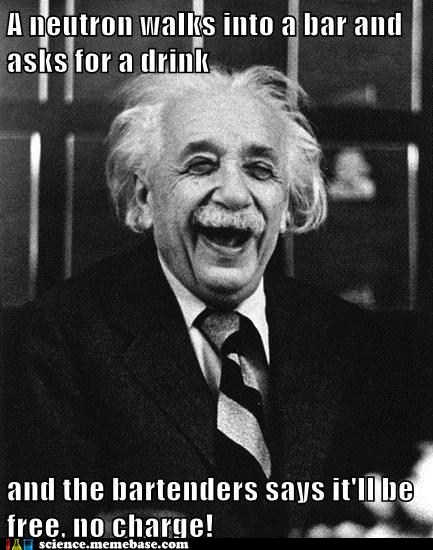
Hey, reviewers! Lighten up! Loosen up! We need new thinking, new ideas. Absence of humor often means absence of open-ness to anything unusual or weird. Even Einstein told jokes (bad ones – see above).
How Competing For Grants Kills Science – and Scientists’ Motivation
By Shlomo Maital
This is the sad story about how a shortage of resources, and the system of competitive funding of research grants through peer-review, is ruining U.S. science and killing scientists’ motivation. I heard it today on America’s National Public Radio News, in a report by Richard Harris.
Ian Glomski thought he was going to make a difference in the fight to protect people from deadly anthrax germs. He had done everything right – attended one top university, landed an assistant professorship at another. But Glomski ran head-on into an unpleasant reality: These days, the scramble for money to conduct research has become stultifying. So, he’s giving up on science. Ian Glomski outside his home in Charlottesville, Va. He quit an academic career in microbiology to start a liquor distillery.
Why is he giving up????
Because to get grants, you need to ‘tweak’ safe existing ideas, so your peers will approve it; because if you have radical ideas, your peers who judge the grants competition will shoot them down, because if you succeed, those ideas will endanger the judges’ own safe, conventional, non-risky research.
“You’re focusing basically on one idea you already have and making it as presentable as possible,” he says. “You’re not spending time making new ideas. And it’s making new ideas, for me personally, that I found rewarding. That’s what my passion was about.”
Glomski wanted to study anthrax ‘in vitro’, in live animals, using scanning techniques. Today it’s done by analyzing tissues of dead animals. His idea might have failed. But if it succeeded, it could have utterly changed our understanding of anthrax and other such diseases.
In theory, peer-review of grants is fair. But it fosters extreme mediocrity. And as government funding of research declines, (20% cut in recent years), competition gets fierce (1 of 8 grant proposals is successful, and it takes long stretches of time to prepare one – so young scientists spend their time writing proposals rather than doing effective research).
Harris reports that “…. payoffs in science come from out of the blue – oddball ideas or unexpected byways. Glomski says that’s what research was like for him as he was getting his Ph.D. at the University of California, Berkeley. His lab leader there got funding to probe the frontiers. But Glomski sees that far-sighted approach disappearing today.” Playing it safe will never generate the creative breakthroughs we need.
As with many things in America, scientific research is utterly screwed up. And it is unlike to change in the near future.

 TIMnovate