
You are currently browsing the tag archive for the ‘space-parts’ tag.
Replaceable You! Virtual You!
By Shlomo Maital
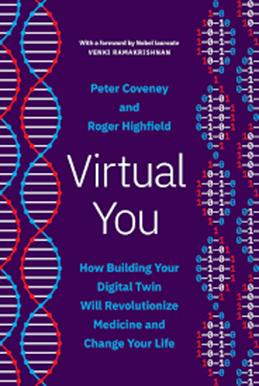
Virtual You: How Building Your Digital Twin Will Revolutionize Medicine and Change Your Life. Peter Coveney, Roger Highfield, Venki Ramakrishnan. 2023 Princeton University Press
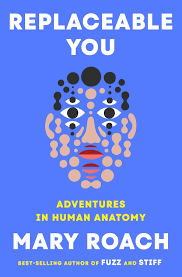
Replaceable You: Adventures in Human Anatomy. Mary Roach. Random House, 2025.
One of my never-miss podcasts is Ira Flatow’s Science Friday. This week two wonderful books were reviewed: Virtual You, and Replaceable You. Virtual You reviews how creating a digital copy of each person’s bodily mechanisms and organisms (each of us has a bodily organism unlike any other) can advance medicine by light years, at a time when identical drugs are prescribed for everyone, even though we are all different. This is particularly true of women, at a time when most clinical trials are done on white males. Personalized medicine has been long discussed; digital twin technology may make it feasible and cost-effective. “… your digital twin can help predict your risk of disease, participate in virtual drug trials, shed light on the diet and lifestyle changes that are best for you, and help identify therapies to enhance your well-being and extend your lifespan”, write the authors.
Replaceable You is about the spare parts business – how we are replacing hearts, lungs, livers, knees, hips, eye lenses, and hair follicles, among others, with ‘spare parts’. This too is revolutionizing medicine. It is also a source of heartache, literally – many people wait in long queues for, e.g., kidney transplants. One approach the author describes is the ‘body shop’ approach — hearts for transplant have to be used within four to six hours of removal from the dead donor, and many such hearts are not up to par and are not usable. Scientists look for ways to ‘repair’ defective hearts, and to prolong the time after which they become unusable, to expand the supply – currently, with huge excess demand and long queues.
Science Friday this week discusses how AI has shown promise in speeding development of new drugs – but so far has failed. The current model of drug development, involving mice (very poor representations of human anatomy) and then people (long, expensive, and often misleading) is costly and cumbersome. It was hoped that AI could analyze billions of molecules, to find the right one to block a ‘bad protein’ that causes illness. But so far – it has not happened.
One of the fascinating frontiers of research for ‘spare parts’ is 3D biological printing of organs – corpuscles, cells, etc. This is incredibly complex. But – one day, perhaps, a 3D printer will be able to print a heart – perhaps using key cells from one’s own body to forestall immune rejection.

 TIMnovate