
You are currently browsing the tag archive for the ‘technology’ tag.
Is Nvidia a Bubble?
By Shlomo Maital
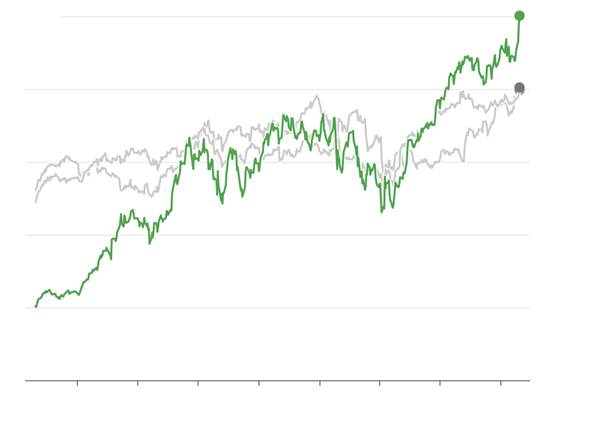
2024: $1 tr. Nvidia market cap. 2025 $5 tr.
Nvidia has become the first company whose market value of its shares reached $5 trillion. $5 trillion! That is larger than the national GDP’s of every country except the US, UK and Germany (close tie with Germany!).
Is this a bubble?
Nvidia’s shares have risen by five times, from $1 trillion just over a year ago. The reason is clear. Nvidia’s Jensen Huang made a huge bet on AI chips…and thanks to his acquisition of Israeli startup Mellanox, founded by Eyal Waldman, his bet paid off. Nvidia has the chips that AI desperately needs… right at the moment when they were most needed. Mellanox supplied software that speeds up calculations (originally, used to speed up uploads and downloads on the Internet), which Huang cleverly realized could speed up calculations on microprocessors.
So is it a bubble? Probably. Any share that rises by five times is a bubble. Can Nvidia sustain its growth? Especially when the US is trying to shut off the Chinese market for Nvidia, a market of the world’s second largest economy.
Every sharp rise in shares is driven by future expectations and dreams. Nvidia’s 2025 profits rose to about $80 b., from around $28 billion in 2024. That’s a big rise. But a stock valuation of some 60 times net income is very high. It is a PE price-earnings ratio of 60, astronomically high.
US stock markets are now at all time highs. It is not just Nvidia. It is time to think carefully if you are in the market. There are enormous storm clouds gathering.
Replaceable You! Virtual You!
By Shlomo Maital
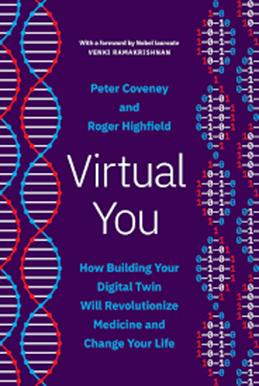
Virtual You: How Building Your Digital Twin Will Revolutionize Medicine and Change Your Life. Peter Coveney, Roger Highfield, Venki Ramakrishnan. 2023 Princeton University Press
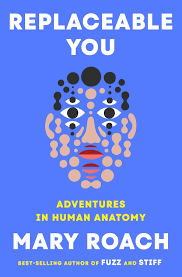
Replaceable You: Adventures in Human Anatomy. Mary Roach. Random House, 2025.
One of my never-miss podcasts is Ira Flatow’s Science Friday. This week two wonderful books were reviewed: Virtual You, and Replaceable You. Virtual You reviews how creating a digital copy of each person’s bodily mechanisms and organisms (each of us has a bodily organism unlike any other) can advance medicine by light years, at a time when identical drugs are prescribed for everyone, even though we are all different. This is particularly true of women, at a time when most clinical trials are done on white males. Personalized medicine has been long discussed; digital twin technology may make it feasible and cost-effective. “… your digital twin can help predict your risk of disease, participate in virtual drug trials, shed light on the diet and lifestyle changes that are best for you, and help identify therapies to enhance your well-being and extend your lifespan”, write the authors.
Replaceable You is about the spare parts business – how we are replacing hearts, lungs, livers, knees, hips, eye lenses, and hair follicles, among others, with ‘spare parts’. This too is revolutionizing medicine. It is also a source of heartache, literally – many people wait in long queues for, e.g., kidney transplants. One approach the author describes is the ‘body shop’ approach — hearts for transplant have to be used within four to six hours of removal from the dead donor, and many such hearts are not up to par and are not usable. Scientists look for ways to ‘repair’ defective hearts, and to prolong the time after which they become unusable, to expand the supply – currently, with huge excess demand and long queues.
Science Friday this week discusses how AI has shown promise in speeding development of new drugs – but so far has failed. The current model of drug development, involving mice (very poor representations of human anatomy) and then people (long, expensive, and often misleading) is costly and cumbersome. It was hoped that AI could analyze billions of molecules, to find the right one to block a ‘bad protein’ that causes illness. But so far – it has not happened.
One of the fascinating frontiers of research for ‘spare parts’ is 3D biological printing of organs – corpuscles, cells, etc. This is incredibly complex. But – one day, perhaps, a 3D printer will be able to print a heart – perhaps using key cells from one’s own body to forestall immune rejection.
Key Future Technologies: The View from McKinsey
By Shlomo Maital
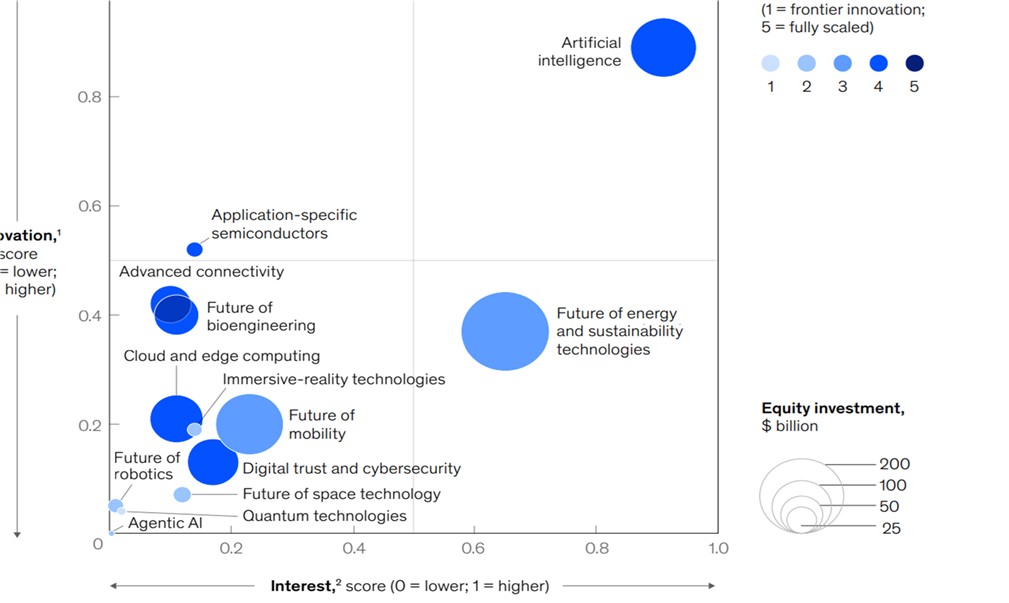
Innovation Score (Y axis) vs. Interest (Investment) (X axis)
In the global consulting company McKinsey’s latest survey of technology trends for 2025, the above graph caught my eye. On the X Axis: a measure of interest, as measured by total investment. On the Y axis, a measure of the degree of innovation.
Normally, graphs for previous years showed a scattering of interest among several key topics. This is natural. Hi-tech is risky and businesses generally do not ‘play poker’ by putting all their chips on one single new technology.
Except for now. The graph shows Artificial Intelligence as leading by far in both innovation and in resource bets, globally.
But take a look at #2. Future of energy and sustainable technologies. Less innovation, far more resources. Globally.
The cost of solar energy is today the cheapest of the varied forms of energy.
Can one understand how the Trump administration is single-mindedly revoking tax credits, laws, regulations, everything, designed to promote solar and wind energy? Yes – as a short-sighted political deal based on the huge contributions of Big Oil to the Trump PACs. Big Oil spent $445 million (nearly half a billion dollars) on contributions to Trump, in the last election.
A terrific investment, given how Trump has repaid it. The McKinsey graph for the US would show it as a backward, lagging outlier in energy.
In this, as well as in science, healthcare, social services, education, research, vaccines, and global aid programs, Trump has set America back decades, in a very short time. The damage can be repaired – but the road to do so will be long and hard.
OpenAI: Who Am I?
By Shlomo Maital

Who am I? Can we find out about ourselves with AI?
Posting on the Medium website, Mohammed Bakry proposes the following prompt, to ask AI about someone and dig through the Internet for information:
“Do intensive research on XXXXXX and give me a massive report on everything you find. Find the needle in the haystack — something unexpected — so I can reach out with a surprising personal connection.”
So I tried it on myself. Here is the result (with my annotation):
Shlomo Maital is a renowned figure, [false; beware of AI obsequious flattery] primarily recognized for his contributions in the field of economics and innovation management. As a professor and senior researcher at the Technion – Israel Institute of Technology, he has influenced both academic circles and industry practices significantly. Maital’s work often emphasizes the practical application of economic theory in fostering innovation and entrepreneurship.
One of his noteworthy roles has been as the Academic Director of the TIM-Technion Institute of Management, which focuses on executive training and development. His research and teachings often explore the intersection of economic theory and real-world applications, striving to make complex concepts accessible to practitioners and policymakers.
Maital is also an accomplished author, having published several books and numerous articles on innovation management, creativity, and entrepreneurship. His writings frequently address the challenges organizations face in cultivating innovation and the strategies they can employ to overcome them.
An unexpected angle to explore when connecting with him could be his interest in the psychological and social aspects of economics. Maital has often focused on how behavioral insights can enhance economic policies, a topic that diverges from the traditional economic narratives and showcases his interdisciplinary approach. [Failed to mention my wife Dr. Sharone Maital, psychologist, who is and was an essential collaborator]. Engaging with him on how behavioral economics can drive sustainable innovation might serve as an unexpected yet impactful point of connection.
To reach out with a surprising personal connection, you might consider referencing his involvement with societal and educational initiatives, reflecting shared interests in how education can drive economic development and societal well-being. His emphasis on the human aspects in economic systems could provide a unique personal touch to your outreach.
[Missing: Our grandchildren and great-grandchildren, light of our lives; our synagogue Ve’ahavta, and Rabbi Elisha Wolfin, with whom I do a weekly podcast on the Bible – a deep and meaningful activity; my column in Jerusalem Report, also a huge focus for me; the think tank where I now work, S. Neaman Institute, my second family].
OK — bottom line. Who am I? AI will not help much. Who is XX? AI won’t help much.
That’s a big relief.
How to Get AI to Do What You Want
By Shlomo Maital

As I and many others have learned, the hard way, you can get some great output from AI – but it is crucial to ask for it in just the right words. Kind of like getting kids to do what you want. The key is the wording of your ‘prompt’ – what you ask for and how you ask for it.
I found a very helpful post by Eva Keiffenheim on the MEDIUM website. I will try to summarize and shorten it.
Level One: Five Ingredients of a Strong Prompt. Here is a mnemonic to help remember it. Tall Cats Read Every Issue. T – task. C – Context. R – references. E – Evaluate. I – Iterate.
Task: Start with a persona, then a clear verb, then a specific output format. E.g. “As a cognitive scientist, explain long-term retention. Present the findings in a table, with columns for … etc. etc.
Context: Details needed? Your end goals? Your desired impact? E.g. “Make cognitive science approachable, no jargon, use tangible examples.”
References: Give AI examples to mimic for tone, structure, style. E.g. “Use a tone similar to this excerpt from ….. etc.”
Evaluate: Is this result useful? Paste the received output into a fact-checking plugin. Is anything missing or incorrect? Does it meet my goal?
Iterate: Tweak and improve. Refine until the output meets or exceeds your needs. Prompting equals iterating.
Level Two. Use These Four Techniques:
- Simplify. AI likes simplicity. Use clean, short digestible steps.
- Shift perspective. Instead of telling AI “you’re a cognitive scientist..”, try telling it – “you’re a science journalist seeking to…”
- Modify the language. If you don’t get great results, change the phrasing, tone, and structure. (I’ve found AI likes praise, and a friendly tone).
- Impose constraints. AI likes to have limits. 5 book titles, 5 words each for summaries, etc.
Mnemonic: Sister Suzie played Many Long Concertos. Simplify Shift perspective Modify language Constraints.
Level 3. Advanced Prompting.
Treat AI like a teammate. Prompting is like building blocks..start simple, add layers. Turn tasks into bullet points.
And perhaps the best tip of all: “Add this phrase to your prompt: Explain your reasoning step by step before answering.” Then, use ‘tree of thought’ – get AI to explore several reasoning paths.
Ask AI to write better prompts for you. E.g. “AI – act as a prompt engineer. Write a prompt that generates 10 creative but practical startup ideas in the [xxxx[ space.” Remember: Prompting = Thinking. Clarify your thinking – mine usually begins fuzzy, and badly needs focus and sharpening. Fuzzy prompts = fuzzy AI responses.
Hope this is helpful. Thanks, Eva Keiffenhaim!
My New Eyes: Thanks to Patricia Bath
By Shlomo Maital

Dr. Patricia Bath
On December 22 and again on January 19, I got new eyes.
A skilled surgeon removed the clouded lenses in my eyes, and replaced them with new plastic ones. The anasthesia was local, so I watched the whole thing in real time. It was fascinating.
A little laser robot carefully approached my eye, made a tiny incision in the cornea (the cells of the cornea are unique, they are made to grow back quickly, in case the cornea is scratched or damaged – a gift from evolution) and inserted a small collapsed lens, which then unfolds. The laser robot is very precise and rarely, very rarely, errs.
Later, I learned whom to thank – apart from the brilliant and experienced surgeon, Dr. Avi A. Thank you, Dr. Patricia Bath, a pioneering African-American ophthalmologist, surgeon, and inventor. Here is her story, from Wikipedia:
“In 1986, Bath conducted research in the laboratory of Danièle Aron-Rosa, a pioneer researcher in lasers and ophthalmology at Rothschild Eye Institute of Paris and then at the Laser Medical Center in Berlin, where she was able to begin early studies in laser cataract surgery, including her first experiment with excimer laser photoablation using human eye bank eyes. Bath coined the term “laser phaco” for the process, short for laser photo-ablative cataract surgery and developed the laser phaco probe, a medical device that improves on the use of lasers to remove cataracts, and “for ablating and removing cataract lenses”. Bath first had the idea for this type of device in 1981, but did not apply for a patent until several years later. The device was completed in 1986 after Bath conducted research on lasers in Berlin and patented in 1988, making her the first African-American woman to receive a patent for a medical purpose.”
I need not recount the many many ceilings Dr. Bath had to break through, to achieve success.
Wish I could thank her in person. And so do millions of people. Cataract surgery is the most routinely performed surgical procedure of all, with 7 million surgeries performed per year in Europe, 3.7 million in the United States, and 20 million worldwide. Since its first introduction, phacoemulsification cataract surgery (PCS) has become the standard of care, mainly done by laser.
If you are elderly and your vision is becoming poor, see an ophthalmologist – and if cataract surgery is recommended, don’t be afraid. In many cases, it is life changing. In order for our brains to continue to function well, we need good vision. 20 million people worldwide testify to this. That little robot laser is really really good at what it does.
I wish this expensive device could be provided widely to poor countries. One study in northern India showed that between 53% and 60% of those with cataracts are untreated.
Social Media Harm Young Girls & Young Women
By Shlomo Maital

The American Psychological Association’s journal, Monitor, publishes annually the top 10 research papers published in the 89 APA journals, based on downloads by psychologists. The results for 2024 show what problems US psychologists are dealing with and what is on their minds most.
You guessed it. The harmful impact of social media, especially on young girls and young women.
The #1 article, “Living for the likes” finds that “women who use social media more than others experience more fear of missing out (FOMO), social comparison and appearance anxiety.
#2: “Viewing images of ‘thin-ideal’ body shapes lowers personal body images for women of all ages and self-esteem levels.” You might call this a “Barbie” effect.
Both these two articles were published in Psychology of Popular Media, vol 13, no. 3.
I recall as a youth how intensely sensitive I was about how I looked (and I am a male!), to the point where I refused to wear eyeglasses for almost two years (those who wore spectacles were called four-eyes). And this was long before Tik-Tok. Social media greatly amplify sensitivity to body image.
#3. “Limiting social media use decreases depression, anxiety and fear of missing out in youth with emotional distress.” The title of this article tells it all. Limiting social media use to one hour per day for 3 weeks was highly beneficial. This paper too appeared in Psychology of Popular Media (advance publication).
Wise parents are finding ways to limit use of social media among their kids. But the resistance is strong, because the algorithms used by the media are purposely insidious, fostering dependence and constant use, simply to make more money.
In August 2023, Associated Press reported this: BEIJING (AP) — The Cyberspace Administration of China on Wednesday published the draft guidelines on its site, stating that minors would not be allowed to use most internet services on mobile devices from 10 p.m. to 6 a.m., and that children between the ages of 16 and 18 would only be able to use the internet for two hours a day.”
China is an undemocratic big-brother society that limits its citizens’ freedom relentlessly. But perhaps this regulation does make a lot of sense.
And last year, Australia, a highly democratic society, “…passed one of the strictest internet crackdowns in the world last month, banning children under 16 from being on social media or opening new accounts. The law, which takes effect a year from now, holds social media companies responsible for verifying kids’ ages. Not complying could trigger fines up to nearly $50 million.”
The evidence is clear. Social media harm the young, and not only the young. It is up to us adults to protect them, even against themselves. But I think we are failing.
The Cost of Losing Human Interaction
By Shlomo Maital

Last night on Israeli TV news, three small children were shown sitting in kindergarten chairs next to one another; each was playing a game on his or her tablet. Someone came in with a tray of their favorite candy and put it on the table right in front of them. None of the three lifted their eyes from the tablet. When they were invited to come to the table and enjoy the candy (with their tablets), they were told that they had to turn off their tablets in order to partake. Two of the three refused, choosing to continue playing with their tablets rather than enjoy the candy. Normally, three kids sitting together begin to talk and interact. Not these three, absorbed with their plasma screens.
Do we really understand the hypnotic power that plasma screens have over us?
In today’s New York Times, Jessica Grose reports on some disturbing research. The title is: Human Interaction is now a luxury good. The key point: As AI and digital software are increasingly employed to boost productivity and cut costs, human services become a high cost luxury item only the wealthy can afford.
Grose cites a new book “The Last Human Job,” by the sociologist Allison Pugh. She spent five years following teachers, doctors, community organizers and hairdressers — more than 100 people in total who perform what she calls “connective labor,” which is work that requires an “emotional understanding” with another person. Even when human services are indeed offered and provided, the bureaucratic tangle that requires them to account for what they do digitally, constantly, is a huge butden and interferes with human interaction. (Ask doctors who fill out Medicare forms).
“Pugh explains that increasingly, people in these jobs have to use technology to obsessively monitor and standardize their work, so that they might be more productive and theoretically have better (or at least more profitable) outcomes.”
A vivid example in Pugh’s book was the hospital chaplain, who provided crucial spiritual comfort – but still had to report online, endlessly, in detail — because God too is an accounting cost.
Conclusion: A paradox. As we are addicted to plasma screens at an early age, we come both to rely on them and to distrust them, because …. The services they provide are inhuman, non-human. And it is this, perhaps, that can help account for the collapse in trust in such institutions as doctors, public health, police, judges, and more than ever, the political democratic system. Real human interaction becomes a luxury good only the rich can afford.
I don’t know how to escape this quandary. As far right politicians ascend, and attack government and slash budgets, evermore services will be digitized and non-humanized, leading to further loss of trust.
Something has to break this spiral.
In Science, One Thing Leads to Another…
By Shlomo Maital

Lawrence Livermore Labs fusion
For decades, scientists have pursued the goal of replicating the virtually endless source of energy found in our Sun – fusion, the fusing of hydrogen atoms, producing helium and releasing vast amounts of energy. H-bombs do this, of course – but use fusion for destruction, not for construction. Fusion is clean energy par excellence and infinite in quantity.
Scientists at Lawrence Livermore National Laboratoy in the US have finally succeeded in a key first step – ignition. Using powerful lasers to focus an energy beam at hydrogen, they have created fusion – and most important, gotten (in one experiment) twice as much energy created by the fusion, as the energy they needed to ignite it, by powering the lasers. This is a big deal.
But in a TED talk, Livermore scientist Tammy Ma said just in passing, that the laser technology developed for this purpose actually led to another unexpected, unplanned, unanticipated benefit – more powerful, smaller computer chips, through extreme ultraviolet lithography.
How come?
“Extreme ultraviolet lithography is a technology used in the semiconductor industry for manufacturing integrated circuits (ICs). It is a type of photolithography that uses 13.5 nanometer extreme ultraviolet (EUV) light from a laser-pulsed tin plasma to create intricate patterns on semiconductor substrates. ASML Holding is the only company that produces and sells such systems for chip production, targeting 5 nanometer (nm) and 3 nm process nodes.”
Note: A single atom is between 0.1 and 0.5 nanometers in width. So, the EUV technology, originating from fusion research, is now creating chips with detail down to the width of 6 individual atoms!
In life, and especially in science, one thing leads to another. The EUV technology arose because at Lawrence Livermore, it was necessary to focus the laser beam on a very very very small space, hydrogen atoms. And, whoops…turns out to be useful in etching transistors on silicon.
Who knew!?
Do We REALLY Need Those SUV’s and Trucks?
By Shlomo Maital

Did you know: over 7,500 pedestrians were struck and killed in the US in 2022 – a new high? And did you know: some 80% of new vehicles are either trucks or SUV’s?
Hey, is there a connection? There is, according to the NPR program Living on Earth.
Ford F150 trucks have grown in the past 30 years, they are 800 pounds heavier and 7 inches higher. And they are the #1 best-selling truck.
Those SUV’s? Do we REALLY need an SUV to drive to the corner grocery store? They are gas guzzlers and do huge damage when they strike pedestrians. And both trucks and SUV’s have blind spots, because of their size. So there IS a link between what vehicles we buy and all those pedestrian deaths.
A study experts conducted showed that some 1,100 pedestrian deaths could have been prevented, had we just bought normal-size vehicles, as the Europeans do.
Why do Americans buy those huge vehicles? Here is a theory. In a rather chaotic world, we seek to buy things that convey power, strength, safety. Maybe, maybe an SUV is safer in a crash than an i10 Hyundai. But safer for whom? For the driver? Sure. But not for the pedestrians who are struck and killed. Is it MY safety I seek? Or my safety and the safety of those trying to cross the street, when a F150 smashes into them by making a right turn and simply not seeing, say, a 5-year-old, trying to cross, with the light, in a school zone..and completely invisible to the driver. This is a true case.
I am frequently upset when capitalism at its worst manipulates consumers into buying things they don’t really need, playing on our worst fears. How come the Europeans do not buy huge trucks and massive SUV’s? And why should we?
As the song goes: When will they ever learn?

 TIMnovate