
You are currently browsing the tag archive for the ‘trees’ tag.
Pi Day
By Shlomo Maital

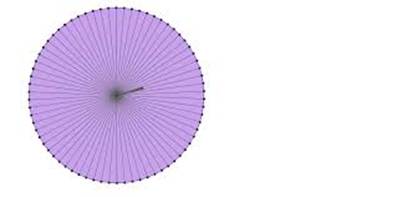

Yesterday, Friday, was Pi Day. March 14. 3.14 Warning: This blog has a lot of numbers.
Yes, I did bake an apple pi — for our synagogue’s pot luck supper. And yes, I added home made vanilla ice cream to top it.
Pi is 3.141592653,… It is the ratio of the circumference of a circle to the diameter.
Why is it called by the Greek letter pi? To represent: Perimeter. Pi.
Engineers say in practice, e.g. building bridges, you never need pi to more than 10 digits….yet, mathematicians have calculated pi to (wait for it) — As of July 2024, π has been calculated to 202,112,290,000,000 (approximately 202 trillion) decimal digits.
I asked ChatGPT how many print pages would it take to print out all 202 trilliong decimals. Here is its answer:
Calculation:
202,112,290,000,000 digits: 1250 digits per page\frac{202,112,290,000,000 \text{ digits}}{1250 \text{ digits per page}}1250 digits per page202,112,290,000,000 digits =161,689,832,000 pages= 161,689,832,000 \text{ pages}=161,689,832,000 pages ≈ 161.7 billion A4 pages.
OK – I asked it, so how many trees would it take, to make the paper, to print all 212 trillion digits on A4 pages? Here is ChatGPT’s answer. In 3 seconds.
Calculation:
161,689,832,000 pages8,500 pages per tree\frac{161,689,832,000 \text{ pages}}{8,500 \text{ pages per tree}}8,500 pages per tree161,689,832,000 pages =19,022,333,176 trees= 19,022,333,176 \text{ trees}=19,022,333,176 trees
≈ 19 billion trees 🌳
How Big is That? ChatGPT says:
- “The Amazon Rainforest has an estimated 390 billion trees.
- Printing π to 202 trillion digits would require about 5% of all the trees in the Amazon.
- The total number of trees on Earth is estimated at 3 trillion.
- This means we’d need 0.63% of all trees on Earth just for this print job!
So… maybe it’s best to keep π digital instead. 😅🌍♻️ “
- – – – – – –
Wait a second. Get that last comment! “Maybe it’s best to keep pi digital instead.” With emojis! ChatGPT has a sense of humor!
It’s almost …. Human.
It will take me a while to process that.
Happy Pi Day.
One last comment. Archimedes calculated pi in 220 B.C.E. very precisely. How? By a brilliant method.
He drew a big circle with radius 1. He drew within it a polygon (equal sided figure) inscribed, with 96 sides and calculated the sum of the length of the 96 sides, using Pythagoras’ theorem. (Each side of the polygon is a hypotenuse of a triangle). This is the low estimate of pi.
Next, he drew another polygon with 96 sides, on the outside of the circle, each side tangential or touching the circle. Again, he measured the sum of the length of the 96 sides. This is the high estimate.
Finally: He calculated: the smallest value of pi is the length of the 96 sides inscribed in the circle, or 3 1/7, or 3.142857; and the biggest value of pi is the length of the 96 sides circumscribed on the circle (outside it), or 3 10/71, 3.140845. The average of the two is 3.141851.
True value: 3.14159.
Archimedes’ value for pi is 1.000083079 of the true value.
So, we spent the next 2,255 years calculating more pi digits than we could possibly need.
Why? Same reason Trump closes the Department of Education.
Because – he can.
If Only Humans Were Like Trees!
By Shlomo Maital

Prof. Dan Chamowitz
“A person is like a tree in the field,
Like us, trees grow,
Like trees, we are sometimes cut down,
And I don’t know where I’ve been or where I’m going,
Like a tree in the field.”
This poem, by Israeli poet Natan Zach, and sung by Shalom Hanoch, raises a question. Are people truly like trees? Because today we know that trees communicate and work to help each other thrive. Do we humans?
Dan Chamowitz, Dean of Life Sciences at Tel Aviv University, wrote a wonderful book, What a Plant Knows: A Field Guide to the Senses. (2012). “Plants can communicate like people,” he notes. “What does that say about us human beings?”
What it says is: We should be more like trees.
A BBC report on this research notes that trees have an Internet, comprised of fungi – thin threads that link the roots of plants deep underground, known as mycelia. This fungal network “helps out the neighbors by sharing nutrients and information, or sabotaging unwelcome plants by spreading toxic chemicals”. It’s the “wood wide web”, says the BBC. “Around 90% of land plants are in mutually-beneficient relationships with fungi.” Why? Plants provide fungi with carbohydrates. Fungi, in turn, help plants suck up water and provide “nutrients like phosphorus and nitrogen….fungal networks also boost their host plants’ immune systems by triggering release of defense-related chemicals”. Plants do business with one another. Douglas fir and paper birch trees transfer carbon between them, through the mycelia.
Darwin through trees are like individuals, competing for surval. But they are not. “They are interacting with each other, trying to help each other to survive,” notes Prof. Suzanne Simard, UBC Canada.
This raises two key questions. First, capitalism. Is capitalism built on greed, on individual ‘survival of the fittest’? Because if it is, it is a gross distortion of how ‘survival of the fittest’ works in Nature. “Let’s work together for mutual benefit,” say the trees. Perhaps that is true capitalism.
Second: Ecosystems. Plants and trees have evolved complex highly-sophisticated ecosystems, based on mutual synergies and collaboration. We humans seem to be busy, first, destroying the fragile ecosystems of Nature, and second, destroying our own fragile social ecosystems, neighborhoods, communities and families, that build social capital.
Humans are less and less like trees of the field. And it’s a shame.

 TIMnovate