
You are currently browsing the tag archive for the ‘Trump’ tag.
Dealing with the Trump Presidency: a Survival Guide for 4 to 8 Years
By Shlomo Maital

OK, so counting four years from Jan. 20, or possibly eight – how do we survive?
Mark Blyth, a political science professor at Brown University, has some sage advice, published in the Washington Post.
The basic problem: In democracy, we vote for what we want. And increasingly, Blyth notes, we are simply NOT getting it.
“Unsurprisingly, people are beginning to realize that they are no longer getting what they vote for. Instead, they are being asked to pay more and more for what they already receive through taxes, taken from stagnant or declining incomes, which also must service their debts. In such a world it’s great to be a creditor and lousy to be a debtor. The problem for democracy is that most people are debtors. In such a creditor-friendly world, however, democracy is reduced knowing that the menu of policy will never vary. Trump’s win in the Midwest, British voters deciding to leave the European Union, Italy’s referendum and Greece’s revolt against its creditors are all connected in this way.”
In short: Most of us owe money. A few OWN money. The system has been rigged in their favor. And it may stay that way under Trump, the billionaire.
So how do we respond? Blyth observes:
“At the end of the day, when you no longer get what you vote for and when the role of voting is reduced to affirming the status quo, voters will vote for the most undemocratic of options if that is all that is “off the menu.” That’s democracy in action in a world devoid of choice. When you can’t get what you want and most people do not benefit from the economic outcomes of government, it’s also what makes democracy unstable.”
Americans voted “off the menu” (a minority of them, true) because that was the only choice ‘off the menu’. And it has made democracy unstable, and is doing so all over the Western democracies.
We’ll survive this. Take a deep breath. Take a long view. Watch how the brilliant, wise American Constitution protects its citizens from scoundrels. At some point, centrist politicians will begin to understand that voters want real change, want to unrig the system to help debtors not creditors, and want actions, not promises. It may take a few more ringing defeats, like Trump, Brexit, and Italy to wake these politicians up.
For four years, or eight years, Americans must say clearly what they want, and vote that ticket in every election. Mid-term elections are only two years away. How will Trump supporters vote, when they feel they are again, not getting what they want?
Pontypool: We Forgot Them & We Will Pay a Heavy Price
By Shlomo Maital
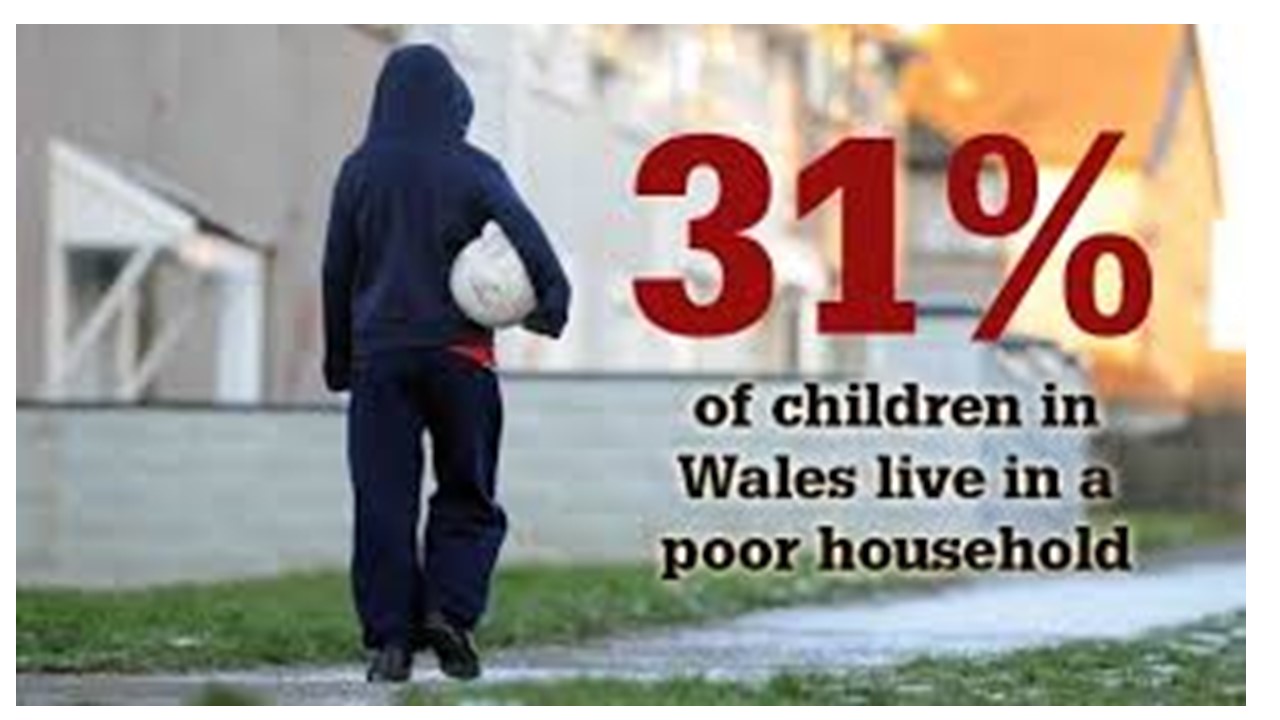
Journalist Aditya Chakrabortty has been covering the “post industrial” depressed areas of Britain for The Guardian. These are the people who once had good jobs in factories and mines, who have been forgotten and neglected by governments in Britain, the rest of Europe and the U.S. They became invisible.
Now, after Trump and Brexit, perhaps we are waking up. Perhaps we are beginning to see them. Here are parts of Chakrabortty’s vivid description of a once-wealthy Wales town. If Brexit and Trump act to truncate globalization, it will be because we forgot those who lost because of it, and celebrated only those who gained. Post industrial? “Post” implies something came after ‘industrial’. But what? Poverty? Hardship?
“The story of Pontypool is a story of riches squandered, of dynamism blocked, of an entire community slung on the slagheap. Sat atop vast deposits of iron ore and coal, it was probably the first industrial town in Wales. For a time, under Victoria, it was richer than Cardiff. Even now, to look along its skyline is to see traces of wealth: the park with its Italian gardens and bandstand; the covered market with its olde price list for snipes or a brace of pheasants; the 25 listed buildings that make this one of the most sumptuous small town centres in Britain.
“Then look down. On a typical weekday, the indoor market is a desert. Those bits of the high street that aren’t to let are betting parlours, vaping dens and charity shops: the standard parade for hollowed-out towns across Britain. The reason isn’t hard to fathom: the mines shut down decades back; the factories have pretty much disappeared. Those big employers still left aren’t big employers any more. One of the staff at BAE tells me that when he joined in 1982, it had 2,500 workers on its shopfloor; now, he reckons, it has 120.
“Swaths of Pontypool and the surrounding region of Torfaen now rank among the poorest in all Britain. On part of one of its housing estates in Trevethin, 75% of all children under four are raised in poverty. Over half – 53% – of all households who live on that stretch are below the poverty line. With that come all the usual problems: families that can’t pay the rent, that are more likely to fall prey to a whole range of sicknesses, from mental health to cancer. Those people can expect to die 20 years before their near-neighbours in some of the better-off areas in Pontypool. First the economy died out, now its people are too.
“Pontypool is like the rest of south Wales, like many other parts of Britain I have reported from. It’s what politicians and economists call “post-industrial”. That term, though, implies something coming after; here, hardly anything has come after. A few years ago Pontypool town centre was declared on the verge of death by a local councillor, who bore a coffin lid in a mock funeral procession.”
How Asia Sees the Trump Presidency
By Shlomo Maital

Here is how my friend Bilahari Kausikan, former First Permanent Secretary of Singapore’s Ministry of Foreign Affairs, sees the Asian reaction to the election of Donald Trump as U.S. President. This is from the Nikkei Asian Review:
Donald Trump will be the 45th president of the United States. Whatever they may say in public, few East Asian governments will greet the news with much enthusiasm — and all will harbour a degree of unease. Only the North Korean leader Kim Jong Un and Cambodian Prime Minister Hun Sen made their preference for him known. But they are hardly typical and the latter, for once, did not follow China’s lead.
- Beijing is usually scrupulous about avoiding comment on the domestic politics of other countries, but still felt it necessary to publicly criticize Trump’s stance on climate change. A South China Morning Post poll published on Nov. 5 showed that 61% of Chinese preferred Trump’s Democrat rival Hillary Clinton, higher than her final share of the U.S. popular vote. Only 39% of the Chinese preferred Trump, lower than his share of the U.S. popular vote. A study by the U.S. journal Foreign Policy of Chinese elite attitudes, published on Nov. 7, concluded that while they viewed Clinton as unfriendly, most felt that Trump would be a disaster for the U.S. and hence for global stability.
- China’s leaders may not admit it, but they know that the U.S. is vital for the maintenance of regional stability. Beijing values stability above everything else, particularly with the Chinese Communist Party’s crucial 19th congress only a year away and internal labour and social unrest endemic. President Xi Jinping’s anti-corruption campaign has generated a great sense of insecurity among cadres across all sectors of the state. In October, about 1,000 military veterans in uniform protested outside the ministry of defense in Beijing. It is impossible for such a large and conspicuous group to have gathered near such a sensitive area without at least the tacit connivance of some senior cadres.
- Like most of East Asia, China hates surprises. Clinton was a known quantity and would have stood for continuity in American policy toward the region. But East Asia is also pragmatic, not wont to just wring its hands in despair over new realities. Governments of the region will work with whoever is in power in the U.S.
Harvard Business School Reveals: Why Trump Won
By Shlomo Maital

Harvard Business School’s Working Knowledge on-line magazine reveals: “6 Lessons from Donald Trump’s Winning Marketing Manual”
Donald Trump’s upset election win offers six lessons for marketers looking to beat the odds and overcome powerful competitors, says John A. Quelch. Here they are, in case you wondered.
Here are six important lessons from Trump’s brand marketing playbook:
- Give consumers a job. The best marketing campaigns always call on consumers to do something. For example, United invites you to “Fly The Friendly Skies.” Nike insists that you “Just Do It.” The most successful brands also allow their consumers to co-create brand meaning. “Let’s Make America Great Again” is an inclusive call to arms with a powerful goal that each voter can interpret for himself. It embraces passion and purpose. Clinton’s “Stronger Together” is also inclusive but it evokes process, not that process isn’t important, but the desired outcome is much less clear. Good marketers know that, if you don’t position your brand clearly, your competitors will do it for you.
- Show the past as prologue. Offering consumers the adventure of voting for an uncertain future never works with the majority, especially if your brand is new to the game. Trump, the political neophyte, won by recalling a better yesterday and promising to recreate it as the better tomorrow. The word “Again” is no accidental addition to the Make America Great slogan. Remember the famous Kellogg’s Corn Flakes campaign to recover lost consumers: “Try Us Again for the First Time.’ For millions of Americans in the rust belt, the good old days really existed and they voted to bring them back.
- Pursue forgotten consumers. Most financial firms chase the same high net worth prospects, ignoring or at best taking for granted millions of modestly prosperous people. Trump turned the Democrats’ commendable embrace of diversity on its head to invoke the “Forgotten Man,” winning over lunch-bucket Democrats overlooked by their party as well as bringing in new voters and energizing lapsed ones. At the same time, almost all Republicans came home to vote for their nominee. Good marketers always know how to balance new customer acquisition with customer retention.
- Sizzle beats steak. Clinton was always going to beat Trump on the steak of experience and policy knowledge. A new brand can’t afford to get lost in the policy weeds. Hence, Trump’s campaign persona and his contract with the American voter offered more sizzle. Painted in broad brush strokes, the contract emphasizes goals and outcomes, and is light on policy and implementation details.
- Build enthusiasm. Good marketers know the power of word-of-mouth recommendations. In the era of social media, better organization (the old ground war) and outspending on television advertising (the air war) weren’t enough for Clinton. Trump’s determination and stamina–five speeches a day–and the size of his crowds impressed ordinary voters watching on television much more than Clinton’s barrage of paid ads. The pundits questioned whether enthusiasm would convert into votes. Good marketers know that brand enthusiasm rings the cash register. It did for Trump, but not for Clinton.
- Close the sale. Political marketing requires you win a plurality of votes not every day but on a single day once in four years. Timing is everything. Trump learned what worked and what didn’t work as the campaign progressed. He refined his message, suppressed the ad hominem insults, and peaked at the right time, confounding the pollsters and media pundits. In every recent speech, he repeated the same messages, inviting voters to imagine the future if they bought into the promises of a Trump administration. He confidently asserted “we are going to win” this state, “we’re leading in” that state. Consumers not only want to back a winner, they want to back a brand that sees itself as a winner. And they want to back a brand that other people similar to themselves see as a winner. That’s when a brand becomes a movement. In the last week, brand Clinton promised a bright future but looked like the candidate of yesterday, a little tired and overly reliant on a supporting cast of Obamas and Bon Jovis. By contrast, Brand Trump promised a future that looks like yesterday, Everyman’s high-energy underdog and outsider, disruptive yet decisive, standing alone at the podium, mane flowing, ready to step up to Pride Rock.
Quelch concludes: “Brand Trump is today’s bright new thing. But new is easy. Good is hard. Time will tell whether Brand Trump can deliver on its promises.”
Middle Class Blues: A Different Narrative
By Shlomo Maital

We are hearing endlessly about the struggling blue collar workers and the oppressed middle class, sinking into debt, losing jobs, struggling to stay afloat. We hear Donald Trump play on their fears and grudges.
There is another narrative, one given in today’s New York Times by David Brooks. It is about resilient workers and middle class people, who adapt, shift jobs, lose one and gain another, learn new skills – and stay afloat, endure and even prevail. And there are lot of them.
Here is how Brooks describes one such case:
A few weeks ago I met a guy in Kentucky who’d lived through every trend of deindustrializing America. He grew up about 65 years ago on a tobacco and cattle farm, but he always liked engines, so even while in high school he worked 40 hours a week in a garage. Then he went to work in a series of factories — making airplane parts, car seats, sheet metal and casings for those big air-conditioning fans you see on the top of buildings. Every few years as the economy would shift, or jobs would go to Mexico, he’d get hit with a layoff. But the periods of unemployment were never longer than six months and he pieced together a career.
So, how did he piece together a career?
His best job came in the middle of his career, when he was a supervisor at the sheet metal plant. But when the technology changed, he was no longer qualified to supervise the new workers, so they let him go. He thought he’d just come in quietly on his final day, clean out his desk and sneak away. But word got out, and when he emerged from his office, box in hand, there was a double line of guys stretching all the way from his office in back, across the factory floor and out to his car in the lot. He walked down that whole double line with tears flowing, with the guys clapping and cheering as he went. We hear a lot about angry white men, but there is an honorable dignity to this guy. Some of that dignity comes from the fact that he knows how to fix things. One of the undermining conditions of the modern factory is that the workers no longer directly build the products, they just service the machines and software that do. The bakers now no longer actually know how to bake bread.” But this guy in Kentucky can take care of himself — redo the plumbing at home or replace the brake pads.
And what was his ‘narrative’, his story, told to himself? One of betrayal, exploitation, deprival, social inequality? None of that.
It’s more of a reactive, coping narrative: A lot of the big forces were outside my control, but I adjusted, made the best of what was possible within my constraints and lived up to my responsibilities. ….
I adjusted. Made the best of what was possible. Lived up to my responsibilities. This is a narrative that I believe is far far more representative of the working middle class, than the Trump “I’m-a-victim” narrative: “Washington screwed me, so I will vote for a scoundrel, because he expressed my anger, even though he hasn’t a clue about what middle class life is about.”
People are basically resilient. They bounce back. And the ones with integrity do not cast ballots for those who cynically exploit the worst qualities among us – avoiding personal responsibility for our own fate.
What We Don’t Know…Is Hurting Us!
By Shlomo Maital
“What you don’t know can’t hurt you!” I wonder if anyone ever said anything dumber. What you don’t know will hurt you and always does. And what is worse, what you don’t know that you don’t know, THAT will do you in for sure.
I am an economist. We pretend that we understand how the world’s economy works. Do we really? Didn’t the 2008 global crisis, and aftermath, prove anything? That we did not know enough to predict it, and worse, did not know enough to know how to dig the world out of the mess it was in (the ‘austerity’ camp fought the ‘spend/spend’ camp, confusing the world totally).
So the first step in dealing with this problem, is to try to KNOW and define what we don’t know. Here is a partial list:
* Globalization: Globalization is the process in which nations of the world together moved toward freer movement of goods and services, people, information, technology and capital across borders. It has generated unprecedented wealth for those individuals, businesses and nations clever enough to become globally competitive and join the globalized ecosystem — $150 trillion worth, according to McKinsey Global Institute. This is mainly true of Asia, including China but not solely. It also left left out individuals, businesses and nations not able or willing to become part of the global system. Some have thrived in the globalized world; many have suffered. Economists say opaquely, it’s “Pareto-optimal” (winners can compensate losers, with lots left over). I say, economic borders are being restored because those losers are finally revolting, after being ignored and neglected.
In the era of Trump and his Wall and anti-globalization backlash: How can the benefits of globalization be distributed more fairly and how can the inevitable losers to globalization be compensated, without ruining the energy and freedom that drive globalization and without seriously disrupting its benefits?
* Global aging: Large parts of the world are aging demographically. Yet the issue of how to set aside adequate resources for the retired and elderly has barely begun to be addressed. How can we ensure that the retired and the elderly live in dignity without imposing an unfair or unbearable economic burden on working people and the young, and prevent a war between the generations?
* Global Capitalism: History shows that socialism, based on state ownership of key assets, has failed. But it also shows that capitalism, the system of free open markets, has not fully succeeded and continues to endanger our fragile global ecosystem. The fundamental causes of the 2008 financial crisis and ensuing recession have not been remedied. What new, basic economic architecture can create a system that is good at both generating new wealth and ensuring its distribution is fair and equitable, within a system that is not prone to repeated, frequent collapse?
* Global Social capital: Social capital is the summed present value of the bonds of love and friendship among family, friends, neighbors and communities, that generate mutual support and security. Financial capital is tracked to the last dollar; social capital is hugely important, gigantic in size, yet is not measured, tracked or fostered. Growing urbanization has begun to diminish social capital and hamper its formation. How can we reverse the decline of social capital, measure it and expand it, in a world where urbanization and the anonymity it creates are destroying the crucial social bonds that once enhanced lives everywhere?
* Global Search for Meaning: How can better-off individuals, businesses and nations the world over find new meaning and purpose in life, other than acquiring more and more goods and services — proven to be ultimately disappointing, unable to bring true happiness? How can we rebalance present-future choice and make the future what it once was, without crashing the borrow-and-spend system?
Economists and politicians lack viable answers. They’re hopeless. Can social entrepreneurs can come up with some initial answers and find ways to try them out? At the least, we will know what we don’t know, before it kills us. Let entrepreneurs everywhere work on these global life-or-death dilemmas, rather than invent another app that will show how far we’ve jogged.
Pittsburgh: Rises from the Ashes
By Shlomo Maital

In today’s International New York Times (July 3), David Brooks makes an important observation. The political battleground in the U.S. and other countries has until now been: big government? Or small? Too much government? Or too little? This is changing, in the wake of Trump and right-wing nationalist parties in Europe.
The core issue, he says, in the coming decade, will be: open or closed? Open society, to trade, ideas, immigrants, information? Or closed society, with a big wall, protectionism, tariffs, and ‘immigrants not welcome’ signs?
Globalization began with the fall of the Berlin Wall, Nov. 9 1989. The unification of the two Germanys accelerated the European Single Market and boosted global trade. But the benefits of free open trade, which have been enormous for Asia, accrued mainly to the wealthy and better off, who make money from money. Blue collar workers in the West lost their jobs, as manufacturing migrated. This silent majority is no longer silent. And their pain has become a central issue in politics, in the post-Trump era.
Brooks, like all good columnists, leaves his office and goes out into the field, to see first-hand. He visited Pittsburgh. My sister lives in Pittsburgh, and I’ve been visiting her regularly since her marriage to Chuck, my late brother-in-law, a Pittsburgh optometrist, in 1952. I saw first-hand the smoky steel mills along the Monongahela River and saw the terrible pollution that coated Pittsburgh with a layer of dust. I saw them disappear, as Pittsburgh reinvented itself to become today’s modern high-tech city, financial center, healthcare center and home to a great university, Carnegie-Mellon. As Brooks observes, Pittsburgh today is amazing, with sparkling clean air, great restaurants, cultural events, an old train station rezoned into restaurants and shops… a stark contrast to many other rust-belt cities, like Cleveland, OH and Gary, IN, which have not done the same.
But nonetheless, Pittsburgh too has its community of losers, those who lost high-paying steel jobs in the heyday of U.S. Steel. Globalization may have produced net gains for Asia, and even for the U.S., but those gains were very very unevenly distributed, and the winners did not in the least compensate the losers. After a long delay, the losers are now generating a political reaction and near-counter-revolution.
It would be a shame if the benefits of globalization were reversed, simply because our political system was too lazy, stupid and short-sighted to realize that somehow, we have to find a way to help those who lose from it. Maybe a good place to start is Pittsburgh, as Brooks notes, which lost thousands of steel jobs and eventually created thousands more of service jobs.
I think we should recall China and its amazing Great Wall, stretching for some 13,000 miles (21,000 kilometers), completed around 1400-1600. The Great Wall kept out the Manchus and kept China whole and safe, at least in part. But it also kept out the world and led to 500 years of stagnation in China’s economy. Modern China has been a huge winner from globalization, because it has been smart enough to know how to reap the benefits. We should challenge other countries, especially the U.S. and Europe, to state: What is your strategy for evening the playing field, NOT globally but WITHIN your own country, to help those who have lost well-paying jobs to free global trade? Because if you don’t shape such a strategy quickly, you may find that politically globalization is no longer viable and is replaced by protectionism and modern Great Walls. Trump’s “build a wall and make them pay for it” will replicate itself elsewhere, if we do not act soon and wisely.
Bernie Sanders is Taking the Money Out of Politics
By Shlomo Maital

Senator Bernie Sanders is running a long-shot campaign for the Democratic nomination for President. Like all socialists, he has no chance of actually being elected, but very high probability that some of his ideas will be tamed and adopted by his rivals.
In today’s New York Times, a strong editorial reveals one other huge gift Sanders brings to the table. He is raising money the old-fashioned way – one small gift at a time. The average donation to Sanders’ campaign is $31.30. “It would be hard to buy any politician for $31.30”, says the Times. Americans of ordinary means have given Sanders 400,000 donations, and 80 per cent of them were less than $200. Now, contrast that with the fact that 400 of America’s wealthiest families, writing huge checks, account for half the money raised so far by both parties, Republicans and Democrats. And Trump? As a billionaire, he pays his own bills… and bought his way into the lead.
America’s Supreme Court, notes the Times, in its recent Citizens United decision, “has greatly boosted the buying power of corporate and special interest donors and made a casino frenzy of the (nomination) race”. The Koch brothers, billionaires, organized 400 of their wealthy friends to create a super war chest of $889 million for Republican candidates. Jeb Bush raised over $100 m. in big-check donations so far. Even Hillary Clinton has raised over $20 m. in super-PAC money.
When democracy is bought by the rich, who invariably seek (and get) favors in return from those whom they help elect, it is no longer democracy. So, good for you, Bernie! Tear a strip off the big donors. You bring honesty and sanity to this weird campaign.

 TIMnovate