
You are currently browsing the tag archive for the ‘Ukraine’ tag.
Strategic Empathy Is Missing in Action, in the US and Israel: And the Price is Terrible
By Shlomo Maital

Consider ‘sympathy’ and ‘empathy’. Sympathy — you offer it to those bereaved. Empathy? Empathy is shown in how much compassion and understanding we can give to another, in our actions.
Empathy is good, right? The foundation of community and brotherhood. The glue that binds us together as human beings. “And you shall love your brothers and sisters as yourself”.
Not according to the world’s richest man. Direct quote from Elon Musk: “The fundamental weakness of Western civilization is empathy – the empathy exploit.” He said this on Joe Rogan’s podcast – same podcast that refused to host candidate Kamala Harris.
Empathy is Western civilizzation’s fundamental weakness! And why? Because the United States, through AID and other organizations, helps those abroad who are poor, ill, uneducated. This is, by Musk, a weakness. It invests resources in others, who exploit our compassion, when we could be buying more $100,000 Tesla cars. This, from the person now dominating US government (and destroying it), who, as far as I know, was never elected by anyone.
LACK of empathy causes wars. Here is the analysis of MIT Professor Barry Posen: “Vladimir Putin likely viewed Russia’s strategic situation through a preventive war frame. NATO membership for Ukraine would shift the balance of power against Russia, and U.S. and NATO military cooperation with Ukraine intensified during the Joe Biden administration. These developments likely convinced Putin that he did not have much time to forestall Ukraine’s NATO membership.”
The US lacked what Posen calls “strategic empathy”. Understanding how foes feel and think.
“The United States is an enormously powerful actor in international politics. But U.S. leaders often fail to consider the knock-on effects of their own policies. U.S. foreign policymakers are always alert to how the United States’ behavior affects the confidence of its allies. They are attentive to how U.S. behavior does or does not strengthen deterrence of its potential adversaries. But U.S. leaders are often oblivious that U.S. power and behavior might feel threatening to other states.” [1]
Posen shows that Russia’s Putin for years, dating to 2014 and before, felt threatened by Ukraine’s avowed desire to be part of NATO. He felt in February 2023 that if he did not occupy Ukraine now, Ukraine would join NATO – and that would bring, by force of law, the entire military might of NATO on him. His invasion of Ukraine was predictable – with a bit of strategic empathy.
Consider Hamas’ murderous attack on Israel on October 7, 2023. Hamas leader Yihya Sinwar spent 22 years in Israeli prisons. Enough time to get inside his head? And he made no bones about it. His goal was to destroy Israel. He attacked on October 7, because he saw Saudi Arabia close to normalizing its relations with Israel – and that would forever marginalize the Palestinian cause and leave the ‘occupation’ permanent. The October 7 attack led to over 50,000 Palestinians’ death. But it has delayed, maybe for years, Saudi normalization. Or maybe forever.
And Israeli intelligence? And government? That fed Qatari billions into Gaza, even when it became clear that the money was going to Hamas tunnels and weapons, not to food and water for Gazans. The total lack of strategic empathy, to understand what Posen calls the ‘preventive war’ (you go to war to keep a worse war or event from happening), was rampant. Especially in the Netanyahu government, in power since March 2009, with only a short break.
The Netanyahu government is culpable, directly, including its head, because it lacked strategic empathy. And we, the people, paid a terrible price.
The ancient Chinese general Sun Tzu, author of The Art of War, wrote this some 2,500 years ago: “If you know the enemy and know yourself, you need not fear the result of a hundred battles. If you know yourself but not the enemy, for every victory gained you will also suffer a defeat. If you know neither the enemy nor yourself, you will succumb in every battle.”
On October 7, we learned that Israel neither knew the enemy, nor knew itself. Despite having imprisoned Yihya Sinwar for over two decades, we failed to learn, understand, and pay attention to his intentions –- even though he declared them openly.
And despite some 15 major operations and wars against Gaza since 1948, Israel and IDF did not come to know themselves — applying strategies that repeatedly failed, while building blindly on assumptions (the enemy is deterred) that were visibly and obviously false.
No, Elon Musk. Strategic empathy is not a weakness. The total lack of it is. And the price we pay is truly terrible.
[1] Barry Posen. Putin’s Preventive War: The 2022 Invasion of Ukraine. International Security, February 2025.
Putin: Great Leader? Or Huge Failure?
By Shlomo Maital

U.S. Presidential candidate Donald Trump has expressed admiration for the Russian President Vladimir Putin, comparing him favorably with Barak Obama and calling him a great leader. In today’s New York Times, Paul Krugman adds up Putin’s achievements since he came to power in Russia in 1999.
He has destroyed Russian democracy, creating a handful of billionaire oligarchs who support him while destroying others who did not. He has utterly failed to diversify Russia’s economy out of oil and gas, even though the old Soviet Union left behind superbly educated people, including many thousands of engineers and scientists who emigrated to Israel beginning in 1990, and who fueled Israel’s high-tech boom. (Many, of course, did not emigrate, but their skills were not made use of – except for Putin’s global hacking operations).
According to New York Times columnist Paul Krugman, writing in today’s Opinion section, Putin has shaped a massive Russian military — which he used for grabbing part of the Ukraine and the Crimea. Crimea, once a tourist haven, has lost most of its tourist business, so it has become a drag on Russia’s economy.
Why then is he so popular? Putin’s aggressive nationalism appeals to Russians, who seem to recall Stalin fondly and who are not at all fond of democracy, which brought them raging inflation and little else. One can perhaps understand, partly, Putin’s popularity in Russia. But his popularity among Trump supporters?
Utter folly.
Is Money the New Morality?
It is – And That’s Good!
By Shlomo Maital
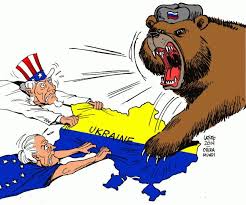
Really bad things are happening in the world today – and good people seem powerless to do anything about it. Syria’s Assad bombs civilians. Russia’s Putin grabs Crimea. Unspeakable crimes occur in Central African Republic. And that’s just a start. The United Nations? Deadlocked. Obama? Words, no deeds. European Union? Russia’s gas and Russian oligarchs’ money parked in London dominate.
But guess what. Where good people fail, money succeeds. Here is how. When countries like Russia do bad things, money flees. When money flees, the currency declines, inflation rises and economic growth plummets. This is happening to Russia, according to the World Bank. Putin is paying the price — not because of Obama sanctions, but because of market economics. Here are the figures:
“… the (World) bank said Russia’s gross domestic product (GDP) might shrink by 1.8 percent in 2014. …. The Economy Ministry estimates net capital outflow (out of Russia) at up to $70 billion in the first quarter alone, compared with $63 billion in the whole of last year. … the World Bank envisages capital outflow at $150 billion this year and $80 billion in 2015. This year’s forecast exceeds the $120 billion in capital flight that Russia saw in 2008 during the global financial crisis. … The outflow of money will put further pressure on the rouble, which despite its recent firming is still 7 percent down against the dollar this year. The weakening of the currency is likely to put upward pressure on inflation, which the World Bank sees at 5.5 percent in 2014, higher than the upper end of the central bank’s targeted range of 4.0-5.0 percent.”
So, it’s very simple. When countries’ leaders do bad things, money flees. Flight of capital trashes the economy. People suffer. They protest. And eventually, the bad leader leaves, is removed, flees, or is forced to adopt repressive measures, which ultimately fail. Russia cannot afford to lose $150 b.
This is the new morality. Money and capital keep leaders in line, not ethics, values or Obama. It’s the new ethics of globalization.
Is it so bad? The message is: Run your country properly, treat your people well, or, the money will leave and go elsewhere, where leaders are smarter and more ethical. And every country needs to keep its capital at home, rather than flee abroad.
The morality of the new global system is money. Let’s watch Russia closely to see if it really works.
Lessons of the Ukraine/Crimea:
Will Insanity Recur?
By Shlomo Maital

Crimean War
My friend Bilahari Kausikan, Ambassador at Large in Singapore’s Foreign Ministry and until recently First Permanent Secretary, has wise words regarding the Ukraine/Crimea crisis, published in the Straits Times. He visited Kiev in December, recalls hearing a speech by an EU politician in Independence Square – and thought, “this could end up like Hungary in 1956”, when the West encouraged Hungarian revolt, then folded its arms and did nothing to help when Russian tanks invaded.
“Russia cannot allow Ukraine to become part of the Western system without losing an essential part of itself and abandoning Putin’s goal of a revived Russia as a great power,” Kausikan observes. Some 17% of Ukraine’s population, or 8 million people, is ethnically Russian. This is the largest Russian diaspora in the world. They live in the Crimea, and East and southeast Ukraine. Russian gas pipelines run through Ukraine, and Sevastopol is Russia’s only warm water port.
“It was inevitable that Russia would move decisively,” Kausikan notes. (He once served as Singapore’s Ambassador to Moscow). And as usual, Russia’s intervention “caught the West flatfooted”. The U.S. is weary of wars. And “the EU has neither the stomach nor the capability to wage war on Russia”.
Kausikan believes that the West gave false encouragement to the Ukrainian, without the capacity to deter Russian intervention or respond effectively.
Once again, my own view is that President Obama, and the incompetent EU foreign Minister Katharine Ashton have proved worse than incompetent. “The West mistook their hopes for reality,” Kausikan writes. Because the West has no stomach for military intervention, they thought Russia felt the same. Stupid.
“Do not listen to the sweet words of foreigners,” Kausikan counsels Singapore. And, he might have added, Israel, as well. Small countries have no room for error. And the great powers that ‘support’ them are increasingly unwilling to stick out their necks for their friends.
“It is the Ukrainian people who paid and who will continue to pay the heaviest price,” Kausikan writes. “We (Singapore) must never lose the ability to look after ourselves, because if we cannot look after ourselves, nobody will look after us.” True of every single small nation, sandwiched between a paper-tiger marshmallow former great nation, America, a bankrupt internally-conflicted EU, and an aggressive Russia led by a megalomaniac dictator who is, according to Merkel, “detached from reality”.
Watch your backs, small nations. Nobody else will.
And, an historical footnote: The Crimean War, between the French British & Ottoman empires and the Russian Empire, lasted from Oct. 1853 to Feb. 1856. Russia lost. But there were 300,000 to 375,000 dead, including 100,000 who died of disease. The cause of the war? Rights of Christians in the Holy Land. France promoted the Catholics. Russia, the Orthodox. I’m not kidding. That was the cause of a bloody war. So maybe, in the 21st C., we are a tiny bit more civilized.

 TIMnovate