
You are currently browsing the tag archive for the ‘wellness’ tag.
The Pleasure Loop: Key to Understanding Addiction
By Shlomo Maital
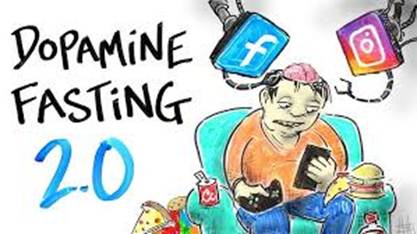
There are few tragedies in life greater than seeing loved ones suffer from addiction. Consider for instance the terrible addiction of Rob and Michelle Reiner’s son – and the horrible consequence. Yet we seem to be unable to crack the problem or solve it.
A recent edition of the Hidden Brain, headed by Shankar Vedante, offers a persuasive explanation. It is the dopaminc pleasure loop.
“Dopamine is a crucial chemical messenger (neurotransmitter) in the brain and body, acting as both a neurotransmitter and hormone that regulates pleasure, motivation, movement, mood, learning, and focus. It’s often called the “happy hormone””. It is a crucial hormone.
Some 50,000 years ago, when humans struggled to find enough food to stay live. Dopamine rewarded each such find. Today, when food is largely ample, or excessive, dopamine continues to reward us excessively. Result: obesity.
But the same is true with addiction. A narcotic triggers dopamine. But we become habituated. Less and less dopamine. The feedback loop seeks more and more drug, to generate the same dopamine high…and consumption rises, until, often, overdose or death or psychosis.
It is an example of how evolution generally improves survivability and viability – but in this case, a rare but terrible one, it leads to annihilation at times. Add to that the enormous drug profits the cartels earn and generate.
The pleasure-loop feedback is immensely hard to change. Once it gets rolling. I think we are all somewhat addicted to something… complete this sentence, “I find it hard to wean myself from my favorite….???”.
There is no easy solution. Dopamine is an insidious, terrible foe, when it becomes an enemy. I loved running – in part because my brain always rewarded it with a jolt of dopamine. Runners know what I mean.
Can we replace bad dopamine pleasure loops with positive ones? Facile, shallow, too easy.. but, we absolutely have to crack this terrible pleasure loop. Understanding it more deeply can help.
Nature Heals – And Helps Us Think
By Shlomo Maital

In the latest episode of the psychological podcast Hidden Brain, with Shankar Vedante, the theme is how Nature Heals. It is based on a conversation with psychologist Mark Berman, U. of Chicago, who researched the subject.
Vedante opens with these startling statistics: “The share of American adults reporting they took prescription drugs for mental health conditions stood at 19% in 2022. … That’s millions of people taking drugs for anxiety, for depression, for attention deficit disorder. Millions more are in therapy, working through their challenges with a counselor. For many people, such measures are enormously helpful, even essential. At the same time, it may be the case that we are overlooking a potential source of relief that is literally right outside our door. This remedy costs nothing, has no known side effects, and is often delightfully pleasant. We are talking about spending time in nature. The capacity of the natural world to soothe and refresh our sensibilities has been known for centuries. But it’s only recently that scientists have begun to identify exactly what it is about the outdoors that has such a powerful effect on our moods and our minds.”
Berman and other scholars have shown what virtually all of us know – a stroll or hike or jog through Nature is calming, refreshing, relaxing … and can heal the mind, at least in part. And there is an additional benefit.
In daily life, our brains are attentive to what we are doing and what needs to be done. In other words, our brains are very busy. In Nature, as we stroll along, our brains relax, and have nothing more to do than to breathe and take in the beauty. And then, things pop in to our minds – ideas, solutions, Plan B’s…. These ideas are always there, but our brains are busy and we don’t have time or attention to hear them.
Berman explains that in Nature, we no longer have focused attention, enabling our brains rest, relaxation and ideation.
We all know this, right? Why don’t we use this more often? I find that our two doggies help a lot – they need walks four times a day, especially the elderly Yorkie, who is 14. We are blessed to live among beauty, among old trees and blooming flowers. Even a short walk can be therapeutic. And it’s right under our noses.
Gum Disease & Alzheimer’s: A Surprising Connection
By Shlomo Maital

A study led by Prof. Gabriel Nussbaum, Faculty of Dental Medicine, Hebrew University of Jerusalem, reveals a curious connection between gum disease and Alzheimer’s. It is reported by the daily Jerusalem Post.
Here is the story.
Porphyromonas gingivalis, the microbe that causes gum disease (e.g. gingivitis) is a germ that thrives in inflamed oral tissue in our mouths. Unlike most microbes, that thrive on sugars, it lives on proteins and on the iron in red blood cells. It feeds on the plaque and on the bleeding gums that arise when our gums are infected and ailing. Bleeding gums are like lunch or supper for it.
This insidious little bug has a magical trick. It uses a protein to fight the body’s immune system. The protein is called CD47. When the body has an infection, anywhere, e.g. our gums, it sends white blood cells to fight – part of our immune system. But this sneaky microbe, porphyromonas, has figured out how to defeat the white blood cells, and moreover, actually make them worsen the infection and gum bleeding, worsening the inflammation.
Sneaky! Gosh, what evolution can come up with!
But – what in the world does this have to do with Alzheimer’s?
Alzheimer’s is characterized by sticky plaque that gums up our brains and ultimately shuts it down. It seems likely that the microbes that infect our gums spread to our brains, and “drive macrophage cells into a pro-inflammation stage, generating plaque rather than preventing it.”
Macrophage cells are cells in our brain that comprise our active immune defense to protect our brains from microbes and other bad things. They make up fully 10% of the total number of cells in our brain. Makes sense — Evolution has evolved to protect our brains – but porphyromonas gingivalis may have figured out a defense against the defense.
What is the action item here? Seniors — healthy teeth and gums are really important for overall health. We’ve known this for ages. But now, we may see some real science that connects our gums and teeth with our brains.
Have your teeth cleaned regularly by a dental hygienist, so plaque doesn’t form and cause gingivitis. Maybe every six months or so. If your gums do bleed, see a periodontist. Your brain will say, thank you.

 TIMnovate