
Weizman, Darwin and the Birth of Israel
By: Shlomo Maital*
Can you find a connection between the following: Chaim Weizmann, U.S. Patent No. 1315585, the bacterium Clostridium acetobutylicum, Louis Pasteur, Arthur Balfour, Winston Churchill, the global biotechnology industry, the birth of Israel, and Charles Darwin, whose 200th birthday was celebrated last Feb. 12?
Here is the story in full. Chaim Weizmann was born in 1874 in the tiny shtetl of Motol, near Pinsk, in Western Russia (today, Belarus). He wanted to study science but as a Jew, was not allowed. He studied chemistry at the University of Fribourg, in Switzerland, then taught at the Univ. of Geneva. He emigrated to England in 1904. There, he joined the staff of the University of Manchester. In 1910 the U.K. Home Secretary named Winston Churchill signed Weizmann’s citizenship papers.
Not long after arriving in Manchester, in 1906, Weizmann met a dynamic politician named Arthur Balfour while Balfour was politicking in Manchester for his Unionist Party. It was shortly after Uganda had been mooted as a possible homeland for the displaced Jews. Balfour asked Weizmann why Palestine—and Palestine alone—could be the basis for Zionism.
“Anything else would be idolatry”, Weizmann protested, adding: “Mr. Balfour, supposing I were to offer you Paris instead of London, would you take it?”
“But Dr. Weizmann”, Balfour retorted, “we have London”, to which Weizmann rejoined, “That is true, but we had Jerusalem when London was a marsh.”
Balfour was visibly surprised.
‘Are there many Jews who think like you?’ he asked.
‘I believe I speak for millions of Jews,’ replied Weizmann.
‘It is curious’ Balfour remarked, ‘The Jews I meet are quite different.’
”Mr Balfour” said Weizmann, ‘You meet the wrong kind of Jews.” **
Weizmann and Balfour were later to meet again, with fateful results.
In World War I Britain was battling Germany. The British needed an explosive known as cordite to propel shells for the 12-inch guns of its fearsome Dreadnought battleship. Cordite was made of nitroglycerine mixed with acetone. When the acetone dried, it formed explosive ‘cords’.
Acetone was very scarce. It was feared that the lack of acetone would force the British to modify the Dreadnought’s guns.
In August 1914, Weizman writes, he found a circular on his desk from the War Office, inviting scientists to report any discovery of military value. Perhaps, Weizmann thought, I can ‘ferment’ acetone. Weizmann offered the War Office his fermentation processes. There was no response. But later, the editor of the Manchester Guardian, C.P. Scott, who had heard of Weizmann’s scientific prowess, contacted a Welsh politician, David Lloyd George, then Minister of Munitions. Weizmann and Lloyd George met.
Perhaps I can find a microbe in nature, able to synthesize acetone, Weizmann theorized. In a few weeks, he found it, after studying bacteria occurring in soils, able to turn cereal starch into acetone and butyl alcohol. It was Clostridium acetobutylicum.
A young politician named Winston Churchill, then First Lord of the Admiralty, summoned Weizman and spoke with Churchillian bluntness.
As Weizmann relates in his autobiography, “[Churchill’s first words were] Well, Dr. Weizmann, we need 30,000 tons of acetone. Can you make it?”
“I was so terrified by this lordly request that I almost turned tail,” Weizmann wrote later. But fortunately, he did not.
“Once the bacteriology of the process is established,” he said, “it is only a question of brewing.”
A huge acetone plant was soon set up, using Weizmann’s bacterial fermentation process. There was a wartime shortage of grain. So Weizmann and the Ministry of Munitions had schoolchildren collect horse chestnuts instead, fermented in six huge silos. United States Patent Office lists patent number 1315585, filed Dec. 26, 1916, issued to “Charles Weizmann” on Sept. 1919, for the acetone process. Weizmann’s process was replicated in huge plants in Canada and in America. New versions of Weizmann’s original process are used today to produce biofuels, making Weizmann arguably one of the fathers of biotechnology.
David Lloyd George became Prime Minister of Great Britain late in 1916. When he asked Weizmann what payment he chose for his crucial wartime synthesis of acetone, Weizmann declined any payment, just asking for (according to Lloyd George) “the rights to Palestine.” As a result, Arthur Balfour (who was then Foreign Minister) issued the famous Declaration on Nov. 2, 1917, stating that “His Majesty’s government view with favour the establishment in Palestine of a national home for the Jewish people”, in a letter to Baron Rothschild. It is plausible, therefore, to argue that the birth of Israel arose directly from Balfour’s declaration, and the little bacterium Clostridium acetobutylicum directly responsible for it.
And Charles Darwin? Where does he enter our story? Trial and error is, of course, a capsule description of Darwin’s theory of natural selection. Nature does millions of trial-and-error ‘experiments’ — accidental mutations that create new traits (“trials”). Most are unsuccessful (“errors”). A few help the species survive to procreate, and hence endure.
Weizmann’s biography is titled Trial and Error***. Trial and error describes how Weizmann, as a scientist, sought a way to harness fermentation to synthesize acetone, finally hitting upon Clostridium acetobutylicum.
Weizmann himself has the last word. “From the beginning,” he writes in Trial and Error, “I looked upon Zionism as a force for life and creativeness residing in the Jewish masses, [not solely] the blind need of an exiled people for a home of its own.” He got his wish. Weizmann would have been pleased to see how, in the 21st C., the creativity of Israel’s scientists and engineers — including several hundred biotechnology startups — have made Israel a world high-tech power.
And it all started with a clever little bacterium.
_______
*Prof.(emeritus) and Academic Director, Technion Institute of Management.
**See Geoffrey Lewis, The Zionist, the Zealot and the Declaration Which Changed the World (Hambledon, London: 2009).
***Chaim Weizmann. Trial and Error. Hamish Hamilton: London, 1949.
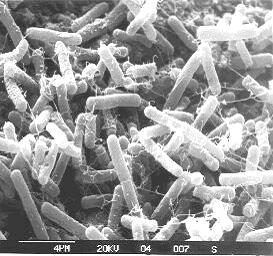
Clostridium acetobutylicum
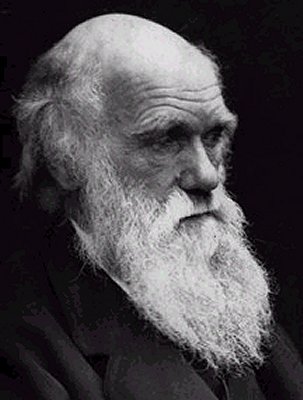
Charles Darwin
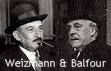
Weizmann & Balfour



Leave a comment
Comments feed for this article