
Global Crisis Blog
Rashomon & the Global Crisis 2007-9
By Shlomo Maital
Expectedly, a spate of books is appearing, interpreting the causes, nature and effects of the global crisis 2007-9. My own book (which leverages the crisis to explain why and how managers must now think for themselves, and never again rely solely on economists) will appear in June. (Global Risk/Global Opportunity: SAGE, 2010).
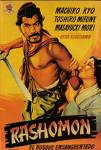
It is hard to sift through the various perspectives, to find the real truth. It is much like the legendary 1950 Japanese movie Rashomon, which depicts the rape of a woman and murder of her samurai husband, through the eyes of the wife, the bandit, the samurai and the woodcutter — each account being very different, each account truly believed by the teller. As I have learned during recent study groups, even the Bible is not exempt from the ‘victor’s syndrome’ (the victor tells the ultimate story, even if it is false). The Book of Kings is written in a biased manner in favor of the Kings of Judah, severely distorting historical truth, against the Kings of Israel (the northern tribes that split away from Judah).
The latest entry is The End of Wall Street, by Roger Lowenstein, a top (the top?) Wall Street reporter. (Penguin: 2010). Reviewed by equally sharp financial reporter Joe Nocera, in the Global New York Times (April 4), Lowenstein’s book (which follows one he wrote on Long Term Capital Management) avoids clichés and focuses on the “business theories that led to grievous destructive miscalculations” (the idea that a world of highly interconnected financial systems makes regulation unnecessary and smoothes away business cycles or bubbles). My guess is The End of Wall Street will be the definitive book on the crisis, at least for many years, until the focus of time helps us overcome the Rashomon effect and truly understand cause and effect.
 TIMnovate
Leave a comment
Comments feed for this article