
Innovation Blog
Why Did Motorola Drop the Cell Phone Ball?
By Shlomo Maital
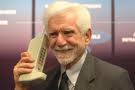
Marty Cooper
A fascinating segment on the CBS program 60 Minutes features Morley Safer’s interview with Marty Cooper, whose Motorola team built and demonstrated the first cell phone, in 1973. There is no question that cell phones have changed the world, and that their influence is just in its infancy. With over 5 billion cell phones now operating worldwide, this appliance has had more powerful impact on society than even, perhaps, computers. And of course, cell phones are now becoming computers.
What is Cooper’s take on cell phones today? It is worth hearing:
“Technology has to be invisible. Transparent. Just simple. A modern cell phone in general has an instruction book that’s bigger and heavier than the cell phone. That’s not right,” Cooper said. Call it the complexity or confusion factor. Cooper argues that cell phones designed to do everything – take pictures, play music and videos, surf the Web – don’t do any of them really well. He thinks the buyers should be dictating exactly what they want.
“The consumer is king. The consumer ought to make the decisions. And not, certainly not the engineer,” Cooper said. “Engineers tend to get enchanted by the technology itself.”
I wish Morley Safer had asked Cooper the $640 b. question. Why did Motorola drop the ball? Why did Motorola pioneer the cell phone, prosper because of it for a time (remember RazR ?), then almost disappear? I don’t know the answer. I wonder if Motorola does. But, how often do we see a brilliant entrepreneur lead a small team to world-changing innovations, only to have the surrounding bureaucratic organization fail to realize its full potential?
I believe Marty Cooper is one of those few individuals who are super-creative — their creativity machine is permanently turned on, they ‘get it’, and produce an endless stream of wonderful, simple practical world-changing ideas.
What is Marty working on now?
So it seems only natural that the latest gadget developed by Cooper and his wife is a retro cell phone called the “Jitterbug.” It’s a basic phone – there’s no camera, no music. Any idiot can operate it. It sounds simple enough: if you can hear a dial tone on the Jitterbug, you can make a call. “If there’s no dial tone you can’t,” Cooper explained. CBS) His next target are lost calls, also known as drop outs. Atop his office building, ugly conventional cell phone antennas are disguised as flagpoles. He’s developing so-called smart antennas that can cut through all the competing noise in the radio environment to get your call through.
“And what they do is when we transmit, we send the information only to your phone,” Cooper explained.

 TIMnovate
2 comments
Comments feed for this article
June 20, 2010 at 4:37 am
Yoav
Hi,
Motorola is back to the mobile phone business big times with its “MOTO” Android smartphone.
June 20, 2010 at 4:05 pm
Dave
Apple tossed out the big book of “how to” and made a smartphone that was intuitive. And while it can do almost everything except wash the dishes (there’s not an app for that) users tend to glom onto a dozen things or so they want to do. Each person has their own dozen. Apple did for the iPhone which others hadn’t considered: it made the phone easy enough to use, even for complex tasks, that you never needed to RTFM (read the freakin’ manual). It is what Apple does. I sure wish they would design a car!