
Latvia — Europe’s Poster Boy
By Shlomo Maital
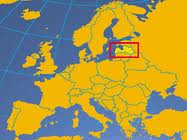
Name Europe’s fastest-growing economy in the first quarter of 2012, a time in which Europe and the euro sank into deep crisis.
If you got Latvia – you are a genius. Tiny Latvia, with only 2.2 m. people (a fifth the population of Greece) grew by 5.5 per cent (annual GDP growth). There are two reasons this is astonishing. First, Latvia was a total basket case two years ago, when its economy contracted by 17.7% (in 2009), one of the largest contractions in Europe. Second, Latvia has been imposing austerity.
Austerity?? This blog has blasted austerity policies, like Cato the Elder calling for the destruction of Carthage in the Roman Senate.
Here is what Latvia’s tough courageous political leaders have done. Cut public wages by 20%. Slashed the budget deficit from 10% of GDP to 2.5%. Slashed Latvia’s import surplus from 25% of GDP (!) to 1.2% last year.
How did they do this? And why?
Latvia is utterly determined to dump its weak unstable currency, the ‘lat’, and adopt the euro. Its terms of membership in the EU enable it to do this, provided it meets tough conditions. One of those conditions is to keep the ‘lat’ fixed relative to the euro for the pre-euro period. That means that none of Latvia’s recovery has been helped by a currency devaluation (an ‘easy’ policy).
Why has austerity worked in Latvia, and failed elsewhere? First, Latvia had no choice; it was going down the tubes. Second, Latvia has very strong tough political leadership. Third, the people of Latvia understand the reason for austerity – enabling Latvia to switch to the euro, and benefit from foreign investment and EU funds.
The picture is not all rosy. Some 200,000 Latvians emigrated abroad in the past decade. And the austerity program is eroding support for the euro, as is the crumbling euro itself.
But despite this, we should ask: Are other European nations asked to impose severe austerity for a decade, just so they can pay back wealthy European banks, able to meet the conditions Latvia meets? If not, they won’t be able to sustain austerity. And of course, the answer is: Greece is not Latvia. Not even close.
* source: Wall Street Journal, Heard on the Street: May 23.

 TIMnovate
1 comment
Comments feed for this article
May 27, 2012 at 11:32 pm
las artes
Well, we haven’t advanced too far in all these months, now have we, if we are still wheeling out the argument that “external” devaluation will hit holders of euro denominated loans, since it should be generally recognised that the (very painful) internal devaluation which is now taking place is hitting Euro loan and Lati loan holders alike. And the argument is a strange one to use just shortly after the statistics office announced that due to the rapid reduction in the number of those employed and to the fact that many of them changed their working conditions from full-time to part-time, the number of hours worked in the 3rd quarter of 2009 fell by an annual 27.3%, while labour costs fell during the same time period by 30.1%. This fall in disposable income, and the continuing prolongation thereof, poses a far greater threat to the continuity of Latvian loan payments than the 15% reduction in the value of the Lat as compared to the Euro which the IMF proposed in the autum of last year would have done. Indeed, it is, in and of itself, one of the pernicious consequences of having resigned yourself to an “L” shape non-recovery. Stress on the banking system only goes up and up, as incomes and employment fall, and the government has less and less ammunition left to counteract the contractionary pressure.