
You are currently browsing the category archive for the ‘Global Crisis Blog’ category.
Global Crisis/Innovation Blog
How to Innovate by Asking Audacious Questions
By Shlomo Maital
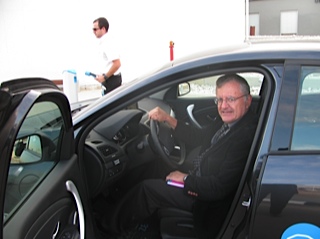
Renault Fluence: no gasoline!
Yesterday I and two colleagues visited Better Place, a company founded by Israeli entrepreneur Shai Agassi. Better Place wants to wean the world from its addiction to oil and gasoline. It believes consuming 85 million barrels of crude oil daily, half of it for powering automobiles, is not sustainable. Its solution: Create an ecosystem with electric cars (Renault-Nissan “Fluence”), lithium-ion replaceable batteries, charging stations, and battery-replacement stations. The first such nation-wide system is now almost in place in Israel (we interviewed Agassi by phone as he made the rounds of his robotic battery-replacement stations, aiming at having 50 of them in place very soon, all over the country). Hybrids are not the solution, because they still consume gasoline, albeit somewhat less of it. Better Place thinks the added electricity used by electric cars can be generated by non-fossil-fuel sources, and Denmark, the next site of a nation-wide system, already makes 20 per cent of its power through wind and sun, and has so much of it Denmark pays Germany (!) to take the power off its hands. Drivers of Better Place cars drive in to charging stations, where a robot replaces the spent battery with a charged one, in less time than it takes to fill a tank with gasoline. You pay by subscription, based on kilometrage driven yearly (20,000 km., 30,000 km., etc.). The car’s computer tells you if you havee enough charge to get to your destination without a new battery, and if not, where you can replace the spent one.
The origin of Better Place was an audacious question. After completing an amazing career (B.Sc. from Technion-Israel Institute of Technology at age 17 ½, work at Apple, startup named TopTier, sold to SAP, work at SAP leading up to a top management position, resigned to launch Better Place, and Agassi is only 36), Agassi asked this question:
How can we run a country’s cars without gasoline?
The technological answer is simple. Electric cars. The business answer is really tough – how to sustain a company that does this. Better Place is essentially a “media” company. It doesn’t sell cars, Renault does that. It sells the recharging/battery replacement system. Fluence owners drive in to a batter replacement center, and a robot replaces the lithium-ion battery under the car with a charged one. The margin between what Better Place pays for electricity and what it charges the drivers for electricity provides profit that drives and sustains the business.
It all began with an audacious question. But Agassi’s answer was NOT technological, solely, but cleverly business and economic. This has enabled him to raise several hundred million dollars, from top investors, including GE.
So – innovator: Ask, what is the question? Not, what is the answer! And, seek highly audacious questions. Questions that comprise unsolved, perhaps unsolvable, social problems. Then tackle them with energy vision and creativity.
Global Crisis/Innovation Blog
How to Build a $15 b. Global Company
By Shlomo Maital
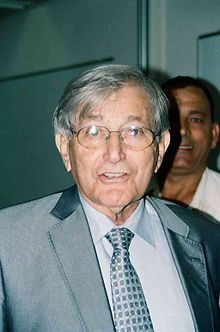
Eli Hurvitz
The legendary founder, long-time CEO and Chair of Teva Pharmaceuticals Ltd. Eli Horwitz, recently passed away, at age 79. He died of cancer.
Teva is a $15 global pharmaceutical giant, the world’s leading generic drug firm, and is on its way to “31 for everyone” ($31 b. in annual revenues). It was driven by the vision and skill of Hurvitz, and his long-time CEO Israel Makov. To create a global market leader is tough. To do so from an Israeli home base is nearly impossible. How did Hurvitz and Makov do it? Through sweeping vision and smallest-detail execution, qualities that rarely collaborate or even co-exist.
Hurvitz spotted a press report, in 1985, describing the U.S. Hatch-Waxman Act, named after American political leaders Orrin Hatch (Senate) and Henry Waxman (House). This act was designed to encourage generic drugs (ethical drugs whose patent has expired, and can be produced and sold by anyone), as a way of reducing health care costs, even then troubling America’s leadership. Few pharmaceutical firms showed any interest. Generic drugs are commodities, with low margins (compared to the enormous margins enjoyed on ethical drugs). Why bother? Hurvitz spotted a business opportunity. He realized that to excel in generics, Teva, his company, would have to be super-efficient at managing costs, and super-speedy in developing ways to produce generic drugs the instant patents expired (recall that pharmaceutical companies patent not only the molecule but also the way they produce it). He also realized that Teva would have to scale up, and to do so would require many acquisitions – so he built world-class competency at acquiring and integrating companies. His CEO Israel Makov was a great partner. Makov offers this prescription for building a global firm: first to imagine, first to move, first to scale. Hurvitz and Makov imagined (a global giant, in generics), moved (to build global capability) and scaled up. Together they disproved the assumption that cost-effective production cannot take place in high-wage high-cost Israel (Teva’s Kfar Saba plant is its most efficient worldwide).
Innovator: Keep your eyes peeled for news accounts of trends that embody business opportunities, like Hatch-Waxman. Envision the possibilities. Organize to implement. Move and scale quickly. And you too, like the late Eli Hurvitz, will create a market-leading global firm.
Global Crisis/Innovation Blog
Kyle Bass Sees What is Plainly Visible But Unseen
By Shlomo Maital
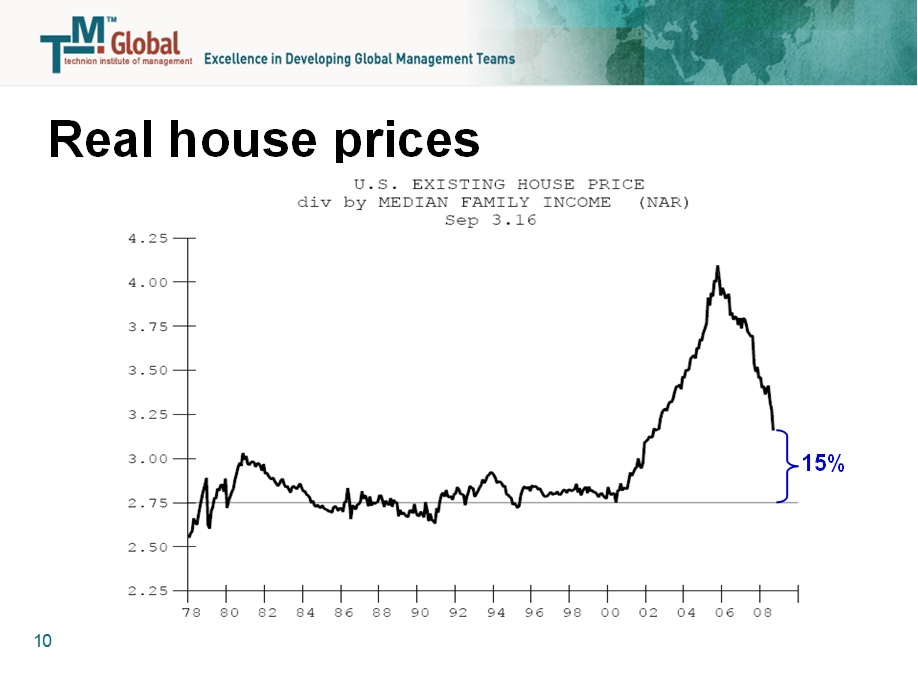
US house prices/median family income, 1978-2008
In a previous blog, I quoted Peter Drucker, who “saw what is visible but unseen”, just by looking out the window. Kyle Bass did the same. He worked at Bear, Stearns, becoming at age 28 the youngest senior managing director in the firm’s history. He is now the managing partner of Hayman Advisors LP, an investment firm which he founded in 2005-6. Bass is famous (notorious?) for foreseeing the subprime mortgage crisis and profiting from it immensely, when most of us just didn’t see it. He realized before anyone that private bank debt would become sovereign debt, and that Greece’s debt was too big for Greece to be able to pay back. He bet on that — when Greece’s interest rates were nearly equal to Germany’s. He won big time. He was recently interviewed on the BBC program “Hardtalk”. Here is what he said:
“ in 2001 [Fed Chair Alan] Greenspan traded the dot com bust for the housing boom, lowered interest rates to 1%, because he thought that was how to come out of the dot.com bust aggressively. Then he quit…handed the reins to Bernanke. We [at Hayman] looked at: median home prices, median income that had moved in parallel for 50 years…and at affordability. When Greenspan created the housing boom, there was massive divergence between median income and median home price [see figure above]…home prices took off, median incomes stayed stable… How did we profit? When you are a fiduciary, like Hayman, people invest their capital with us, in order to not lose and to make good risk adjusted returns… in 2006 we had a portfolio of investments all over the world… the hedge we did, we bet against the bottom 3% of subprime securitization, it cost me 1% a year.. it was the best asymmetric hedge I’d ever seen in my life… we were long in the fund, so this was our hedge, just in case something went wrong. We knew something would go wrong. We had a good hedge against it. We lost on other investments, profited on the subprime hedge, and made profit overall.
“We have a large portfolio of global investments. And enormous hedges in Europe and in Japan. We realized the crisis would move from housing, to banks, to govt. We did math which other people did not do. As the housing problem metastasized, it started to move globally, what we saw was, beginning of 2008 to Q2 2009, every time a highly levered institution got into trouble, in US and EU, the Central Banks took those bad private risks/assets and moved it onto the public balance sheet. [It was called a ‘bailout’, ‘too big to fail’.] We decided in mid-2008, there would be either massive delevering (deleveraging, write-off of bank debt, including bankruptcy), or would the move onto the govt. balance sheet. The latter happened – in the US and partly in the EU they moved bad private assets onto the govt. balance sheet. No one did this calculation…looked at how big debts were, how big revenues were, for govts. What solidified our search was: for Iceland, 300,000 people, $20 b. GDP, 3 Iceland banks had over $200 b. worth of assets!. When the Icelandic banks went bad, it sank the country. No regulator existed, deciding to put limits on the size of banking system relative to GDP…because it generated revenues, jobs.
“The global debt scenario? Yes, we took bets against Greece… for a $1,000 bet, you could make $700,000 profit, in the initial stages, 2008. Greece’s sovereign debt traded as if it were German sovereign debt… it was within 11-17 basis points of German debt. That’s 11/100 of one per cent. There were great asymmetric hedges then. Today, all the asymmetry hedges in the world lie in Japan.
“The only way to resolve EU problems is to have massive debt restructuring, write-downs. You know Europe is in trouble when it has a German Pope, and an Italian Central Banker. World sovereign debt has grown in the last 9 years from $80 trillion to $210 trillion. That’s 12% / yr., while GDP grew at 4%. It is not sustainable. The “PIIGS” (Portugal, Iceland, Ireland, Greece, Spain) are heading into insolvency. There is noo solution but – either pay the bills, or debts have to be written down. Germany itself has defaulted twice in the last 100 years. Germany hasn’t recapitalized its banks.. UK, US HAS! EU banks have three times the leverage of US banks. EU hasn’t recapitalized its banks. Issue Eurobonds (with no country on the face)? So profligate Southern European countries continue to spend wildly and Germany foots the bill. Profligate countries blackmail Germany every time. It’s not to Germany’s benefit. How many of your relatives would you go joint and severally liable with? EU won’t work unless it has centralized taxing authority, until every one of the 17 Euro nations cedes sovereignty. This is a tall order. The [bond] market is telling us, it won’t work. Japan? It will fall big time. Japan has the single worst balance sheet problem with sovereign debt in the world… in Japan: a xenophobic society, population decline, they will lose 27 m. people in next 40 years to demography…private assets of the public in Japan are close to $13.2 trillion…but govt. debt is $15 trillion – the first time in history a country’s sovereign debt exceeds private assets…. In Italy, the 10 yr rate went from 5% to 6%: and Italy went to full crisis, in one percent! Japan spends 50% of central govt. tax revenue on debt service, and half is interest… if Japanese interest rates rises 2%, debt service will alone exceed govt. revenue!”
Kyle Bass went to college (Texas Christian University) on a combined academic/sport scholarship (he was a champion diver). As a talented high diver, he knew how to take leaps others did not. His leap into betting against subprime mortgages was a huge success. Perhaps then, we should listen to what he says about the euro and Japan.
Global Crisis/Innovation Blog
Angela Merkel, Meet Frederick the Great
By Shlomo Maital
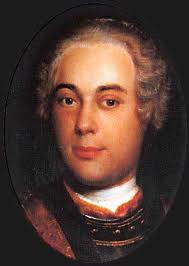
What would happen if Frederick the Great, King of Prussia (b. 1712 – d. 1786), Der Alter Fritz, who ruled for over 40 years, came back to life and spoke with German Chancellor Angela Merkel? What would they chat about?
Here’s my take on it.
Merkel: Alter Fritz, I’m in deep trouble. I lead Germany, Germany is the only nation that can save the euro, yet my stubborn people won’t let me, they want to punish Greece and Italy more than they want to strengthen Germany.
Frederick: The reason you were chosen Chancellor, Angela, is presumably because you are smart and wise, like me. We know you are smart, because you are a trained scientist. But are you wise?
Merkel: What do you mean, Frederick?
Frederick: Shall I tell you how I saved my nation?
Merkel: Yes please. My history is a bit rusty these days, all I get to read is what those damned economists write.
Frederick: Europe had a mini-ice age for two centuries. Crops froze. The people were starving. They had no grain, no bread. I heard of something called a potato, brought from the New World by the Spanish in the 16th C. But it spread very slowly in Europe. Yet the potato was ideal, because even if its leaves froze above ground, the potatoes below ground survived. But – how can I get those stubborn Prussian farmers to adopt it? So, around 1770, I planted potatoes in the fields of my palace in Potsdam. I announced I would whip any farmer who stole my potatoes for seed. I served them regularly for my dinner. And I left big holes in my fences. The potato quickly spread like wildfire throughout Prussia. To this day, kartoffel is a German favorite. It saved Prussia from mass starvation. In contrast, in France, stupid King Louis and his “Academy of Science” declared that the New World Americans were idiots, because they ate corn and potatoes. They refused to adopt the potato. Some say the resulting starvation led to the French Revolution. Louis lost his head – literally.
Now, do you see what I mean by ‘wise’?
Merkel: Yes, but… I have no palace. And … I’m afraid my Germans today are more French than Prussian.
Global Crisis/Innovation Blog
Drucker at 100
By Shlomo Maital
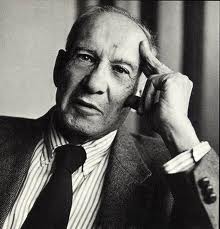 Peter Drucker
On Saturday (Nov. 19) we mark the 102th anniversary of the birth of Peter Drucker, the scholar who more than any other management expert defined the nature of the discipline of running businesses. In over three dozen books (the last published just three years before his death, in 2002), Drucker taught students of management the essentials of building organizations, with integrity, respect, and vision.
Drucker was a visionary, yet insisted, “I never predict; I just look out the window and see what’s visible but not yet seen,” he told Forbes magazine. He was the first to understand tht the industrial revolution is over, and the innovation / knowledge revolution has begun. In his 1968 book The Age of Discontinuity, he challenged managers to boost the productivity of knowledge work, to create a surge in productivity like that the industrial revolution created.
He foresaw the angst of the 2007-11 global crisis. In an interview given nearly 25 years ago, he said, “in the next economic downturn, there will be an outbreak of bitterness and contempt for the super-corporate chieftains who pay themselves millions.” Drucker hated the way CEO’s overpaid themselves.
Drucker fled his native Austria because of the rise of the Nazis. This strongly influenced him, and his conviction that good management is essential not only for the success of companies, but also for the economic and political stability of the community and the nation.
According to author Richard Straub, Drucker called management a “social technology” (would that it was!) and called himself a “social ecologist”, one who watches the man-made environment of society. Straub notes that in a 2008 Gallup Poll on honesty and ethics, only 12 per cent of respondents felt business executives had high/very high integrity – an all-time low. And in economist Richard Layard’s study of happiness, among the people employees wanted to interact with, the ‘boss’ (CEO) came dead last. Drucker would have been deeply distressed to see how bad management has ruined the lives of many in America, Europe and elsewhere, in the current global crisis.
My favorite Drucker story is how he consulted to Starbucks – by rising at 4 a.m. and going out with a delivery truck, to bring supplies to one of the outlets. First, Drucker made sure he understood the business, at the coal face, long before he ever dared to offer advice. Take heed, consultants. Get out of your office, like Drucker, and get down and dirty in the mines.
Global Crisis/Innovation Blog
Innovator: Your EQ May Be More Crucial Than Your IQ
By Shlomo Maital
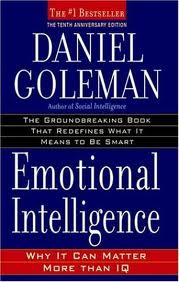
Looking back on my ‘career’, I find the thing I most regret concerns the two or three sharp, hasty words I blurted, that created lifelong enemies. (In Academe, memories are long – like, centuries long). These words were the result of low EQ – emotional intelligence. EQ is in very short supply in many organizations, driven by people who’ve spent their lives studying and researching. I recall a Workshop we once did for Intel engineers in Ireland. We taught them strategy, HR, innovation – lots of strong tools. We included, at the last minute, a short lecture by an expert on Emotional Intelligence. A huge majority of them chose the EQ talk as by far the most valuable. They realized it was something they needed, as super-smart nerdy engineers, and lacked.
Emotional Intelligence (EQ) is defined as “a self-perceived ability to identify, assess, and control the emotions of oneself, of others, and of groups”. The concept was built mainly by Daniel Goleman. It includes ‘reading’ your own emotions, and reading those of other people, and acting and responding in a mature and controlled fashion.
In his 2004 book, * Primal Leadership: Learning to Lead With Emotional Intelligence, Goleman and co-authors link EQ with leadership. Here is their typology, showing how to assess your EQ in four separate key dimensions, and then linking EQ with leadership styles.
The dimensions: 1. Self awareness (emotional awareness; accurate perception; self-belief); 2. Self management (control the emotions; transparency; adaptability; achievement; initiative; optimism); 3. Social awareness (empathy; organizational awareness; ability and desire to serve or meet needs); 4. Relationship management (inspire others; influence othes; develop others; change catalyst; build bonds; teamwork).
They identify six leadership styles. Which suits you? 1. Visionary. 2. Coaching. 3. Affiliative. 4. Democratic. 5. Pace-setting. 6. Commanding.
And finally, they pose five key questions all innovators should answer. 1. Who do I want to be? 2. Who am I? 3. How can I reduce the gaps between (1) and (2)? 4. How can I experiment, in order to understand better who I am and who I want to be? 5. Who will support me, in these efforts?
Self-awareness is a key (and underestimated) element in innovation. You cannot deal effectively with the powerful opposition your new ideas will arouse, unless you are very secure with who you are. So, set aside your high IQ, and reflect on your EQ. It’s really important.
————
* Primal Leadership: Learning to Lead With Emotional Intelligence by Daniel Goleman, Richard E. Boyatzis and Annie McKee HBS Press, 2004.
Global Crisis/Innovation Blog
Direct to the Client: Can You Disintermediate a Service?
By Shlomo Maital

Here is the latest “power word” in innovation: Disintermediation.
Yuk. One of those economists’ words. Never trust a word with two prefixes joined, especially when one is ‘dis’.
But there is a powerful idea here. Disintermediation means “eliminating the middle man” and linking supply directly to demand, or creator/innovator directly to user/fan/customer. Writing in the Nov. 1 issue of Bloomberg Business Week, John Tozzi ( jtozzi2@bloomberg.net) describes “Bandcamp”, and how Ethan Diamond left his great job at Yahoo to launch Bandcamp, an easy way for rock bands to publish and sell music online. Writes Tozzi:
Artists can plug Bandcamp’s player and storefront into their own websites to stream entire albums for free and sell or give away downloads. Today, hundreds of thousands of artists use Bandcamp, and Diamond says about 25,000 join every month. That makes the company a fast-growing contender to succeed Myspace as the go-to online tool for musicians to get music directly to fans. As Myspace users decamped for Facebook, “there was basically a huge vacuum left,” says Aram Sinnreich, founder of media consultant Radar Research. “There were more than 10 million bands on Myspace. All those bands needed someplace to go.”
Food coops are linking farmers directly with consumers. Capital markets are making it possible for businesses to borrow directly from lenders, without banks. Digital books are enabling authors to sell directly to readers without a publisher. Disintermediation takes that frustrating, sterile, greedy middleman (publishers give authors 12 ½ per cent royalties, take a year to prepare the book, and then, forget to market it) and eliminates him/her. The Web is a powerful tool for disintermediation.
Pick a service or product. Innovator – can YOU disintermediate it? If so – you have a business.
====================
Bandcamp Powers Online Sales, Aims to Fill Myspace ‘Vacuum’, By John Tozzi – Nov 1, 2011
Global Crisis/Innovation Blog
The New Democracy: Bond Traders Rule!
By Shlomo Maital
A new form of democracy has just been born – yesterday in fact.
Greece appointed Lucas Papademos as Prime Minister designate. He ran Greece’s Central Bank, at the time Greece bluffed its way into the European Single Market and euro, with false data, and was vice governor of the European Central Bank. He has consistently opposed any ‘haircut’ (reduction) of Greece’s debt.
Italy is apparently appointing Mario Monti, former European Commission competition commissioner, as its new Prime Minister, to replace Silvio Berlusconi and lead Italy toward new austerity measures.
Why were these new leaders chosen? In the sole desperate hope that the bond markets will like the moves sufficiently, to raise the price of Italy’s and Greece’s sovereign bonds, enough to keep those two countries solvent, able to continue to borrow in capital markets so they can avoid default and bankruptcy.
Will it work? Will the bond traders agree? Will they give a Facebook “thumbs up”? (Like!). Or will they give a Facebook thumbs down? Everything depends on these bond traders – the future of Europe, the future of the Euro, and perhaps the future of global markets.
This is the new democracy. A key political decision is being made, NOT by the people of Greece, and not by the people of Italy, but by the faceless millions who buy and sell bonds in global markets. And they, of course, are driven not by considerations of the wellbeing of Italians and Greeks – but by the wellbeing of their bonuses and bottom lines.
Not a very good system, is it! It is not, in fact, democracy any longer. It is the oligarchy of money. We thought the power of financial markets had been curtailed and regulated after the global crisis of 2007-9 – but in fact, it has if anything grown.
Global Crisis/Innovation Blog
Free Agent Nation: What to Do if you Can’t Find a Job
By Shlomo Maital
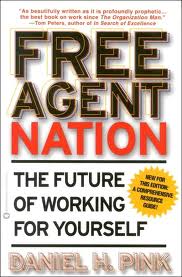
I am encountering growing numbers of smart, experienced, talented people who just cannot get a job. And the longer they are out of work, the tougher it gets. Some companies won’t even interview those out of work for a year or more, on the grounds their human capital has disintegrated.
In his new book Free Agent Nation: The Future of Working For Yourself, author Daniel Pink points out that a new form of employment is evolving rapidly, almost unnoticed, which he calls “free agentry”. Now, these are not just ‘temps’, a much-maligned and exploitative form of employment. Pink notes America’s largest employer is in fact Manpower, an agency that supplies ‘temps’. Many ‘temps’ would really like a full-time job and just can’t get one.
The three types of free agents are: 1. Solos, 2. Temps, and 3. Microbusinesses.
1. Solos: There are 33 m. Americans who are self-employed, and most are ‘soloists’ because they prefer it. These solo businesses employ one person, or are teams of up to 4 or 5, and ‘sell’ their knowledge. They comprise 26 % of all employment, up from 22% in 1998. Solos prefer it and indeed earn 15 % more than those in comparable jobs.
2. Temps: There are 3.5 temps in America who would rather have a permanent full-time job. If you add them to the unemployment figures, the 9 % unemployment rate looks a whole lot worse. Even governments exploit temps, who have little or no benefits. There is need for real legislation in this area to protect their rights. In a bad job market, they are being scalped.
3. Micro Businesses: These are real small businesses, employing 2-3, and they comprise a half of all U.S. companies. The Internet and IT have greatly reduced the size a business needs in order to be viable.
Pink says that free agents make meaning in four ways: They have much more freedom; they have strong accountability (if you employ yourself, you are accountable for your own success); they create authentic value (you are only as viable as your next value-creating offering); and they define success by their own criteria, not by any P&L.
What is happening now, Pink says, is that groups of free agents are organizing social networks, to help and support one another. These are ‘fan clubs’, confederations, or ‘entreprenetworks’, facilitated sessions to offer mutual assistance. There are also growing numbers of matchmakers, who bring free agents together with those who need them, and also mentors and coaches, who assist free agents and dissolve their loneliness. We are even beginning to see free agent IPO’s, as individuals issue stock on…themselves. Free agents even issue their own bonds. An example? David Bowie, rock star, who sold $55 m. worth of David Bowie bonds, 15 year bonds paying 7.9 per cent and graded AAA by Moody’s.
In the age of the Knowledge Revolution, those who have knowledge can offer it, on their own, without signing away their lives and their souls to big corporations whose values they reject. And even if you’re looking for a job actively – in the meantime, why not become a free agent? Who knows, you might love it so much you’ll be one forever.
Global Crisis/Innovation Blog
Three Stories: Startups an Inch from Failure And a Centimeter from Huge Success
By Shlomo Maital
It is the nature of startups to be close to unbelievable success, enjoying meteoric growth, and at the same time at the edge of total failure. Here are three examples.
1. Groupon: Web-ify a humdrum product
 Andrew Mason
Background: “Groupon (“group coupon”) is a deal-of-the-day website that features discounted gift certificates usable at local or national companies. Groupon was launched in November 2008, by now-CEO and Pittsburgh native Andrew Mason. The idea subsequently gained the attention of his former employer, Eric Lefkofsky, who provided $1 million in “seed money” to develop the idea.
According to Reuters, “Groupon Inc raised $700 million after increasing the size of its initial public offering, becoming the largest IPO by a U.S. Internet company since Google Inc raised $1.7 billion in 2004. The global leader in “daily deals” is now valued at almost $13 billion after saying it increased the offering by 5 million shares to 35 million in total and pricing them at $20 each, above an initial range of $16 to $18.”
Groupon is generating four times as much revenue as Google was, at this stage (three years after its first sale). It already employs 10,418 people, as many as Google had in its year eight.
Groupon is a classic Web business which is both close to utter collapse and close to gigantic jackpot earnings, at the same time. It has negative working capital, according to Richard Waters, who writes a Technology column for the Financial Times (Nov. 3). It owes far more to merchants (for the coupons) than it has cash on hand. It has 143 m. email addresses in its databases, but only one of them in five has ever bought a coupon. It is growing at 72 per cent a quarter, but the amount of money it retains per coupon has collapsed, by 5 percentage points, to 37 per cent. So, either the novelty value of coupons has collapsed, and with it Groupon, or, Groupon is showing it has a solid business by slashing its spending on subscriber acquisitions and is ‘cruising’.
Waters perceptively notes Groupon’s (and Mason’s) problem. Groupon has to do what Jeff Bezos did at Amazon – turn a one-product Internet business into a broader “solutions” business. Waters says doing this, on the ‘fly’, is like changing tires on a racing car while the car is doing 200 mph on an F1 track. If he can pull it off, Waters say, Mason will have earned his place among the handful of lasting dotcom winners.
2. Dropbox: Become What You Need
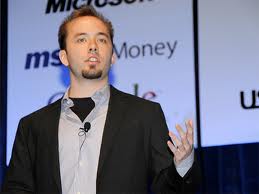 Drew Houston
Dropbox is a digital storage service that has surged to 50 million users. Steve Jobs tried to acquire it – and was turned down flat.
Founder Drew Houston tinkered with an IBM PC Junior at age 5, and was programming at age 14. He had startups in high school already. Dropbox is his sixth! After reading Daniel Goleman’s Emotional Intelligence at MIT, he realized that “smarts aren’t enough”. He started reading business books. Houston was once riding a bus to New York. He planned to work during the 4-hour ride from Boston to NYC but forgot his USB memory stick. Frustrated, he started building technology to synch files over the Web. Four months later, he flew to San Francisco to pitch his startup idea to an incubator. The incubator head rightly said he had to have a partner. So he found someone named Ferdowsi, who studied computer science at MIT. With just 6 months to go, Ferdowsi dropped out of school to work on the startup Dropbox with Drew. They got a $15k grant from the incubator, and went to work, eager to make Dropbox work on EVERY computer, including the closed-system Mac. Drew spent 20 hours a day trying to reverse-engineer “the guts of the Mac”. Dropbox solves a need among people who have multiple devices – PC’s laptops mobiles, etc. – and have multiple files and photos stuck everywhere. “Devices are getting smatter – your TV, your phone, your car – and that means more data spread around,” says Houston. “You need a fabric that connects all those devices. That’s what we do”. And it started with something that Drew himself wished he had. Dropbox has become what Drew himself needed.
Like many Web-based businesses, it is an inch from success and a centimeter from failure. At his final keynote speech Steve Jobs announced iCloud, which does basically what Dropbox does. Drew’s response: he fired an email to his staff, “we are one of the fastest-growing companies in the world”, he wrote, and then added a list of other one-time meteors that fell to earth: MySpace, Netscape, Palm, Yahoo…..
Drew has solved the “freemium” riddle. 96 % of his users pay nothing. He has only 70 staffers, mostly engineers, and grosses enormous revenue per employee. The revenue comes from those 4% who pay. He offers free 2 gigabytes, plus upgrades to 50 gigs for $10 a month or 100 gigs for $20. Growth is built in to the business model. As clients store more and more data, they need more and more space, so even without new clients, Dropbox revenues will grow rapidly. Dropbox has strong VC backing, including Sequoia, Index Ventures, Greylock, Benchmark, and even Goldman, Sachs. It’s close to huge success, and perhaps about to fail.
2. Largan Precision: Find a Sweet Spot in the Profit Pool
Largan’s founders are Largan Group Chair Scott Lin and Largan Precision Chair Tony Chen
Global smartphone sales this year will total 468 million units, and 652 million units in 2012, according to Gartner! This comprises a huge ‘profit pool’ – and not all the profit is being made by the phone innovators themselves. A lot of it is made by those who supply key components. One of those is a little-known quiet company called Largan Precision. The founders Lin and Chen, bet on camera phone lenses – and invested a fortune to become the leading supplier of this key component. They designed them for manufacturability, rapid production, because mobile-device makers need just-in-time parts very quickly to ramp up output and meet soaring demand.
Largan is a Taiwanese company. It is the 2nd most profitable, out of 1,000, manufacturer in Taiwan. Largan ha sspent $50 m. in capital yearly. The two founders are very quiet and manage a low profile. Why? They want to avoid upsetting major clients like Apple and they want to keep company secrets from competitors, who are dying to know how they do it. The mobile-phone lens industry is huge. It will produce 1.7 billion units this year, at an average price of $2 each for smartphones, and $1 each for simpler handsets. This is why Largan’s bet on smartphones was so wise. Largan’s lens accuracy is 80 %, far higher than the industry average of only 50%. The next challenge for Largan is to generate 3D lenses, easy to fit and easy to make. Largan likes to say it is very nimble, able to handle rush orders. And in the smartphone business, ALL orders seem to be ‘rush’.
A key breakthrough for Largan Optronic was the insight that you could switch from glass lenses to plastic, which is cheaper and far easier to mass produce. It was a gamble, but the investment in plastic lens technology paid off. It was how Largan differentiated itself from competitors. Another key to its competitive advantage is its hiring policy. Largan pays more than other Taiwanese employers, and makes sure it pays overtime, rather than demand free extra hours. It trains its junior staffers intensely, so those who join Largan know they are going to learn a lot. In return, they must offer intense dedication. The turnover rate is very low, despite the high-pressure job.
Apparently, Apple makes up a third of Largan’s business. The rest comes from HTC, HP, Lenovo and Nokia. Each new phone raises the bar for the lenses.
Long ago, Microsoft and Intel (the “Wintel” model) found that it was they who could make high gross margins in the PC business by supplying the microprocessors and operating system (DOS and Windows), a business IBM scorned at the time. Since then many wise entrepreneurs have found a ‘sweet spot’ in the profit pool of a new and growing industry. If you can make a component for a product that is hot and in demand, you can build a powerful business. You don’t need to make and design the whole smartphone, for instance, in order to profit from the smartphone industry, as Largan founders Lin and Chen have discovered.
As an OEM, dependent on the companies to whom it supplies lenses, Largan is always on the knife-edge. It has to anticipate its clients’ needs, and be ready to meet them when they demand components. Like most such businesses, Largan is just one product away from failure. But so far, it has found a key sweet spot in the sweet smartphone industry and has maintained its competitive edge there. And it has kept out of the limelight, to avoid drawing attention to the fact that major companies like Apple rely heavily on component makers for their innovative success.
These case studies are based in part on articles in Forbes Asia, Nov. 2011.


