
You are currently browsing the category archive for the ‘Global Crisis Blog’ category.
Global Risk/ Innovation Blog
Piercing the Geopolitical Fog: The Wisdom of Bilahari Kausikan
By Shlomo Maital

Bilahari Kausikan is Singapore’s Deputy Foreign Minister. Singapore is unique, because it attracts the very best and the brightest to its public service; most other countries practice ‘adverse selection’, which means that the best and brightest avoid poorly-paid underappreciated public service like the plague. And the realm of politics and civil service is in most countries a wasteland as a result. Singapore selects and develops its future civil servants the way Barcelona builds its stars with a youth team, starting from age 8. Kausikan has long years of experience, knows several languages, has been posted in many parts of the world, and brings a knowledge of both theory and practice to his analysis of geopolitics. He trains his own team by bringing them along on field trips to many countries. Here are a few of his insights, in an address he gave earlier this month.
The U.S. has learned that it cannot, if it ever could, effectively exercise power alone. It must negotiate coalitions. These can’t be created solely by the national charm of its leaders. Unlike during the Cold War, there is no reason for nations to subordinate their national interests to U.S. leadership. So America cannot insist, but only persuade. U.S. global leadership is still irreplaceable, but is increasingly questioned. The result: A prolonged period of messiness in international relations. There will be periodic crises.
The key factor that will determine whether global ‘messiness’ can be kept within manageable limits is U.S.-China relations. China is becoming more assertive in the pursuit of its interests.
Global macro-economic imbalances and exchange rates are not really the core issues. The root of all crises is always political failure. US and western economies allowed their economies to deindustrialize, over 30 years, and let their financial sectors grow too big. So, for the first time, Americans and others in the West contemplate a future where living standards will probably fall. No Western government has been entirely candid with their electorates. Their tendency is to demonize an external cause. In America, this ‘demon’ is becoming China. The slightest short-term improvement of the economy in the US or Europe will be seized upon to declare permanent victory, leading a slow slide back to old bad habits. For the EU, it will be a very long time before it becomes more than a rhetorical global geopolitical force. The key players will be the US and China. All other players will be side shows.
In Asia, all the major powers (India, China, Japan) are seeking a new modus vivendi with each other. None of this is easy. The outcome of Asian architecture will profoundly influence future global architecture. Southeast Asia has little to unite it; its only intrinsic characteristic is diversity. And the emerging East Asia architecture will affect US-China relations, which in turn drive future global architecture.
The bottom line of this analysis? Asia is crucial globally, not solely because of its growing economic muscle, but also because of its rising geopolitical power. Of course, economic and political power are closely interconnected. I think the crucial question is: Will Asia look inward and create its own Single Market, as the EU did, or will it seek to create an Asia-oriented global architecture? No-one knows the answer. The result will impact all of our lives.
Innovation Management
Reinventing (Retroventing) Capitalism: Michael Porter on “Shared Value”
By Shlomo Maital
Harvard Business School Professor Michael Porter invented the discipline of competitive strategy, in his book by that name published in 1980 (The Free Press). Now, in an article in the latest issue of Harvard Business Review (Jan-Feb. 2011), Porter (together with co-author Mark Kramer) seeks to redefine capitalism through the concept of shared value. Here is a brief excerpt:
A growing number of companies known for their hard-nosed approach to business—such as GE, Google, IBM, Intel, Johnson & Johnson, Nestlé, Unilever, and Wal-Mart—have already embarked on important efforts to create shared value by reconceiving the intersection between society and corporate performance. Yet our recognition of the transformative power of shared value is still in its genesis. Realizing it will require leaders and managers to develop new skills and knowledge—such as a far deeper appreciation of societal needs, a greater understanding of the true bases of company productivity, and the ability to collaborate across profit/nonprofit boundaries. And government must learn how to regulate in ways that enable shared value rather than work against it.
Capitalism is an unparalleled vehicle for meeting human needs, improving efficiency, creating jobs, and building wealth. But a narrow conception of capitalism has prevented business from harnessing its full potential to meet society’s broader challenges. The opportunities have been there all along but have been overlooked. Businesses acting as businesses, not as charitable donors, are the most powerful force for addressing the pressing issues we face. The moment for a new conception of capitalism is now; society’s needs are large and growing, while customers, employees, and a new generation of young people are asking business to step up.
Porter’s “shared value” is in fact not innovation, but ‘retrovation’. It is how capitalism used to be run, before the narrow-minded selfish financial wizards of Wall St. shanghaied it. See my blog about Scott Paper’s CEO Thomas McCabe [“McCabe’s Credo”, Aug. 6 2010]. It is high time we reverted to it, as capitalism once was. Perhaps thought leaders like Porter can accelerate this process.
Here is Porter’s checklist, to determine how your organization can create shared value.
- Could our product design incorporate greater social benefits?
- Are we serving all the communities that would benefit from our products?
- Do our processes and logistical approaches maximize efficiencies in energy and water use?
- Could our new plant be constructed in a way that achieves greater community impact?
- How are gaps in our cluster holding back our efficiency and speed of innovation?
- How could we enhance our community as a business location?
- If sites are comparable economically, at which one will the local community benefit the most?
Global Crisis/Innovation Blog
QE2 Has Failed – Here’s the Evidence
By Shlomo Maital
My friend David Frank, a rising blogger who has significant experience in US bond markets, provides evidence that Fed Chair Bernanke’s QE2 (quantitative easing, version 2) has failed.
In his forthcoming blog, he notes:
- Since the program began in November, 5-year-yields (the yield on five-year US treasury bonds) have risen by a very large 0.9 percentage points (90 basis points). This means that the Fed has taken a $3 b. capital loss on the $116 b. worth of bonds it bought, because their prices have fallen, making their current value only $113 b. This is not the key point – the point is, QE2 was aimed at LOWERING long-term interest rates, and apparently it has done the opposite.
What went wrong?
Frank attributes the core problem to lack of coordination between the White House and the Fed — not the first time. The White House, by embracing the Republicans ‘ beloved extension of the ‘tax cuts for the rich’ program, has created even more red ink and postponed even further dealing with America’s near-11 per cent of GDP deficit. This means the Federal government will need to sell even MORE bonds in future to pay for its deficits – and by the laws of supply and demand, higher supply means lower prices (and higher bond yields).
It is not at all surprising, given the actors in place now in the Obama Administration, that the Treasury is acting at odds with the Fed. But it is distressing – because the Fed is the World’s Central Bank, not just America, and at the moment, it is bring mismanaged, as is the US Treasury, to the detriment not only of the rest of us outside the US but to the detriment of ordinary Americans as well.
Global Crisis/Innovation Blog
Secret Bankers’ Meeting: Is This Restraint of Trade or What?
By Shlomo Maital
Take senior business leaders from nine top companies in a vital industry.
Arrange for them to meet on the third Wednesday of every month in New York.
Purpose of the meeting: Protect their monopoly on an enormously profitable product.
Secrecy: “the details of the meeting and identities of the participants have been strictly confidential”.
Question: Does this qualify for breaking the law, under America’s anti-trust legislation, or what?
In her front-page exposé in the Global New York Times “Secret group keeps grip on trading derivatives” [Monday Dec. 13 2010], Louise Story reveals how top global banks “fought to block other banks from entering the market [for derivatives], and are also trying to thwart efforts to make full information on prices and fees freely available.
Let me get this straight. The huge, unregulated global derivatives market, including CDS’s (credit default swaps, that destroyed AIG), created by the huge banks, almost destroyed the global economy during 2007-9. The same people who brought you the Global Crisis Act One are now conspiring in secret to recreate it and keep it alive – the very assets that caused ordinary working people all over the world enormous grief and job loss.
Why are they doing this? Apparently, according to Story, because the derivatives market is hugely profitable, precisely because it is secret, unregulated, and no-one knows for sure how much the banks are charging legitimate companies for the vital hedging activities that derivatives permit.
How do we know it is enormously profitable? Checked the banks’ P&L statements lately? Wondered where all that profit is coming from, in a weak economy, with limited bank lending and borrowing? Two sources: Derivatives, and speculative trading.
The global banks failed to truly destroy global capital markets in their first try.
Perhaps this time, unless they are brought under control, they will succeed.
For the record, the bankers who meet secretly are: Thomas J. Benison, JP Morgan Chase; James Hill, Morgan Stanley; Sthanassios Diplas, Deutsche Bank; Paul Hamill, UBS; Paul Mitrokostas, Barclays; Andy Hubbard, Credit Suisse; Oliver Frankel, Goldman Sachs; Ali Balali, Bank of America; Biswarup Chatterjee, Citigroup. Note that it was JP Morgan who invented credit default swaps in the first place.
Ostensibly they meet to manage a “clearing house” for derivatives. In practice, they are effective in keeping out newcomers, including respected banks including Bank of New York-Mellon Clearing.
“Fundamentally the banks are not good at self-regulation”, said a former Federal Reserve regulator Theo Lubke who oversaw derivatives review until last autumn.
Here, we have the hands-down winner for Understatement of the Year!
Global Crisis Blog
Blame the Fed
This is an abbreviated version of an editorial that ran in Barron’s, the weekly magazine of the Wall Street Journal, on Dec. 11.
Alan Greenspan, The “Maestro,” won that title because so many people believed he saved America and the world economy when lesser men might have panicked and done rash things, or nothing at all.
On Oct. 19, 1987, just two months after his confirmation as Federal Reserve Chairman, the stock market fell 20%. Greenspan’s 30-word sentence issued at 8:41 a.m. on Oct. 20 promised “a source of liquidity,” which perhaps prevented a global recession.
In 1998, Greenspan and the president of the New York Federal Reserve Bank organized a quasiprivate bailout of Long-Term Capital Management. The hedge fund was registered in the Cayman Islands, beyond the Fed’s legal jurisdiction, but its debts had soared to an estimated trillion dollars and threatened to topple major banks.
Two great accomplishments, but from 2001 to 2005 Greenspan helped create an unsustainable housing bubble through credit expansion and interest-rate cuts that ultimately led to the global crisis of 2008.
He denied this charge in an essay published this year by the Brookings Institution: “I fear that preventing bubbles will in the end turn out to be infeasible. Assuaging their aftermath seems the best we can hope for.”
The current Fed chairman, Ben Bernanke, took up the theme, saying, “The Fed cannot reliably identify bubbles in asset prices.”
Greenspan and Bernanke are fundamentally wrong on both counts. The Fed can anticipate asset bubbles and excess financial leverage because it bears much responsibility for creating both. And it can forestall them by changing its misguided policies.
Greenspan defines an asset bubble as a “protracted period of falling risk aversion that translates into falling capitalization rates that decline measurably below their long- term trendless averages.” Translation: People incur debt to bid up prices because they expect to be wealthier in the future, and they’re often wrong about that.
Many economists believe the Fed’s radical interest-rate cuts between 2000 and 2003 led people to believe that their risk in borrowing was also low. Greenspan himself has cited a Wall Street Journal survey of Jan. 14, 2010, showing 77% of business economists thought “excessively easy Fed policy in the first half of the decade helped cause a bubble in house prices.”
Greenspan’s Fed slashed short-term federal-funds rates from an average of 6.24% in 2000 to 1.13% in 2003. The Maestro says the Fed saw the 1% rate “as an act of insurance against the falling rate of inflation in 2003 that had characteristics similar to the Japanese deflation of the 1990s.” But he’s trying to have it both ways, justifying active intervention to forestall predicted deflation and claiming the Fed cannot forecast and forestall looming asset bubbles.
Greenspan blames the decline in long-term interest rates on market forces—a “global savings glut.” But there was no such glut. Massive Asian saving fed America’s equally massive borrowing and spending, while American borrowing and spending created a seemingly secure place for Asian producers and savers to put the money they earned from selling stuff to the rest of the world.
Due to low interest rates and easy money, U.S. house prices doubled between 1997 and 2006. Many Americans believed that they needn’t save because their soaring home values were saving for them by creating wealth.
Greenspan said in his Brookings essay that homeowners would have taken large mortgages even if interest rates and terms were much higher and more disciplined. This is clearly false. Home buyers are sensitive to monthly mortgage payments, and they took on more debt to get more house for the same monthly payment.
[ Brown University Professor Jerome Stein has written a series of closely-argued papers using a tool known as SOC – stochastic optimal control. ] Applied to economic analysis, stochastic optimal control would read changes in capital gains, interest rates, debt and supply and demand for goods and services, identifying excessive, unsustainable leverage and generating early-warning signals to change monetary policy. It would be a statistical substitute for the Fed’s fine-tuning.
Stein shows that had SOC been used, it would have sounded alarm bells as early as 2005. The Fed has never used the tool Stein proposes, but surely it is at least worth a try. Quantitative analysts use sophisticated math to create risky instruments; why not use it as well to track risk?
Many economists and politicians — but not Greenspan — now realize that Greenspan’s Fed failed to curb irrational exuberance during the dot-com asset bubble in 1996-2000 and the real-estate asset bubble of 2003-2007. Instead, the Fed waited for the bubble to burst, and then tried to clean up the mess.
This is Bernanke’s policy now. Quantitative easing is a new way to create a bubble. Let the Fed refrain from creating bubbles, and there will be fewer messes to clean up.
There is a Hebrew saying that clever people can extricate themselves from disasters but wise people avoid them.
Greenspan and Bernanke say, in effect, that the Fed can only hope to be clever. It must be wise, or it must stop trying to be so clever.
Global Crisis/Innovation Blog
Now is The Time to Rethink Manufacturing in China: Bring Those Plants Home!
By Shlomo Maital
This is a perfect time to rethink the losing strategy (losing, at least, for middle class factory workers in America and Europe) of producing everything in China. According to Joe Manget and Pierre Mercier, writing in Bloomberg Business Week, “The rising cost of manufacturing in China gives multinationals a rare chance to rethink global production plans”.
The authors note that rising wages are eroding China’s massive competitive edge. They point to Foxconn (huge Taiwan-owned contract manufacturer in China) and its doubling of wages, following strikes, suicides and worker unrest.
“Much has been written about the more than doubling of wages at the Shenzhen factory of Foxconn, the world’s largest electronics contract manufacturer, which produces Apple (AAPL) iPhones and iPads and employs 920,000 people in China alone. ‘One can talk about a world pre- and post-Foxconn,’ says Victor Fung, chairman of Li & Fung, the world’s biggest sourcing company and a supplier of Wal-Mart (WMT). ‘Foxconn is as important as that.’ ”
Wage inflation in China, coupled with soaring minimum wages (20 – 30 per cent increases in most regions) and stagnant productivity, suggest this is a great time to rethink the Made in China strategy. If wages continue to rise 20 per cent a year, note the authors, added wage costs will total $623 / month in five years. (They cite a BCG Boston Consulting Group study). Why not anticipate this trend, and bail out now, rather than wait for foreign multinationals’ Chinese plans to become uncompetitive?
I fear that again, CEOs of multinationals will again take the easy path and instead of working hard to build competitive plants in America and Europe, they will look for another source of cheap labor. It’s easy to find – Vietnam. According to Manget and Mercier,
“Take one factory in Vietnam, where wages of 80¢ per hour are 31 percent lower than in China. On the face of it, this looks like a good deal—but factor in the differing productivity rates, and the Vietnamese factory’s cost edge drops to 14 percent. Furthermore, it won’t take long for young Vietnamese to demand the same treatment as their Chinese counterparts.”
It is time for the U.S. to wake up and abolish all the major tax incentives granted under George Bush for companies that produce abroad, and transform those tax incentives by 180 degrees – give them to companies producing in America, rather than companies producing in Asia. No country can ever maintain a strong prosperous middle class, healthy employment, modern production technology, and rising productivity, when it produces services almost exclusively. It is obvious. Why, then, is it not obvious to political leaders in the West?
A golden opportunity presents itself to tackle the pernicious job crisis, with policies that are neither fiscal nor monetary. Will our leaders again not miss an opportunity, to miss an opportunity?
Global Crisis/Innovation Blog
QE2 Fails – So Let’s Go for QE3 !
By Shlomo Maital
Ben Bernanke’s bond-buying rampage, known as QE2, or Quantitative Easing #2 (after the smash hit of QE1), has brought a deluge of criticism, global instability, and renewed fears of inflation, with no discernible impact on the US economy.
Writing in Bloomberg Business Week, Prof. Scott Shane [Case Western Reserve Univ.] shows that small business – the same small businesses who created nearly all the new jobs in America in the past decade, while big businesses were firing and laying off workers – will not benefit, while big business (yes, the ones firing and laying off) will. Even if QE2 does lower interest rates, it will not help small businesses, who have trouble getting loans at any rate, and who, moreover, refrain from borrowing because of weak demand for their products.
Prof. Shane notes what is completely obvious to everyone: The banks will continue to use the liquidity created by QE2 to shore up ravaged balance sheets (which continue to record losses, as banks ‘mark to market’ and write down their assets) by keeping every dollar the Fed pumps in, rather than lend it.
“QE2 is unlikely to get banks to lend. Banks have weakened balance sheets as a result of the financial crisis and are more likely to use the money created by the Fed’s asset purchases to shore up their reserves than to lend more.”
Faced with overwhelming evidence against QE2, and widespread protest from business economists (those who really know what is going on), Bernanke has thought carefully and deeply, and apparently – decided to try a third round of quantitative easing, QE3. And, doubtless, a fourth and a fifth, until the dollar collapses and inflation recurs.
The Obama Administration is clearly desperate. It cannot use fiscal policy, because capital markets now seem to demand a cut in budget deficits rather than an increase. So its message to the Fed is, don’t just stand there, do something! With monetary policy also having shot its wad, the right message to the Fed should be: Don’t just do something, anything, stand there! Hasty ill-advised policy will prolong Americans’ travails, rather than cure them. And that is precisely what is happening.
Global Crisis/Innovation Blog
Micro-Finance: the “Atomic Energy” Syndrome Returns
By Shlomo Maital
A BBC report notes that India’s huge microfinance industry faces collapse, as the borrowers in an entire large state, Andrha Pradesh, struggle to repay their loans. In Bangla Desh, where micdrofinance was first invented by Mohammed Yunus, the government has slapped a ceiling on interest rates for microloans: 27 %. Ceilings (maximum rates) tend to become also minimum rates. And how many strong businesses, like Microsoft, could afford to pay 27 per cent on their debt?
What went wrong?
It is the atomic energy syndrome. Splitting the atom made possible an enormous source of energy for peacetime purposes. Heat from nuclear fission (and one day, from nuclear fusion) makes steam, that turns turbines, that generates electricity. But splitting the atom also makes it possible to create nuclear weapons, thousands of them, that threaten humanity. Like almost all technologies, splitting the atom is both a fantastic boon and an enormous evil. It all depends on how we use it.
Microfinance has been, expectedly, misused. By allowing the private sector to run amok in this area, with the aim of making profit, it has made microfinance into a micro-example of what the village lenders did earlier – charge usorious exorbitant interest rates that the poor cannot repay, then take away all their possessions when they fail to pay it – at times, leading to suicide.
Some industries are simply not suited to for-profit rapacious capitalism. Health care is one. Microfinance is another. Why do free-market advocates repeatedly grab control of industries that need to be provided as public goods, and turn them into private bads?
Dr. Kazi Akhmed, a Bangla Deshi expert, notes that microfinance loans have to be repaid starting one week from receipt of the loan, in weekly installments. How many businesses can make profit within one week, in order to repay the loan? Even philanthropic microfinance companies charge 12-15 percent interest – the rate of interest that the government of Ireland is struggling to pay. How many poor people taking microfinance loans have the business expertise to know how to run businesses, especially in hard times, during the global crisis? Lending the poor money is not enough; they need to learn about basic rules of business as well. Why is this not provided together with the money?
Collapse of microfinance will mirror the collapse of investment banks – only it will be the poor who pay the price, not the rich. It could, and should, be prevented.
Global Crisis Blog
Will America Bounce Back? And How Will We Know?
By Shlomo Maital
America is still the world’s largest economy, more than twice as big as #2, China. But America no longer can play its traditional role – providing huge amounts of demand for other countries, to pull the world out of global recession. America’s wagon itself is stuck in the mud and badly needs help.
President Obama’s former Council of Economic Advisors Chair Christina Romer, writing in the Global New York Times (Int. Herald Tribune), gives us a clue to the vital question: Can America bounce back (again)? How will we know when the ‘bounce’ begins?
“In a paper I wrote many years ago,” she notes, “I found that …the stock market crash in 1929 did not destroy a particularly large amount of wealth or make people highly pessimistic. Rather, it made companies and consumers very unsure about future income, and so led them to stop spending as they waited for more information.”
This is a perfect description of Japan, 1990-2010, where for two decades uncertainty shrouds everyone, extinguishing both consumer demand and business investment. Much of the uncertainty comes from incompetent, unstable political leadership and leaders who have no vision whatsoever, nor provide any hope to ordinary people.
And it is a perfect description of the U.S., 2008-2010, where political deadlock between Republicans and Democrats, vengeance-driven Republicans who would rather sink the U.S. economy to defeat Obama in 2012 than help the economy and, heaven forbid, re-elect him (viz. Senator Mitch McConnell), and a weak and weakened Obama who has been unable to get control of the old-boy-club in Washington, have conspired to mount an enormous question mark over the lives of ordinary Americans.
America will bounce back. Out of this chaos will emerge a leader, doubtless a rather unlikely one, who speaks words ordinary people understand and who shows them the way forward, involving present sacrifice for future gain. Don’t rely on economists or number-crunching to guide you. This crisis is NOT about numbers. It is not about interest-rate basis points or GDP growth points, it is about hope. People work hard, start businesses, invest, even spend, when they have hope.
In Franklin Delano Roosevelt’s First Inaugural Address, in Jan. 1933, the new U.S. President, who inherited a mess far worse than that Obama did, said, “the only thing we have to fear is fear itself.” That captures the problem in a nutshell. Once ordinary Americans overcome their fear of the future, and are given good reasons to overcome it, once their fear turns into hope, the crisis will be over and America will bounce back, even though the road will be long and hard.
Global Crisis/Innovation Blog
Blame the Fed – Again!
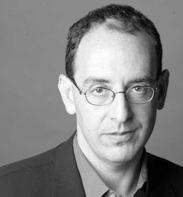
Frank Partnoy
Blame the Fed for irresponsibly slashing interest rates during 2001-4, causing the worst part of the U.S. housing bubble. [See my editorial in Barrons, Dec. 15, “Blame the Fed”, refuting Allan Greenspan’s self-serving and misleading article*].
Blame the fed, again, for irresponsibly bailing out foreign banks in 2007, then choosing NOT to bail out Lehman Brothers, a disastrous error, then claiming (Bernanke) it didn’t rescue Lehman brothers because to do so would have broken the law. False.
Now we know the truth. A law suit brought by Bloomberg, under Freedom of Information, demanding that the Fed open its books and reveal what it did, to whom it loaned and how much, and against which collateral, together with the Dodd-Frank Act, in which a tiny clause required the Fed to come clean, has now brought revealing documents from the Fed.
Why did it take a law suit? Why did the Fed, the ultimate regulator, the body that demands transparency from the banks it regulates, not come clean itself? Why did it hide the truth?
And the truth is this, according to Frank Partnoy, professor at U. of San Diego and author of Infectious Greed: How Deceit and Risk Corrupted the Financial Markets, a remarkable indictment of Wall Street skullduggery. (See the Financial Times, Dec. 3, 2010 **). The American Fed was lending prolifically, in 2007, to the tune of a staggering $3.3 trillion (more than 20 % of US annual GDP). Much of this lending went to foreign banks! Says Partnoy, based on his analysis of the newly-released Fed data: “the Fed’s new data show it was well aware of the crisis [in 2007] and had the ability to lend tens of billions of dollars, but it opted to lend primarily to non-US banks. Those non-US banks, incidentally, lent some of the money back to troubled US banks.
Writing in the same remarkable issue of FT, Gillian Tett notes that the Fed, with its staggering $3.3 trillion in new lending, was replacing the collapsed securitization market, supplying liquidity where none was available, not only in the US but also in Europe. This raises the question, for ECB head Jean Trichet, and for the EU in general: Where were you? What were you thinking? Why were you asleep?
Scholars will doubtless research 2007-9 intensively. As more and more data appear, we see a mixed picture of aggressive Fed action mixed with inexplicable and disastrous decisions. We can, indeed, as a result, blame the Fed.
———————————————–
* Alan Greenspan. The Crisis. Brookings Papers on Economic Activity: Spring 2010, pp. 201-246.
** Frank Partnoy. “Sunlight shows cracks in crisis rescue story”. FT, Comment.


