
You are currently browsing the category archive for the ‘Global Crisis Blog’ category.
Global Crisis Blog
Will Gold Continue to Glitter?
By Shlomo Maital
Those readers who have raised children, or are still raising them, know that when children appear flushed, listless, tired, with runny noses, and we suspect they are ill – out comes the thermometer, to check for fever.
The global economy is no different. When global markets are unstable, uncertain, nervous, over-sensitive to risk – out comes the thermometer. And the thermometer? The price of gold. The price of gold is a measure of the degree of nervousness, or panic, in global markets. Investors buy gold when they lose faith in all types of paper assets, not just one or two.
Normally investors shift funds from market to market, seeking advantage and arbitrage. But what do you do when all markets seem risky? This appears to be the case at the moment. As G20 finance ministers conclude their meeting, and decide to “avoid competitive devaluations of currencies”, leaving implementation to the toothless IMF, their Prime Ministers and Presidents are about to gather in Korea, on an isolated man-made island built in the middle of the Han River, in Seoul, at a cost of $85 m. The setting is a perfect metaphor for the total isolation and detachment of the G20 leaders. People everywhere are worried about jobs. They need a global consensus about how to get the global economy back on track again. What they will get out of the visionless leaders sipping espresso and white wine in Korea is… nothing. The G20 meetings have been so pointless, the leaders have now decided to meet only once a year rather than twice. They might as well not bother to meet at all. It makes one nostalgic for the incredible Bretton Woods gathering, July 2-20, 1944, an 18-day period in which 40 global experts reinvented the global economy and monetary system.
Meanwhile, the gold-price ‘thermometer’ indicates the world is running a fever. In January 2002 gold was about $300 an ounce. It doubled to nearly $600 an ounce by Jan. 2006. The onset of the global crisis sent gold to over $1,000 an ounce, before the price slipped back to $700, as it appeared the worst of the crisis was over. Since 2009, as investors conclude the crisis is far from over, but is simply changing its form and shape, gold has again soared, to today’s $1380. As a result, Goldman Sachs has now raised its 12-month forecast for gold prices to $1,650/ounce. The reason: the Fed’s policy of “quantitative easing”, which is a euphemism for dumping enormous quantities of high-powered money into the system, money which in large part is finding its way to capital markets in China and other parts of Asia.
The price of gold reveals another key fact. The falling yields on 10-year US Treasury bonds signal the market anticipates continued deflation. But the soaring price of gold indicates the market anticipates inflation. Apparently, there are two groups at odds in the capital markets: the Deflation Devils and the Inflation Instigators. Who is right? They cannot both be!
Perhaps they are serially right. Perhaps, initially, there will be continued deflation – and then, inflation, as the massive amounts of dollars dumped into the market drive the dollar down, make imports expensive and recreate the inflationary cycle America and the world experienced in the late 1970’s.
Stay tuned.
Global Crisis/Innovation Blog
Geopolitics & Innovation: Leveraging Three Crises?
By Shlomo Maital
As I write this, at least three major geopolitical crises are unfolding.
- In Britain, the new Conservative government is announcing spending cuts in civilian spending, after announcing defense cuts. The result may be redundancies (euphemism for firing and layoffs) among Britain’s public sector works. Some 60% of Britons accept PM Cameron’s statement that spending cuts are necessary. But many public sector workers, facing loss of their job, may migrate abroad. Economists are divided on whether the cuts should be zero (continue to stimulate a weak economy), small (avoid tipping the economy into recession) or big (achieve fiscal stability to reassure capital markets).
- In France, unions continue to blockade refineries and fuel dumps. President Sarkozy has called out France’s tough anti-terrorism squads to break these ‘illegal’ blockades. (“You have the right to strike,” the Interior Minister says, “but not the right to prevent others from working” – a very fine line). Unlike in Britain, 70 % of France’s citizens oppose Sarkozy’s mild proposal to raise the retirement age in the public sector to 62 from 60. The French Parliament will vote on this law this week. It will pass. It remains to be seen whether the union protests will grow and become violent, or shrink and fade away.
- On Nov. 11-12, the G20 nations meet in Seoul Korea, and the main topic will be the weakening dollar, the undervalued yuan, and the American Fed’s plan to blast huge additional amounts of dollars into world markets, many of which will immediately flee America to assets in emerging market countries. Can China, the US and the remaining nations agree on a consensus plan for exchange rates, similar to the Plaza Agreement on Sept. 22, 1985, [in which nations agreed together on a controlled devaluation of the US dollar, to reduce America’s current account deficit, which it was felt destablized world markets]? Or will nations engage in unilateral acts that destabilize capital markets and ruin world trade? Right now, consensus action a la Plaza looks highly doubtful.
In our new book Global Crisis/Global Opportunity, I and my co-author D.V.R. Seshadri note that true innovators with global vision can see opportunities where others see only crises. Innovators: Can you see opportunities in these three emerging geopolitical crises? What are they? How will you implement them? And will they create true value, by mitigating the crisis, and mitigating the impact they have on ordinary working people? I believe our book will help you find some answers.
Global Crisis Blog
The Revenge of John Maynard Keynes: Yes, Virginia, There IS a Liquidity Trap
By Shlomo Maital
The theories of John Maynard Keynes, enunciated in his 1936 book The General Theory of Employment, Interest and Money, were fashionable for many years, and were used to guide practical policies. Then they fell out of fashion, displaced by palpably ridiculous theories such as “rational expectations” (economic actors fully and accurately incorporate all economic data into their price expectations), theories that won proponents Nobel Prizes.
Well, friends, Keynes is back big-time. For example, Keynes’ theory of the “liquidity trap” –the idea that monetary policy (credit expansion or interest rate reduction) can no longer stimulate economic activity, because interest rates may be at rock bottom or zero (they are today, in the U.S.) and because credit expansion has no palpable impact (banks absorb Fed-supplied liquidity, but do not pass it on, instead keep the money to shore up leaky balance sheets).
Federal Reserve Bank of Chicago President Charles Evans believes the U.S. is at present in a liquidity trap, as does Nobelist Paul Krugman and many other leading economists. Yet Fed Chair Ben Bernanke continues to push a policy of QE – quantitative easing, buying bonds to pump more and more liquidity into the system. This angers China and Asia as a whole, which believes America is spilling too many dollars into the world markets and thus endangering Asian stability.
When monetary policy no longer works, why not try fiscal policy? Great idea – except America is now working to reduce its budget deficits, because the American people have come to believe (rightly) that much of the deficit spending was wasted on inappropriate ineffective bailouts of banks and financial institutions.
With the U.S. economy still very weak and with very little new job creation occurring, with monetary policy spent, and with fiscal policy no longer an option, what are the options? Don’t bother to ask the economists – they have no clue.
The situation recalls Woody Allen’s joke about choosing between alternatives. The world faces the choice between nuclear holocaust, or environmental catastrophe, he observed.
May we choose wisely.
Global Crisis/Innovation Blog
Currency War? Not Quite Yet!
By Shlomo Maital
America’s economy, now on Fed life-support, is growing but not producing jobs. Ordinary Americans think the Obama Administration has wasted billions of its hard-earned taxpayer money on fruitless bailouts and will likely punish the Democrats in the Nov. 2 mid-term elections. Obama and Treasury Secretary Tim Geithner have found someone convenient to blame: China. China is manipulating its currency, they say, keeping it excessively weak to foster exports. The resulting war of words has threatened a worse war, a War of Currency – with nations competing to devalue, or under-value, their exchange rates, to protect their exports and competitiveness. Geithner’s Treasury Dept. was due to issue in April a bi-annual report on currency policies of nations with which America trades. It was feared this report would formally accuse China of currency manipulation. The last time this happened was in 1994, under President Clinton. At that time, nothing was done to implement the report. And since then China has piled up a huge mountain of dollars, $3 trillion worth, to keep the yuan from appreciating.
The Treasury report has been repeatedly delayed. It will not appear until after the crucial G20 meetings in Seoul, Korea, on Nov. 11-12. Meanwhile, China’s export surplus with America was $28 b. in August alone; in that month America’s trade deficit soared 8.7 percent, to $47 b. Note that over half was in trade with China. Trade deficits imply that when goods are imported, jobs are exported, specifically to China. And jobs are THE political issue right now.
A Currency War means a rapid fall in the dollar. This is in nobody’s interest. World trade and capital flows require a stable currency. There is no replacement in sight for the dollar; some 80-90 per cent of foreign exchange transactions today are in dollars. With China restricting yuan transactions, the yuan is many years away from being a true global money. America says China is responsible for global imbalance and must strengthen the yuan, from 6.8 per dollar to, say, 3.5. China says America is the problem, endangering Asia by flooding the world with dollars through the Fed’s “QE” quantitative-easing policy. Both, of course, are right.
Sometimes, wars break out by accident. This was largely the case with World War I and II. In World War I, a random assassination of the Archduke was the spark. In World War II, it was Hitler’s blind miscalculation. A currency war could break out. But the fact that such a war would be lose-lose may hopefully deter the adversaries from starting it. Let’s hope a consensus solution to global imbalance and rebalancing will be crafted in Seoul.
For innovators: Innovation occurs within the context of global markets. As innovators zoom in on the DNA of their inventions, they must let one eye zoom out and track global developments, such as currency realignment. If I were an innovator, I would work out a worst-case scenario, or contingency plan, for the event that currency wars do break out and the dollar drops precipitously against other currencies.
Global Crisis/ Innovation Management
A Rainbow of Honesty: How Alan Mulally Rescued Ford
by Shlomo Maital
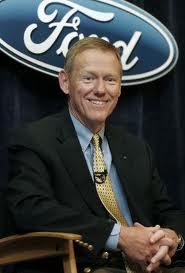
Alan Mulally
After a 37-year career at Boeing, during which Alan Mulally helped design and build all the great Boeing aircraft – 707, 727, 737, 747, 757, 767, 777, 787 — Mulally was asked to become President and CEO of Ford, in 2006. In 2007, even before the onset of the global crisis, Ford was drowning in red ink, losing $17 b.! Mulally’s leadership kept Ford out of bankruptcy, when GM and Chrysler were going bust, despite the fact that the global crisis came on top of Ford’s earlier problems — and restored Ford’s profitability. Here is a short excerpt from Peter Day’s (BBC Global Business) interview with Mulally, done at the Paris Auto Show. Remember his phrase: “Rainbow of Honesty’.
” “The only way to change attitudes is to pull everybody together – engineering, manufacturing, product development, We started meeting every Thursday, 7 a.m., everybody around the world, all netted in. Details of the plan – then expectations; everyone would say where they are relative to the plan. Every Thursday. Compelling vision. Stick to the plan. Relentless implementation. On the back of the card: Foster technological excellence, Own working together, Role model Ford values, Deliver results, [by coincidence, it spells FORD]… everybody worldwide, color coded, RED YELLOW and GREEN, we say, you’re not red, the issue you’re working on is red, so everybody can help…. Everyone on the same screen, color coded.”
“Nobody would admit there were problems, even though we were losing billions. We have all the data flowing. All color coded, every issue, every launch, quality, productivity. Up on the wall. All netted around the world. We lost $17 b. But — every chart is GREEN! I stopped the meeting, and I said to our team, is there anything that’s not going well? We’re losing $17 b., is anything not going well?” Eye contact, but– eyes to the floor! Trust me. How’s it going? Tell the truth. Reflect the reality.
“The next week, Mark Field, who runs the Americas, getting ready for launch of an Edge model in Canada, up comes the launch, everything about it, everything is RED! RED! The room goes silent. Everyone thinks, now we’re going to see what Alan the new leader will do. He said it was safe to tell the truth. Let’s see.
“I started to clap! Now all the eyes turn to me, that’s the sign, Marks’ gone! He’s gone!
“I said, Mark, that was fantastic! Fantastic. Is there anything we can do to help you? Because we know you’re working hard. Derek says, Mark I’ve seen that issue (actuator on tail gate), Benny says, “I saw that months ago”, manufacturing pipes up… etc., The team made suggestions! That interchange took 12 seconds. And we moved on. That was absolute key to One Ford.
“Next week it’s RED still. Everybody is helping. Next week it’s YELLOW. Next week it’s GREEN. 2,000 vehicles start shipping. Next week: The entire 320 charts look like a rainbow! Everybody knew everything, everything for the first time. A RAINBOW OF HONESTY. RED, YELLOW, GREEN, now we’re managing the business, because when everything was GREEN it was secret, and people were managing the secret, now they are managing the reality.”
“You never want to let a crisis pass you by. The real philosophy is, continuous improvement, every year, every quarter, is our commitment to improve the business, to improve the products, to improve our capability, quarter after quarter after quarter.”
Global Crisis/Innovation Blog
Birth and Death in the Auto Industry: The Difference Between America and Europe
By Shlomo Maital
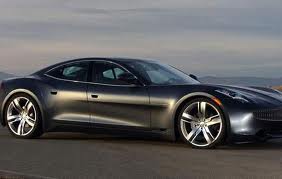
Fisker’s NINA
A short piece by John Reed in the Financial Times, Oct. 4 (“startup to launch hybrid sports car”) and in today’s Global New York Times by Bloomberg (“Unable to sell, Opel will close Antwerp plant”) reveals a key, vital difference between American entrepreneurship and innovation and that of Europe.
John Reed reports that Fisker Automotive, a US startup launched by Henrik Fisker, will build rechargeable hybrid sports cars (Fisker “Nina”) at a former General Motors plant in Wilmington, Delaware. Fiskers bought the plant for an amazing $20 m.! He says it would have cost him $400 m. if he had to build the plant from scratch. His company got two low-interest loans worth $529 m. from a US Dept. of Energy credit-line for low-emission vehicles.
Fisker’s competitor is Elon Musk’s Tesla Motors, already building $109,000 electric roadsters. Tesla will produce its Model S mass-market car in 2012 at another former GM plant in Fremont, California. Musk paid $42 m. for it. He says: “We’re getting first-rate equipment for pennies on the dollar.” Tesla, too, got a Department of Energy loan worth $465 m.
In contrast, GM’s unprofitable Opel Division in Europe also tried to sell its large factory in Antwerp, Belgium. “None of the potential investors was able to come forward with a sustainable business concept for the plant,” GM Opel said. “The process (for selling the plant) has come to an end.” The plant opened some 43 years ago. While 18 assembly plants have been closed in the US since the onset of the 2007-9 global crisis, the only European automotive assembly to close is Opel’s Antwerp operation, where some 1,300 workers are employed.
What can we learn from this?
Again, for the umpteenth time: There is no birth, no innovation, no launching of new ideas and industries, without death, without closing old moribund ones. If Europe cannot close old failed plants, it will not have entrepreneurs snatch them up to create and build wonderful new cars that the dinosaur firms like GM Opel should have, could have, would have – but never did. The US Energy Dept. grants are helpful. But the Fisker and Telsa startups would doubtless have built their cars in Asia had they not been able to buy the GM plants, and all those good jobs would have been lost to Americans.
Global Crisis
Irish Crisis: Is Alan Greenspan to Blame?
By Shlomo Maital

Alan Greenspan
Ireland is in the throes of a major crisis. Losses of the nationalized Anglo Irish Bank mount daily and threaten a meltdown of Ireland’s whole economy. As the Irish Government acts to bail out the bank, the amount of money this entails (some $50 b. and counting) will lead to an unbelievable, staggering Irish government deficit of about one-third of Ireland’s GDP. True, this will be a one-shot one-off deal. But it is still incredibly huge. The cause? Irresponsibly bad housing loans. Ireland’s property bubble is worse by far than America’s.
Ireland’s finance minister Brian Lenihan said the other day, “Any Anglo failure would bring down the sovereign. It is systemically important not because of any intrinsic merit in the bank. But because of its size relative to the national balance sheet. No country could contemplate the failure of such an institution.”
Who is to blame? There is more than enough blame to share among many people. Here are some data about the magnitude of the bubble:
Since 2000, approximately 75,000 housing units have been built every year as detailed by the Irish Department of Environment, Heritage and Local Government. However, a significant proportion of these new homes are unoccupied. Economic commentators give a figure of approximately 230,000 vacant properties. Of these up to 115,000 or so may be holiday homes.
Blame Ireland’s Central Bank, which saw the bubble explicitly in 2006 and took no action, and even hid its concern. Blame Ireland’s planners, which actively encouraged massive overbuilding. Blame Ireland’s government, which insisted banks recognize financial losses up front instead of deferring them (as many US banks did).
But above all, blame Alan Greenspan, head of the US Fed for 19 years, from 1987 through 2006.
It was Greenspan who showed other nations like Ireland how to create a housing bubble, by slashing interest rates rapidly and irresponsibly from 6.5 per cent (Fed rate) to 1 per cent, in the wake of the 2000 dot com crisis. No Central Bank should ever slash interest rates so far or so fast, to the point where ‘real’ (inflation-adjusted) rates are actually negative (“Here, borrow a ton of money! Please! We’ll pay YOU if you do”). Then, when Greenspan woke up to what he had done, in 2005, he rapidly INCREASED interest rates, causing the bubble to burst with collateral damage greater than necessary had a wiser and gentler hand controlled the monetary spigot.
In a self-serving article published in Spring, [1] Greenspan argues: 1. It was the fall of WORLD interest rates, not US interest rates, that created the property bubble. It is easy to show that the fall of world interest rates was driven by enormous credit creation in the largest capital market, America. 2. The excess leverage, or debt, incurred by banks was driven by failure to understand complex risk-creating financial instruments. This led to a domino effect, with one bankruptcy or near-bankruptcy causing another. It is the responsibility of the Fed to blow the whistle when it sees excessive leverage and debt. It is the responsibility of the Fed to understand complex financial instruments that banks do not understand. Under Greenspan, it failed. 3. The property bubble collapse was inevitable, given the low capital requirements of banks (the amount of capital they held relative to their liabilities). It is the responsibility of the Fed, charged with monetary stability, to raise the alarm if it sees capital requirements are too low, and above all, not to abruptly and disastrously raise rates if it understands that this will cause the excess leverage and debt to generate financial crisis. The Fed, under Greenspan, failed.
And Ireland? Governments all over the world emulated and imitated America’s aggressive policy of stimulating housing and construction. Some governments, like that of Ireland, outdid even Greenspan.
Mr. Lenihan? Send the $50 b. bailout bill, which your suffering Irish taxpayers will have to pay (an enormous sum for a country with only about 4.5 million people, amounting to $10,000 per capita, man woman and child, just this one single bailout) to Alan Greenspan. Of course, he won’t pay it. But perhaps he will stop inflicting his self-serving ‘analyses’ about how he is guilt-free, on the world.
To be fair, let me stress: Greenspan saved the world in 1998. When LTCM ran up debts of close to $1 trillion, Greenspan led a rescue effort even though he had no jurisdiction (LTCM was registered in the Cayman Islands), realizing the collapse of LTCM would lead to global financial meltdown. Is there any example in history of someone who has in a relatively short space of time saved the world, and then nearly destroyed it? I doubt it.
The Talmud quotes a Rabbi, Shimon ben Shatach (Ethics of Our Fathers) who said, I have lived my life among the wise and found nothing better than silence. Greenspan lived among the wise. But alas, in 2000-2006, he was not one of them. He should therefore in future, forever, remain silent.
[1] “The Crisis”, by Alan Greenspan. Brookings Papers on Economic Activity, Spring 2010, pp. 201-246.
Global Crisis Blog
Black Swan Society: Nassim Taleb’s 10 Principles, or
“In French socialism 1980’s, the government takes over the banks; in the U.S. 2000’s, the banks take over the government….” – Nassim Taleb
By Shlomo Maital
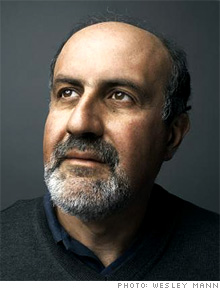
Nassim Nicholas Taleb is the author of The Black Swan: The Impact of the Highly Improbable, a New York Times bestseller published in 2007 just before the onset of the global crisis. Taleb has now done a second edition with a new section titled “on robustness and fragility”. It includes “The 10 Principles for a black-swan-robust society”, originally published as an editorial in the Financial Times in 2009. In a footnote, Taleb notes that the FT editor changed his own original title to “Black-Swan-proof”, something which he says does not exist.
Here is a brief version of his 10 principles that can help societies cope with the aftermath of crises that are inevitable and always will be:
- Let what’s fragile break early, while it’s small. “Nothing should ever be too big to fail”.
- Do not socialize losses and privatize gains. “Whatever needs to be bailed out should be nationalized”.
- Don’t let people wearing blindfolds drive buses ever again. “The economics establishment should be ignored [forever]”.
- Forbid people with ‘incentive’ bonuses from managing your financial risks. “Odds are they will cut corners to show ‘profit’ in order to gain the bonus”.
- Compensate complexity with simplicity. “Complexity is a form of leverage”. Avoid it.
- Do not give children dynamite sticks. “Ban complex financial procedures that nobody understands”.
- Governments should never ever need to ‘restore confidence’.
- Don’t give addicts more drugs if they are in withdrawal. “Using leverage to cure excess leverage is pure denial. The debt crisis is not temporary, it is structural and requires rehab”.
- Citizens should not use financial assets as a repository of value and should not rely on fallible ‘expert’ advice for their retirement. “Economic life should be definancialized”.
- Make an omelet with broken eggs. “Remake the system before it remakes itself (through crisis).”
Global Crisis Blog
Benchmark Estonia: It’s Run Like a Business
By Shlomo Maital
Little Estonia, population 1.3 m., will dump its currency and join the 16 countries in the Euro bloc next January. This has become near-certain following the EU announcement that Estonia has met the Masstricht fiscal preconditions for Euro membership, noting that “Estonia stands out… fulfilling the criteria clearly”. The European Commission was far less upbeat about several other large Eastern European countries waiting to adopt the euro, such as Poland and Hungary. The last nations to join the euro were Slovenia in 2007 (another smart small country with about 2 m. people), Cyprus and Malta in 2008 and Slovakia in 2009.
Estonia has been hard hit by the global crisis, and by the EU recession; it has 18 per cent unemployment. But despite this, its budget deficit is modest (less than 3 per cent) and it has a Balance of Payments current account surplus. By embracing the euro, Estonia integrates its capital markets with the EU and trashes all the many problems related to having a weak unstable currency.
Some years ago, I brought a group of Israeli managers to Talinn on a benchmarking trip. We were amazed. Estonia has first-rate IT capabilities. It is even one of the first countries to run elections on-line. And you can file your annual income tax report on-line, too, in 20 minutes, and most people do. Cabinet meetings are held electronically, with absent or travelling ministers joining through their webcams. Estonia has closely integrated its economy with Finland, acting as a kind of off-shore “China” for that country.
Recently, NYT columnist Tom Friedman quoted an expert who said that it is hard to compete with China, because that country “is run like a business”. Estonia, too, is run like a business, by its clever political leaders. Let Poland, Hungary, Bulgaria, the Czech Republic, Latvia, Lithuania, Romania and Sweden – the remaining countries struggling to fulfill Masstricht requirements – study Estonia carefully. Let them try to run their countries properly, as businesses.
Global Crisis Blog
Don’t Laugh: “US Toughens Tone on Chinese Currency”
By Shlomo Maital
That headline is real. It is from the Global New York Times, Sept. 17, p. 15.
The gist is this: America is this time, for real, we’re not kidding, better take us seriously, make no mistake, this isn’t playing games, we mean business, …. getting tough with China regarding its manipulation of the renminbi.
What manipulation?
Perhaps, the manipulation that involves China buying $1 b. DAILY of dollar-denominated securities, or $365 b. annually, to keep its exchange rate from appreciating, and thus making its exports more expensive. Perhaps, the manipulation that keeps China’s exchange rate today at RMB 6.83 per US dollar, compared to RMB 6.95 in 2008, a level that according to The Economist and even The World Bank and IMF, undervalues China’s currency by about 50 percent (that is, the true economic exchange rate would be about RMB 3.5 per dollar, if the exchange rate were allowed to be determined by market forces alone, without the Bank of China). Perhaps the manipulation in which China has accumulated way over $2 trillion in reserves through daily purchase of dollar assets.
If China’s exchange rate were indeed allowed to rise to RMB 3.5 per dollar, suddenly all its exports would cost double. Perhaps then global rebalancing could begin – with fewer goods flowing out of China, and more goods flowing into it.
For how long has China’s Renminbi been undervalued? Would you believe 15 years? The exchange rate was RMB 8.35 per dollar in 1995. It stayed at that level until 2004. The exchange rate was then allowed to appreciate very very slowly and gently, to RMB 8.19 (2005), 7.97 (2006), 7.61 (2007), 6.95 (2008) and 6.83 (2009). At that rate, excruciatingly slow Chinese ‘water torture’, global rebalancing will be completed by the year …. 6583.
U.S. Treasury Secretary Timothy Geithner is talking really tough. The Treasury “would take China’s actions into account as we prepare the next Foreign Exchange Report”, he said; the Report is due Oct. 15. America is threatening to declare China a currency manipulator! China? I have no doubt the entire nation is shivering with fear.
Wake up, America. China has been manipulating its currency for 15 years. And you, America, you are an active partner in crime, because you have been living beyond your means with the money China lends you and loving it, and you still are, and there is no real sign whatsoever that your politicians are willing to even begin inflicting the pain (lower living standards) that is required to end this impossible situation.
So, forgive me if I read the headline and chuckle sadly. The last President who talked tough to a trading partner was Ronald Reagan, who read the Riot Act to Japan in the 1980’s. Since then, they’ve all been marshmallows. The result: Global disaster and America’s hollow economy that is unable to create new jobs.


