
You are currently browsing the category archive for the ‘Global Crisis Blog’ category.
The COVID-19 Crisis: How to Save Your Business and Protect Your Family
By Shlomo Maital

Israel’s national airline, El Al, just announced it is laying off 800 workers. That is a huge number. Many believe that El Al was in trouble well before the COVID-19 crisis and is just using it as an excuse to shed excess workers.
True or not – we are about to see a wave of layoffs, all over the world, in airlines, hotels, cruise ships and many other industries suffering from a parts shortage.
An article published on Feb. 27 in Harvard Business Review is timely. “Lead your business through the coronavirus crisis”, by Martin Reeves, Nikolaus Lang and Philipp Carlsson-Szlezak, of BCG Boston Consulting Group.
Here are 12 things the authors suggest that you do.
- Update intelligence. That is track the latest information. This is harder than it seems, because there is an enormous amount of hysteria, panic and false data. 2. Beware of hype. See #1 – “as you absorb the latest news, think critically about the source of the information before acting on it.” 3. Share information. “We have found that creating and widely sharing a regularly updated summary of facts and implications is invaluable”. 4. Use experts and forecasts carefully. “Each epidemic is unpredictable and unique, and we are still learning about the critical features of the current one.” 5. Reframe your understanding of what’s happening constnatly. “A Chinese general once said: Issue orders in the morning, change them in the evening”. 6. Beware of bureaucracy. Everybody will weigh in, about what to do — avoid the inertia and delay that may result. 7. Make sure your planned response is balanced, across: Communications, employee needs, travel, remote work, supply-chain, business tracking, and corporate responsibility. 8. Use resilience principles. Resilience requires ‘redundancy’ (2nd, 3rd sourcing of supplies), diversity (multiple approaches), modularity (assemble your business system in different ways), Evolvability (adapt and change, fast!), prudence (avoid hysteria), and embeddedness (live your values, don’t survive at others’ expense). 9. Prepare now for the next crisis (expect more troubles after COVID-19). 10. Intellectual preparation is not enough. (Set up a small war room, practice various scenarios). 11. Reflect on what you’ve learned. 12. Prepare for a changed world. We won’t be the same world after all this blows over.
It sounds trite, but – crises are opportunities. At the end of February 2003, when the SARS crisis broke out and Chinese businesses went into lockdown, Alibaba, under Jack Ma, organized the construction of its new on-line platform, with people working from home and communicating by phone and modem.
Alibaba’s market capitalization today is $547 billion.
Why COVID-19 Will Hurt the Global Economy
By Shlomo Maital

COVID-19 Map
The ‘new coronavirus’ dubbed boringly COVID-19 has brought to mind an insight of Charles Darwin:
It is not the species best adapted to their environments, that thrive and prosper, but rather, those who learn fastest to adapt to changes in their environment.
The reason? Environments are constantly changing. Living species have to adapt, and some do it far better than others.
Viruses are an example. Keep in mind- viruses are not actually living things, as cells are. A virus is a small infectious agent that reproduces only inside the living cells of an organism. It inserts its ribonucleic acid (RNA) into the DNA of the cell, reproduces, kills the cell, bursts out and continues with its marauding raid on the human body, like Genghis Khan’s pony-mounted fighters.
Viruses can infect all types of life forms. And they have learned, through evolution and mutation, to defeat the human body’s antibodies – soldier cells that attack and kill foreign invaders, or antigens. Viruses learn and adapt fast.
And we humans?
The damage to the global economy from the COVID-19 virus will be greater than we expect. World capital markets, down 10% and more, are now waking up to this fact. But why?
Most economic downturns occur on the demand side of the supply-demand nexus. Some shock occurs, people cut back, spend less, invest less, governments slash spending, exports fall – and the fall in demand slows the economy. This is standard, and it describes every single economic downturn.
When President Reagan implemented huge tax cuts in 1981 and then again in 1984, he ascribed them to ‘suppy side economics’ – desire to boost the supply of saving and capital, by putting more income in the hands of the wealthy. It worked – but not in the way Reagan thought. The rich spent the money, there was a huge demand boom, and America had a decade-long demand-side stimulus boom.
COVID-19 is unique, because it is the first major supply-side disaster, since the global economy’s architecture was redesigned and rebuilt at Bretton Woods, NH, in July 1944, 76 years ago. China produces a great many of the world’s manufactured goods and parts. Most of its factories have slowed or closed. This is a huge disruption to the intricate system of global supply chains.
What can be done? Very little, because we have neglected supply side policies, and have underestimated how fragile and delicate the global supply chain system is.
Central banks can slash interest rates, but interest rates are already rock bottom. Governments can spend money, but they already are running big deficits.
And anyway, these are demand-side policies. Yes, they can help soften the demand problems arising from the supply shocks – tourism is collapsing, airlines are in trouble, etc. But these are secondary symptoms.
How to restore the global supply chain? That’s the key issue. It requires a meeting of the world’s leading countries; meanwhile global companies like Apple are scrambling to find quick temporary fixes, and there are few good ones.
Darwin was right. Our environment changed, when a tiny virus originating in Wuhan, China, set out to spread itself. How fast we learn to adapt will determine how costly that little virus will be to the world.
Why Rip van Winkle and the Climate Crisis Are Closely Connected?!
By Shlomo Maital
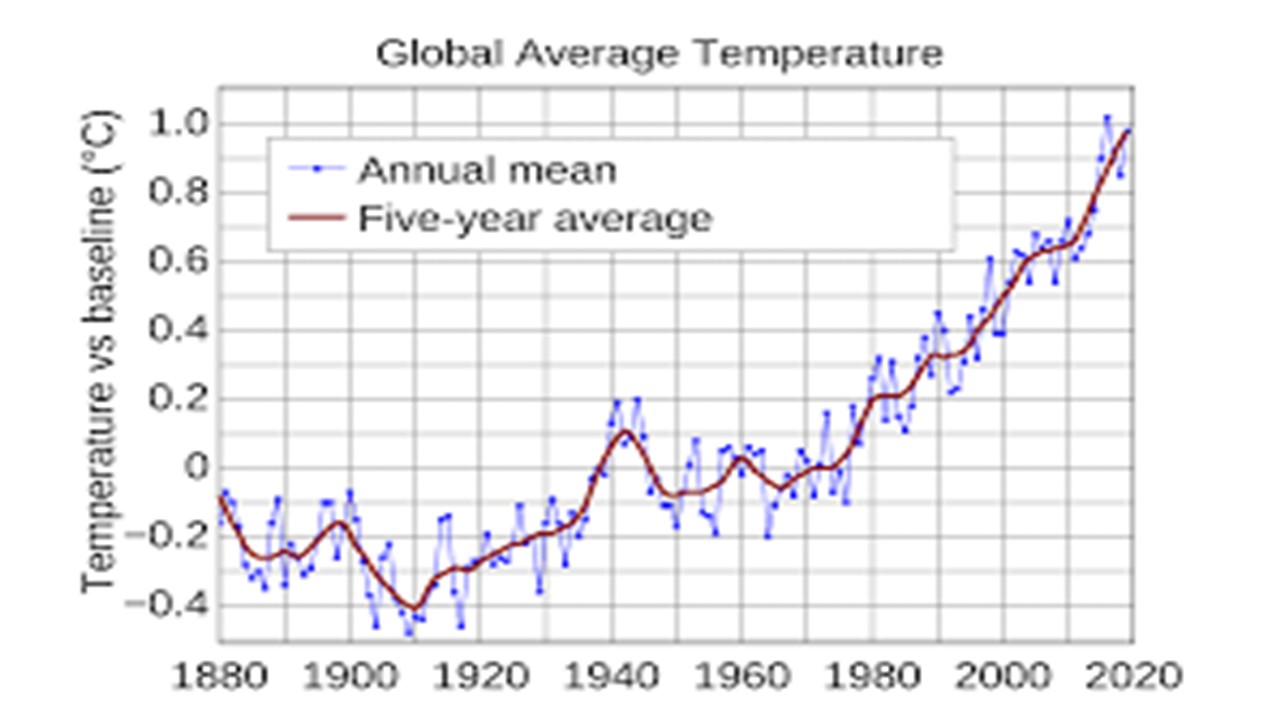
I recently spoke at a climate crisis conference. In my remarks, I asked, when did we have the earliest data about greenhouse gases and global warming?
A lot lot earlier than you might think. Indeed – in author Washington Irving’s famous story, “Rip Van Winkle”, the protagonist, a Dutch-American villager in colonial America, falls asleep in the Catskill Mountains and wakes up 20 years later.
Well, we the people are Rip Van Winkle. Except — we overslept a whole lot longer.
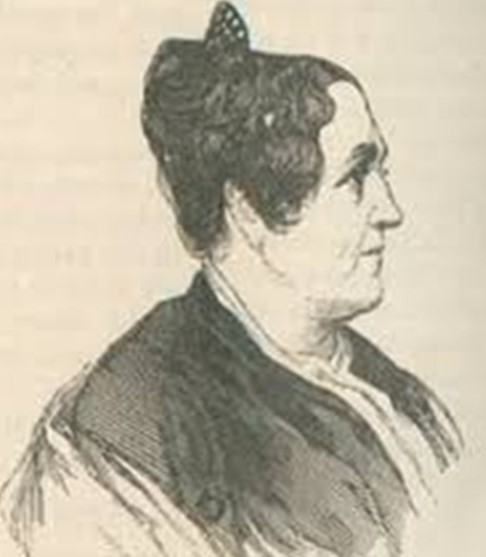
Eunice Newton Foote
An American woman scientist named Eunice Newton Foote (highly unusual for her time) published a paper in The American Journal of Science & Arts, in 1856: 163 years ago. (Van Winkle would have been awake for 143 years already). She filled glass jars with a) water vapor, b) carbon dioxide and c) air, and compared how much they heated up in the sun.
She concluded: “The highest effect of the sun’s rays I have found to be in carbonic acid gas [CO2]”
In August 1908 Henry Ford produced the first of his 15 million Model T Ford cars. The age of vehicle emissions began…and we knew from Eunice Foote what the ultimate result would be. We knew that burning fossil fuels would spew CO2 into the air.
In 1899, almost a century before the December 1997 Kyoto Protocol was signed (in which nations promised to limit emissions), Thomas Chamberlin published a book stating that “changes in climate could result from changes in the concentration of atmospheric carbon dioxide.” Footnote: The Kyoto Protocol was largely ignored.
So, when did global warming actually begin? It started more or less when that Model T Ford rolled off the line – in 1905. (See graph). That is, 114 years ago. Almost 6 times longer than Rip Van Winkle slept.
We as a society are asleep. We failed to see the nose in front of our face. And to see the results, and the reason we now use the phrase “climate crisis”, look closely at Australia, once a serene paradise, now a place in which a fifth of its forests have burned, a billion mammals died, and now disastrous floods occur (because the dry hard-packed ground cannot absorb the rain).
And Rip? Well, at least he woke up. We, society, are still largely asleep.
Donald Trump – Meet Nicola Machiavelli
By Shlomo Maital
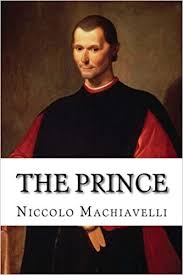
In 1513 an Italian politician and scholar named Nicola Machiavelli, living in exile on his farm, wrote a slim book, “Of Principalities”, which became known as The Prince. The book summed up Machiavelli’s 14 years of experience in the fraught political wars of Italian city-states and Medici rulers. In it, Machiavelli writes,
- “it is much safer to be feared than loved”,
- “people should either be caressed or crushed”, and
- “the new ruler must determine all the injuries that he will need to inflict” and
- “must inflict them once and for all.”
Wow. I read this in a New York Times book review by Jennifer Szalai, reviewing Patrick Boucheron’s new book Machiavelli: The Art of Teaching People What to Fear, written originally in French.
Now, US President Donald J. Trump is not an avid reader. I truly doubt he has read The Prince. But he doesn’t need to. Trump has applied every single political maxim in this amazing book, written 500 years ago. The same issue of the New York Times that carried this book review, also reported how Trump is purging his inner circle, and crushing his foes, ensuring far far fewer people listen in on his phone call conversations with world leaders. Trump lovingly caresses his supporters, like criminally-convicted Roger Stone, and viciously attacks and purges his opponents, like Lt. Col. Vindman. His Attorney General is his waterboy.
National Football League teams each have a playbook. President Trump has one, too, unwritten, and it is amazingly similar to that of Machiavelli. It has two plays only. Crush foes. Caress friends. Trump’s world is binary.
As Boucheron concludes: “If we’re reading [Machiavelli] today, it means we should be worried.”
I am. Because we are not just reading Machiavelli. We are living him. And maybe, as his Republican cult-followers chanted in the House of Representatives, during his State of the Union speech: for four more years???
p.s. this is blog # 1,600. Thanks for reading them.
Iowa Democrat Primaries: Analysis
By Shlomo Maital

Living in Israel, I rightly question whether the Iowa Democrat caucus for Presidential candidates, the first of its kind in this election year, is truly relevant for my country and the rest of the world outside the US.
It is! Here is why.
First the results. (71% of ballot counted).
| candidate | votes | % of total | But – other |
| Buttigieg | 418.722 | 0.268099 | |
| Sanders | 393.521 | 0.251963 | 25.201 |
| Warren | 286.882 | 0.183684 | 131.84 |
| Biden | 241.314 | 0.154508 | 177.408 |
| Klobuchar | 196.696 | 0.12594 | 222.026 |
Former South Bend, Indiana, Mayor Pete Buttegieg, who just turned 38 on Jan. 19, and who served in the US Navy for 8 years, has won, with 71% of the ballots counted.
(Why 71%? Because Democrat caucus officials embraced a smartphone application that was totally flawed and untested – several dress rehearsals would have revealed the flaws, and the backup, phone-in, with 1,700 primary sites calling in at once, crashed the phone system, expectedly. Republicans may rightly ask, if the Democrats can’t run a small primary election in Iowa, how can we expect them to run the country?)
Don’t underestimate Mayor Pete. Here is why. In 2008, of eight major Democratic presidential candidates, then-U.S. Senator Barack Obama of Illinois received the most votes and was ultimately declared the winner. Aged 47, he was the first African American to win the caucus. Obama went on to become President.
Buttegieg is a mainstream centrist candidate. The second-place candidate, 78-year-old Bernie Sanders, Vermont Senator, was only 25,000 votes behind Mayor Pete. Sanders is a self-proclaimed democratic socialist, (declared Independent) on the left of the party. He ignites the energy and support of young people, amazingly. He will be a powerful force in the Democrat Convention in Milwaukee, representing the party’s left wing.
Senator Elizabeth Warren was 131,840 votes behind Mayor Pete, a major defeat, despite her campaign funds and strong on-the-ground operation in Iowa. The third-place finish bodes ill for her campaign. She lacks the fiery youth of Mayor Pete, and the youthful support of Bernie.
Senator Amy Klobuchar got fewer than half the votes of Mayor Pete. She is a strong centrist candidate, with proven legislative abilities, but her poor showing in Iowa makes her a dark horse. It’s too bad.
Republicans gloat at the chaos in the Democrat primaries, and the upcoming debate will again feature a stage full of candidates, attacking one another rather than President Trump. Meanwhile, I’ve just listened to Trump’s State of the Union speech, carefully orchestrated for a huge TV audience of some 50 million. He will be a formidable candidate in November, because his focus is solely on being re-elected, and his frequent election rallies of his supporters are, I believe, unprecedented for a busy sitting President.
Joe Biden finished fourth. His showing was very weak. He may do poorly in New Hampshire as well, the next primary. So far he has not shown any ability to ignite excitement among the field of candidates. His main claim, that only he can defeat Trump, seems increasingly doubtful.
Buttegieg is gay, and his partner was onstage with him when he declared victory. Democratic Iowa voters showed intelligence, in voting for whom they saw as the best candidate, regardless of his orientation, and even though Iowa is in general a state of deeply religious people. Buttegieg will become a force in national politics, no matter what happens in the Democratic Convention in Milwaukee, and has a big future in national politics.
Another four years of a Trump Presidency will mean almost irreversible damage to the global economy, to civil society in the US, and, in my neck of the woods, to Mideast peace efforts. The so-called Deal of the Century for the Mideast has already ignited protests and conflicts, lighting a match to what is already a tinderbox.
Buttegieg’s win signals that voters seek new youth and energy. The Democrats may provide it yet, as they did in 2008 with Obama. A whole lot depends on it, not just for America but for the world.
Six Facts About the Wuhan Coronavirus
By Shlomo Maital
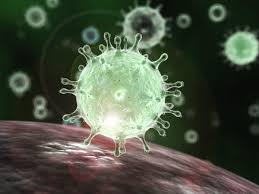
Wuhan coronavirus
Here are six things you should know about the Wuhan coronavirus, now sowing panic worldwide. (Based in part on Dr. Dan Werb’s New York Times article.) [1]
- China is an integral part of the global economy, and its factories supply parts for other countries’ supply chain ecosystems. China’s economy itself is 20% of the world economy – so any negative impact on China’s economy impacts the world directly, at once, and indirectly, over time. I know Israeli hi-tech firms whose products are made in China that have already been hard hit. The Wuhan virus is teaching the world that ‘globalization’ is a fact and that when the virus bell tolls, it tolls for everyone everywhere.
- A key data point is so-called R0 – how many additional people are infected, on average, when one person falls ill with the coronavirus? The answer is, apparently, 1.4 to 2.5. Is this good or bad? Both. It is higher than SARS (Severe Acute Respiratory Syndrome), whose R0 is only 0.5. It is far lower than measles or polio. And it is just a bit higher than seasonal flu. But the point is, it does spread easily and rapidly.
- Another key data point: How deadly is it? Not very. About 2% of those who fall ill die from it, mainly from pneumonia and after-effects. Those who die are mostly those whose immune system and general health are poor. And in any event, a lot more people die of seasonal flu than from coronavirus. But don’t forget, that 2% does not really matter. If you can die from it, then the coronavirus sows panic — we humans are poor at perceiving accurately probabilities, and if something bad CAN happen, then we (rightly) worry that it WILL.
- Why did it start in China? Ducks and pigs. Chinese farms raise both. Ducks eat parasites in rice paddies, so they do good. But their “unique biology” makes them repositories for “a vast number of viruses”, while with pigs, various strains of viruses mix together and evolve and mutate into new strains able to infect humans (e.g. swine flu). Having said that, it appears that the Wuhan coronavirus may have come from bats or other animals, sold in a Wuhan market.
- What is coronavirus? Why is it called that? According to Dr. Werb, “The family of coronaviruses (so-called because they resemble glowing crowns) that includes the new Wuhan strain are exceptionally challenging to control. It gets its name from the shape of the virus, like a kind of crown, (corona is ‘crown’ in Latin) or like the circular corona of the sun. Coronaviruses are responsible for the common cold, pneumonia and bronchitis, but the coronavirus family is sprawling and includes deadlier outliers like Severe Acute Respiratory Syndrome and Middle East Respiratory Syndrome (MERS), which have fatality rates of up to 15 percent and 35 percent, respectively.”
- Why can’t we just take a pill or a vaccine shot and solve the problem? Why doesn’t the body’s own system of antibodies defeat them? Viruses in general, and coronaviruses in particular, are really ‘smart’. Here is what I learned about how they foil the immune system.
“When a virus enters the body, a race begins between responding immune cells and the infecting pathogen. The pathogen replicates and finds a target cell or organ that will allow it to thrive. So, the effectiveness of a response depends on the immune system winning the race to clear the pathogen before it causes irreversible damage to the body. Immune cells called “B cells” make antibodies. A pathogen such as a virus is a large molecule with different components, called antigens. When a B cell recognizes an antigen, it is activated and interacts with other immune cells to receive directions. When an “invader” cell attacks, the body’s immune system checks its ‘memory’ to see if it has seen it before. Because memory cells have already undergone quality improvement, they can respond quickly after reinfection to produce a large number of plasma cells secreting high-quality antibody. Therefore, memory cells can clear the infection much more rapidly than the initial infection. This means the pathogen doesn’t have time to damage the body. However viruses change, mutate and evolve. Flu is highly variable and changes each season, or evolves in ducks and pigs; variations are why we require yearly vaccinations. And with Wuhan coronavirus, which ‘surprised’ the world, no vaccine exists yet, nor will we have one for many months.”
[Source: http://theconversation.com/explainer-how-viruses-can-fool-the-immune-system-43707%5D
So, what is my prediction? Will coronavirus become a global pandemic, like the 1918-19 infuenza epidemic that killed between 20 million and 40 million people, more than in World War I (including my grandfather Israel)? Or will we manage to control it?
No, it will not become a pandemic. It will slash a few points of global growth. We should learn the main lesson that Wuhan coronavirus comes to teach us. We have created a superb global ecosystem, where nations become wealthy by doing what they do best and selling the result to others, buying from others what THEY do best. This creates an enormous interdependent ecosystem, with major advantages but one big disadvantage – any bad virus that starts in one place spreads rapidly all over, because of millions who travel regularly. Shutting down travel, and trade, is devastating, but at times necessary. And there will be lots of those viruses, because they are very clever, they change, mutate and adapt, and continually surprise us, making off-the-shelf solutions irrelevant and fooling our immune systems regularly.
We will need a new, efficient, clever and rapid global cooperative mechanism to deal with this new threat. But the current political poison against global cooperation may make this really difficult to attain.
[1] Dr. Dan Werb, New York Times, Jan. 30/2020, To Understand the Wuhan Coronavirus, Look to the Epidemic Triangle.
The Miracle of a Butterfly’s Wings
By Shlomo Maital

Butterflies in general are small miracles; evolution has created them, most lovely of creatures, from ugly caterpillars.
But on Ira Flatow’s wonderful Science Friday podcast, latest edition, we learned about the butterfly’s miraculous wings, based on new research.
The color? It’s not from pigment. It is created by tiny “nanoscales”, tiny structures, that reflect light of various wave lengths. Some of these nanoscales reflected near-infrared light, to keep the delicate butterfly’s wings cool – built-in air conditioning. Some of the nanoscales create the amazing coloring of the butterfly’s wings. (Turns out, blue eyes in humans also get their color from nanostructure, not from pigment!)
Other structures in the wing generate pheromones, for males, which attract females. But most amazing is the tiny ‘heart’ – beating small heart cells in the wings, that pump blood and keep the wing alive and healthy, in addition to a regular heart in the thorax (body) of the butterly.
One of Nature’s most amazing migrations is that of the Monarch butterfly. According to Wikipedia: “The eastern North American monarch population is notable for its annual southward late-summer/autumn migration from the northern and central United States and southern Canada to Florida and Mexico. During the fall migration, monarchs cover thousands of miles, with a corresponding multi-generational return north.”
Thousands of miles? Those delicate feather-light butterflies? How in the world? Apparently, the butterflies use southward air currents to help them. Monarchs need milkweed – their caterpillars eat only milkweed and Monarchs lay eggs only on milkweed as a result. Milkweed in Mexico is disappearing, threatening these amazing creatures.
The underlying miracle of the butterfly wing is evolution. Classical evolution has long ago halted in humans, because we now know fortunately how to keep alive the weak, the ill, the disabled…. But we humans can still use this incredible model for human progress.
Like the evolution of butterfly wings: Try things. Most will fail. Don’t worry about it. A few will succeed. When they do – go with it! And be patient. It took millions of years for butterfly wings to evolve as they are. We humans don’t have hillions of years. But we do need some patience, to try things, to fail, fail, fail…and ultimately succeed, without giving up at the second or third failure.
Clayton Christensen’s Legacy
By Shlomo Maital

Clayton Christensen
Harvard School of Business Professor Clayton Christensen passed away last week. He died of cancer.
Christensen’s main legacy – what he is widely known for – is the concept of disruptive innovation – innovative ideas that totally change the nature of an industry or market. This, of course, is precisely what startups do, and it took Christensen to show us a road map for effective disruption.
But I will remember Christensen, who was a deeply religious Christian, for his 2010 article, “How will you measure your life?”.[1]
Why? Because so few young people even bother to ask that question, and Christensen threw a spotlight on the question, while his students still had time to shape their career paths in its light.
“On the last day of class”, Christensen wrote in the article, “I ask my students to…find cogent answers to three questions.
* First, how can I be sure that I’ll be happy in my career?
* Second, how can I be sure that my relationships with my spouse and my family become an enduring source of happiness?
* Third, how can I be sure I will stay out of jail?”
In short, career, family, ethics. I would change the order. I would put the ‘relationships’ or ‘family’ question first. A career of disruption, in startups, necessarily takes a heavy toll on family life, and young people must be aware of this from the start, if they choose this path. When my friend David “Dadi” Perlmutter (former #2 in Intel worldwide) spoke to entrepreneurship students at Technion, he shared 10 lessons with them – and the first was about family.
And going to jail? It is not a facetious or cynical question, Christensen insists. Two members of his Harvard class went to jail.
For CEO’s who radiate arrogance, Christensen counsels, “Remember the importance of humility”. And for radical bottom-liners, “Choose the right yardstick”. Also: “Create a culture” – no, not corporate culture. Family culture. “Children build self-esteem by doing things that are hard and learning what works.” This is wonderful advice!
And – most important – Allocate your resources. “Your decision about allocating your personal time, energy and talent ultimately shape your life’s strategy”.
I wish I had read that decades earlier. After taking early retirement, I simply stopped going to meetings or committees. A vast waste of time. I should have done that years ago.
[1] Harvard Business Review, July – August 2010.
Can You Lend Me a Hand?
About a Creative Piano Duet
By Shlomo Maital

This is a very small story about helping people, caring people, a piano and a two-handed duet.
In our synagogue, X. (name withheld) is a superb concert pianist, with a neurological illness that makes playing piano difficult, and confines him to a wheelchair. S. is a competent skilled piano player, who meets with X. regularly to discuss music and to play piano. X has problems with his left hand. It doesn’t work very well, and makes playing Chopin tough for him.
So – give up playing?
No. X. plays the right hand of the lovely Chopin prelude and S. plays the left hand. She tells me this is what she used to do regularly, in teaching her students to play difficult pieces. S. has lent a hand to X. Literally. Wish we would all do the same for our friends and neighbors, and strangers.

Someone very close to me also has a neurological disease (Parkinson’s). She’s a brilliant and talented artist, but can no longer hold paint brushes in her hands.
Give up painting?
People with courage do not give up. They lend themselves a hand (with, as the Beatles say, a little help from their friends and family).
She paints with sponges. And the results are astonishing. (See above).
The lesson here is clear. Work with what you have. If you have one good hand, play with that. If you have no real grip, find a substitute for paint brushes. Keep doing what you love, as long as you can. Let others lend you a hand. Lend yourself a hand.
And just keep truckin’.
Births in China: Social U-Turns are Hard!
By Shlomo Maital

Social U-turns (radical changes in policy involving social behavior) are immensely difficult. Consider China’s one-child policy, now doubled to “two children are OK”. It’s not working too well.
China’s one-child policy aimed at lowering the growth rate of its rapidly growing population. The policy set a firm legal limit on the number of births parents could have, and was introduced in 1979. In the mid-1980’s it was changed to let rural parents have a second child if the first was a girl. The policy lasted three decades and was abandoned at the end of 2015.
A New York Times report by Sui-Lee Wee and Steven Lee Myers, from Beijing, now notes that China’s birth rate has fallen to the lowest rate in six decades, despite the rule change permitting two children. In 2019 only 14.6 million babies were born in China, in a population of 1.4 billion. That is a 1% birth rate – not sufficient to supply the labor China’s economy needs.
Why has China’s birth rate not increased since 2015? Here is the best explanation. “We are all only children,” said a young Chinese dental assistant, “and to be honest, a little selfish. How can I raise a child when I’m still a child myself? And take care of him and feed him at midnight?”
I have a strong suggestion for China’s leaders. Contact Dan Ariely at Duke U. and his group of researchers, along with Richard Thaler, George Lowenstein, Robert Shiller, and other leading US behavioral economics experts. Ask them to design a few small-sample experiments. The Chinese people are very very pragmatic. They do what is in their interest. How can having two children be shown to be in the interest of hard-working Chinese middle-class educated couples? I’m pretty sure the behaviorists will have some answers.
Notice how hard a social U-turn is, even in China, where authorities rule with a strong hand. If you believe America is going to change radically, even if Trump loses in November, please think again. Social change has strong momentum and by the laws of physics, Momentum equals mass times velocity. There is a large mass of Americans who think like Trump, and even if you slow their velocity the momentum is still immense.

 TIMnovate