
You are currently browsing the category archive for the ‘Global Crisis Blog’ category.
How to Change:
Will Power vs. Habit
By Shlomo Maital
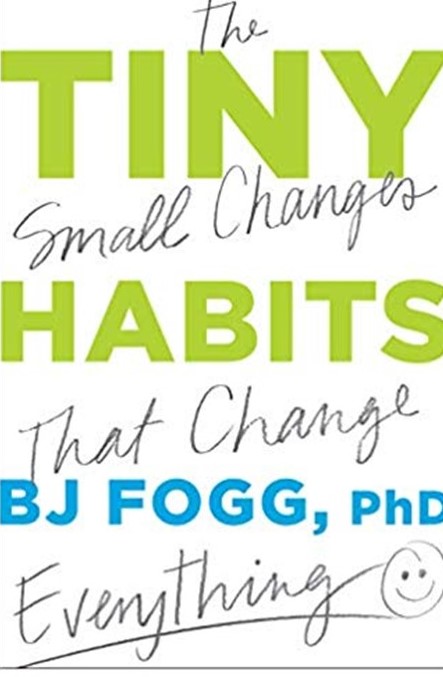
Do you want to change? Do you want to lose weight? Exercise? Sleep more? Be more social? Be a better spouse? All of the above?
Then, you need to watch this heavyweight title fight. In the right corner, weighing in at 300 pounds: Will Power, the champion. In the left corner, weighing in at 138 pounds, the challenger, Habit. Wait! Wait a minute! This is unbelievable. The fight hasn’t started yet and…and… Will Power is throwing in the towel. Habit wins. Habit is the undisputed Change Your Behavior champion.
Ok, agreed. That’s kind of hokey. But true.
B.J. Fogg is a Stanford University faculty member and runs a behavioral design lab. His new book is Tiny Habits: Small Changes that Change Everything. And his proven core principle is very simple: Will power in general is not enough, despite what we may think. If you want to change what you do and how you behave, it’s not enough simply to …will it! There is a better way.
Change your habits!
But how?
Here is one proven method, used by 40,000 of Fogg’s subjects. Small changes.
Sunscreen? Crucial to prevent skin cancer? But – do we forget often, or simply can’t be bothered?
Put on one single tiny drop. Just one. Do it every time. It takes just a second.
Why? That drop doesn’t make any difference.
No – but it creates a sunscreen habit – going out in the sun, put on sunscreen. One drop. Later, two. Then – slather it. And the habit will persist. Fogg proves it.
Flossing your teeth? You forget, or are in a hurry? Floss one tooth. Just one. Do it every time. Takes a second. Do it regularly. Eventually, expand it…and you have a habit that will not be broken.
Fogg’s idea here is based on proven psychology, and widespread testing. It works. If you want to change your behavior and are really serious about it, design a habit. Start it small. And grow it. And persist.
Use Fogg’s simple formula: B=MAP. In Fogg’s own words: : “Behavior (B) happens when Motivation (M), Ability (A), and a Prompt (P) come together at the same moment.” Don’t forget the Prompt. The thing that triggers an action.
In other words: Motivation – I want to exercise more regularly. Ability – I have committed to walking to my bus connection, rather than riding. And Prompt – I am putting on my Brooks running shoes rather than dress shoes in the morning.
Give it a try. And remember Fogg’s advice: Simplicity, simplicity! The simpler your change habit design, the better! Don’t beat yourself up if you break your diet. It’s not a lack of will power. It’s bad design.
As Fogg suggests: When the waiter brings you the basket of delicious hot bread rolls, make it automatic to say, ‘no bread please’. Temptation, get thee away! If you get in the habit, lots of calories can be saved…
2020 Vision: What Does 2030 Hold in Store
By Shlomo Maital

20/20 means that you can see things at a distance of 20 feet that normal eyes see at that distance. 20/100 means, you need to be 20 feet from something to see it, when normal eyes see it at a distance of 100 feet. In the metric system, 20/20 translates to 6/6.
So if we all had 20/20 vision to see what the year 2030 holds in store, what would we see and what can we say about it, as we greet the New Year 2020?
The New York Times International Edition comes to the rescue today. Some dozen public figures weigh in.
* Edward Snowden, who stole crucial NSA files and software, thinks the Internet will become a weapon of the rich, and berates server farms for gobbling massive amounts of electricity. * Democratic presidential candidate Andrew Yang want us to put “people ahead of profits” and rethink how we work and create jobs. * Vox.com editor Ezra Klein wants us to stop killing 70 billion animals for food each year. * Mark Blyth, politics prof, thinks the only issue for the new decade will be climate change…and thinks we’ll continue to wail about it and do nothing.* Caity Weaver, NYT author, sees ads becoming more and more personalized (“in 2030 the only ads I encounter will be for products I would kill to buy”)…[say, who in the world would ‘kill to buy’ anything??]. * Mike Gallagher, Republican congressman, warns that in 2030 there will be a Chinese Communist Internet. * Alexandra Scaggs, financial analyst, warns that we will have to become legal businesses in order to work in the gig economy, which dominates. * Stacey Abrams (Democrat candidate from Georgia, possible VP candidate) sees America becoming majority/minority by 2030 (i.e. minorities will rule, there will be no single majority ethnic group); * Jami Attenberg, novelist, sees community bookstores thriving. * Dambisa Moyo, economist, warns against the population explosion that will bring world population to 9 billion by 2030. * Gary Kasparov, chess master, warns the world is moving to a post-truth fake news reality, like that he grew up with, in the old Soviet Union. Min Jin Lee, novelist, thinks that by 2030 religion will have a stronger hold on young people. * P.W. Singer, cybersecurity specialist, thinks everything in our lives will be networked, in smart cities. Larry David, comic writer and producer, thinks “the next big trend will be outright, brazen lying”.
And, the icing on the cake, in a separate “Strategies” blog Jeff Sommer warns us, again, that “stock market forecast are less than worthless” (why less? Because people believe and act on them, this does damage).
Some, all or none of this might come to pass. ‘
So, as we greet the new year and new decade – take special good care of your loved ones, surround yourself with people you love and admire, do good, cause no pain, challenge yourself daily, find ways to create value and stay relevant, look after your health, and be happy. And if you do, the coming decade will take care of itself.
Global Winners & Losers: The “Elephant” Diagram
By Shlomo Maital

Source: World Bank: Christoph Lakner, Branko Milanovic, 2014
The above diagram tells the story. On the “X” axis: the global distribution of income, from the poorest 5% to the richest 5%. On the “Y” axis: the global rate of growth of the income for each of the 20 5% groups. The time period is the two decades, from 1988 through 2008. In these two decades, the Berlin Wall fell, global trade boomed, China grew by double digits, Asia prospered…and then it ended, in 2008, when the ceiling fell, with the global financial crisis.
The diagram has been dubbed the ‘elephant’ diagram, because it does look like an elephant, trunk and all.
What is the story it tells? The poorest 5% were left out – their incomes did not grow at all. The ‘middle class’ in the poorer countries, mainly China, enjoyed strong growth. The ‘middle class’ in the wealthy countries were hard hit — the 80th percentile did not grow at all, in income. And the top 5%? Their income soared.
Now — looking at elections in the UK, in the US, and elsewhere — I think you could have made strong predictions just based on the ‘elephant’. A large underclass, in the left-out economy. A large middle-class hard hit and struggling. A wealthy elite, able to buy political influence. The rising economic power of China.
Britain’s Labor Party leader Corbyn was crushed, because he lost touch with his voters. There is a real and present danger that the Democrats in the US may do the same – though I understand, they are studying the UK election closely.
The two groups of big-time losers, in the elephant diagram, will stay home or vote against you, if you ignore what matters to them and if you ignore policies that they believe will help them. It happened before – it could happen again.*
* “Lakner & Milanovic: “democracy is correlated with a large and vibrant middle class, its continued hollowing-out in the rich world would, combined with growth of incomes at the top, imply a movement away from democracy and towards forms of plutocracy. Could then the developing countries, with their rising middle classes, become more democratic and the US, with its shrinking middle class, less?”
We Ignored Keynes in 1919 – Are We Repeating the Mistake in 2019?
By Shlomo Maital
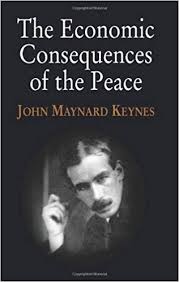
Today’s New York Times has an Op-Ed by Boston College political science professor named Jonathan Kirshner.* He reminds us of a book published 100 years ago, by J.M. Keynes, that contained a precise prediction: the Versailles Peace Agreement, that imposed unbearably heavy war reparations on Germany, will create the new world war and facilitate the rise of the Nazis.
It did.
Keynes was then an obscure economist who advised British Prime Minister Lloyd George and who attended the Versailles conference. He returned home from it, greatly upset and worried, and wrote The Economic Consequences of the Peace, published by Macmillan on Dec. 8, 1919.
Kirshner writes, “Keynes’s book is essentially correct with regard to its most important arguments. But it was, and remains today, largely misunderstood. The enduring contributions of the book are to be found not in Keynes’ first dissenting clause (his “objection to the treaty”), but in the second, about “the economic problems of Europe.” Keynes was sounding an alarm about the fragility of the European order.”
Keynes’ book is relevant today as well. The current world economic and political order is exceedingly fragile. Very bad things can happen, unless we wake up. Russians, Iranians and others constantly meddle in democratic elections, now in the UK, and in the US. Far-right racist politicians gain political power and representation. The US withdraws from the Paris climate accords, and engages in trade/tariff wars. The “left-out economy”, as TIME magazine calls it, finds new political voice, as demonstrations break out all over the world, facilitated by social media.
The current world order was shaped in part by Keynes himself, at Bretton Woods, NH, in July 1944. It worked very well indeed, helping many nations in Asia especially become wealthy. But it also meant, by the same token, that many nations and many people, not skilled and wise enough to compete globally, became poor.
Only one thing was missing from the Bretton Woods architecture – a way to tax the rich to help the poor. It was a fatal mistake. It took 75 years, but the left-out underclass are now rising up and are threatening the current world order, creating chaos in many countries.
It’s time we read again Keynes’ little book and began to think about addressing the left-out economy more seriously. What Keynes warned us of, in 1919, came about 20 years later, in 1939, with disastrous consequences.
- Jonathan Kirshner. “The man who predicted Nazi Germany”. New York Times, Dec. 9/2019
The Educational Tower of PISA is leaning—dangerously!
By Shlomo Maital
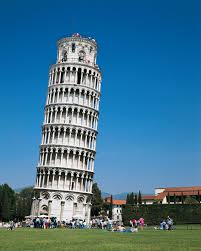
The Leaning Tower of Pisa
PISA 2018 (Programme for International Student Assessment) is a report on the educational attainments of 15-year-olds globally. As expected, China leads, followed by Singapore, in math, reading and other skills. Overall, scores declined. Israel especially did poorly, leading the world in the spread between top and bottom in schooling achievements.
But one key point emerged, that is especially disturbing. A British educator, Kevin Courtney, made this observation:
“…globally fewer than 1 in 10 students were able to distinguish between fact and opinion…[this] is extremely worrying in an era of fake news.”
Fewer than one in 10 know the difference between fact and opinion. This means that more than 9 in 10 15-year-olds believe that when someone states, “I think that…”, that is indistinguishable from when someone says, “it is a fact that…”.
Fact and opinion. This implies the death of truth, globally. And it indicates we are failing to teach our kids how to engage in critical thinking, which is simply the skill at knowing what is fact and what is not and hence needs checking and verification.
We should not be surprised, then, when wild unsubstantiated rumors take on a life of their own, and fanciful conspiracy theories, once stated, are widely believed.
Learning math, reading, science, these are all important. Telling fact from fiction is more important. It is time we taught this to our kids. If they don’t get it in school, perhaps we can give it to them at home?
The REAL American problem:
More Americans Are Dying
By Shlomo Maital

Rising US Morality Rates
What is wrong with America? Most news accounts focus on the US President, now featured on Twitter with the photo-shopped body of Rocky (check it out).
No, that is far from the only problem the US has. According to a new study in the leading medical journal JAMA, “increased death rates in midlife extended to all racial and ethnic groups, and to suburbs and cities.”
Suicides, drug overdoses and alcoholism were the main causes. But other illnesses, like heart disease, strokes, and chronic pulmonary disease, also contributed.
According to the New York Times, “the increase in deaths among people in midlife highlighted the lagging health measures in the US compared withother wealthy nations, even though the US has the highest per capita health spending in the world”.
And note: “fully a third of the ‘excess deaths’ (increased mortality) occurred in just four stats: Indiana, Kentucky, Ohio and Pennsylvania.
It seems that Trump is unavoidable. Those are key swing states that elected him. And his support there is still quite strong and resilient.
The Democrats made a key strategic error, by focusing Congress’s attention on impeachment, while people are dying. Impeachment will end in futility in the Senate. Meanwhile the Democrats’ resounding 2018 win, in gaining a House majority, came about largely because of the healthcare issue.
If Trump wins again in 2020, it will be the Dems’ own fault.
Why Pre-School is So Vital –
Make It a Public Good
By Shlomo Maital

Head Start began as a catch-up summer school program that would teach low-income pre-school children in a few weeks what they needed to know to start elementary school – hence the name, head start. It was launched in 1965 by its creator and first director Jule Sugarman. It was expanded in 1981, re-authorized in 2007..and continues. IT is one of the longest running public programs to tackle poverty in the US. According to Wikipedia, as of late 2005, “more than 22 million children had participated.” Economists have shown that the rate of return to investment in Head Start, and in pre-school in general, is astronomical.
But apparently, this relatively limited program, with its astonishing impact, has not made much of an impact on America’s politicians. Head Start remains limited and is often attacked from the conservative right.
In the New York Times, University of California (Berkeley) public policy expert David Kirp sends us a reminder: Pre-school is one of the very best ways to break the poverty cycle. Start early! (See his “How to break the cycle of poverty”, NYT Op-Ed).
“How much good does a preschool experience offer children born in poverty? Enough to make their later lives much better, and they pass a heritage of opportunity on to their own children.”
As readers of this blog know, I am a big fan of N=1 stories. Here is Kirp’s story about one great pre-school program and its impact:
In 1962, 58 African-American 3- and 4-year-olds, all from poor families and likely candidates for failure in school, enrolled in Perry Preschool in Ypsilanti, Mich. This was a novel venture, and parents clamored to sign their children up. Louise Derman-Sparks, who taught there, told me she “fell in love with the kids. They were so excited, so intelligent, so curious.” Because the demand could not be satisfied, 65 applicants were turned away. They became the control group in an experiment that confirmed the importance of a child’s first years.
Researchers who tracked these children say this experience shaped their lives. Those in preschool were more likely to graduate from high school and attend college. As adults, more have held down jobs, and owned a home and a car. Fewer smoke, drink, use drugs, receive welfare or have gone to prison.
Never mind those economists’ studies showing pre-school investment pays social returns of hundreds of percent! Why do we not open our windows, flock to Ypsilanti, Michigan, and learn the lesson from this amazing program? Why not initiate a huge pre-school program, as a public service, to tackle systemic poverty, when so many other programs have failed?
Notice that sad sentence: “because the demand could not be satisfied”?.
Parents of small children understand the value of great pre-school.
Then – why don’t political leaders?
Why Don’t We All Become Estonia?
By Shlomo Maital

Estonia – digital society
Estonia — the Republic of Estonia — is a small, clever country on the eastern coast of the Baltic Sea in Northern Europe, population 1.3 million. It is the most digital country in the world. People vote online, pay taxes (in 20 minutes) online, and the government has meetings online (for ministers who are abroad and travelling).
Clearly, this is the future. You can provide quality services to your citizens by moving them online, saving queues, money and frustration.
So – recently, at an entrepreneurship conference in Mexico, I asked the Vice-Minister of Economics, from Estonia, (who briefly presented how Estonia has digitized public services), why don’t other countries beat a path to his door to learn how?
Of course, he did not know…and the question really was directed at my own country, Israel, and other countries, including the US.
This is a mystery. Countries have closed their windows and doors. They do not practice best-practice benchmarking, when the benefits of using it are huge.
Well-run businesses regularly and systematically benchmark their key business processes against the best practices of other organizations, both within their industry and outside it. Countries, too, are businesses. Countries should also practice best-practice benchmarking, as a fundamental policy tool, by asking two simple questions: What do other nations do better than we? And how can we adapt and adopt what they do, to improve the wellbeing of our citizens? Knowledge of best practices is in general not privileged or secret, is widely available, yet is significantly underused by countries, including Israel, even though the benefits of using it can be striking.
Israel has spent fortunes on a plan to digitize public services – but typically, we seem to have reinvented the wheel, rather than benchmarked other nations like Estonia, who are light years ahead of us.
Why? When our ministers go on junkets abroad regularly and spend fortunes on them, why do they not visit places where they can learn?
A small suggestion: When the Prime Minister and other ministers return from forays abroad, make this a Law — stand in front of a camera and tell us what you learned, what your take-home was, and what you intend to apply here at home, to make life better for your voters and citizens. Bring us valuable take-homes, not just suitcases stuffed with things from Macy’s.
“Business Does Better With Love”
By Shlomo Maital

So let’s be clear. Friendships do better with love. Marriage does better with love. Religion does better with love. Love does better with love. Obvious, right?
Everything does better with love. Even war. Respect your enemy and retain your humanity even when fighting for your life.
But – business?? After several decades of teaching MBA classes, in business schools that preach hard-core bottom-line business warfare, I am reading Moshe Engelberg’s new book, first of a series, The Amare Wave, with a combination of delight and perhaps, amusement – at how those who preach fierce capitalism will respond to it. * (Amare means ‘love’ in Latin).
Engelberg is a successful business consultant, founder of ResearchWorks; he has a Ph.D. degree from Stanford University.
Business does better with love, Engelberg shows. Love for whom? Love for your stakeholders – your workers, managers, clients, shareholders… all those who have a stake in your success. It’s a mystery why so many businesses purposely exploit and squeeze their workers, when long-term, respectful love given to them drives long-term loyalty and motivation. If everything does better with love – why then have economists sold the idea that business is the exception – and business does well only with knife-in-the-teeth competition, perhaps the only human endeavor that is a no-love zone?
How is company success measured? By short-term operating profits? How about, Engelberg writes, how well people are treated? By how much real value is created for clients? Imagine, Engelberg writes, that love is not only “the new necessity in business, it is simply how business is done in the 21st C and beyond”. And guess what? Because business is done better with love, it is also, in the end, more profitable. Engelberg knows; he has long years of experience as a consultant.
Imagine — business acts to become kind, green, socially responsible, philanthropic and good for society. Imagine. All business.
I eagerly await Engelberg’s second book in the series – a set of stories about love in business. I kind of wish Engelberg had started the series with the stories – narratives are, I think, far more powerful than polemics.
Show us, Moshe, how business really does work better. You have a tough road ahead – Amazon, Facebook, Google are not exactly Mother Teresa. Google’s “do no harm” has done loads of harm, and Facebook doesn’t even pretend to do good, while Amazon ruins many small retail businesses and squeezes workers.
Here are today’s market cap figures for these three companies: Google $894 b., Amazon $869 b., Facebook $551 b. In contrast: Exxon’s market cap is only $67 b.
Could Google, Facebook and Amazon have even bigger long-term market caps, if they practiced Engelberg-style love? Well, I believe they could – but right now, very few agree.
Alas.
= = = = =
- Moshe Engelberg, with Stacey Aaronson. The Amare Wave: Uplifting Business by Putting Love to Work. Angel Mountain Press, 2019. 359 pages.
Gary Vaynerchuk – People, Wake Up!
By Shlomo Maital

Gary Vaynerchuk
I am attending, and speaking at, an entrepreneurship conference in Monterrey, Mexico, sponsored by Tecnologico de Monterrey, Mexico’s leading science and engineering university. The opening keynote speaker of the conference, known as INCmty, was Gary Vaynerchuk.
Here is Vaynerchuk’s story, and a short version of his powerful message. Happy birthday, Gary – he will be 44 years old on Nov. 14.
He was born in Babruysk in the former Soviet Union – Belarus today — and immigrated to the US in 1978 as a child. Vaynerchuk’s family was very poor – he lived in a studio-apartment in Queens, New York, with eight other family members. Vaynerchuk was a child entrepreneur – he operated a lemonade-stand and earned money on weekends trading baseball cards. At age 14, he joined his family’s retail-wine business, and became known as a wine critic who expanded his family’s wine business – he did it, some 20 years ago, by moving part of it online, long before such a strategy was known and implemented. I first noticed him, when I watched his viral YouTube video, Do What You Love!
Here is the crux of his message to all of us. It’s only 500 words.
“Everyone in this room underestimates the power of the Internet. Everyone! Once economic power resided with those in the middle – the distributors, retail stores, etc. Today, the value chain is different. The ‘middle’ is gone. YOU have the power and ability to leverage the Internet. YOU need to become a communication media expert. Every single person can be their own communicator. Audio, video, text. If you are not creating 50-100 pieces of content daily – you are missing the boat. YOU need to start a podcast! The key – it’s free. You do not have to pay for distribution (of information), you don’t have to pay to make contact with people.
“Everyone in this room needs to create an online journal. This is REQUIRED. It is not a luxury. Today, those aged 13-22 have remarkable online talent and create amazing content. Unless you produce content you (and your business) will be outmaneuvered! Are you a salesperson? Or a marketer?
“Raising capital – the idea that you DESERVE investment capital is laughable. You can build a business without raising capital.
“Responsibility — the best part of being an employee is, you can always blame someone else. And it is done all the time. But as a founder, an entrepreneur? 100% of your problems are YOUR fault. When those you hire screw up – it’s your fault, YOU hired them. As parents, we blame everyone else for our kid’s problems – social media, government. IT is OUR FAULT. We must take responsibility. WE are the parents, not they.
“There has never been a better time to be alive, despite all the pessimism. No world wars, no black plague… so we need to eliminate excuses and take responsibility. …. My career is based on ‘underpriced attention’. Be “in the dirt” not “in the clouds”…. Be in the world….
“I “day trade” attention (see his best-selling book Crushing It!). You need to understand where attention is! There are two key issues. A. your product. B. your ability to tell people about it. Which is more important? B is!! Your ability to tell people about it!
“Artificial intelligence poses a danger. Alexa, Google Assistant, etc. are powerful. In the next 10 years, when Alexa tells us what to buy, your brand will be all you have — will Amazon’s Alexa be objective, or advise you based on what’s best for Amazon and its clients? Everything we talk about today did not exist 10-15 years ago. This will be true in the future as well. “You ain’t seen nothing yet!”.
So – stop thinking. Start doing. Think about what you want to say [about your product or service or business]. Then say it. Say it well! Learn to say it well. You are not effective in video? Get better!
 TIMnovate