
You are currently browsing the category archive for the ‘Global Crisis Blog’ category.
Girl Power: It Starts at Age 8
By Shlomo Maital
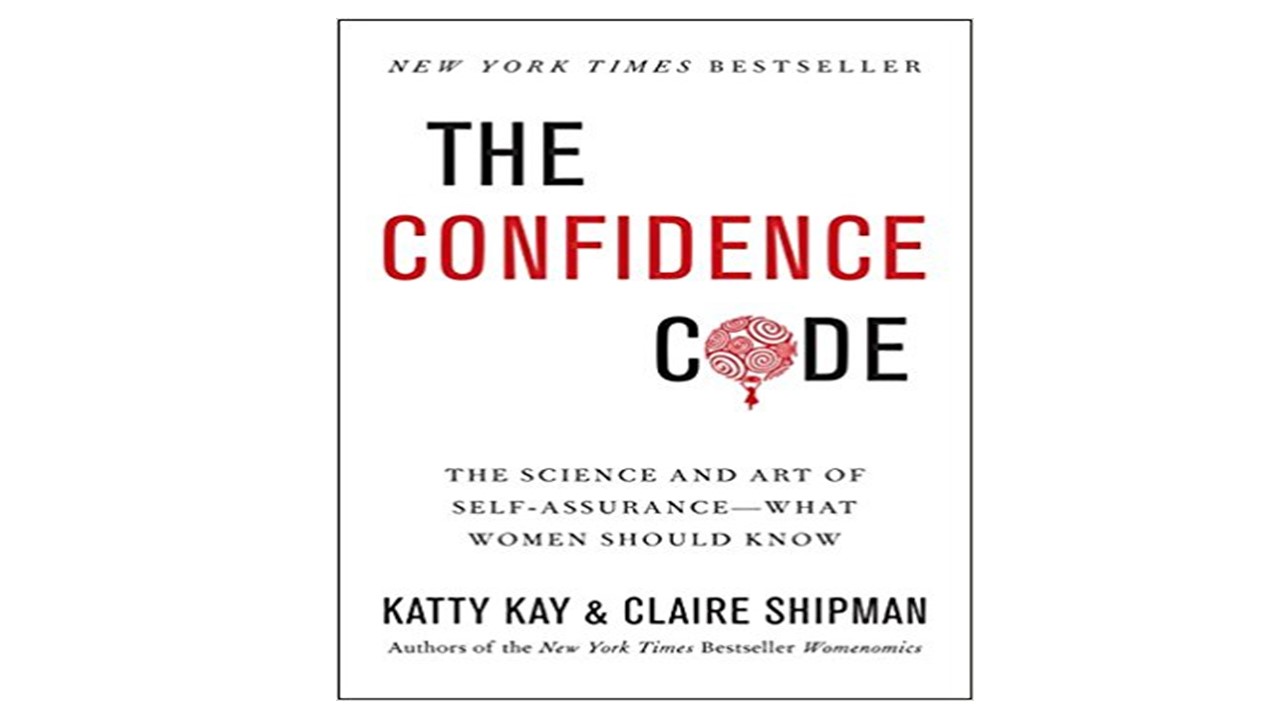
As a constant listener to US Public Broadcasting, I recently heard an interview with two brilliant women, Katty Kay and Claire Shipman, on their book The Confidence Code.* As an educator for five decades, I’ve long believed that women have many superior qualities but are dominated by men, often less capable ones.
In their book, says the back cover, “They visit the world’s leading psychologists who explain how we can all chose to become more confident simply by taking action and courting risk, and how those actions change our physical wiring. They interview women leaders from the worlds of politics, sports, the military, and the arts to learn how they have tapped into this elemental resource. They examine how a lack of confidence impacts our leadership, success, and fulfillment”.
In the WBUR radio interview, Kay and Shipman observe that while girls have superior academic grades to boys in elementary and high school, the boys are encouraged to be bold risk-takers in their career choices, while girls are expected to provide ‘perfection’ and avoid risk. The cover of boys’ magazines cite how to become an astronaut, excel in rugby, etc., while the girls’ magazines write about “your first kiss”.
I once led an outdoor leadership exercise for senior managers, men and women. They had to tackle a tough task. The men were stumped. Standing off to one side, “Michal” said quietly that she knew how to crack it. None of the men paid any attention. I stopped the group and forced them to listen. Michal reluctantly took the lead. And she led the exercise to perfection. This has happened to me countless times, in classroom settings – women know the answers, have the insights, but are reluctant to speak up. Gender bias is not only in wages. It starts at age 8, in the way we socialize our boys and girls. It has to stop! The #Metoo movement, protesting male exploitation of women, is just a symptom of a deeper problem.
I just wrote a column about how Israel’s Finance Minister intends to replace the female head of the Bank of Israel, and her deputy, also a woman, highly capable effective leaders, because they punctured his ego with truth-telling.
This just has to stop. If we give more power to women, and taught them to empower themselves, we will have a better world. And it IS a matter of choice. As the authors note, “fewer people [i.e. women] e pleasing and perfectionism and more action, risk taking, and fast failure.”
* Katty Kay, Claire Shipman. The Confidence Code: The Science and Art of Self Assurance – what women should know Paperback. Harper Business 2015
Infrastructure: Europe, China – and America
By Shlomo Maital

In Economics, there are not many principles we can cite with absolute certainty. Here are two of them:
1. The rate of return on investment in Research and Development is in many cases astronomical. In 1958 Prof. Zvi Griliches found that investing in research in hybrid corn “paid a return of at least 700 per cent”. Few other social investments can rival this. Yet countries continue to underinvest in R&D.
2. The rate of return on investment in infrastructure (roads, transportation, communication, education) is equally astronomical. Yet in the West countries continue to undersave and underinvest in infrastructure.
The contrast between Europe, China – and the US under Trump is stark.
The EU, not noted for bold innovation, is undertaking a huge infrastructure project that will link Malmo, a Scandinavian port, with Palermo, a port in Italy. This project will help reduce the large gap between the wealthy Northern EU and the relatively poor Southern EU. It will do much to knit the fractured EU together, in the wake of Brexit.
China has a bold vastly expensive program to build a new Silk Road, linking China with Europe, the Mideast and Africa. The One Belt One Road initiative, now changed to “Belt and Road Initiative” is, according to Wikipedia “one of the largest infrastructure and investment mega-projects in history, covering more than 68 countries, equivalent to 65% of the world’s population and 40% of the global GDP as of 2017.”
And the US? Well, on a recent visit there, I used Waze (an application developed originally in Israel, now owned by Google) to navigate. In the US, Waze informs the driver of potholes. And, trust me – I heard about a LOT of potholes from Waze while driving in the eastern United states. Some of them were big enough to swallow Trump’s ego.
President Trump speaks often about infrastructure. He has plans to fix it, including thousands of crumbling bridges. But here’s the catch. The latest Trump tax cut put a huge hole in the government budget and added $1.5 trillion to the deficit. So there is no money left for infrastructure investment. The solution? Trump thinks he can get private industry to finance it, using tax credits.
This is science fiction. Basic economics shows, the return on infrastructure investment is largely “social”, that is, not captured by private investors, but accruing in a diffuse manner to all of us. So why would private money invest in it?
China, EU – and the US. Another instance of how the US has become a Third World nation, and China, in the Third World, is becoming First World.
The Era of False News: Why We All Must Think Critically
By Shlomo Maital

Today’s New York Times (“False News Really Does Spread Like Wildfire”, by Steve Lohr) asks a tough question: “What if the scourge of false news …is not …[Russians or bots]? What if the main problem is us?”
People are the principle culprits. You and me. This is the result of extensive MIT research of false news (they prefer that term to Trump’s ‘fake news’). “True stories were rarely retweeted by more than 1,000 people, but the top 1 % of false stories were routinely shared by 1,000 to 100,000 people. And it took true stories about six times as long as false ones to reach 1,500 people”.
We humans are responsible. Because false news is almost always more sensational, more livid, than true. So we rush to share it. The research of Sinan Aral, MIT Sloan School of Management, appeared in Science magazine.
So what can you and I, what MUST you and I, do? I think it is simple. Back to basics. Back to John Dewey. Back to Einstein. We have to learn again how to think.
I have been a college professor for over 50 years. In that time, did I teach my students, facts, concepts, tools? Or did I teach them how to think critically, including about what I am telling them? I don’t think I did a very job in training them in one of today’s most crucial skills, knowing to tell truth from falsehood.
Knowledge today has a short half-life. And in any case, knowledge can be found quickly, by anyone, using digital tools. But the ability to think, to sort fact from fiction, truth from lies — that has a very long half life. And that skill is the pillar of any democratic system. Because otherwise , scoundrels can get elected by telling us lies – and they do it all the time now.
Increasingly, people watch media, conventional and social, only when they agree with what it tells them. Critical thinking is anesthetized. This has to stop. We have to teach our kids to analyze, weigh, criticize, critique, challenge. We have to teach ourselves. In a world where this skill is more widespread, the Russians will simply draw a blank – and give up. And in a world where Trump says to Canada’s PM: “US has a trade deficit with Canada” (false), and later gloats that he just made it up (US has an overall trade surplus with Canada, it takes 3 seconds to check this), when the leader of the Free World doesn’t care if what he says is true or false, not does his base, it is incumbent upon us, every human being, to care a whole lot more.
Girls Who Code: The Effective Way to Defeat Gender Bias
By Shlomo Maital

Reshma Saujani
In virtually every country, women are paid less than men, for equal work. Women are under-represented in high-tech, senior management, politics, legislatures (except Iceland) – everywhere.
What can be done? Pass laws? It doesn’t work. Let’s analyze the underlying true cause. According to Reshma Saujani, in a powerful TED talk, it is because boys are taught to be bold risk-takers, while women are socialized to be … perfect. To get it right.
Boys who are taught computer coding try it, make mistakes, try again… in an experiment, girls taught to code had blank computer screens…because they erased their trials, since they were not perfect.
Let’s teach our girls to be bold risk-takers! Let’s teach our girls bravery, the same way we teach our boys. This is Reshma’s message. She should know – she was one of the ‘I have to be perfect’ girls, Yale Law, etc., until she figured it out. She has helped launch a movement that hopefully will bring many more women into engineering and high-tech and to senior management. Here is a short piece from her TED talk:
“For the American economy, for any economy to grow, to truly innovate, we cannot leave behind half our population [women]. We have to socialize our girls to be comfortable with imperfection, and we’ve got to do it now. We cannot wait for them to learn how to be brave like I did when I was 33 years old. We have to teach them to be brave in schools and early in their careers, when it has the most potential to impact their lives and the lives of others, and we have to show them that they will be loved and accepted not for being perfect but for being courageous. And so I need each of you to tell every young woman you know –your sister, your niece, your employee, your colleague –to be comfortable with imperfection, because when we teach girls to be imperfect, and we help them leverage it, we will build a movement of young women who are brave and who will build a better world for themselves and for each and every one of us.”
3 Decades in 364 Words:
A Guide for the Perplexed
By Shlomo Maital

The world has become a chaotic, complex system, hard to understand, impossible to predict. Here in 300 words is a vestpocket history since 1989 –hope it will help.
On Nov. 9 1989 the Berlin Wall fell. This led to the rapid unification of the two Germany’s (note: this can also happen to the 2 Korea’s, equally fast), which accelerated the European Union, and marks the onset of true globalization – free movement of ideas, capital, labor, goods, services and information across borders.
Globalization created massive wealth for a handful smart enough to take advantage. It created unprecedented growth for China and other Asian nations; for Germany to some extent; for India, and some poor countries. But most poor nations were left out, especially those in Africa.
Capitalism broke down. Great wealth bought political influence, and corruption became rampant, in Russia, and elsewhere. The huge canyon between rich and poor led desperate people in corrupt nations (Mideast, Africa, some Central and Latin American countries) to migrate, at risk of life and limb, toward the wealth. Meanwhile, in many countries democracy regressed. The EU pushed union too far, seeking to unify politically, leading to widespread pushback and Britain’s exit. The flood of migrants to Europe threatened the foundations of European unity.
In the ongoing historical cycle, the wave of democracy that swept the world after WWII, and during globalization, began to retreat, as corruption, influence of money and wealth disparities led democracy to break down in many places that tried it. The Arab Spring became the Mideast winter. Russia, China and other nations seemed to entrench leaders permanently. Globalization receded.
Even America, a bastion of democracy, regressed under Trump, embracing the backlash of the white minority against migrants. Trump’s “trade wars are good” reflects abysmal ignorance of the last Great Trade War, 1933, that brought a world depression. Italy’s election tomorrow will focus not on key issues (economy, jobs) but on Italy’s 650,000 migrants. In my country Israel, a right-wing government seeks to illegally expel African migrants, against their will.
This cycle will play itself out. We will eventually return to democracy and globalization will again grow and spread. We will find ways to include poor nations left out of the global system. Racist ignorant leaders will be deposed. We are seeing signs everywhere of an uprising, of young people taking responsibility. Take a long view of history and remain hopeful.
= = = = = =
A brief p.s. In May, if sufficient numbers register, I will offer a one-week course on How to Change the World With Ideas, at a beautiful spot in northern Greece. If this interests you, check out: http://unboundprometheus.com/program-one/
Janet Eckelman: Fishnet Fantasy
By Shlomo Maital

Janet Echelman is a well-known American sculptor and artist, born in 1966. Her sculptures are made of fiber and are huge – they float in the wind and change with the light, metamorphosing constantly. They are filmy and delicate, yet — in Denver, one of her works survived a massive storm that toppled lamp posts.
She recounts that she applied to seven art schools – and was rejected by all. So she began painting – and won a Fulbright scholarship to India. On arrival she found that all her paints had been lost. What to do?
She went to the port, and saw fisherman unloading their nets and folding and draping them. She thought about it – and envisioned sculpting with a fishnet like material, strong but light, that wafted in the wind. What is interesting about her story is that it tells of adversity and failure turned into massive success. Many of us has seen fishnet. But how many have really seen them, in a manner that envisions a massive and transformative sculpture?
If you wish, listen to her fascinating TED talk.
Ballooning Debt & Deficits: How the Republicans are Making America “Great (in Debt)” Again
By Shlomo Maital
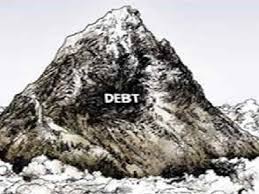
You, dear reader, are as tired of reading about the Republicans’ iniquities as I am of writing about them. Hopefully – this is the last blog on the subject for a very long time.
The Trump Administration has made hypocrisy an essential element of everything they do, with unqualified support of Republicans, both in the House of Representatives and the Senate.
The latest 2-year budget? It calls for massive spending increases in defense and non-defense items, without showing how to pay for them. Add this to the unfunded tax cut. The result?
* The ratio of debt to GDP will rise to 109% by 2027, and
* the spending bill will add $1.2 trillion to the deficit by 2019.
Under Obama, the Republicans rioted over Obama’s free-spending budgets. But it is a fact – deficits have risen far more under Republican presidents (remember Reagan’s tax cuts, unfunded?) than under Clinton and Obama. Clinton in fact balanced the budget! Obama ran a small deficit.
Make America great again? Here is how Trump is doing that.
Here is the list of countries with triple digit (over 100%) debt to GDP ratios: Portugal, Italy, Eritrea, Belgium, Mozambique, Japan.
You’ve done it Trump! You have managed in just one year to help America gain entry, very soon, to this unique club of great nations, with GRRRREAT debt to GDP ratios. America will soon drown in debt, on the Republicans’ watch. Does this bring new meaning to the word “political hypocrisy”?
I predict this Trump Tweet: GREAT world-leading debt ratio. Historical. Fabulous. Debt is great. I know — I did borrow and then bankrupt. Watch me bankrupt America too…piece of cake. Make America broke.
How to Implement Change (David Brooks)
By Shlomo Maital
Increasingly, when I teach entrepreneurship, I find my students are eager to learn about “social entrepreneurship” – using creativity and startups to achieve social goals, rather than capitalist for-profit goals.
David Brooks has written a fine column in the Global New York Times, Feb. 9, on how social entrepreneurship fosters change, and tells the story of Ashoka, the organization founded by Bill Drayton that fosters social entrepreneurs, thousands of them, world wide. He writes:
“Bill Drayton invented the term “social entrepreneur” and founded Ashoka, the organization that supports 3,500 of them in 93 countries. He’s a legend in the nonprofit world, so I went to him this week to see if he could offer some clarity and hope in discouraging times. He did not disappoint.”
Here is how Brooks describes what he learned from Bill Drayton:
“Drayton believes we’re in the middle of a necessary but painful historical transition. For millenniums most people’s lives had a certain pattern. You went to school to learn a trade or a skill — baking, farming or accounting. Then you could go into the work force and make a good living repeating the same skill over the course of your career. But these days machines can do pretty much anything that’s repetitive. The new world requires a different sort of person. Drayton calls this new sort of person a changemaker. Changemakers are people who can see the patterns around them, identify the problems in any situation, figure out ways to solve the problem, organize fluid teams, lead collective action and then continually adapt as situations change.
For example, Ashoka fellow Andrés Gallardo is a Mexican who lived in a high crime neighborhood. He created an app, called Haus, that allows people to network with their neighbors. The app has a panic button that alerts everybody in the neighborhood when a crime is happening. It allows neighbors to organize, chat, share crime statistics and work together. Solving problems is a critical skill. It may be that the remaining jobs look for that skill set, but people are not comfortable with that… To form and lead this community of communities, Gallardo had to possess what Drayton calls “cognitive empathy-based living for the good of all.” Cognitive empathy is the ability to perceive how people are feeling in evolving circumstances. “For the good of all” is the capacity to build teams.”
Remember those two key phrases. “Cognitive empathy” – living for the good of all, not for the good of myself and my loved ones. For the good of all – implement cognitive empathy’s insights to effect change by building powerful teams.
That’s the formula. Now, let’s all get to work on it!
Strategizing the Value Chain
By Shlomo Maital
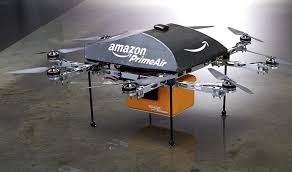
Amazon just announced it will create its own package delivery service, to compete with Fedex and UPS.
Amazon stock fell on the announcement – but this has happened before, each time Jeff Bezos has a new and costly idea, which usually prove correct.
This strategic move suggests a key principle for startups: How to strategic the value chain.
For on-line retailing, a significant chunk of the total profits in the whole ecosystem accrues to those who deliver the packages, not just those who make the products or sell them. Amazon is greedy for these profits, accruing to Fedex UPS and DHL and wants to swallow them.
Every product or service is part of a complex value chain ecosystem. Each startup, pushing an innovation or creative idea, must ask:
Where is my product or service aiming, in the existing value chain?
The key is: Do NOT necessarily aim at where the money (big profit margins) are at the moment. Aim where they will be in 2-3 or 5 years. And second: Maybe, just maybe, aim at an entry point that the other players do NOT find that attractive (e.g. Teva Pharmaceuticals long ago aimed at generic drugs, when Big Pharma was scorning this industry). Use this to get your foot into the door. Once you are there, have cash flow, revenue, profit – and name recognition — consider migrating, to another spot in the value chain, as Amazon is doing and has done constantly — books to other products to all products, to cloud to original TV content….
So to sum up: Startup entrepreneurs – analyze CAREFULLY the existing value chain. Draw it, picture it, analyze it. Where are you aiming at with your product? Is this an ideal entry point? Why? Where will you migrate AFTER you make a successful entry?
This is a bit like an uninvited guest knocking on the door and sticking their foot into the door to prevent it from being closed. Once you get in – look around, carefully, and figure out which room you will visit next.
This value chain analysis is crucial and is based on a long-range plan and vision. Many startups don’t bother, or are not even aware they have to do this right from the start.
IBM thought the true value in computers was in hardware. Microsoft’s WINDOWS saw the value was in software and operating systems. The rest is history.
World Economy: Best in Years
By Shlomo Maital
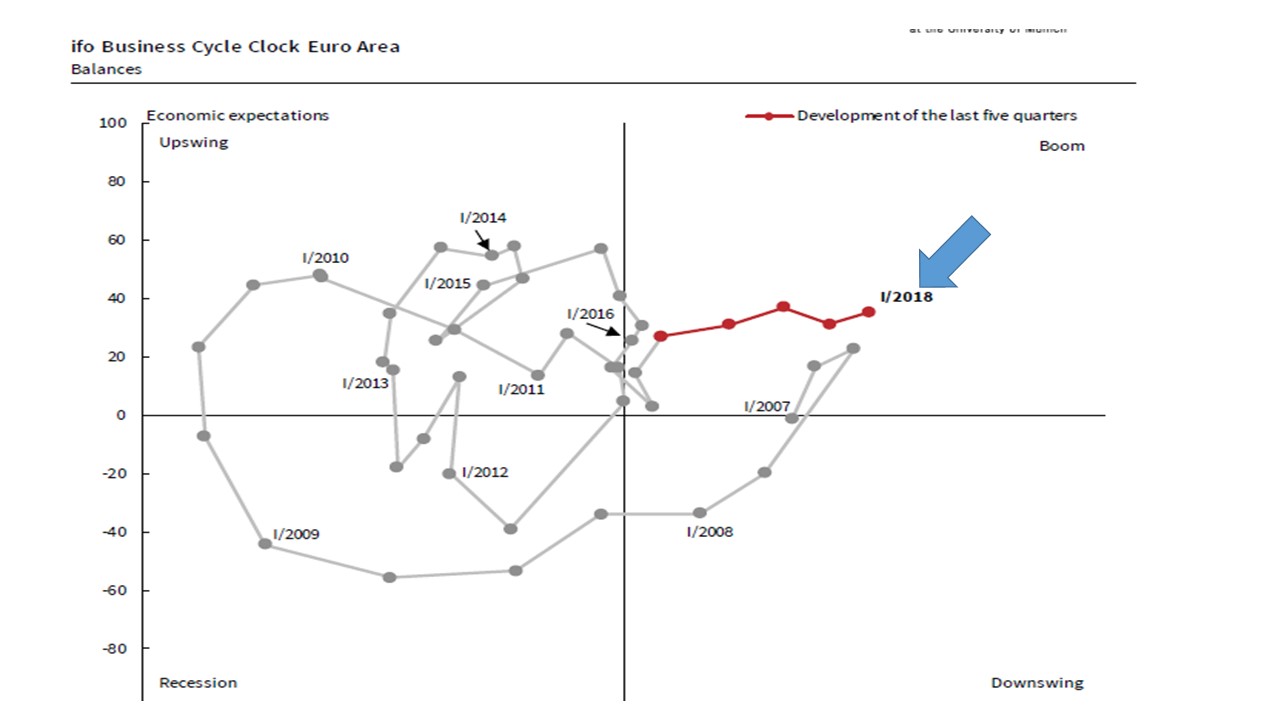
The recent one-day dramatic drop in the US stock markets, about 6%, has brought panic to investors – especially to every-day ones who manage their 401K accounts. It embarrassed President Trump, who speaks daily of the booming stock market and the “$8 trillion in new wealth” that it has created. He has ignored the drop, and his spokespersons revert to speaking about the strong economy.
So here is the basic truth. The global economy, for the first time in over a decade, since the onset of the global financial crisis of 2007-8, is expanding everywhere – United States, Europe, Asia. This synchronous expansion is of course amplifying economic growth and employment and job creation in each of the three key regions.
The graph above, from Ifo Munich, shows “actual” on the x-axis and “expectations” on the y-axis, for the EU region, which is about the same size as the US economy. It indicates that the EU economy is squarely in the upswing upper right quadrant, after a very long time being remote from it. The economy is growing, and people expect it to continue.
I hope small investors do not panic and bail out of their stocks, giving unwarranted profits to the sharks, and that they take into account this global synchronous acceleration, which I think will continue for a while. I hope also nobody will attribute this to what politicians, including Trump, are doing or have done. This is simply a cyclical pattern, as people and businesses expand their spending after years of belt tightening. It will end some day — but hopefully not too soon.


