You are currently browsing the category archive for the ‘Global Crisis Blog’ category.
How Asia Sees the Trump Presidency
By Shlomo Maital

Here is how my friend Bilahari Kausikan, former First Permanent Secretary of Singapore’s Ministry of Foreign Affairs, sees the Asian reaction to the election of Donald Trump as U.S. President. This is from the Nikkei Asian Review:
Donald Trump will be the 45th president of the United States. Whatever they may say in public, few East Asian governments will greet the news with much enthusiasm — and all will harbour a degree of unease. Only the North Korean leader Kim Jong Un and Cambodian Prime Minister Hun Sen made their preference for him known. But they are hardly typical and the latter, for once, did not follow China’s lead.
- Beijing is usually scrupulous about avoiding comment on the domestic politics of other countries, but still felt it necessary to publicly criticize Trump’s stance on climate change. A South China Morning Post poll published on Nov. 5 showed that 61% of Chinese preferred Trump’s Democrat rival Hillary Clinton, higher than her final share of the U.S. popular vote. Only 39% of the Chinese preferred Trump, lower than his share of the U.S. popular vote. A study by the U.S. journal Foreign Policy of Chinese elite attitudes, published on Nov. 7, concluded that while they viewed Clinton as unfriendly, most felt that Trump would be a disaster for the U.S. and hence for global stability.
- China’s leaders may not admit it, but they know that the U.S. is vital for the maintenance of regional stability. Beijing values stability above everything else, particularly with the Chinese Communist Party’s crucial 19th congress only a year away and internal labour and social unrest endemic. President Xi Jinping’s anti-corruption campaign has generated a great sense of insecurity among cadres across all sectors of the state. In October, about 1,000 military veterans in uniform protested outside the ministry of defense in Beijing. It is impossible for such a large and conspicuous group to have gathered near such a sensitive area without at least the tacit connivance of some senior cadres.
- Like most of East Asia, China hates surprises. Clinton was a known quantity and would have stood for continuity in American policy toward the region. But East Asia is also pragmatic, not wont to just wring its hands in despair over new realities. Governments of the region will work with whoever is in power in the U.S.
Harvard Business School Reveals: Why Trump Won
By Shlomo Maital

Harvard Business School’s Working Knowledge on-line magazine reveals: “6 Lessons from Donald Trump’s Winning Marketing Manual”
Donald Trump’s upset election win offers six lessons for marketers looking to beat the odds and overcome powerful competitors, says John A. Quelch. Here they are, in case you wondered.
Here are six important lessons from Trump’s brand marketing playbook:
- Give consumers a job. The best marketing campaigns always call on consumers to do something. For example, United invites you to “Fly The Friendly Skies.” Nike insists that you “Just Do It.” The most successful brands also allow their consumers to co-create brand meaning. “Let’s Make America Great Again” is an inclusive call to arms with a powerful goal that each voter can interpret for himself. It embraces passion and purpose. Clinton’s “Stronger Together” is also inclusive but it evokes process, not that process isn’t important, but the desired outcome is much less clear. Good marketers know that, if you don’t position your brand clearly, your competitors will do it for you.
- Show the past as prologue. Offering consumers the adventure of voting for an uncertain future never works with the majority, especially if your brand is new to the game. Trump, the political neophyte, won by recalling a better yesterday and promising to recreate it as the better tomorrow. The word “Again” is no accidental addition to the Make America Great slogan. Remember the famous Kellogg’s Corn Flakes campaign to recover lost consumers: “Try Us Again for the First Time.’ For millions of Americans in the rust belt, the good old days really existed and they voted to bring them back.
- Pursue forgotten consumers. Most financial firms chase the same high net worth prospects, ignoring or at best taking for granted millions of modestly prosperous people. Trump turned the Democrats’ commendable embrace of diversity on its head to invoke the “Forgotten Man,” winning over lunch-bucket Democrats overlooked by their party as well as bringing in new voters and energizing lapsed ones. At the same time, almost all Republicans came home to vote for their nominee. Good marketers always know how to balance new customer acquisition with customer retention.
- Sizzle beats steak. Clinton was always going to beat Trump on the steak of experience and policy knowledge. A new brand can’t afford to get lost in the policy weeds. Hence, Trump’s campaign persona and his contract with the American voter offered more sizzle. Painted in broad brush strokes, the contract emphasizes goals and outcomes, and is light on policy and implementation details.
- Build enthusiasm. Good marketers know the power of word-of-mouth recommendations. In the era of social media, better organization (the old ground war) and outspending on television advertising (the air war) weren’t enough for Clinton. Trump’s determination and stamina–five speeches a day–and the size of his crowds impressed ordinary voters watching on television much more than Clinton’s barrage of paid ads. The pundits questioned whether enthusiasm would convert into votes. Good marketers know that brand enthusiasm rings the cash register. It did for Trump, but not for Clinton.
- Close the sale. Political marketing requires you win a plurality of votes not every day but on a single day once in four years. Timing is everything. Trump learned what worked and what didn’t work as the campaign progressed. He refined his message, suppressed the ad hominem insults, and peaked at the right time, confounding the pollsters and media pundits. In every recent speech, he repeated the same messages, inviting voters to imagine the future if they bought into the promises of a Trump administration. He confidently asserted “we are going to win” this state, “we’re leading in” that state. Consumers not only want to back a winner, they want to back a brand that sees itself as a winner. And they want to back a brand that other people similar to themselves see as a winner. That’s when a brand becomes a movement. In the last week, brand Clinton promised a bright future but looked like the candidate of yesterday, a little tired and overly reliant on a supporting cast of Obamas and Bon Jovis. By contrast, Brand Trump promised a future that looks like yesterday, Everyman’s high-energy underdog and outsider, disruptive yet decisive, standing alone at the podium, mane flowing, ready to step up to Pride Rock.
Quelch concludes: “Brand Trump is today’s bright new thing. But new is easy. Good is hard. Time will tell whether Brand Trump can deliver on its promises.”
President Trump: Whom Will He Appoint? Time to panic?
By Shlomo Maital
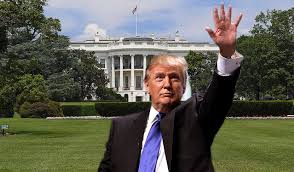
President-elect Trump. Never thought I would write those words. A great many people I know are stunned, shocked, and almost in panic.
No need to panic. The White House has ways of changing the DNA of its occupants fairly quickly.
Who will Trump appoint? The Financial Times has some ideas, and they are at least a bit reassuring…
* Steve Mnuchin, a former Goldman Sachs executive frequently mentioned as a possible Treasury secretary, and Wilbur Ross, a distressed asset investor. OK, the Trump administration will be pro-wealthy, even though the blue-collar guys elected him. But what did you expect?
* ….conservative columnist Lawrence Kudlow, a former official in the Reagan White House who once worked as chief economist at Bear Stearns, is another senior member of the campaign team, as is Steve Moore, an economist at the conservative Heritage Foundation who helped draw up Mr Trump’s tax plans.
* Trump has said: “Guys like [former General Electric chief executive] Jack Welch. I like guys like Henry Kravis [the co-founder of KKR, the private equity group]. I’d love to bring my friend [billionaire investor] Carl Icahn. I mean, we have people that are great.”
* National security: Michael Flynn, a former head of the Defence Intelligence Agency, who has been a regular analyst on Russia Today, the Russian-backed television network, as well as Keith Kellogg, who has worked in the private sector since helping run the Coalition Provisional Authority in Baghdad after the 2003 invasion of Iraq. Among his other advisers are Walid Phares, a Middle East analyst who has come in for criticism for his ties to a Christian armed faction in Lebanon’s civil war in the 1980s.
* ….attorney-general: Rudy Giuliani, the former New York City mayor who has been a vocal backer and close Trump adviser since the summer.
* “ economic platform: Peter Navarro of the University of California’s Paul Merage School of Business, an economist who produced the film Death by China, a documentary featuring animated Chinese aircraft bombing the US.
On second thought, after writing the above: Not reassuring.
It’s time to panic. All together now… Yikes!
Dalai Lama: Find Meaning
By Shlomo Maital

The Dalai Lama is the 14th such Dalai Lama. And he may be the last, according to his own words. Dalai Lamas are important monks of the Gelug school, the newest school of Tibetan Buddhism. He was born on July 6, 1935 and despite his age, 81, he travels the world with his message of peace and harmony. His full name: Lhamo Dondrub, but it is rarely used. He now lives in McLeod Ganj, India, near Tibet, because Chinese authorities do not permit him to return to Tibet, from which he fled at an early age.
I once heard the Dalai Lama speak in person, to 5,000 persons in Tel Aviv. His presence is spellbinding and radiates the serenity that he preaches.
In the International New York Times, Nov 5-6, there is an unusual Op-Ed piece written by the Dalai Lama together with Arthur C. Brooks, president of the American Enterprise Institute, a conservative pro-free market think tank based in Washington. In it, the authors ask, if things are so good all over the world, why do people feel so bad?
Good??? All over the world? “Fewer among us are poor, fewer are hungry, fewer children are dying and more men and women can read than ever before”, they note. How strange, they note, then to see anger and discontent in the world’s richest nations.
So why is there such tremendous angst, dissatisfaction, unhappiness, social unrest and violence in so many parts of the world? They note research that shows that senior citizens (that old euphemism for old people) who did not feel useful to others were three times as likely to die prematurely, as those who did feel useful. Apparently, to stay alive, you need a reason, and helping others is the primary one.
People are unhappy, says the Dalai Lama, because they do not have meaning in their lives. Remedy? “We should start each day by conciously asking ourselves, ‘What can I do today to appreciate the gifts that others offer me?” We need personal commitments “that we mindfully put into practice”.
I love this message. I try to practice it. But I don’t accept the premise. People are unhappy, because they struggle every day to provide food, shelter and clothing for themselves and their families, and have a very very hard time doing it, including those in wealthy countries. The odds are stacked against them. The old “trickle down” fallacy has been refuted ages ago, but politicians still preach it. Wealth does not trickle down, it trickles up…to the ever-richer 1 per cent or 0.1 per cent.
Arthur Brooks and the American Enterprise Institute are among those who espouse trickle down, and provide grist for the Republican Party. (“Trump will lose, but Americans will make a fatal error if they do not recognize what Trump got right”, says the AEI website. Hmmm what DID Trump get right?). I regret that a person as wonderful as the Dalai Lama seems to have thrown in with an ideology that is so flawed.
On Turning 74: How to Age
By Shlomo Maital
On Nov. 10 I will be 74 years old. I celebrated by doing a 74-km. (44 mile) walk during 3 days, from the Mediterranean to the Sea of Galilee, with grandchildren and sons and daughter, and Sharona, who joined for at least part of it.
Here are some insights about growing old, for what they are worth.
- Try to do one difficult thing every day… it’s easy to pamper yourself, when you’re a senior citizen, and lots of kind people around you are willing to help. Keep in practice doing things that stretch your mental and physical abilities. That way, at least you won’t slide backward… or will do so more slowly.
- Resist becoming a child. Seniors are forgiven behaviors that adults are not. Resist it. It’s easy to become grumpy and spoiled like a child.
- Treat your body like a faithful old car. You don’t expect a 15-year-old car to run perfectly. You do good maintenance, but not all repairs are worth the pain, time and effort. Same with your body. Fix what you can, live with what you can’t… and don’t spend infinite hours running to doctors, if you can avoid it.
- Remain relevant. That means, make your life meaningful by helping other people whom you love. Do this daily. In little ways, or in big ways. If you do, it means that your life has meaning, and that others care. The key is to be part of a loving community, including family and friends.
- New beginnings – seek them. Seniors tend to be risk averse. Take some chances. Dare. What do you have to lose? Learn new skills, try new things. Try new foods.
- Think positive. Think happy. A happy mind definitely helps create a healthy body. It’s been proven physiologically. Find the bright side. Be an incurable optimist.
- Enjoy every hour, every minute, every day. Find things of beauty, find small (and big) ways to enjoy. Find interesting people, find ways to be with them. Make sure that when you wake, you have strong reasons to get out of bed. If not, well, find some.
- Doing what you love? Keep doing it. Never retire. Bored with what you’re doing? Find something else to do. But — keep doing!!
AT&T + Time Warner:
Good for the people? Or Bad?
By Shlomo Maital

AT&T has just announced it is acquiring Time Warner for $85 b. The deal must be approved by the FCC Federal Communications Commission and antitrust authorities.
What is going on here?
Frank Biondi, former head of media giant Viacom, describes it succinctly. AT&T has 125 cell phone customers and a large number of cable TV customers. It is essentially a US ‘media and communications’ distribution company, one of the biggest. AT&T was once huge, was broken up by an aggressive anti-trust judge, and is now reforming and again becoming a giant player.
Time Warner, including HBS and CNN, is a ‘content’ company. It creates the content, like the hit series Game of Thrones, that AT&T distributes.
So, Biondi says, AT&T is buying, for $85 b. (14 times the value of Manchester United, for instance) “access to creative talent”. Because today the value in communications is not in the infrastructure and distribution, but in what you put onto this infrastructure. AT&T is buying a seat at the creativity table.
Will AT&T favor, like a monopoly, content its own companies create? Probably not. If AT&T customers want to watch something else, and AT&T fails to provide it, they will lose millions of customers in the blink of an eye.
I think that what is interesting about this mega-deal is this: Ideas have become hugely valuable and creative talent is now the focus of competitive strategy. If you are creative, if you have ideas, the AT&T+Time Warner deal says: The future is yours.
Nobel Prizes 2016
By Shlomo Maital
This year’s Nobel Prize winners:
Medicine/Physiology: Yoshinori Ohsumi, Japanese cell biologist. He discovered how cells recycle their wastes – an amazing and complex process that keeps cells from choking on garbage. Ohsumi asked a question that intrigued him, but that interested few others…
Economics: Oliver Hart (Harvard) and Bengt Holmstrom (MIT): contract theory. Especially “incomplete contracts”. See Hart’s American Economic Review 2001 article on financial contracting — enlightening, especially for Venture Capital.
Physics: David Thouless, F. Duncan Haldane, J. Michael Kosterlitz. Their mathematics (based on topology) revealed insights into ‘extreme state’ matter (e.g. very low temperatures, super-cooled, etc.), and may lead to important new products, perhaps in semiconductors and computing.
Chemistry: Jean-Pierre Sauvage, J. Fraser Stoddart, Bernard Feringa: synthesis of molecular machines. These tiny machines, the size of a single molecule, can do actual mechanical work. Also may lead to important innovations one day.
Note the common denominator: Willingness to ask really good questions, questions others aren’t asking, ability to take risks in research, tackle very challenging hard problems, and in some cases, defy the establishment by choosing a research direction others think is a dead end.
And the Peace Prize? To Colombian President Santos, and the peace agreement that ended 50 years of senseless civil war. We learn from Colombia what we already know, from Britain’s Brexit vote – beware of referendums, you cannot be sure what they will yield. Colombia will revote its peace agreement, narrowly defeated in a referendum, and gain approval. But Britain? Britain will leave the EU, for certain, a result very few expected, with major consequences for Europe and the world.
Hope for Alzheimer’s Cure?
By Shlomo Maital

Prof. Dan Michaelson
My family physician recently told me that about half of the elderly aged 85 and over have Alzheimer’s. That should make Alzheimer’s a top priority for research money. But it is far from it.
Today’s Hebrew daily Maariv reports on a major breakthrough. Tel Aviv U. Prof. Dan Michaelson, along with his doctoral student Anat Bam-Cogan, have found a drug that can combat Alzheimer’s in mice. Here is the story:
There are apparently quite a few ‘varieties’ of Alzheimer’s, just as there are types of cancer. Michaelson notes that 413 clinical trials, that tested 244 anti-Alzheimer’s drugs over the past 13 years, all failed! Why? Maybe because Alzheimer’s is many diseases, not just one, he reasoned.
Michaelson decided to tackle one type, related to specific genes ApoE3 and ApoE4. Lab mice that have this defective gene develop Alzheimer’s. Michaelson tested the theory that the key protein that the defective ApoE4 gene makes fails to attach itself to fat cells properly, leading to the Alzheimer “plaque”. He contacted a biotech company Artery, and got from it a protein (peptide) that helps ‘stick’ fat cells to the protein. And it worked. The peptide fixed the Alzheimer’s mice’s cognitive problems and repaired the plaque in their brains.
This is still a very long way from a drug that will help, or even cure, Alzheimer’s in humans. But it is a big step in the right direction. We await more news from Dr. Michaelson, with hope.
Govt. Pays Taxes to Corporations: Why??
By Shlomo Maital
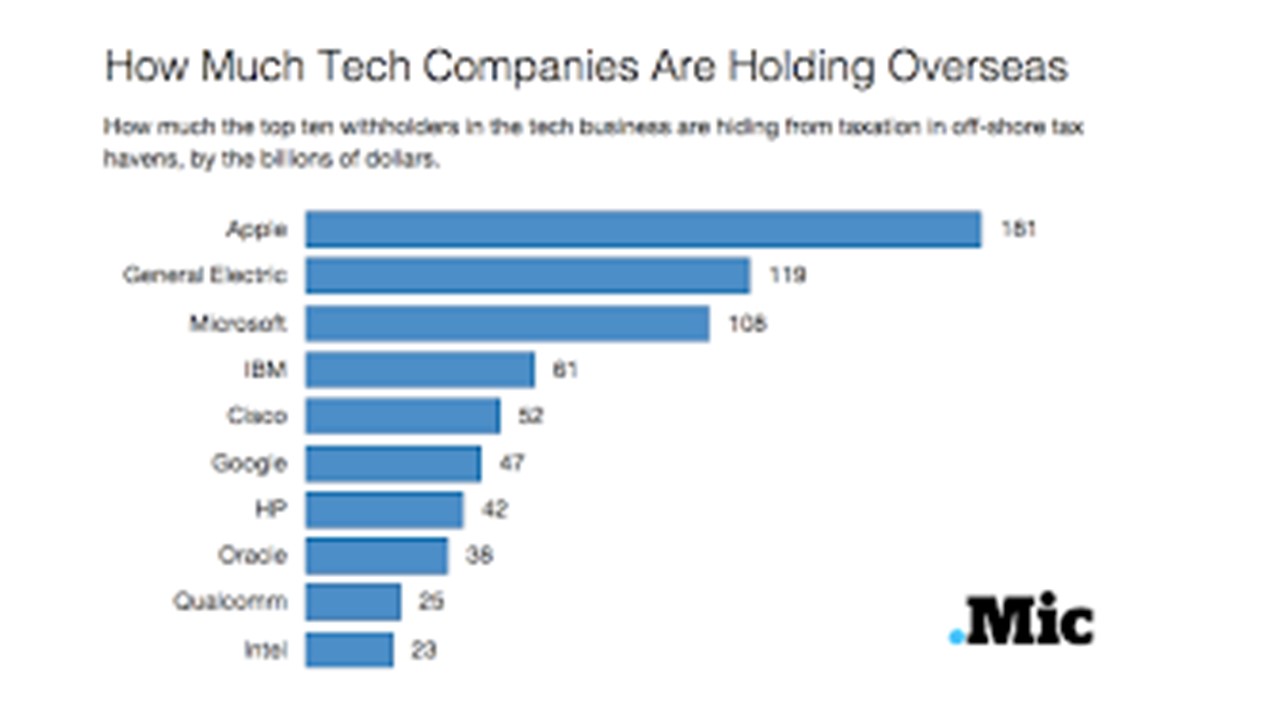
Once corporations paid taxes to governments. It made sense. Companies benefit from services and infrastructure, so they should pay taxes, like everyone.
But then, countries discovered they could play a win-lose game by offering corporations tax breaks (like Ireland’s 12.5% corporation tax) to lure them to come. We win, you (other countries, e.g. U.S.) lose. Soon many countries were offering such tax breaks. And corporations grabbed every one. Legally. It is almost true that governments now pay taxes to corporations.
Writing in the Oct. 5 New York Times (“Dealbook”), Russ Sorkin cites a study just released, that found that “73 per cent of Fortune 500 companies” (that is, 365 of them!) maintained “subsidiaries in offshore tax havens”. Apple alone holds $214.9 billion abroad and would owe $65.4 billion in taxes if it brought that money back to the U.S.
The study shows how companies set up small subsidiaries, small enough to avoid reporting offshore profits; “27 companies reported 16,389 total subsidiaries (!) and 2,836 tax haven subsidiaries to the Federal Reserve – but only a small fraction of those were reported to the Securities Exchange Commission”.
A furor arose over Donald Trump’s failure to pay income tax. But compared to the legal tax avoidance of companies sending money offshore, it’s a drop in the bucket.
America could use a big dose of capital investment. But the money that could pay for it is sheltered abroad. How much? 58 Fortune 500 companies alone would owe $212 b. in federal taxes, if they were taxed properly.
My questions: Who created these loopholes in America’s tax law? And why can’t legislators fix them? Are Republicans so enamored by wealth that they approve this? Are Democrats so helpless they can’t take on tax reform?
The Europe Union is trying to collect $14.5 b. in taxes from Apple. Apple CEO Tim Cook calls this effort “total political crap”.
The place to start is simply to require transparency. Nobody really knows how much money is sheltered abroad. Start by making companies report offshore holdings. And then – figure out how to make them pay taxes on them, no matter where they are.
Life After Silicon:
The Age of the Cup-holder
By Shlomo Maital
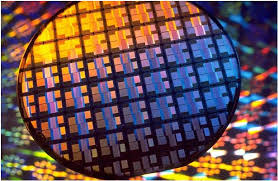
Most of us are blithely unaware of how much we owe to a law – Moore’s Law, named after Intel co-founder Gordon Moore, which says in simple language that every 12 months or so, the number of transistors in a given area doubles. In a 1965 paper, Moore used 4 or 5 data points to show that this had happened up to 1965, and he said it would continue for the foreseeable future.
And it did..and how! We now carry more computer power in a chip barely 3 sq. mm. than the 1976 room-size supercomputer designed and built by a genius, Seymour Cray.
But what if Moore’s Law is about to be repealed? What if the future ends? As Francis Fukuyama wrote, in 1992, we are at “the end of history”; are we at the end of the history of silicon?
Yesterday I heard a brilliant lecture on this subject by Prof. Mark Horowitz, on Innovation in a Post-Moore’s Law World. Horowitz is a former Chair of Electrical Engineering at Stanford and is visiting my university, Technion. He delivered the annual Hershel Rich Lecture.
Here are some of his key points:
* As we move down from IBM’s path-breaking one micron chip in 1974, to today’s 20 nanometer chips, 50 times smaller, we have reached the limit of Moore’s Law, mainly because the heat generated by these tiny powerful microprocessors is very hard to dissipate. Cooling limits further transistor doublings. Mathematically: “computing power” = energy per operation x operations per second. If we want to boost ‘operations per second’, we need to lower ‘energy per operation’..and we’re reaching the limit on that one.
* Result? “In future, success will no longer be about technology development. It will be about finding the right applications of the existing technology”.
In other words: We have loads of computing power. Now we need to find ways to adapt it to create value. The so-called Internet of Things is misleading. There is no “internet of things”. It is in fact a broad collection of devices, and each device needs its own application, its own software, its own microprocessors, to enhance its value.
Horowitz noted that ITRS (International Technology Roadmap for Semiconductors) has for years done roadmap predictions of future technology, based on Moore’s Law. They have now stopped. No more roadmaps. The end of history.
What does this mean for entrepreneurs and innovators? In future, there will be a huge premium for IT engineers who understand the technology, but who also have deep sensitive knowledge of business, customers, preferences and markets. Only this will enable us to have life after silicon. I think every engineering school should have a required course on Startup Entrepreneurship. Silicon will no longer be a rapid-growth industry, it will become like steel and plastics, notes Prof. Horowitz — big, but stable.
Sure, there may be a huge technological breakthrough. But Horowitz notes, it is unlikely, because developing it will take enormous resources, more than governments can afford, and more than private investors are willing to risk.
Prof. Horowitz has a powerful metaphor. In future, he noted, successful products will include many “cup-holders”. A cup-holder is a place to put your coffee or soda, in a minivan or car. German carmakers started the idea. Today some vans have 16 or 17 such cup-holders. They are low-cost, and are highly appreciated, because they show the car-maker is aware of, concerned about, the lifestyle of drivers.
Innovator: Can you use existing computer power, to create small low-cost add-ons (incremental innovation) that create great value? Apparently, this will be our innovation lives – after Moore’s Law expires.