You are currently browsing the category archive for the ‘Global Crisis Blog’ category.
Tzameret Fuerst: Pass It Forward!
By Shlomo Maital
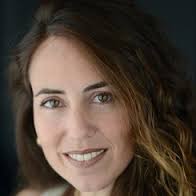

Tzameret Fuerst PrePex
Tzameret Fuerst is a highly-popular Israeli inspirational speaker, who travels the world telling her story. Here it is, in short.
She read about how HIV/AIDS is killing millions in Africa. In Botswana, one in every four persons has HIV. Unlike the rest of us, she decided to act. She read about WHO research showing that circumcision greatly reduces exposure to HIV, by 70%, because removing the foreskin takes away the HIV virus’ favorite place to hide and invade (foreskin cells are sensitive, prone to abrasions and cuts, easy for the virus to invade). But so what? There is no way we can circumcise millions of African men.
Well – why not? Fast forward. Fuerst started Circ MedTech and tackled the problem with passion, and her company developed PrePex. PrePex is a device placed on the penis, that cuts off blood circulation to the foreskin; within a week it drops off. Simple. It has four parts: A placement ring; an elastic ring; an inner ring, and a verification thread. A nurse can install it; no need for surgery or a doctor. It has FDA approval and today, the Gates Foundation, WHO and the World Bank plan to get the device to 20 million men, saving 3.4 million lives and some $16.5 billion.
A crucial milestone came when Fuerst, stalled in her efforts to disseminate PrePex, got on a plane and flew to a conference she knew was attended by Bill Gates. She approached him, said “ May I have a few moments of your time, outside?”. Gates agreed. She persuaded him to cut the red tape and help move PrePex forward.
There is a very personal angle. Fuerst divorced her husband, who was Chair of her company. She felt that as CEO she could not continue, as a result. So she resigned, for the good of the company and its device. She now travels the world, gave a TED talk, and tells her story to inspire others.
How many of us can say that our energy, persistence, empathy and creativity have saved millions of lives? Thanks, Tzameret. Your name, in Hebrew, means “summit” or “top”. And you are.
If Only Humans Were Like Trees!
By Shlomo Maital

Prof. Dan Chamowitz
“A person is like a tree in the field,
Like us, trees grow,
Like trees, we are sometimes cut down,
And I don’t know where I’ve been or where I’m going,
Like a tree in the field.”
This poem, by Israeli poet Natan Zach, and sung by Shalom Hanoch, raises a question. Are people truly like trees? Because today we know that trees communicate and work to help each other thrive. Do we humans?
Dan Chamowitz, Dean of Life Sciences at Tel Aviv University, wrote a wonderful book, What a Plant Knows: A Field Guide to the Senses. (2012). “Plants can communicate like people,” he notes. “What does that say about us human beings?”
What it says is: We should be more like trees.
A BBC report on this research notes that trees have an Internet, comprised of fungi – thin threads that link the roots of plants deep underground, known as mycelia. This fungal network “helps out the neighbors by sharing nutrients and information, or sabotaging unwelcome plants by spreading toxic chemicals”. It’s the “wood wide web”, says the BBC. “Around 90% of land plants are in mutually-beneficient relationships with fungi.” Why? Plants provide fungi with carbohydrates. Fungi, in turn, help plants suck up water and provide “nutrients like phosphorus and nitrogen….fungal networks also boost their host plants’ immune systems by triggering release of defense-related chemicals”. Plants do business with one another. Douglas fir and paper birch trees transfer carbon between them, through the mycelia.
Darwin through trees are like individuals, competing for surval. But they are not. “They are interacting with each other, trying to help each other to survive,” notes Prof. Suzanne Simard, UBC Canada.
This raises two key questions. First, capitalism. Is capitalism built on greed, on individual ‘survival of the fittest’? Because if it is, it is a gross distortion of how ‘survival of the fittest’ works in Nature. “Let’s work together for mutual benefit,” say the trees. Perhaps that is true capitalism.
Second: Ecosystems. Plants and trees have evolved complex highly-sophisticated ecosystems, based on mutual synergies and collaboration. We humans seem to be busy, first, destroying the fragile ecosystems of Nature, and second, destroying our own fragile social ecosystems, neighborhoods, communities and families, that build social capital.
Humans are less and less like trees of the field. And it’s a shame.
No Money & Late Start: Go for It!
By Shlomo Maital
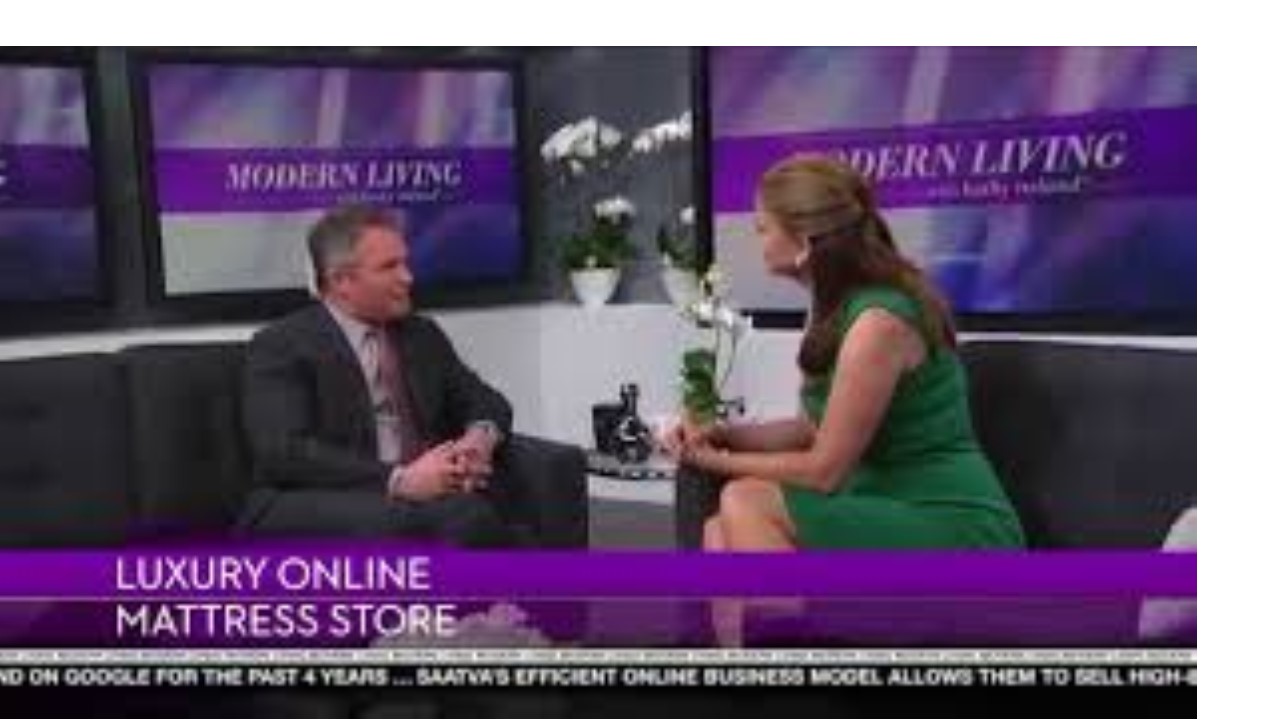
The International New York Times’ Dealbook section today (June 3) tells about Ron Rudzin, who worked in the furniture business from the age of 16, becoming VP of national sales for a sofa company. When he left Jennifer Furniture, he decided to start his own business. His vision: Sell American-made high-quality coil-based mattresses online, for a fraction of the cost of the price retailers charged for store-based brands.
Saatva means “truth” in Sanskrit. It became profitable after its first three months, in 2010. Sales were $2 m. in 2011, and $76 million in 2015. In 2018 Rudzin projects sales of $275 million.
What do we learn? First, becoming an entrepreneur can be done as a second career, after a long first career. That way, you start a business with substantial domain knowledge and contacts, which very young entrepreneurs often lack.
Second – bootstrap. Rudzin took $350,000 of his own money, wrote a business plan in 2007 and began to form his online mattress company.
“People who raise money, rather than be self-funded, tend to spend wildly because it’s other people’s money and they throw a bunch of stuff on the wall and see what sticks. I don’t do it that way,” Rudzin said. “I might go a little slower but in the end I believe I win.” It took him from 2007 and a business plan to 2010 to launch. Slow and steady wins the race.
Bootstrap, and start late. It’s possible, because chances are, when you retire, you can scrape together a not-insignificant sum of savings. Start late, because when you do, you will know a lot more about the industry in which you want to be an entrepreneur. You can spend 20-30 years just identifying a need and an opportunity and validating it.
Rudzin’s company provides full service – experts install the mattress, a service that buyers love. He knew this was key, because of his industry experience. Not everyone would have that insight.
Boostrapping enables you to retain control of your destiny. When you use VC funding, after initial, A and B rounds, the founder often has his shares so diluted that the VC controls the Board – and can fire the founder and boot him out. This has happened a lot. It even happened to Steve Jobs.
People in the future are going to live a lot longer. So we seniors should consider entrepreneurship as a possibility for a 2nd or 3rd career. Gray-haired entrepreneurs can change the world, even if they use canes and hearing aids.
Alzheimer’s Breakthrough?
By Shlomo Maital

Alzheimer’s Disease causes some 70 per cent of all dementia. In terms of the numbers who suffer from it, the WHO (World Health Organization) estimates that in absolute numbers 26.6 million, with a huge range of 11.4–59.4 million, were afflicted by AD, in the world, and, most significant, the prevalence rate would triple and the absolute number would quadruple by 2050. So it would not be an exaggeration to call Alzheimer’s an epidemic.
According to Lisa Desjardins, PBS News Hour: More than five million Americans live with the degenerative brain disease that robs people of their memory. It is the sixth leading cause of death in the U.S Yet Alzheimer’s research is seriously underfunded. America’s National Cancer Institutes alone get some $5 billion a year. On pure economic grounds, a small fraction of that sum could be better invested in the causes of dementia. Few people today have been untouched by it.
New research led by Harvard scientists brings hope that the cause of Alzheimer’s, still unknown, will soon be unraveled:
“….a study led by Harvard University researchers and published this week in the journal “Science Translational Medicine” suggests that Alzheimer’s could stem from the brain’s past attempts to fight off infections.”
According to Rob Moir, a researcher at Massachusetts General Hospital: “Alzheimer’s disease and the neurodegeneration you see with it is thought to be caused by a little protein that forms this concrete like substance in your brain called amyloid. Amyloid, it turns out, is actually be an antimicrobial pit pod, that is to say it is a natural antibiotic that defends against infection in the brain, and if you get a virus or a bacteria that gets into the brain, it rises to do better with it and binds to it and then entraps it in these long fibers and eventually entombs it forever. And as they mount in number, eventually they start to be toxic to our own cells, and that leads to the neurodegeneration. So, that’s what I bet it does.”
In short – Alzheimer’s is caused by amyloid plaque. Amyloid plaque in turn appears to be a result of the brain’s efforts to fight infection.
So what? Notes Moir: “So if it does turn out to be an infection, there is a possibility of treating people before they get AD with vaccines, to target those particular bugs so that the pathogens don’t get a chance to infect the brain.”
Let’s follow this research closely. One day those 50 and over may get a vaccine, like those given to children, that protect their brains. As a senior citizen, few things scare me – but the idea that my brain may one day become scrambled is a major fear. The new Harvard research offers us hope.
Stories and Feelings: Powerful Tools for Creative Thinking
By Shlomo Maital
My last blog was posted nearly two months ago, on March 30. Shortly after, I left for China, for teaching and lecturing. WordPress was not accessible in China. Then, on returning home, I somehow found it hard to restart the blog machine. I deeply regret this, because knowing I have blog readers keeps my eyes and ears open for ideas…. So, this is a ‘restart’, hopefully with no more long regrettable silences…
Nobel Laureate in Economics Robert Shiller (Yale) wrote a wonderful piece in the New York Times, Jan 22, 2016, “How stories drive the stock market”. Shiller is the author of a fine book, Finance and the Good Society, about how finance could be (but alas, sometimes is not) part of the solution, not part of the problem.
In his NYT piece, Shiller refers to psychologist Jerome Bruner, who showed how popular narratives (human interest stories) are “fundamental drivers of motivation”.
Shiller discusses the sharp decline in the U.S. stock market since early January, and describes the ‘stories’ that explain it. First, the slowdown in the Chinese economy – “gross exaggeration” of its importance for the U.S. Second story: “record for poor performance of the stock market in the first week of the year”… Third story: low oil prices. Fourth: tripling of the US stock market from 2009-14, and its “unwinding this year”. Many missed the big tripling, owing to pessimism and fear after the 2008 crash. This created heightened sensibility about a possible fall, after such a surprising precipitous rise.
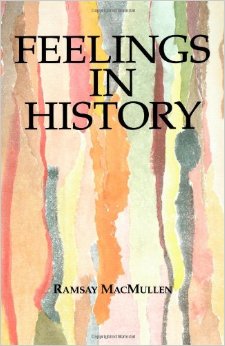
Shiller cites a fine book by fellow Yale professor Ransay MacMullen, Feelings in History: Ancient and Modern, (2003), in which he writes, “History is feeling. It is feelings that make us do what we do. And feelings can in fact be read. But the reading of them requires writers and readers to join their minds in ways that have long been out of fashion among students of history”.
History, financial markets, consumer spending, virtually everything in our economy is driven by feelings. And feelings are evoked by stories about people, challenges, conflicts, crises and how they deal with them.
Conclusion? When you invest, try to analyze the prevailing ‘narrative’ or story that is driving human behavior, including the emotions underlying it. Is it valid? Is it evidence-based? Or is it superstition and empty guesswork? If the narrative is groundless, sooner or later (it might well be much later!), the story will change and reverse. Consider a contrarian (buy when everyone is selling) strategy.
What is the TRUE story? The real narrative? How do you know? What stories are people telling themselves?
In your startup business – what is YOUR underlying story, the story about how you create value for your clients? Is it powerful? What emotion does it evoke?
Feelings drive behavior. If you’re investing, a buyer, analyze which feelings are at work, and why, by identifying the dominant stories. If you’re an entrepreneur, a seller, shape your stories, by identifying clearly the motion you want to create with your innovation, then build everything you do around it, with a powerful narrative.
An Innovation ‘Formula’: X + Y
By Shlomo Maital

Some 158 years ago, on March 30, 1858, Hymen Lipman was granted a patent for his invention of a pencil with a built-in eraser (U.S. Patent # 19,783). Lipman was a stationery entrepreneur. He invented many practical devices that made office work easier and faster — for instance, putting glue on the flap of an envelope.
Patents require things that are “novel” and “non-obvious”. Erasers existed. Pencils existed (since 1565, when a Swiss scientist filled a wood cylinder with graphite, found to be better for marking than lead. (Apparently, until the 1770s, pencil marks were erased using balled-up bread!). Isn’t it obvious that pencils need erasers on them? Yes – but only after someone thinks of it and does it.
Lipman understood that innovation requires two things: novelty and usefulness. Putting an eraser on a pencil was highly useful. Lipman sold his patent in 1862 for the enormous sum of $100,000 ($2 million in today’s money) to Joseph Reckendorfer, in 1862. Soon, the patent was infringed by A.W. Faber, the pencil company, and Rekendorfer sued. The U.S. Supreme Court said, no infringement! The eraser pencil was nothing new. All Lipman had done is combine an eraser (X) with a pencil (Y), two known technologies.
The court got it totally wrong. A great many inventions involve combining in unique ways, existing things. X + Y is a known, proven formula for innovation. Take for instance one of my former students Do Hyun Kim, a Korean engineer with LG, who in 1985 combined a VCR with a TV, in a single box, called it Viewmax – and it became a huge hit. Was this an innovation? Of course.
Take two existing things. Combine them in a unique way. You have an innovation, if it is useful for lots of people. X + Y is innovative, even if the Supreme Court doesn’t think so. Putting WiFi Internet connections into appliances — innovation? Internet of Things? of course.
Source: Haaretz daily, March 30, p. 4.
How to Tie a Ponytail with One Hand
By Shlomo Maital
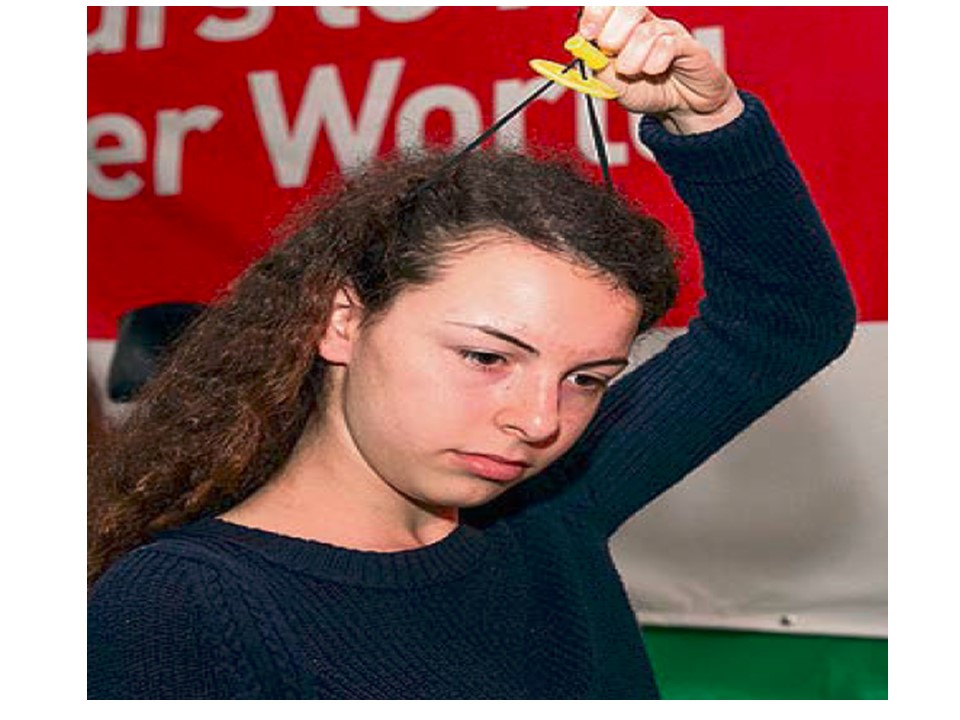
In Hebrew slang, “kuku” means “ponytail” – a hairdo where a girl’s hair is gathered and tied with an elastic knotting device, often just an elastic band.
Tamar, a 15-year-old, had a problem. She had a bike riding accident and was unable to use her right hand as a result, while doing physiotherapy. Alin Hospital in Jerusalem, which specializes in children’s injuries, recently held a “Mike-a-thon Open Source” event, to gather ideas to help children in the rehab program in the hospital. Tamar asked for a solution to her problem: Create a device so that I can tie my ponytail using only one hand, rather than two (normally one hand gathers the hair, the other hand slips the elastic over it).
An Israel Aerospace Industries engineer, specialist in composite materials (used for aircraft wings), named Ilan Sherman came up with a solution for Tamar: an elastic with a small one-way mechanism that can only tighten, but not loosen, so that Tamar can create her ponytail with only one hand.
Soon Tamar will have the use of both hands. But perhaps there are other young ladies who want to one-handed ponytails? Thanks Ilan! Sometimes we need small ideas, not just huge world-changing ones….
Four Reasons Why Scientists Can’t Communicate
By Shlomo Maital

As a professor, I’ve become keenly aware how poor we profs are at communicating our ideas to others, in understandable clear and actionable ways. I think we economists find meaning in life by confusing the most people we can. Now an expert comes along and explains why. Tim Ward’s blog was published in Society for Conservation Biology News and a relative in NYC passed it on to me.
“Four Mistakes Scientists Make When They Communicate:
- Certainty. Scientists are trained skeptics, so they back away from certainty. But outside the realm of science, people interpret expressions of certainty as more likely to be true than expressions of cautious probability. It’s a losing tactic to insist on speaking of certainty only in the scientific sense. Instead, think about how you can speak with certainty in the commonly understood sense. For example, you can say with certainty: “According to NASA, 97% of climate scientists agree the climate is warming. I’m certain the risk is great and we need to act now.”
- If you don’t have a seat at the table, you won’t have a voice at the table. We learned this principle from Dr. Alan Thornhill, who now works for the US Department of the Interior. He told us that at many meetings where policy decisions were being made, he was the only scientist in the meeting. There were many times others turned to him with scientific questions, only because he happened to be in the room. During other discussions he would interject with, “Hold on a minute, we have to look at the scientific research on that before we decide.”
- Assuming the facts will speak for themselves: they don’t. You must advocate for the facts. Communicating for influence is a matter of survival of the fittest. It’s not enough to deliver your information. You are competing with other voices. Use memorable quotes and messages to make your facts stick.
- Focusing on evidence, not on relevance. Scientists too readily dive into the details of their research when speaking in public. But in the real world, if people don’t know why the topic is important to them, they won’t pay attention, and they won’t be listening when you get around to relevance at the end of your talk. In sum, communication is not about output, it’s about impact.”
Big Belly – Revisiting an Old Friend
By Shlomo Maital

Bigbelly wants to transform its solar-powered trash cans into digital hubs offering Wi-Fi access, advertising, and data-collecting sensors. (Oh, and garbage receptacles, too.)
In August 2014 I wrote a blog titled “Why I Live in the House by the Side of the Road”, and in it mentioned Big Belly:
In downtown Brookline, part of Boston, MA., I saw a Big Belly solar powered trash compactor. (See photo). I teach this business case, about MBA student James Poss who won a business-plan contest and used the money in part to help launch this business. The Big Belly saves 3 out of 4 garbage truck trips, helps the environment, is very esthetic, and is simply cool. And it’s got a cell phone – it calls the garbage truck to “come empty me” when it’s full! Poss thought he would sell them to ski resorts. None bought them – but the City of Boston did. Lesson: Get your product out into the market, as fast as you can, and people will tell you how they want to use it, and WHO wants to use it, and you will often be very very surprised. Until you get your product into the market, you will not have a clue about its true value-creating power. Remember: make your product an MVP – minimum viable product, and then launch it. If you wait for perfection, you will almost always be too late.
Now, in a Harvard Business School Working Knowledge article, I am happy to read about Big Belly’s continued success, based on a new case study by Mitchell Weiss. This is a wonderful case about business innovation – innovating how you do business, rather than just the product you innovate. Weiss told HBS Working Knowledge:
“I thought what could be less high-tech than a trash can,” he remembers. When he met with company managers, however, they broke the news that they were transitioning to expand their connected software offering and provide Wi-Fi and other hi-tech services.
“My first thought was, what are you doing to my course?” laughs Weiss. “My second thought was, what are you doing to your company?” Selling hardware to budget-crunched cities can difficult. Bigbelly’s early pitch was that by providing trash compacting in the units (solar powered to boot), additional waste storage would help keep streets cleaner. Another plus: sensors in the units report when the cans are full, enabling cities to optimize pickup routes and save money. Even with initial growth, however, the company wondered why it wasn’t selling even more trash products to more customers.
It turns out that the usually universal sales-winning message of “save money” is not always a convincing pitch for cities. “The reality is, 80 percent of a city’s operating budget is people,” says Weiss. “When you say, ‘save money,’ what they hear is ‘lay off people.’ That doesn’t mean it shouldn’t be done sometimes, but it does make things more difficult.”
A better strategy is selling cities on something citizens need. In Bigbelly’s case, the company aims to leverage the power and connectivity already embedded in the waste stations for a public increasingly hungry for data. Not only are Wi-Fi hotspots in demand by those who can’t afford Internet access, but connectivity is also increasingly desired by smartphone users who want to cut data costs while streaming high-bandwidth content.
“I’ve been surprised at how popular it still is, both to bridge the digital divide and for people who like having access to Wi-Fi instead of using their cellular data,” says Weiss.
Solar trash compactor, as a Wi-Fi hotpot? Now, THAT’s creativity. Go, Big Belly!
Trump is a Fraud – His Business Failures
By Shlomo Maital

Look… the American people have the right to choose whichever Republican candidate they wish for President. They have every right to shout their disaffection with the incompetent, squabbling politicians in Washington who have led American astray, on both sides of the aisle. They have every right to choose Trump.
But what truly disturbs and angers me, is Trump’s lie.
He says that as a successful billionaire businessman, he can run America better than someone who worked as a community organizer in Chicago.
Wait. Successful businessman? Here is the lie. According to TIME magazine, Trump has a very very very VERY long string of business failures to his ‘credit’, after inheriting millions from his dad. Here is the list:
- Trump Airlines
- Trump Vodka
- The Bankruptcies
- The Hair
- The Marriages
- Trump Mortgage
- Trump: The Game
- The China Connection
- Trump Casinos
In his recent victory speech he displayed Trump Steaks…which went out of business in 2007. And his casinos??? The Trump Taj Mahal in Atlantic City went broke. Here is the story: (from TIME):
Donald Trump’s gambles don’t always go as planned. Especially when that gamble is gambling itself. In February 2009, Trump Entertainment Resorts Inc. filed for Chapter 11 bankruptcy protection for the third time in a row — an extremely rare feat in American business. The casino company, founded in the 1980s, runs the Taj Mahal, the Trump Plaza and the Trump Marina. All three casinos are located in Atlantic City, N.J., where the gambling industry has faced a decline in tourists who prefer gambling in Pennsylvania and Connecticut instead. Trump defended himself by distancing himself from the company, though he owned 28% of its stock. “Other than the fact that it has my name on it — which I’m not thrilled about — I have nothing to do with the company,” he said. He resigned from Trump Entertainment soon after that third filing, and in August of that year he, along with an affiliate of Beal Bank Nevada, agreed to buy the company for $100 million. The company reported it emerged from bankruptcy in July 2010.
I think what Trump is doing is running for President, to enhance the brand value of his name, which he sells at exorbitant prices to legitimate businesses.
So, if you want to help Donald Trump pay for his private jet by ‘branding’ himself, vote for him.
If you want someone who really understands business – well, Bloomberg does, parlaying his $10 m. in severance pay into a multi-billion dollar business he created, but he withdrew, precisely because he did not want to pave the way for a Trump presidency.
How ironic.
A failed businessman defeats a highly successful one, because people just don’t seem to get it and are happy and willing to be duped.
Make America Great again? Dump Trump.