
You are currently browsing the category archive for the ‘Global Crisis Blog’ category.
Lighting Up Our World with LED: 2014 Nobel in Physics
By Shlomo Maital
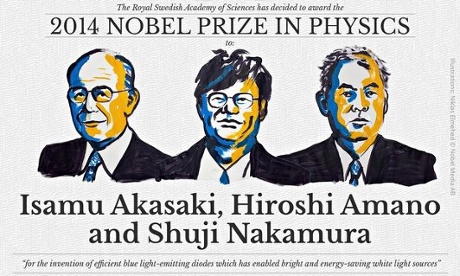
Three Japanese scientists have won the 2014 Nobel Prize for Physics, for their contribution – lighting up the world with LED – light emitting diode technology.
According to today’s New York Times: The three scientists, working together and separately, found a way to produce blue light beams from semiconductors in the early 1990s. Others had produced red and green diodes, but without blue diodes, white light could not be produced, the Royal Swedish Academy of Sciences said in its prize citation. “They succeeded where everyone else had failed.” The Nobel committee said that light-emitting diodes, or LEDs, would be the lighting source of the 21st century, just as the incandescent bulb illuminated the 20th.
The New York Times noted: “The LED lamp holds great promise for increasing the quality of life for over 1.5 billion people around the world who lack access to electricity grids,” the Nobel committee said. “Due to low power requirements, it can be powered by cheap local solar power.”
According to Wikipedia, “a light-emitting diode (LED) is a two-lead semiconductor light source: basic … diode, which emits light when activated. When a voltage is applied to the leads, electrons are able to recombine with electron holes within the device, releasing energy in the form of photons. This effect is called electroluminescence, and the color of the light (corresponding to the energy of the photon) is determined by the energy band gap of the semiconductor.”
The three Japanese scientists managed to achieve “the invention of efficient blue light-emitting diodes, which has enabled bright and energy-saving white light sources.” Previously, light was created with LED technology, but in colors that did not enable replacement of the Edison incandescent bulbs.
Nakamura worked for a time for a Japanese company, Nichia. Nichia awarded him…$200 for his invention. Nakamura left the company in 1999 to join U. of California, Santa Barbara, and sued the company for a fair share of the immense royalties. He settled for $8.1 million.
The ORIGINAL GPS: Our Brain
By Shlomo Maital

The 2014 Nobel Prize for Physiology & Medicine has been announced. It is shared between John O’Keefe, American-born scientist at University College, London; and a husband and wife team, May-Britt and Edvard Moser, at the Norwegian University of Science and Technology in Trondheim, Norway.
Here is what they discovered:
O’Keefe: How do we know where we are? How can we find the way from one place to another? And how can we store this information in such a way that we can immediately find the way the next time we trace the same path? This year´s Nobel Laureates have discovered a positioning system, an “inner GPS” in the brain that makes it possible to orient ourselves in space, demonstrating a cellular basis for higher cognitive function. In 1971, John O´Keefe discovered the first component of this positioning system. He found that a type of nerve cell in an area of the brain called the hippocampus that was always activated when a rat was at a certain place in a room. Other nerve cells were activated when the rat was at other places. O´Keefe concluded that these “place cells” formed a map of the room.
In other words: many many centuries before GPS technology was invented, our BRAINS developed their own internal GPS mapping system. Amazing?
Moser’s: More than three decades later, in 2005, May-Britt and Edvard Moser discovered another key component of the brain’s positioning system. They identified another type of nerve cell, which they called “grid cells”, that generate a coordinate system and allow for precise positioning and pathfinding. Their subsequent research showed how place and grid cells make it possible to determine position and to navigate.
The discoveries of John O´Keefe, May-Britt Moser and Edvard Moser have solved a problem that has occupied philosophers and scientists for centuries – how does the brain create a map of the space surrounding us and how can we navigate our way through a complex environment?
For those who are religious and believe in the Creator, this amazing capability of the brain to orient us using specialized brain cells, and creating grids, GPS coordinates and maps, is a fine example of the miraculous nature of the human brain. Congratulations to these scientists for helping us understand how this works!
Does YOUR doctor listen to you? But, really listen?
By Shlomo Maital

Does your doctor listen to what you say? I mean, REALLY listen? And ask you a lot of questions?
I’ve just finished reading a fascinating book, Reaching down the Rabbit Hole: A Renowned Neurologist Explains the Mystery and Drama of Brain Disease, by Dr. Allan H. Ropper, and Brian David Burrell. (St. Martin’s Press, 2014). Basically Burrell, a wonderful writer, was a fly on the wall, and wrote down stories about how Ropper figured out what went wrong with people’s brains.
A key point Ropper stresses is this: The technology for scanning brains has advanced tremendously. MRI and CT scans reveal a great deal. But nonetheless, a great doctor still needs to listen to the patient, observe and ask questions. Dr. Ropper writes:
“Many [patients] have driven for an hour or two, even three, to [Boston], and they want to be heard. What they hope, what they expect, what they decree, is that we take the time to listen, because the act of listening is therapeutic in itself. When we do it right, we learn details that make us better doctors for the next patient. The residents may not get this yet. They are focused on diagnosis and treatment, on technology, on scales, titers, doses, ratios, elevation, and deficiencies. All well and good, I tell them, but don’t forget to listen!
Does your doctor listen to you. Really listen? If not – and who can blame them, many times they are required to see X patients per hour, leaving no more than 10 minutes per patient — try to find one who does.
As I’ve noted before, even in modern medicine, technology comes last, not first.
America’s 3 % Economy: Why It Is In Deep Trouble
By Shlomo Maital
Writing in the latest TIME magazine issue (Oct. 6), Rana Foroohar explains why the U.S. economy is in deep trouble – and why many are distressed that nobody seems to be tackling the core issues.
Foroohar says it has taken 41 months to replace the jobs lost in the “Great Recession” (2008-11). This is more than three years, far longer than in previous recessions.
But, which jobs?? Mostly, burger flippers, at $8/hr. “That’s a problem in an economy that’s made up chiefly of consumer spending. When the majority of people don’t have more money, they can’t spend more, and companies can’t create more jobs higher up the food chain. So, poor job creation and flat wages are holding back a stronger recovery in consumer spending.
Foroohar concludes: “If this trend is left unchecked, we are looking at a generation that will be permanently less well off than their parents.” This is disastrous, because there is an intergenerational contract, in which older generations offer younger generations the hope of better lives, jobs and strong futures. This is the first time the opposite is the case. We are giving our children a far worse economy and society than the ones we received.
This is by far the core issue today facing America –not ISIL. Let’s focus on the real issues. America’s real enemy is at home, not abroad – its own failing economy. A general estimates the war on ISIL could cost as much as $10 b. This is money needed for schools, colleges, research, innovation and technology. ISIL, the Islamic State, is hurting America deeply simply by diverting resources into jet fuel, smart bombs and cruise missiles. Boots on the ground? America needs special forces to ‘light up’ with lasers the true problem – education, poverty, and above all, low-wage jobs.
Are You Kidding? Alas, Scientists Rarely Are
By Shlomo Maital
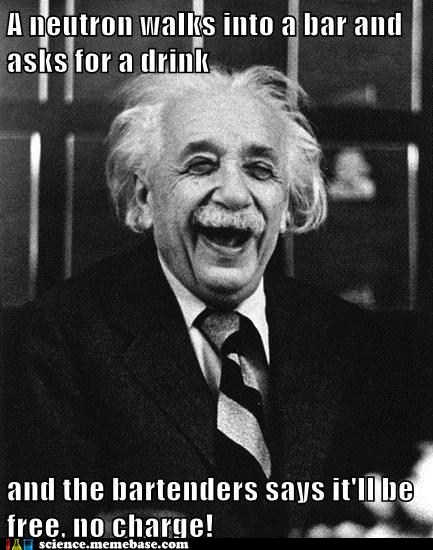
A friend drew my attention to an article in Chronicles of Higher Education, by Tom Bartlett, Sept. 29, about the utter lack of humor in scientific research proposals, and in general, among scientists. (An exception is the late Nobel physicist, Richard Feynman, whose book was titled, Mr. Feynman, You Must Be Joking!). Bartlett asked the editor of the leading economics journal, American Economic Review, whether “she could think of any joke, any tiny moment of amusement, one solitary witticism that has passed across her desk. Anything, even if it was rejected.” “I can’t think of a single thing,” replied Prof. Goldberg, confirming economics’ nickname as the ‘dismal science’.
Why is this a problem? Why shouldn’t science be utterly serious? Isn’t humor frivolous? The answer is no. Research on creativity shows that among people seeking ideas, humor, and in general a light, playful attitude, are powerful contributors to an ambience that generates great ideas. Show me a stiff, and I’ll show you someone without ideas, in all likelihood.
Bartlett provides an example.
“Stephen Heard once wrote a paper about how pollen spreads among the flowers of a certain endangered plant. In it he speculated that the wind might play a role by shaking loose the pollen. To support his point, he cited “Hall et al., 1957″—a reference to the songwriters of the Jerry Lee Lewis hit “Whole Lotta Shakin’ Goin’ On.” But a reviewer nixed Heard’s little joke. “Although I appreciated the levity of the reference,” he wrote, “I think it is not appropriate for a scientific publication.”
That reviewer reminds us of the two old grumps in The Muppets, whose total lack of humor was in itself hilarious. I myself encountered this, in submitting research papers; anything in my writing style that sought to be interesting, journalistic, was instantly shot down, like a shoulder-guided missile homing in on a helicopter.
Hey, reviewers! Lighten up! Loosen up! We need new thinking, new ideas. Absence of humor often means absence of open-ness to anything unusual or weird. Even Einstein told jokes (bad ones – see above).
Smoking Gun – How the FED Pampered Goldman Sachs
By Shlomo Maital
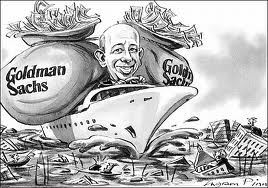
Carmen Sigarra is a veteran lawyer, who worked for the Federal Reserve, overseeing banking operations, specifically Goldman Sachs. She was fired and is now suing the Fed.
During her stay at the Fed, she recorded nearly 50 hours of sessions in which Fed examiners checked Goldman Sachs transactions. She has now released these tapes, and they will be the subject of an upcoming episode of This American Life, on PBS (American public radio). Don’t miss it!
What emerges is a picture of lax regulators, overly delicate with how they treat Wall St. Big Money, especially Goldman Sachs. It demonstrates the culpability of the Fed in the 2008 financial collapse and crisis. Blame the Fed is the title of an article I published in Barron’s, and these tapes confirm it. Blame Goldman Sachs too – they are not blameless.
Specifically, one transaction that illustrates the whole picture was this: the embattled Spanish bank Santander was being pressed by European regulators to boost its capital – that is, to have more liquid cash on hand, in case its assets declined in value. To avoid doing this, Santander needed to get some assets off its books. So it asked Goldman Sachs to babysit them – keep the assets on Goldman’s books. For a hefty fee, of course. Goldman agreed… it’s legal, (but shady, said the Fed examiner. Legal, but shady. That is the mantra of many people on Wall St.).
Goldman attached a clause: The transaction was subject to Fed approval. So the Fed could have killed this ‘shady’ transaction. But of course they didn’t. And it went ahead. And so did many many many other similar, much worse transactions.
What do we learn? Wall St. has immense power. The alleged independence of the regulators, the Fed, is a fiction. This is why another financial collapse, totally different in nature, could well occur.
Why We STILL Need America – and Obama
By Shlomo Maital
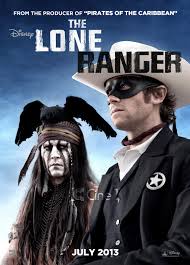
As a child, I recall listening to The Lone Ranger on the radio. The Lone Ranger wasn’t alone; his Indian friend Kemo Sabe rode with him. Together they fought evil, injustice, crime and helped the helpless.
Today America is again The Lone Ranger. Ebola outbreak? America sends 3,000 soldiers to set up as many as 17 emergency treatment centers in Liberia. Why? No other country can or will. And Ebola is a threat to all of Africa and perhaps the world. Liberia is an entire nation under lock-down! And health workers and journalists are murdered in Guinea, by suspicious villagers who think they are bringing the disease rather than fighting it.
ISIS? (Obama is right. It is really ISIL, Islamic State in the Levant, because ISIL believes they will establish the Caliphate throughout the Mideast, including Lebanon and Israel. What you call things DOES matter!). America to the rescue, leading a ‘coalition’, but have no doubt, most of the military action will be American. Because Europe has given up defense spending and prefers to shelter under American defense spending.
If there is a major humanitarian disaster somewhere in the world, that takes resources and abilities, it will be largely America to the rescue.
So, yes, we can criticize America, Americans and their leader President Obama. But as many have noted, at present there is no other country who can come close to replacing America, in its will and ability to come to the rescue, like The Lone Ranger. And yes, America does stumble, fail to fully understand the cultures in which it operates, and yes, it does endlessly debate its decisions to intervene abroad. But in the end, like The Long Ranger, America is there.
So – thanks, America. We really do give you a bad rap.
Why U.S. Stock Price Rise IS a Bubble — Beware
By Shlomo Maital

The Standard & Poor 500, the broad index of Americna stocks, has set new records this summer. This, despite the flagging U.S. economy, an unpopular President, gridlock in Congress, and mountains of cash held abroad by U.S. multinationals, stubbornly refusing to invest it in their own country.
Writing in the London Telegraph, Andrew Davis notes: “US shares are undoubtedly expensive – on some measures such as the Cyclically Adjusted Price-Earnings ratio, which uses a 10-year average of earnings to calculate their current valuation, they have only been more expensive a few times in the past century. “
What is going on? Is it a bubble?
Andrew Davis has a simple answer. Stock buy-backs.
“Companies are using their cash, and cheap interest rates, to buy their own stock, in large amounts. That said, it is clear that one of the forces that has driven the long rise in US equity prices has been the willingness of companies to buy back their own shares. A lot of this buying has been funded by companies taking advantage of extremely low interest rates to issue debt and using the proceeds to buy in their own equity.”
Personally I would not invest in companies that have nothing better to do (R&D, innovation, HR, infrastructure, facilities, IT) with their cash than curry short-term favor with myopic shareholders by artificially pumping up their own stock price. When I tell this to CEO’s, they frown, or worse – but they agree, in their heart of hearts. They simply feel they have no choice but to buckle under shareholder pressure.
They DO have a choice. Present a capital investment program. Invest when other companies are afraid to. Then, when the recovery finally comes, you will have a major competitive advantage — and your stock price will rise for the right reasons.
Scotland: The REAL Story
By Shlomo Maital

The Scottish flag, chosen by the Scottish Parliament in 2003 (yes, there is such a thing) is very beautiful; it forms part of the flag of the United Kingdom and Northern Ireland. (There was a huge debate over the precise color of blue).
Today the Scots are voting on independence. The vote is very close. It is roughly even. Some 4.2 million Scots men and women have registered to vote, or 97 per cent of the voting age population aged 16 and over (yes, 16 and 17 year olds can vote!). It is expected that at least 80 percent will vote. I predict the ‘no’s’ will win, by a small margin.
There is fierce controversy. UK Prime Minister David Cameron predicts apocalypse, catastrophe, if the vote is “yes”. And just a one-vote margin in favor of yes will do the trick. There are many who favor a ‘yes’ vote and independence, predicting utopia.
Where does the truth lie?
Smack in between. The truth is, it makes almost no difference whether Scotland is an independent nation or remains a part of the UK.
Why? If “yes”, it will retain the British currency, the pound, trade with Britain, remain part of the EU… basically nothing of importance will change. What will change is that Scotland will be formally, nominally and independent country. So? Who cares what you call it? What matters to the people of Scotland is their wellbeing and standard of living. And that simply will not change.
So, don’t believe the hysteria. Neither ‘yes’ nor ‘no’ vote hysteria is right.
Scotland is part of a broader geopolitical picture – the fact that increasingly politics is local, while business is global. The reason is, many regions feel they can do better without the burden of the lazy bureaucrats in the central government. And there is some evidence. Slovenia divorced Yugoslavia, just in the nick of time, and has done super-well. Bangla Desh divorced Pakistan, and has not done so well, though arguably better than Pakistan. Quebec did NOT divorce itself from Canada; if it had, it would really not have mattered, business would have remained global (Canada wide).
What about Scotland’s vast oil wealth? It’s not really wealth; it is leased by big oil and Scotland gets royalties, not that much, because this oil is among the most expensive in the world to pump from under the sea. What about Britain’s nuclear naval base in Scotland? It won’t change; it will be leased. Who owns the RAF jet fighters based in Scotland? Well, who the heck cares?
Let the politicians on both sides babble on. Business, trade, economics are global. They disregard borders these days. So whether or not there is an imaginary border between Scotland and England matters not at all.
The Super-Rich: The REAL Explanation
By Shlomo Maital

Roger Martin
Want to know the real story behind the super-rich – those who pull enormous inflated salaries? The Dean of Univ. of Toronto’s Rotman School of Management, Roger Martin, a former McKinsey principal, tells us the story in the latest issue of Harvard Business Review:
The rich are getting richer in the United States, surely, but the real problem, says this former business school dean, is who exactly is getting mega-rich and how. It’s not the capitalists (that is, the shareholders and investors). It’s the speculators (the people who manage their money). The top 25 hedge fund managers in 2010 raked in four times the earnings of all the CEOs of the Fortune 500 combined. How come?
Here is the explanation.
Through a once-obscure mechanism called the “2&20 formula.” Derived from a 2,000-year-old practice whereby Phoenician ship captains took 20% of the value of a cargo successfully delivered, it’s the formula that governs how hedge fund managers are compensated — a 20% cut of the profits generated (taxed at the 15% capital gains rate) on top of a 2% asset management fee. And what are those 25 people doing? They’re borrowing stock, holding it for sometimes less than five minutes, and creating and profiting from the resulting volatility.
And – the solution? Pretty simple, according to Roger Martin:
This problem can be fixed with tax laws that penalize high-frequency trading and require the profits to be taxed as income, and concerted efforts among pension and endowment funds to stop lending the overpriced hedge fund managers the stock they’re playing with.
What are the chances the U.S. Congress will fix the problem? With obstructionist Republicans calling the tune, and with November elections upcoming, with the Democrats in danger of losing control of the Senate – less than zero.


