You are currently browsing the category archive for the ‘Innovation Blog’ category.
Global Crisis/Innovation Blog
Free Agent Nation: What to Do if you Can’t Find a Job
By Shlomo Maital
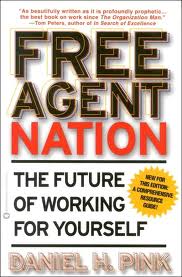
I am encountering growing numbers of smart, experienced, talented people who just cannot get a job. And the longer they are out of work, the tougher it gets. Some companies won’t even interview those out of work for a year or more, on the grounds their human capital has disintegrated.
In his new book Free Agent Nation: The Future of Working For Yourself, author Daniel Pink points out that a new form of employment is evolving rapidly, almost unnoticed, which he calls “free agentry”. Now, these are not just ‘temps’, a much-maligned and exploitative form of employment. Pink notes America’s largest employer is in fact Manpower, an agency that supplies ‘temps’. Many ‘temps’ would really like a full-time job and just can’t get one.
The three types of free agents are: 1. Solos, 2. Temps, and 3. Microbusinesses.
1. Solos: There are 33 m. Americans who are self-employed, and most are ‘soloists’ because they prefer it. These solo businesses employ one person, or are teams of up to 4 or 5, and ‘sell’ their knowledge. They comprise 26 % of all employment, up from 22% in 1998. Solos prefer it and indeed earn 15 % more than those in comparable jobs.
2. Temps: There are 3.5 temps in America who would rather have a permanent full-time job. If you add them to the unemployment figures, the 9 % unemployment rate looks a whole lot worse. Even governments exploit temps, who have little or no benefits. There is need for real legislation in this area to protect their rights. In a bad job market, they are being scalped.
3. Micro Businesses: These are real small businesses, employing 2-3, and they comprise a half of all U.S. companies. The Internet and IT have greatly reduced the size a business needs in order to be viable.
Pink says that free agents make meaning in four ways: They have much more freedom; they have strong accountability (if you employ yourself, you are accountable for your own success); they create authentic value (you are only as viable as your next value-creating offering); and they define success by their own criteria, not by any P&L.
What is happening now, Pink says, is that groups of free agents are organizing social networks, to help and support one another. These are ‘fan clubs’, confederations, or ‘entreprenetworks’, facilitated sessions to offer mutual assistance. There are also growing numbers of matchmakers, who bring free agents together with those who need them, and also mentors and coaches, who assist free agents and dissolve their loneliness. We are even beginning to see free agent IPO’s, as individuals issue stock on…themselves. Free agents even issue their own bonds. An example? David Bowie, rock star, who sold $55 m. worth of David Bowie bonds, 15 year bonds paying 7.9 per cent and graded AAA by Moody’s.
In the age of the Knowledge Revolution, those who have knowledge can offer it, on their own, without signing away their lives and their souls to big corporations whose values they reject. And even if you’re looking for a job actively – in the meantime, why not become a free agent? Who knows, you might love it so much you’ll be one forever.
Global Crisis/Innovation Blog
Three Stories: Startups an Inch from Failure And a Centimeter from Huge Success
By Shlomo Maital
It is the nature of startups to be close to unbelievable success, enjoying meteoric growth, and at the same time at the edge of total failure. Here are three examples.
1. Groupon: Web-ify a humdrum product
 Andrew Mason
Background: “Groupon (“group coupon”) is a deal-of-the-day website that features discounted gift certificates usable at local or national companies. Groupon was launched in November 2008, by now-CEO and Pittsburgh native Andrew Mason. The idea subsequently gained the attention of his former employer, Eric Lefkofsky, who provided $1 million in “seed money” to develop the idea.
According to Reuters, “Groupon Inc raised $700 million after increasing the size of its initial public offering, becoming the largest IPO by a U.S. Internet company since Google Inc raised $1.7 billion in 2004. The global leader in “daily deals” is now valued at almost $13 billion after saying it increased the offering by 5 million shares to 35 million in total and pricing them at $20 each, above an initial range of $16 to $18.”
Groupon is generating four times as much revenue as Google was, at this stage (three years after its first sale). It already employs 10,418 people, as many as Google had in its year eight.
Groupon is a classic Web business which is both close to utter collapse and close to gigantic jackpot earnings, at the same time. It has negative working capital, according to Richard Waters, who writes a Technology column for the Financial Times (Nov. 3). It owes far more to merchants (for the coupons) than it has cash on hand. It has 143 m. email addresses in its databases, but only one of them in five has ever bought a coupon. It is growing at 72 per cent a quarter, but the amount of money it retains per coupon has collapsed, by 5 percentage points, to 37 per cent. So, either the novelty value of coupons has collapsed, and with it Groupon, or, Groupon is showing it has a solid business by slashing its spending on subscriber acquisitions and is ‘cruising’.
Waters perceptively notes Groupon’s (and Mason’s) problem. Groupon has to do what Jeff Bezos did at Amazon – turn a one-product Internet business into a broader “solutions” business. Waters says doing this, on the ‘fly’, is like changing tires on a racing car while the car is doing 200 mph on an F1 track. If he can pull it off, Waters say, Mason will have earned his place among the handful of lasting dotcom winners.
2. Dropbox: Become What You Need
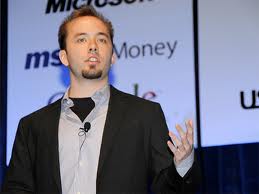 Drew Houston
Dropbox is a digital storage service that has surged to 50 million users. Steve Jobs tried to acquire it – and was turned down flat.
Founder Drew Houston tinkered with an IBM PC Junior at age 5, and was programming at age 14. He had startups in high school already. Dropbox is his sixth! After reading Daniel Goleman’s Emotional Intelligence at MIT, he realized that “smarts aren’t enough”. He started reading business books. Houston was once riding a bus to New York. He planned to work during the 4-hour ride from Boston to NYC but forgot his USB memory stick. Frustrated, he started building technology to synch files over the Web. Four months later, he flew to San Francisco to pitch his startup idea to an incubator. The incubator head rightly said he had to have a partner. So he found someone named Ferdowsi, who studied computer science at MIT. With just 6 months to go, Ferdowsi dropped out of school to work on the startup Dropbox with Drew. They got a $15k grant from the incubator, and went to work, eager to make Dropbox work on EVERY computer, including the closed-system Mac. Drew spent 20 hours a day trying to reverse-engineer “the guts of the Mac”. Dropbox solves a need among people who have multiple devices – PC’s laptops mobiles, etc. – and have multiple files and photos stuck everywhere. “Devices are getting smatter – your TV, your phone, your car – and that means more data spread around,” says Houston. “You need a fabric that connects all those devices. That’s what we do”. And it started with something that Drew himself wished he had. Dropbox has become what Drew himself needed.
Like many Web-based businesses, it is an inch from success and a centimeter from failure. At his final keynote speech Steve Jobs announced iCloud, which does basically what Dropbox does. Drew’s response: he fired an email to his staff, “we are one of the fastest-growing companies in the world”, he wrote, and then added a list of other one-time meteors that fell to earth: MySpace, Netscape, Palm, Yahoo…..
Drew has solved the “freemium” riddle. 96 % of his users pay nothing. He has only 70 staffers, mostly engineers, and grosses enormous revenue per employee. The revenue comes from those 4% who pay. He offers free 2 gigabytes, plus upgrades to 50 gigs for $10 a month or 100 gigs for $20. Growth is built in to the business model. As clients store more and more data, they need more and more space, so even without new clients, Dropbox revenues will grow rapidly. Dropbox has strong VC backing, including Sequoia, Index Ventures, Greylock, Benchmark, and even Goldman, Sachs. It’s close to huge success, and perhaps about to fail.
2. Largan Precision: Find a Sweet Spot in the Profit Pool
Largan’s founders are Largan Group Chair Scott Lin and Largan Precision Chair Tony Chen
Global smartphone sales this year will total 468 million units, and 652 million units in 2012, according to Gartner! This comprises a huge ‘profit pool’ – and not all the profit is being made by the phone innovators themselves. A lot of it is made by those who supply key components. One of those is a little-known quiet company called Largan Precision. The founders Lin and Chen, bet on camera phone lenses – and invested a fortune to become the leading supplier of this key component. They designed them for manufacturability, rapid production, because mobile-device makers need just-in-time parts very quickly to ramp up output and meet soaring demand.
Largan is a Taiwanese company. It is the 2nd most profitable, out of 1,000, manufacturer in Taiwan. Largan ha sspent $50 m. in capital yearly. The two founders are very quiet and manage a low profile. Why? They want to avoid upsetting major clients like Apple and they want to keep company secrets from competitors, who are dying to know how they do it. The mobile-phone lens industry is huge. It will produce 1.7 billion units this year, at an average price of $2 each for smartphones, and $1 each for simpler handsets. This is why Largan’s bet on smartphones was so wise. Largan’s lens accuracy is 80 %, far higher than the industry average of only 50%. The next challenge for Largan is to generate 3D lenses, easy to fit and easy to make. Largan likes to say it is very nimble, able to handle rush orders. And in the smartphone business, ALL orders seem to be ‘rush’.
A key breakthrough for Largan Optronic was the insight that you could switch from glass lenses to plastic, which is cheaper and far easier to mass produce. It was a gamble, but the investment in plastic lens technology paid off. It was how Largan differentiated itself from competitors. Another key to its competitive advantage is its hiring policy. Largan pays more than other Taiwanese employers, and makes sure it pays overtime, rather than demand free extra hours. It trains its junior staffers intensely, so those who join Largan know they are going to learn a lot. In return, they must offer intense dedication. The turnover rate is very low, despite the high-pressure job.
Apparently, Apple makes up a third of Largan’s business. The rest comes from HTC, HP, Lenovo and Nokia. Each new phone raises the bar for the lenses.
Long ago, Microsoft and Intel (the “Wintel” model) found that it was they who could make high gross margins in the PC business by supplying the microprocessors and operating system (DOS and Windows), a business IBM scorned at the time. Since then many wise entrepreneurs have found a ‘sweet spot’ in the profit pool of a new and growing industry. If you can make a component for a product that is hot and in demand, you can build a powerful business. You don’t need to make and design the whole smartphone, for instance, in order to profit from the smartphone industry, as Largan founders Lin and Chen have discovered.
As an OEM, dependent on the companies to whom it supplies lenses, Largan is always on the knife-edge. It has to anticipate its clients’ needs, and be ready to meet them when they demand components. Like most such businesses, Largan is just one product away from failure. But so far, it has found a key sweet spot in the sweet smartphone industry and has maintained its competitive edge there. And it has kept out of the limelight, to avoid drawing attention to the fact that major companies like Apple rely heavily on component makers for their innovative success.
These case studies are based in part on articles in Forbes Asia, Nov. 2011.
Global Crisis/Innovation Blog
Those High-Paying Manufacturing Jobs?
No, Get Real, They Aren’t Coming Home from Asia
By Shlomo Maital
London School of Economics economic historian Tim Leunig, writing in the Oct. 30 Financial Times issue, has bad news. Those high-paying manufacturing jobs that migrated to Asia? The ones politicians like to dream about bringing back home to the West? (“Reshoring”, or reverse offshoring). They’re not coming back.
Here is why.
* The reason China is eating the West’s lunch, the reason its exports are so highly competitive, is NOT primarily because of its undervalued renminbi, as America loves to claim almost daily. It is because its labor productivity has risen by an average of 10 per cent a year for two decades! That means that labor productivity in China has doubled three times, and is now 8 times higher than it was twenty years ago! It is not that China’s wages are so low ($2/day in many cases), but that its productivity is so high relative to those wages. Labor productivity in the West has risen very slowly in the same period.
* Suppose that China’s wages DO rise. They will then lose competitive advantage, and lose some of the manufacturing jobs, right? But to whom will they lose them? UK? USA? No. They will lose them to the new tigers, to Vietnam, for instance, eager to move in to the manufacturing value chain in places where China is moving out of, moving up from.
* And suppose manufacturing DOES come home to the West, in part. Manufacturing has become extremely productive in its process technology and modern plants employ relatively few workers. Leunig says that even if America got ALL of China’s manufacturing, it would still only reduce unemployment by about 2.75 per cent. And that, of course, is an utter pipe dream.
No, reshoring won’t happen. So what we need to do, is marshall our creativity and innovation to become better in doing what we do now in the West, which is services – an area where productivity has lagged badly, because, for some reason, nobody thinks it is important. This, despite the fact that process innovation is proven to be far more profitable, and far less risky, than product innovation.
Global Crisis/Innovation Blog
Don’t Give Up! Black Sabbath & Silver Computers
By Shlomo Maital

Tommy Iommi’s fingertips
It may be that creativity is over-rated, as a key tool for innovators. Dogged stubborn persistence, “don’t give up”, is under-rated. Here are two stories to illustrate why.
* Steve Jobs’ biological sister Mona Simpson, with whom he was very close, wrote a moving eulogy for her brother, given in a California church. She recounts that her brother’s over-riding value was not novelty, or innovation, but beauty. He understood that “what is ugly now may or will be beautiful in the future”. He sought beauty later.
Mona recounts that her brother never ever gave up. Once, afte he had been fired from Apple, some 500 Silicon Valley business leaders were invited to a dinner with the President of the United States. Jobs, pioneer founder of Apple, was not invited. It was a deep humiliation. He was badly hurt. But the next day, he went to work anyway, at Next. He worked hard, every day, all day, all the time. And he never gave up. Perhaps his working class background helped give him the resilience to do so.
* Tommy Iommi is the lead guitarist for the heavy metal rock group Black Sabbath. According to Allmusic, “Iommi is one of only two guitarists (the other being Led Zeppelin’s Jimmy Page) that can take full credit for pioneering the mammoth riffs of heavy metal”. Iommi grew up in a poor neighborhood in Birmingham. He wanted to become a rock guitarist, but like many young people took a job in a Birmingham steel mill (Britain still had them in those days). One day a friend didn’t come to work, so Iommi replaced him, working an unfamiliar press. He chopped off the tips of his middle and index fingers, on his right hand. Most people would have given up a musical career after that – how can you play guitar without finger tips so vital for pressing the frets and making the notes? Iommi made ‘thimbles’ for his missing fingertips, and smoothed them down with sandpaper. He then loosened his guitar strings, to make it easier to hold down the frets. It turns out that the thimbles, and the loose strings, contributed to creating a unique deep funky sound that characterizes heavy metal and made Black Sabbath one of the first hysterically-popular heavy metal rock bands.
Yes, creativity is great. Vital. Crucial. But implementing creative ideas is really tough, and only if you have the dogged determination and resilience to do so, can you break through and succeed. Steve Jobs and Tommy Iommi prove that. Creative people find new ways to do things. Resilient stubborn people find ways to make them happen, against all odds, despite setbacks and obstacles. So let’s cultivate our creativity, exercise our creativity muscles, and exercise our ‘stubborn’ muscles, and hone our dogged determination. Creativity and stubbornness are a winning pair.
Global Crisis/Innovation Blog
MF Global’s Bankruptcy: Here We Go Again?
By Shlomo Maital

Jon Corzine
We are fast approaching Einstein’s definition of insanity (doing the same thing and expecting different results). We have another major Wall St. bankruptcy, this time MF Global, headed by a financial giant, Jon Corzine, who ran Goldman, Sachs, was a US Senator, governor of New Jersey… How can, again, a major Wall St. player undertake irresponsible risk and cause massive harm to his investors?
Who are Jon Corzine and MF Global?
Corzine is a folksy ambitious person, who built Goldman Sachs into a Wall St. powerhouse, was pushed out by Hank Paulsen, who later became US Treasury Secretary and disastrously chose not to bail out his former competitor Lehman Brothers on Sept. 15, 2008, and then like Paulsen went into politics. He is very smart, very ambitious, and though wealthy, chose to try to serve his country, in politics. He cannot in any way be represented as an evil person.
What went wrong?
MF Global was a firm spun off from a UK hedge fund, Man Group, in 2007. Man Group is still a huge investment fund and a major player. Corzine took over MF Global last year and led it to become the eight largest bankruptcy in history. Corzine ‘leveraged’ MF Global 30 to 1, even though in an interview given when he first took over the firm, he specifically said he would not do this. That means, he took on debt and obligations 30 times the firm’s capital. What this means is, if the firm’s assets fall by only 3 percent, the company has negative net worth.
How and why did Corzine do this folly?
Like most bankruptcies, it came about because of a ‘sure bet’. Corzine bet that Ireland, Italy, Spain and Portugal would never in a million years allow their sovereign bonds to go into default – even though Russia, for instance, defaulted (under Yeltsin) in August 1998. So he placed a huge bet, buying huge amounts of bonds of these countries with short maturities, due to mature in 2013, believing that when they matured, he would get full face value for the bonds, while he paid as much as 30 per cent below face value to buy them (a bargain, because of what he believed was irrational and stupid hysteria by bond traders). What has actually happened, is that the value of those bonds has nosedived, as those countries struggle to raise new borrowing to pay off old debts. And as this happens, MF Global has been receiving ‘margin calls’ – meaning, they borrowed money to buy those bonds, using the bonds themselves as collateral, and when the bonds fall in price, they are asked to fork up more collateral, to back their loans, and when MF Global was unable to do so, they are unable to meet their liabilities and therefore are formally and officially bankrupt.
Where were the people who are supposed to regulate MF Global and other such firms?
Busy. The regulator, CFTC, Commodities Future Trading Commission, has been very busy writing and trying to implement the complex Dodd Frank Act, a crazy-quilt piece of legislation cobbled together in 2009. They don’t really have the time or manpower to oversee firms like MF Global.
They should have. MFG, according to Financial Times, had futures and options positions on the Chicago Mercantile Exchange, amounting to over $100 b., and comprising customers who make up 28 per cent of the trading on this exchange. MF Global was indeed a big player. This was not supposed to happen. MF Global was supposed to have ‘segregated client accounts’, which kept clients’ money separate and provided a firewall for it. Now, no-one can find hundreds of millions of client money. It is likely gone forever.
What did Corzine say?
He said he was experiencing “great sadness”.
Not as much, Mr. Corzine, as the people whose savings you destroyed, with a reckless and irresponsible gamble.
Chances are, MF Global is not the last of its kind. Einstein got it right. It is insanity.
Global Crisis/Innovation Blog
Can You Spot Luck When You See It? On Jim Collins’ “Great By Choice”
By Shlomo Maital
A short passage in one of Jim Collins’ books (can’t recall if it was in Built to Last, or Good to Great…) changed my life. In it Collins recounted advice he got, as a young lecturer at Stanford Business School, from an experienced Stanford management professor. “Don’t worry so much about your delivery and style,” he was told. “Make sure you have good content.” In this age of ‘pitch’, ‘marketing’, ‘spin’ and ‘theatre’, many of us educators forget that in the end what matters is the solidity and validity of the material we teach. Collins took heed. His books are based on exhaustive research on thousands of companies, distilling it down into insights for, say, the 11 companies whose performance exceeds the rest by an order of magnitude (Good to Great). I tried hard, from that time, to ensure what I taught was solid and based on textbooks that I wrote myself.
In his new book with Morten Hansen, Great by Choice, Collins and Hansen repeat Good to Great, but this time for entrepreneurs. They ask, why do some entrepreneurs build companies that outperform everyone else by ten times? They ask, ““why do some companies thrive in uncertainty, even chaos, and others do not?”
Recently, Collins and Hansen wrote a short piece in the New York Times based on their book, about the following key issue: How much does luck count for? How much does it explain? What they find buttresses Louis Pasteur’s famous saying; “Chance favors the prepared mind”. Luck is random, by definition. Those who gain most are those who are ready to spot it, and leverage it, with agility, courage and speed.
Here is how, according to Collins, Microsoft was born and over $300 b. in new wealth was created. In Jan. 1975 Paul Allen spotted an article in Popular Electronics, “World’s First Microcomputer Kit to Rival Commercial Models”, about the Altair. Gates and Allen thought they could convert the programming language Basic into a product that could be used on the Altair. At Harvard Gates worked on a PDP-10 computer on which he could develop his idea.
A lot of luck, right? Harvard! PDP-10! But – ask, how many millions of eyeballs read that very same article? Why did no-one else think of using Basic? And how many math and computer whizzes were there at the time, along with Gates, at Stanford, MIT and elsewhere? And how many of them changed their life, stopped sleeping, “inhaled their food”, defied their parents, dropped out of school, moved to Albuquerque to work with the Altair — and how many had the speed and urgency to ship Basic for altair, debugged, before anyone else? Luck, yes. Prepared mind, and dogged hard work – you bet. And Gates’ driving hard work throughout his career has been greatly undermentioned. So, by the way, has that of Steve Jobs. In her eloquent eulogy for her biological brother, Mona Simpson speaks of how hard Steve Jobs worked throughout his life, every single day. It recalls Malcolm Gladwell’s book Outliers, about the secret of being outstandingly successful: 10,000 hours of practice. Mitch Kapor, creator of Lotus, was similarly lucky. In a doctor’s office he watched a medical secretary struggling with reams of paper, and used Basic to create the first spreadsheet. How many people saw the same thing and never acted on it?
So, innovator – can you spot luck when you see it? Is your mind prepared? Is your BODY prepared, to invest the dogged hard work you need to take a lucky break, insight, or incident, and transform it into a terrific world-class business ten times better than anything else in existence? Millions of people are super-lucky. Problem is, they just never realize it.
- Jim Collins and Morten T. Hansen: Great By Choice: Uncertainty Chaos and Luck—Why Some Thrive Despite Them. Harper Business: Oct. 11 2011.
Global Crisis/Innovation Blog
Groupon: The Movie
By Shlomo Maital

Andrew Mason, founder & CEO Groupon
Have you by any chance been following the incredible phenomenon known as Groupon? According to Wikipedia,
“Groupon (“group coupon”) is a deal-of-the-day website that features discounted gift certificates usable at local or national companies. Groupon was launched in November 2008, by now-CEO and Pittsburgh native Andrew Mason. The idea subsequently gained the attention of his former employer, Eric Lefkofsky, who provided $1 million in “seed money” to develop the idea.
According to Reuters, “Groupon Inc raised $700 million after increasing the size of its initial public offering, becoming the largest IPO by a U.S. Internet company since Google Inc raised $1.7 billion in 2004. The global leader in “daily deals” is now valued at almost $13 billion after saying it increased the offering by 5 million shares to 35 million in total and pricing them at $20 each, above an initial range of $16 to $18.”
Groupon is generating four times as much revenue as Google was, at this stage (three years after its first sale). It already employs 10,418 people, as many as Google had in its year eight.
Groupon is a classic Web business which is both close to utter collapse and close to gigantic jackpot earnings, at the same time. It has negative working capital, according to Richard Waters, who writes a Technology column for the Financial Times (Nov. 3). It owes far more to merchants (for the coupons) than it has cash on hand. It has 143 m. email addresses in its databases, but only one of them in five has ever bought a coupon. It is growing at 72 per cent a quarter, but the amount of money it retains per coupon has collapsed, by 5 percentage points, to 37 per cent. So, either the novelty value of coupons has collapsed, and with it Groupon, or, Groupon is showing it has a solid business by slashing its spending on subscriber acquisitions and is ‘cruising’.
Waters perceptively notes Groupon’s (and Mason’s) problem. Groupon has to do what Jeff Bezos did at Amazon – turn a one-product Internet business into a broader “solutions” business. Waters says doing this, on the ‘fly’, is like changing tires on a racing car while the car is doing 200 mph on an F1 track. If he can pull it off, Waters say, Mason will have earned his place among the handful of lasting dotcom winners.
We wish him well.
Global Crisis/Innovation Blog
Poor Economics
By Shlomo Maital

Banerjee, Duflo and friends
Yes, lately, economists have indeed been doing very poor economics. My discipline has few answers and at times seems not even to know what is the core question. For instance, why are young people all over the world so upset with bankers? But that is not what Poor Economics, a wonderful new book by MIT Economics Professors Abhijit Banerjee and Esther Duflo, is about. Their book has just been selected by the Financial Times as Business Book of the Year. Their topic is the Economics of the Poor — How best to help the poor, in poor countries. They seek to bridge the gap between those who claim that aid to the poor is wasted, fruitless and encourages addictive dependency, and those who claim that aid to the poor works wonders. The truth, they show, lies in between. Best of all, they show the world how to do economic research that is powerful and relevant – not by scribbling imaginary models portraying life on Mars, but by doing field research that studies life on Earth.
It is no accident that both Duflo and Banerjee are not U.S.-born. As immigrants to the U.S., they bring new perspectives to their discipline. Like Kahneman and Tversky before them, they have imported the language and logic of other disciplines to make economics useful and relevant. In this case, they have applied the randomized experimental approach of scientific medical research, to field test poverty programs, much in the same way that scientists run clinical trials of new drugs. Rather than do what economists normally do – let’s assume that… — they go directly to the ‘coal face’, where the poor live and work, and run experiments to find out where the truth lies. * They examine why the poor under-consume insurance, and test, for instance, how you can get poor farmers to buy rainfall insurance. * They study whether local elections in China, where they are held, produce more accountable responsive leaders. * They examine creation of social capital through micro finance (their work reveals deep flaws in micro finance). * They examine why 9 million children die yearly from preventable diseases that could be forestalled at low cost (e.g. malaria, and mosquito nets).
Esther Duflo recounts that she was six years old, when she read a comic book about Mother Theresa and the poor of Calcutta, noting they had only 10 sq. ft of space in which to live. She imagined them living in little squares, like chess pieces on a chessboard. Later, at the age of 24 and now an MIT student, she visited Calcutta, to study the misery and found large open spaces (which, of course, they could not afford). Her co-author Abhijit Banerjee, when he was 6, grew up in Calcutta and played with poor children who lived behind his house. They always beat him at sports and at marbles, and made him deeply jealous. Together, they built a laboratory at MIT that does randomized field research – and proves what I learned 40 years too late, that the place to do economic research is not in a cozy office but where the people whom economists try to understand actually live and work. I wonder if economists would still be teaching ‘efficient markets’ theory (the price of an asset embodies all the existing relevant information available), if they actually spent time trading and observing in capital markets.
The poor of the world, Banerjee and Duflo write, are incredibly resilient, able to survive conditions that would quickly vanquish the rest of us. This world experience does not always create behavior that matches standard economic theory or pure rationality. But, this is obvious. Everywhere economists do field research, and test their rationality assumptions, they find those assumptions fail. Belatedly, 235 years after Smith’s Wealth of Nations, economic research is getting a stiff dose of reality. It makes this economist wish he were 40 years younger.
Global Crisis/Innovation Blog
Greek Referendum? Why Not a U.S. STUDENT Referendum?
By Shlomo Maital
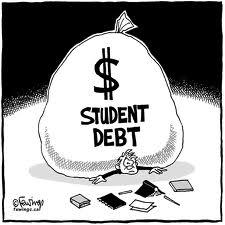
Why am I not surprised that the weakest leader on the face of the planet, George Papandreou, Greek PM, the former history professor turned “leader”, has buckled knees, turning the EU bailout offer to the Greek people in a ‘referendum’ so they can reject it – two years after the onset of the crisis. Has he been asleep for two years? Why now? Don’t get me wrong – it was obvious from the beginning that Greece cannot pay its debts, not even part of it, not even the interest. But what a cowardly act, to blame the people for scotching the EU offer rather than standing up bravely and saying, sorry, I accept responsibility, Greece cannot, will not pay. Papandreou will have to resign, and frankly, good riddance.
But if Greece can have a referendum, why not American college students?
Here are the facts, according to USAToday. As U.S. colleges and the government pass the buck on to hapless students, raising tuition and forcing them to borrow, the amount of new student loans last year topped $100 b. and the total outstanding amount of student loans topped $1 trillion. American students now owe more money on their student loans than Americans owe on their credit cards (!) according to the Federal Reserve. And guess what. If you’re an American and have a mortgage, you don’t have to pay it. You can walk away from your home and let the bank worry about it. But if you’re an American college grad and have heavy student loans, you will be hounded by the collectors for the rest of your life, even if you’ve decided to make your career in a Tibetan monastery.
Contrast how America rips off its students with, say, Germany, where qualified college students study almost tuition-free. Which country would YOU invest in, over the long run? Which country has a better future? Many of the American student loans go to pay tuition to private for-profit universities, which have grown rapidly. I used to believe that higher education was a public good. In America, it is a private ‘bad’.
American college students, drowning in debt – start an Occupy Mass. Ave. movement (that’s the street, at the end of which, you find MIT and Harvard). Demand your rights. Demand a referendum, in which college students vote on the following issue: Do you believe American college students should be ripped off by government and banks, to pay exorbitant tuition on borrowed money, mortgaging their whole future, forcing them to pick high-paying jobs when they’d rather do more socially-valuable things, just to pay off their student loans? If the Greeks can vote democratically to avoid paying old debts, why not American college students?
Global Crisis/Innovation Blog
Patricia’s Dilemma: The Generation Gap
By Shlomo Maital

The generation gap
In my travels, I meet many talented, brilliant young people. In teaching innovation, I find that many are frustrated, because they hold high-paying jobs for companies that preach innovation but do everything possible to eradicate it. As a result, they believe they have lost their creative spark forever. I try to restore it.
Lately, added to the creativity frustration, is another more serious dilemma. Many young people reject the rapacious short-term profit-at-all-cost values of their employers. The world has changed. But companies and the senior people who run them, especially those in financial services, think it has not. They do not hear the message of Occupy Wall St.: Change your values, change how you think and act. What do you do, as a young manager, if the job you need is provided by those very companies whose values you reject?
Here is the essence of a conversation I had recently with a brilliant young woman, whom I will call Patricia.
Until I was 6, I grew up in Northern China, in an industrial city, China’s 4th largest. We lived in public housing, in a row house with three other families. We shared a kitchen. We bought food in the market, in reusable containers. My job was to buy the soy sauce and I would bring it home in a refillable container with a spout. We were poor and happy and we shared. Then we moved to America. I did well in school and worked for a financial services company. I avoided going into debt. I bought things when I had the money. I paid for my MBA with savings. But I am worried by those around me, who pile up credit card debt. In China we learned to save.
The last company I worked for went through four painful rounds of layoffs. On four occasions, people were fired. This created a bitter tense atmosphere, with no-one knowing if they would have a job next month. It was ruinous. This employer was a profit-maximizer. They lost sight of long-term values, of serving their clients.
I am now searching for a job. I don’t want to work for such a company. But it looks like there are very few companies that are run on more pro-social ethical values. I am searching for one. They are hard to find. I don’t want to compromise my values by joining a company I do not like nor approve of. But what choice do I have?
I can’t recall a time when the ‘generation gap’ has been bigger — between my generation, who ruined the planet, created global warming, created the disastrous 2007-9 global crisis, and yet still fail to understand what we’ve done and why everything has to change, and quickly; and young people, whose future we have ruined by our distortion of capitalism, leaving them with a polluted planet, a mountain of debt and an uncertain future. If the facts change, Keynes once said, then YOU have to change. The facts have changed. The ruling generation has not. They don’t get it. They don’t begin to understand the young people leading Occupy Wall St. They don’t even try.
Patricia and I are now engaged in a desperate search, for an employer whom she admires, who shares her basic values, and for whom she could devote her energy and brains with passion and good will.
Readers, can you help?