
You are currently browsing the category archive for the ‘Innovation Blog’ category.
Innovation/Global Crisis Blog
The Lost Generation: Blame Wall Street
By Shlomo Maital

A bitter ideological battle has broken out, over the Wall St. protests, in which mainly twenty-somethings protest the greed, selfishness and reckless risk-taking Wall St. banks and speculators have shown over the past decade. Supporters, mainly Democrats, blame the wealthy bankers for creating the financial crisis that led to the economic crisis. Republicans shout “class war”, and claim the protesters don’t understand the true benefits of free, open markets and capitalism.
In all this sound and fury, the best insight is that of Boston Globe columnist James Carroll. Here is his ‘take’ on the protests, published on Oct. 10:
” ….the plight of 20-somethings is distinct. In America, their anger can seem grounded in a sense of betrayal. Having been taught a social arithmetic since childhood that education plus diligence equals fulfillment, they are now confronted with a grim subtraction. Education has all too often left them crushed by the debt of student loans, and diligence is irrelevant in a jobless market. People in their 20s take the weight of unemployment rates that can be double the national average. Not only are their present prospects bleak – management training in fast food, anyone? — but they can look forward, in their 30s, if and when the recovery comes, to being passed over by junior siblings. Youth interrupted, adulthood postponed, careers that never materialized, disappointment as a way of life. A bottomless abyss of missed opportunity yawns at the feet of an entire American generation.”
Carroll notes that the “lost generation”, the American 20-somethings robbed of their future by the Wall St.-engendered crisis, have counterparts all over the world:
“The phenomenon is global, and has spawned a patronizing multilingual vocabulary. In Japan, they are “freeters,’’ a word that suggests freeloading. In Britain, they are, in the argot of bureaucracy, “neets,’’ for “not in education, employment, or training.’’ In Spain, “ni-ni’s,’’ for “neither-nor’’ (neither workers nor students). In Germany, “nesthockers,’’ for nest squatters. In Italy, “bamboccioni,’’ for grown-up babies. They are “basement dwellers’’ with “status zero.’’ They are “twixters,’’ the “boomerang generation,’’ having returned to “Hotel Mama.’’ They arrived not at adulthood, but “waithood.’’ “
In civilized countries, the older generation hands over to the younger generation, their children and grandchildren, a better, safer, more stable, more hopeful world. In uncivilized countries, the older generation robs the younger generation of its future, and transforms it into a ‘lost generation’. There is no worse moral crime. And it appears that all the nations mentioned in Carroll’s column – Britain, Japan, Germany, Italy – must be regarded as uncivilized. And the worst part of it – instead of accepting responsibility, Wall St. enlists its business-oriented mayor to smash peaceful protests with his Police Department. It will be truly bitter for the world if the moneyed interests succeed in electing a Republican President in 2012, elected by those who have doomed and saddened an entire generation.
Innovation/Global Risk
How to Win a Nobel Prize
By Shlomo Maital

Technion Materials Engineering Prof. Dan Shechtman is the tenth Israeli to win a Nobel prize, the fifth Israeli to win one since 2002 and the third Technion-Israel Institute of Technology scientist. He has been short-listed for perhaps 20 years. It is rather rare that a single scientist gets an unshared Nobel. In each of the last three years, three scientists have shared the Nobel Prize for Chemistry. This year, Shechtman is the sole winner.
So, how do you win a Nobel Prize? Here is how he did it.
1. Read Jules Verne and dream. Shechtman says he read Jules Verne’s novel The Mysterious Island 25 times as a child. The book is about how an engineer turns a desert island into a lush garden. “I wanted to be exactly that: someone who makes everything from nothing”, he says.
To win a Nobel Prize in physics, medicine or chemistry, you need to study science or engineering. And to choose those disciplines, you need inspiration. How can we inspire our youth to choose science, rather than business or law? This is far more important than higher education budgets.
2. Believe in yourself. On April 8, 1982, Shechtman was peering into an electronic microscope at the labs of the National Bureau of Standards, during a sabbatical from Technion at Johns Hopkins University in Baltimore. His mission was to find lightweight alloys for aircraft. Shechtman was looking at an alloy of aluminum and manganese that had been rapidly cooled and crystallized. “Eyn chaya kazoo!” he exclaimed! There can be no such creature! What he saw was an arrangement of atoms that defied the known laws of nature. Everyone knew that atoms in a crystal are arranged with perfect symmetry. What Shechtman saw was a pattern of 10 dots, indicating “five-fold symmetry” – an arrangement in which the distances between some atoms are shorter than between others. (To understand why, try to tile your bathroom floor with five-sided tiles, without leaving spaces between the tiles. It cannot be done.) He ran into the corridor to find someone to tell. But the corridor was empty. So he wrote in his lab diary, “10 fold???” with three question marks. Impossible. After checking, and rechecking, Shechtman wrote up his results. His research team leader fired him from the team, after showing him a passage in a basic textbook and asking him to reread it. His research paper was rejected for publication. He was vilified before a large audience by Nobel Laureate Linus Pauling, at a gathering Shechtman himself attended. He was called a “quasi-scientist”, playing on the “quasi-crystal” matter he discovered. But he never gave up. In the end, other scientists replicated and verified his findings and a new definition of “crystal” was adopted. Shechtman has a favorite picture of a line of a dozen German Shepherds. In front of them, with perfect aplomb, walks a serene cat. “I felt like that cat,” he recounts. But he never yielded an inch from what he believed was scientific truth. “A good scientist needs faith,” he told the daily Haaretz. “I believed in something and it was hard to break my spirit, despite all the hardships and criticism.”
Innovation/Global Crisis Blog
Steve Jobs 1955-2011: Two Observations
By Shlomo Maital

Steve Jobs as a high school student
Everything that could be said, almost, has been said about the late Steve Jobs. Here are two brief comments about what we can learn from his life and from his work.
1. You do not have to be born with a silver spoon in your mouth; you can be born without any spoons, in fact, and change the world.
Jobs’ biological parents were Abdulfattah John Jandali, a Syrian Muslim immigrant to the U.S., and Joanne Schieble (later Simpson), an American graduate student of Swiss and German ancestry. Jandali says he did not want to put Jobs up for adoption, but Simpson’s family did not approve of their daughter’s marriage. Jobs was adopted by Paul and Clara Jobs, of Mountain View, CA., who raised him. Jobs chose not to have contact with his biological father, but later did have a close relationship with his biological sister, Mona Simpson.
2. If Steve Jobs and Steve Wozniak can bootstrap Apple, with $1,300, and reach $200 m. in sales within three years – entrepreneur, so can you!
Jobs and Wozniak founded Apple in 1976 (it was named Apple, because Jobs had an especially happy summer picking apples. Jobs sold his microbus and Wozniak sold his calculator, to raise the cash they needed. They bootstrapped Apple and generated cash flow by selling circuit boards, while building the prototype of their personal computer. In their first year, 1977, they had $2.7 m. in sales. In their third year, $200 m.!
Jobs designed products that were innovative not in technology, but in design. They were cool. And people bought them, because to have them, and to show others you had them, was to prove you were cool. Jobs understood the ‘why’ of cool products (why buy them?) was crucial, not so much that ‘what’. I believe that his working-class background and adopted background gave him an insight into what ordinary people sought. As an outsider, rather than a member of the elite, he made his own rules…and broke many of the accepted ones regarding innovation.
Innovation/Global Crisis Blog
HBS Teaches Lady Gaga: She’s No BS
By Shlomo Maital

All we hear is Radio ga ga, Radio goo goo, Radio ga ga, All we hear is Radio ga ga, Radio blah blah, Radio what’s new? (Queen song, which inspired Lady Gaga’s name)
After reviewing Stephen Law’s book on Believing BS, I guess it’s a natural to write about how HBS, Harvard Business School (is there BS in HBS?) can take a subject as gripping as Lady Gaga, and turn it into a 43-page sleeping pill (Case A and Case B) * which actually does a great job in revealing the details of Lady Gaga’s success. For readers who won’t make it through the HBS BS, here it is in brief:
* She’s very very smart. Stefani Joanne Angelina Germanotta was one of only 20 students given early admission to NYU. She quit after 18 months to focus on her music, but promised her dad she’d return to school if she failed.
* She’s incredibly hard-working, always has been. Germanotta composed ballads at age 13, did open mike nights all around New York at age 14, learned classical piano and trained with a vocal coach.
* She never gave up despite early failure. A label called Def Jam offered her a recording contract, but then dropped her after only three months. “I was pretty devastated”, she said – but she never quit.
* She had a terrific ‘back office’ team. Vincent Herbert, a top producer, auditioned her in LA; she told him, “I want to be the biggest pop star in the world, I’ll be the most loyal and hardworking person you ever worked with.” She is, and she was, and she is. He signed her on the spot.
* Lady Gaga is great at self-marketing, especially digital (Facebook, Twitter) and at building relations with her fans. She writes her own tweets and no-one has her password.
* Lady Gaga leveraged her flamboyant ‘fashion’ which she learned while performing on New York’s Lower East Side to build her brand.
* Lady Gaga has a small seven-person creative team that designs her clothing, make-up styles, props and sets for her live performances, a team she leads in person. She is in charge of everything – she writes the music, video treatments, chooses her photographers, chooses the photos to be used and determines her ‘look’.
* Lady Gaga is incredibly hard-working and energy-packed. On her tours, which last for months, she may have as few as seven days off. Watching her, you understand that she really loves performing. Otherwise, like many musicians, she would fall prey to drugs and to alcohol.
** Harvard Business School. Case 9-512-016 Case A, and Case 9-512-017 Case B, by Anita Elberse and Michael Christensen.
Innovation/Global Crisis Blog
Do You Believe Bullshit? How to Strengthen Your Skeptical Muscles!
By Shlomo Maital

Stephen Law
The Sept. 12 issue of Newsweek has a review of an unusual book by an unusual author.
The book is Believing Bullshit. The author is Stephen Law. Law was a British high-school dropout at age 17 (“asked to leave”), and spent seven years working as a postman and a sandblaster, before a fascination with the big questions of philosophy drove him back to college. According to William Underhill’s Newsweek review, Law recounts, “I did a lot of reading; one book led to another and eventually I found I was reading nothing but philosophy books. Finally it occurred to me that this was something you could study at university.”
The enlightened authorities at London’s City University overlooked his total lack of formal qualifications and accepted him. Within a few years, Law was teaching at Oxford and at age 36 he was professor of Philosophy at Heythrop College, part of London University.
Law published The Philosophy Files, a book aimed at helping schoolchildren think through some of the trickiest of big philosophical issues. (The most popular one, Law says, is whether it’s right to eat meat. Second in popularity: where does the universe come from?). Law dislikes the way education leaves kids vulnerable. “It equips people to accept what they are told,” he believes, “and regurgitate it, so they don’t have robust intellectual defenses…(which means) people are going to take advantage of you. It seems to me that every child should have some immunity to bullshit built into their upbringing”.
And, he might have added – every adult!
One passage in Believing Bullshit relates to “effing the ineffable”. Here is how it works. Say you believe in G-d because of the massive goodness in the world and because of the fundamental goodness of human beings. (I personally believe this). Someone recounts the massive inexplicable lack of goodness – suffering starving children in Somalia and Kenya. You then say, (as did a Christian minister Law cites), anyone who attempts to define G-d by using His attributes is not a Christian, because G-d is beyond our comprehension. End of argument. Beware of this, Law cautions. Beware of the “Mystery Card” argument. Beware of “Well, I just know it is true”. Beware of those “Pressing Your Buttons” by repetition, code words and emotive manipulation.
I think Law’s major message is his life. He loves mountain climbing and plays drums in a rock band. He came to philosophy not in a classroom but through his life. He came to it late, because he became passionate and curious about it, not because he needed a degree with an academic job attached to it. For him, philosophy is intimately bound up with how we live, how we think, how we learn, how we choose between good and evil.
In a world with a huge surplus of lawyers, and a massive shortage of philosophers, we have too many law suits (bullshit) and too few clear values (truth).
Innovation/Global Crisis Blog
The Economists Have No Clue; Let’s Ask the Physicists
By Shlomo Maital
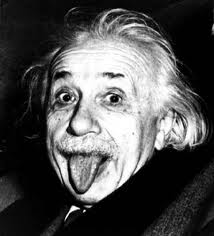 (What Einstein Thought of Economists)
The jubilation over the German Parliament’s approval for another ‘tranche’ of aid for Greece is unwarranted. Here is why. Greece is currently paying out over 6 per cent of its GDP in interest (not including principal) on its debt, or over 15 per cent of public spending. This is unsustainable. It means that if Greeks work super hard (and they already work more hours per year, along with Spain, than anyone in Europe) and get GDP to grow at 5 per cent yearly, they will still have to give all that growth dividend away, mainly to foreign banks in France and Germany, and then some, nearly forever. Their future is mortgaged forever, as long as Greece’s current debt remains as it is. No-one can agree to that. Germany is applying a modern form of Chinese water torture. Italy is just as bad; its interest payments are 5.6 per cent of GDP. And Italy is far far bigger and more worrisome.
What solutions do economists have? None. Monetary policy has not worked, especially where it was applied most radically, in Japan and in the U.S. Fiscal policy has not worked – enormous budget deficits have created mountains of debt and destabilized capital markets. Job creation has stalled. Economists, like politicians, are divided into two warring camps: Spend and create more money (liberals) and spend and create less money (conservatives).
Why not ask the physicists for help, if the economists are hopeless and helpless? Here are a few ideas based on physics, inspired by my students George Crawley, Cyril-Andre Lesage and Emeric Croguennoc.
1. Physics: Momentum = Mass times Velocity. Economics: Economic Momentum (GDP) = Money times Velocity, where velocity is the rate at which money changes hands. Pumping money into the system will not change economic momentum if panicky banks and people hang on to the money rather than lend and spend it. Increase velocity by having political leaders tell people the hard truth and above all, show them a vision and a strategic direction for recovery.
2. Physics: Current = Voltage/Resistance. Economics: “Spending Power” = Stimulus/Resistance. Monetary and fiscal stimulus do nothing, if ‘resistance’ rises proportionately (i.e. fear about the future, fear of losing one’s job, etc.). When people do not trust those in charge, when they are not told the full truth, no amount of stimulus will work.
3. Physics: E = Mc2 . Economics: Energy = Economic Mass (population) times the speed of light squared. People without hope, aspirations, vision and ambition are people without economic mass; they are massless neutrinos. Even a tiny minority of people with ideas, creativity and innovative power can generate enormous national energy. But they need to have frictionless bureaucracy-free infrastructure to facilitate starting businesses and role models who show it can be done.
4. Physics: Potential Energy equals Mass times Constant times Height. Economics: Economic energy equals GDP times Constant times Height of Aspiration. “Without vision, the nation perishes”, says the Book of Proverbs. Nations whose leaders and whose ‘friends’ (like Germany) leave them no hope, have goals with the height of zero, which means their potential energy is zero. Nations with leaders like John F. Kennedy, who said in 1962, “we will go to the moon!”, have potential energy literally as high as the moon. Where are those leaders today, when we need them?
5. Physics: The difference in potential energy = Mass times Constant times Height, minus the opposing pull of another body or planet, its Mass times Constant times its Height. Economics: America, for instance, has its potential energy sucked away by the enormous pull of imports from China, a huge minus. Only now is it becoming aware of this. *
What unites all these five physics equations is this: Energy. You will never get economic growth unless you create economic energy, driven by hope, aspiration, ambition and creativity. And in turn, you will never achieve those, until somebody steps up and creates a vision for a better future – a reason for expending more energy. Almost ANY vision will do. In the end, economics is hopeless, because our dilemma is not economic, it is physical and psychological. President Roosevelt understood that. Today’s leaders do not.
========================================
* See: “The China Syndrome: Local Labor Market Effects of Import Competition in the United States”, by David H. Autor, David Dorn, and Gordon H. Hanson, MIT August 2011. “Transfer benefits payments for unemployment, disability, retirement, and healthcare …rise sharply in exposed (to Chinese import competition) labor markets. The deadweight loss of financing these transfers is one to two-thirds as large as U.S. gains from trade with China.”
Innovation/Global Crisis Blog
Rebuild Your Brain, Rewire Your Brain: How “Neuroplasticity” Can Change Your Life
By Shlomo Maital
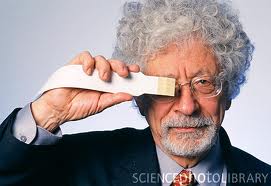
Paul Bach-y-Rita
From Norman Doidge, M.D., The Brain That Changes Itself: Stories of Personal Triumph from the Frontiers of Brain Science. (Penguin, U.S., 2007):
…I met a scientist who enabled people who had been blind since birth to begin to see, another who enabled the deaf to hear; I spoke with people who had had strokes decades before and had been declared incurable, who were helped to recover with neuroplastic treatments; I met people whose learning disorders were cured and whose IQ’s were raised; I saw it is possible for 85-year-olds to function the way they did when they were 55; I saw people rewire their brains with their thoughts, to cure incurable obsessions and traumas….
I teach innovation, and increasingly, personal creativity – how to build a personal creativity machine, a highly personal, individualized process, unique to each person, tailored to that person’s history and personality, that generates a torrent of world-changing ideas. My “pitch” is that the brain is a muscle, a kind of bicep, and when you exercise it, when you constantly imagine new and different things, you greatly strengthen its abilities. But I think I did not truly believe this until I read this book.
Doidge recounts the story of Paul Bach-y-Rita, an American scholar of Catalon-Jewish background, who is a true scientist-practitioner – he does icon-smashing research as a scholar and at the same time applies what he learns as a rehabilitation physician. His dogged persistence, against fierce opposition, stems in part from his youth. He was temporarily dwarfed, when a rare form of chronic appendicitis halted his growth. In a tough Bronx high school, he was beaten and bullied daily. (He was cured, after his appendix burst). Later, when conventional brain scholars figuratively beat him up, he was immune. They beat him up, because it was once “known” that certain parts of the brain controlled certain functions, and there was no ‘plasticity’ or flexibility. Thanks in part to Bach-y-Rita, we know now this is false. The brain is ‘neuroplastic’. Here are several brief stories:
* Bach-y-Rita’s father had a stroke, had severe brain damage (as an autopsy showed after his death), yet was taught to crawl, then walk, speak, write….step by step, painfully, using exercises that simulated everyday actions.
* Barbara Arrowsmith was severely learning-disabled. She read a research paper by Mark Rosenzweig, U. of California (Berkeley), showing how rats living in stimulated environments had heavier brains with better blood supply than rats living in less stimulated environments. A light bulb went on. She founded the famous Arrowsmith School in Toronto, where the learning disabled are taught to do strenuous mental exercises that greatly enhance their mental functioning.
* Bach-y-Rita did a famous experiment, published in Nature in 1969, in which he enabled blind people blind from birth to see! How? A TV camera scanned the scene in front of the subject, as he/she turned a hand crank. The camera sent signals to a computer, which processed 400 vibrating stimulators arranged inside a chair back, resting against the subject’s skin. The ‘stimulators’ were like pixels, vibrating for dark parts, still for light ones. The six subjects in the experiment learned to recognize things like telephones, and even learned to recognize a picture of the supermodel Twiggy.
* Rudiger Gamm is a young German of normal intelligence, who turned himself into an exceptional ‘calculating machine’, who can compute the ninth power or fifth root of numbers in seconds. Starting at age 20, Gamm, who worked in a bank, began doing four hours of computational practice every day. He now makes his living performing on TV. A PET scan of his brain shows that when he calculates, he uses five more brain areas for calculating than “normal” people. Specifically, his brain enlists ‘long term memory’ for calculations when you and I use only ‘short term memory’ brain space.
I believe the evidence is beyond doubt. With sufficient persistence and practice, you CAN greatly boost your brain’s abilities. And indeed, your brain can preserve its own sanity. When U.S.S.R. “refusenik” Nathan Sharansky was jailed for nine years, of which more than a year was spent in dark solitary confinement in a tiny cell, he preserved his sanity by playing chess against himself, remembering both black and white positions. He claims this kept his sanity. Later, he went to live in Israel, became a Minister, and invited Gary Kasparov to play chess against Cabinet members. They all lost – except Sharansky, who managed a draw.
Innovation/Global Crisis Blog
Chimerica—The Latest ‘Twist”
By Shlomo Maital
 Chubby Checker, “The Twist”, 1960
Harvard Business School Professor Niall Ferguson (“The Ascent of Money”) coined the phrase Chimerica, referring to the stressful symbiotic relationship between America and China, which at once have win-win (we invent things, you make them) and lose-lose (your strong currency zaps our exports) relationships. Here is the latest Chimerica saga, a kind of ‘twist’ on the Fed’s Twist.
As noted in this blog, Ben Bernanke’s Fed is selling long Treasuries and buying short Treasures, for $400 b. each. Recall, demand raises the price, higher prices of bonds lower their yields. So the goal of this plan is to ‘twist’ the interest rates, lowering long term rates, and raising short term rates, to help demand for mortgages and corporate borrowing, which depend on the longer interest rates. The ‘twist’ was tried, with little success, in the 1960’s. (Chubby Checker’s 1960 dance version, The Twist, was far more successful and still lives!). It is probably a bad idea, because short term rates drive what banks pay for deposits and banks are already in trouble.
But again China may save the day, by ‘twisting’ back. China may sell long-term Treasuries (remember they have billions of them), and buy short-term Treasuries, because China wants to avoid lower yields on their total Treasury holdings (recall that if China holds $3 trillion in Treasuries, a one percent drop in yield is $30 billion! That is fully half of once per cent of its GDP. )
So China may simply reverse what the Fed is doing, and thus neutralize it. Did Ben Bernanke and the 10-person FOMC Federal Open Market Committee check with the Chinese before they made their highly-divisive move (the vote was 7-3, almost unprecedented to have 3 dissenters on an important policy shift!)? Probably not. So much for Chimerica.
- See Tom Orlik’s piece in the on-line Financial News, “Will Chinese Twist Fight the Fed?”
Innovation/Global Crisis Blog
To Fix America’s Busted Economy, We Need to Call an Electrician
By Shlomo Maital
Woody Allen once commented, “not only is there no G-d, just try to get a plumber on the weekend!” Or, he might have added, an electrician.
Maybe America needs an electrician. Yesterday the Fed announced its Operation Twist, with $400 b. in bond-buying of long-term bonds, to raise 20-year bond prices, hence lower their yields and push down long-term interest rates that impact mortgage borrowing, corporate borrowing, etc., while selling an equal amount of short-term bonds, to keep its balance sheet balance. It’s called “twist”, because the interest rate term structure is twisted, with the short-term rates rising, and the long-term rates falling. This was done in the 1960’s, but with minimal effect. It is a sign of the Fed’s desperation. The vote in the Federal Reserve Open Market Committee was far from unanimous, 7 in favor, 3 against. This is also rare, usually the meetings end in consensus. Not only is America’s politics a ‘house divided’, so is the Fed itself.
Here is why America needs an electrician. Ohm’s law states that the current through a conductor between two points is directly proportional to the potential difference across the two points, and inversely proportional to the resistance between them. Say that again?
I = V/R , I = current, V = voltage, R = resistance
Let’s say, I is “power”, or “current” (economic momentum). V is voltage, or the Fed stimulus, zapping the economy with money. Let’s say R is ‘resistance’ (desire of people to lower their debt, stop borrowing, save more, etc.). If the Fed raises the voltage, it will do no good, if at the same time it does so by saying things are MUCH worse than anyone thinks, and ordinary people tighten their belts even more. If V rises 10%, and R rises 10%, it’s a wash. Nothing happens to the economic “power”.
We need an electrician. How do we lower the “R”, resistance? By offering ordinary people a clear simple strategic plan for rebuilding America’s economy, its schools, investment, infrastructure, manufacturing and society as a whole. ANY plan will do, a clear vision will lower “R” if people think there is such a vision and there is hope for the future.
Obama is no electrician. Neither is Bernanke. Is there an electrician out there? And, will he/she be willing to work this weekend?
Innovation/Global Crisis Blog
Plus ça change…
By Shlomo Maital
The more things change, say the French, the more they stay the same. Plus ça change.
Wall St. bank chicanery helped cause the 1929 Crash which led to the Great Depression. U.S. banks both issued stock on behalf of client companies (as investment banks) and peddled that stock to depositors (as commercial banks). Conflict of interest? How dumb we were to buy into this scam.
In 1933, two Democrats drafted the Glass-Steagall Act that effectively separated commercial and investment banking. But under President Clinton, it was repealed; the provisions of Glass-Steagall that prohibit a bank holding company from owning other financial companies were repealed on November 12, 1999, by the Gramm–Leach–Bliley Act, named after its co-sponsors Phil Gramm (R, Texas), Rep. Jim Leach (R, Iowa), and Rep. Thomas J. Bliley, Jr. (R, Virginia). Result: Another Great Crash (it is three years exactly since Lehman Bros.’ bankruptcy). This time, the worthless paper was mortgage-backed securities.
So, again, the U.S. has acted to force all big banks to become bank holding companies, subject to regulation as commercial banks, and has acted to limit “nostrum” (own-account) speculative trading. Back to Glass-Steagall. And Britain is following suit. The British Vickers Commission has just reported, calling for ‘ring fencing’, which means separating British banks’ commercial lending and borrowing from its more risky operations, much like Glass-Steagall. This proposal will be phased in very slowly, to avoid stressing British banks.
What are the odds that the next American President, likely a Republican, perhaps even conservative Texas Governor Rick Perry, again crushes the new version of Glass-Steagall, in 2012-3, when the moneyed interests retake the White House? This is quite plausible. Obama’s approval ratings are as low as, or lower than, Bush’s. His job-creation speech did not even cause the approval needle to quiver. The Democrats lost a New York House seat to a Republican, first time in memory a Republican was chosen in this district.
As the global economy weakens and big banks plead poverty, what are the odds the Vickers Commission too will defer its recommendation – to, say, 2097?
Einstein said insanity is doing the same thing and expecting different results. How can we ordinary folks be so dumb to allow this to go on, again and again, and elect the officials who let it happen?
Plus ca change….


