
You are currently browsing the category archive for the ‘Innovation Blog’ category.
Innovation/Global Crisis Blog
Three Brief, Simple Comments on the Euro: Europe picks lose-lose
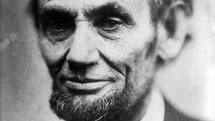
Abe Lincoln
1. In 1860-4, 151 years ago, America fought a bitter bloody Civil War. During the war 625,000 persons died – more than all the U.S. deaths in World War I and II combined. The Civil War was not about abolishing slavery. It was about whether the individual States had the right to do whatever they wished, against the Federal constitution. The South lost, the North won. America remained one country with a clear set of rules. Never again was America’s existence questioned.
Europe is today undergoing the same crisis. It is not a Civil War but a financial one. Nobody is dying. All that is at stake is money. What Europe does today will determine its future for a century. The difference is, America had Lincoln, a strong and visionary leader, tough in war and forgiving in peace. Europe has no Lincoln. That may be the difference.
2. Here, in 144 words, is the euro problem. Greece cannot pay back what it owes. The proof: The ‘insurance’ premium on Greece’s short term debt (known as credit default swaps, CDS) is 98 per cent (you have to pay 98 euros to insure 100 euros of debt!). So it is clear that soon, Greece will be in default on its debt. It is paying 23 per cent interest to borrow, no country can afford to roll over debt at that rate. Who will bear the cost of Greece’s default? Not us, say many Germans. Not us, say private holders of Greek bonds. And each day that passes without a solution, the costs to everyone mount. Europe is incapable of applying the American model (swallow the losses fast, clean up the mess and move on) and instead follows Japan (sweep the losses under the carpet and stagnate for 21 years as a result).
3. In the language of game theory, there are only two outcomes of the euro crisis. Win-win. Or Lose-lose.
* Lose-Lose. Greece is forced out of the euro zone, returns to the drachma, the drachma drops by half, and Greek banks and businesses are all bankrupt, because their old euro debt doubles overnight, in terms of drachma. (How many businesses, or governments, can have their liabilities double overnight and remain solvent?) This is what happened to Argentina in 2001. Nor will anyone lend to Greece for years – and you cannot do business without credit. Greek people lose all their savings. Greece’s GDP falls by 40 per cent. Greek unemployment soars from 16.6 per cent today to 45 percent. There is bloody social protest. Greece is a huge loser. But so is Europe. Frightened by Greece’s default, lenders bail out of Italy, Spain and Portugal, pushing those nations toward default as well. Italy is the 800-pound gorilla – its sovereign debt is massive. The Greek crisis raises interest rates in Europe, and hurts economies throughout the 27 EU (27 minus Greece) nations. Everyone loses, including America. Even China. Italy thinks China will ride to its rescue. Does anyone think it is more than ridiculous for an EU nation to ask China to bail it out?
* Win-Win. Europe wakes up. On one sheet of paper, Merkel writes down the total financial and economic costs of Greek default and exit from the Euro, for each of the 27 EU nations (including the 10 not in the euro currency zone), and for all taken together. This is , say, X trillion euros. She then writes down, on the same one sheet of paper, the total cost of PREVENTING this massive loss. This is, say, Y trillion euros. The exact numbers are imprecise, but it doesn’t matter. Because X is massively bigger than Y. The cost of dismantling the euro is massively bigger than the cost of saving it. Then Merkel, Sarkozy and others take the “Y” number, and split it up reasonably among the stronger European nations; a big European Stabilization Fund is mounted, so big that it might not even be needed, because its very existence shows currency speculators that betting against the Euro might cost them heavily.
Merkel then asks the German people: Do you want to invest 100 billion euros today? Or do you want to lose, say, 200 billion euros, in the coming years, because we failed to invest?
The current European rules of the game require unanimity of all 27 nations for a major decision. This is absurd. Little Slovakia, with 5 million people, can (and is) sabotaging key EU decisions for the benefit of over 500 million people. One percent of Europe is calling the shot! Suspend the rules, and move on! In 1860, America would have fallen apart if it had allowed Mississippi to veto anti-slavery laws.
Lose-lose or win-win. Which would you choose? Only in the Mideast do leaders actively and continually pick lose-lose. Europe seems about to join us.
Innovation/Global Crisis Blog
Delta Force: But This One Kills Good Guys, Not Bad Guys
By Shlomo Maital
The arrest of Kweku Adoboli revealed the following practice done by leading global banks, not only by Adoboli’s employer UBS, and its Global Synthetic Trading group. It is called Delta One. That’s what Adoboli was doing that lost $2 b. Here is how this “Delta Force” works.
1. Offer clients guaranteed return on their investment.
2. Take their money.
3. Invest their money in higher-risk securities, that pay higher returns, and call it a “synthetic trade” (“Hey, we kind of like maybe bought you 10,000 shares of IBM, but actually we put the money into 100,000 shares of Fly-By-Night Inc., don’t worry, it’s all perfectly safe and legitimate, trust us!”).
4. Pay the client their guaranteed return (5%) and pocket the difference between what you actually earned with their investment and what you paid them (20%? 40%). Except, when you bet wrong and lose the whole wad.
Legal? Sure. Ethical? I don’t think so. More of the same fol-de-rol that ruined the global banks in 2007-8? Worrisome, on the 3rd anniversary of the collapse of Leyman Bros?
Delta Force. The new version. Brought to you by the same great guys that created Global Crisis 2007 – ? . The original Delta Force killed bad guys. This one kills good guys – or at least, their money (OUR money). Even the original Delta Force wouldn’t be able to overcome the new Delta Force. It’s armour-plated.
Innovation/Global Crisis Blog
There is still “BS” in UBS – and “U” and I Are Paying For It
By Shlomo Maital
 Kweku Adoboli
First the facts. A 31-year-old equities trader named Kweku Adoboli, originally from Ghana, son of a former UN official, was arrested by London police on charges of fraud. Adoboli headed Global Synthetic Equities Trading for Union Bank of Switzerland (UBS), a huge Swiss-based global bank, in its London office. He engaged in “rogue trading”, i.e. took unhedged positions that led to quickly-mounting losses, eventually totaling $2 billion. The losses are large enough to cause UBS to report a loss this quarter. Adoboli didn’t steal the money, he just made bad bets and UBS’s risk management system failed to stop him.
Now, my opinion.
Don’t blame Adoboli. Of course he’s culpable, and he’ll go to jail (the maximum sentence for his alleged crime is 10 years in prison). Blame the system, blame UBS and other global banks. They still don’t get it. UBS paid Adoboli an estimated half million dollars a year (yes, you got it, $500,000), to a 31-year-old just a few years out of college. Why would they do this? Because as a trader he made money for UBS in speculative risky markets. And UBS likes money and needs money, because frankly, as a conventional bank it is not doing so well. So instead of doing the hard patient work of rebuilding its conventional banking business (taking deposits and lending money), UBS and other banks like it are still taking the short-cut, seeking short-term speculative profits gained by trading for its own account in volatile global markets. Blame UBS.
How did Adoboli get away with it? Simple. He first worked in UBS’s “back office”, where traders are monitored, managed and controlled. He knew the system. When he moved up to become a trader, he knew how to get around the system and make trades that were unhedged and illegal, without the Bank knowing. By the time it realized what he was doing, $2 b. went down the drain.
“I need a miracle”, Adoboli posted on his Facebook page. We all need a miracle. We need a miracle for these global banks to stop at once the behaviors that caused the continuing global crisis. Adoboli’s favorite book is Jordan Belfort’s The Wolf of Wall Street, whose tagline is “I partied like a rock star and lived like a king”. So did Adoboli. Don’t blame them. Blame those who employ them and turn them loose.
America has passed legislation banning “nostrum” accounts (speculative trading by banks for their own profit, rather than on behalf of their clients). Let Switzerland now do the same, and the European Union. Don’t blame the traders. Blame the fat bankers who turn them loose. Let UBS’s CEO join Adoboli in the jail cell, where they can discuss, for a decade, the moral implications of using the money of depositors and shareholders to take rash, speculative risks.
Guys! It’s not your money! It’s ours. Stop this at once!
In the name UBS, there is still a whole lot of BS. And “U” and I are paying the price.
* Based on: The Times, “I need a miracle”, Sept. 16, 2011, by Katherine Griffiths, David Brown, p. 1.
Innovation/Global Crisis Blog
Innovator: Can You Reinvent Any of These Businesses?
By Shlomo Maital
Dear Innovator,
As so often happens, while everyone’s attention is on the raging “fires” that consume the media – euro, capital markets, rugby’s All Blacks – the real crises lie elsewhere. Six major industries all have business models that have become obsolete and need radical reinvention. In my opinion, nobody in these industries has a clue how.
* Publishing: The Economist writes: Book publishing resembles the newspaper business in the late 1990s, or music in the early 2000s. Although revenues are fairly stable, and the traditional route is still the only way to launch a blockbuster, the climate is changing. Some of the publishers’ functions—packaging books and promoting them to shops—are becoming obsolete. The tide of self-published books threatens to swamp their products. As bookshops close, they lose a crucial showcase. …
* Newspapers: News and with it advertising are moving to the Web. Newspapers everywhere are in deep trouble and have not yet found a way to replace print ad revenue.
* Movies: After DVD sales replaced box-office sales as a primary revenue source for movie makers, Internet downloads have now killed DVD sales.
* Banks: Since Jan. 1, 2011, French bank share prices (BNP, SG, CA) have fallen by 44-58 %. RBS shares have fallen by 44%. Even Deutsche Bank and Barclay’s fell by 44%. Credit Suisse is down 46%, and UBS just announced it lost $2b. to a rogue trader. The real problem: With their credit ratings downgraded, exposed to Greek, Italian, and Portuguese sovereign bond default, some banks now pay more for borrowing money than their clients. Banks need a new business model, in the age of total mistrust and paranoia about risk. None have yet found it.
* Consulting: Those fat multi-million-dollar contracts for ‘strategic renewal’ are really tough to get these days. In an age of ‘value for money’, clients are re-thinking whether they really get value for these reports, that mainly gather dust.
* Business schools: After selling over-priced MBA degrees that taught impressionable youngsters their sole goal was to maximize profits for shareholders, business schools are doing some soul-searching, as MBA grads find their traditional job sources (consulting, investment banking) have dried up.
The problem is especially acute in banking and finance. Regulators are tightening the screws, demanding ever-higher capital ratios. At a time when banks are already reluctant to lend, especially to other banks, higher capital requirements will squeeze credit even more, and squeeze bank profitability even more. Yet, without this added capital, banks remain vulnerable to massive potential losses if and when sovereign bonds are in default.
The need to reinvent these industries occurs at a time when it is vital for nations to coordinate and collaborate, because no single nation can stimulate global demand enough on its own. Yet there is no sign of such collaboration. Even the 17 Eurozone countries cannot agree among themselves, not even when the euro itself is at stake – unanimity is required for key decisions, like issuing Euro bonds, and little Slovakia is casting a veto.
Innovator, now is your chance. Can you come up with an innovative business design for any of these troubled industries? I believe the top priority is the banking and finance industry. Banking is becoming like politics – an adverse selection model drove capable young people away from politics, and now the same is happening with finance, for the same reason, as the two endeavors are tainted by corruption, greed and unethical behavior.
Innovation/Global Crisis Blog
The Man Who Paid $5 m. for Lunch – and It Was Worth Every Penny!
By Shlomo Maital
Ted Weschler, Warren Buffett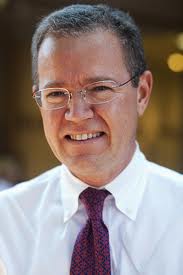
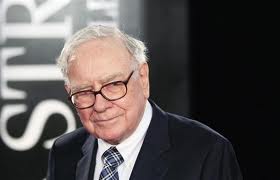
This is a true story. A little-known hedge fund manager paid $5 m. for lunch – and it paid off in spades. Of course, we all know there is no free lunch. But a $5 m. lunch?
The hedge fund manager is named Ted Weschler, manager of Peninsula Capital Advisors, a Virginia-based hedge fund with $2 bn. in assets. In 2012 Weschler will join Berkshire Hathaway, Warren Buffett’s company, to manage a $1 b. – $3 b. slice of Berkshire’s $66 b. portfolio of equities.
How did he get this great job?
Weschler spent over $5 m. in a charity auction, in which the prize was …lunch with the Oracle of Omaha, Warren Buffett.
What was said? What was discussed? We don’t know. But clearly it was enough to impress Buffett sufficiently for him to hire the impetuous Ted Weschler. Along with the announcement of Weschler’s appointment at Berkshire, came an announcement liquidating Peninsula and distributing the proceeds to its owners and shareholders.
Has Buffett lost his touch? Last month he bought $5 b. worth of Bank of America shares, which have since dropped sharply. Can Weschler restore Buffett’s Midas touch? Stay tuned.
- Source: Telis Demos, Financial Times, p. 1, Sept. 13, 2011.
Innovation/Global Crisis Blog
The Real Reason Behind the Euro Crisis
By Shlomo Maital
In a speech last week, the powerful CEO of Deutsche Bank, Josef Ackermann, let the ‘risk’ cat out of the ‘euro’ bag. It turns out that European banks, in Germany, UK and France, hold huge amounts of bonds whose value has plummeted because the PIIGS (Portugal, Ireland, Italy, Greece, Spain) governments may be unable to redeem them. But unlike in the U.S., where commercial banks have ‘marked to market’ similar assets (bonds backed by sub-prime mortgages), European banks have been slow to recognize these losses and regulators have been super-delicate in requiring them to do so. European bank balance sheets do not reveal even a fraction of these losses.
“Many European banks would not be able to handle writing down the sovereign bonds they hold on their banking books to market levels”, Ackermann said. What he means is that Europe has been playing a game of deception, trying hard to ignore bank losses and hoping somehow they will go away. But they won’t.
Of course, capital market insiders know this and have known it for years. Deutsche Bank shares lost a third of their value this year, and less than half of their price before the Lehman failure in Sept. 2008. Some 29 of 30 leading European banks, according to NYT reporter Floyd Norris, have share prices lower today than on the eve of the Lehman Bros. collapse. Credit Suisse, Lloyds, Societe Generale, and UniCredit have lost 40 per cent of their share value since Jan. 1. These losses, in turn, act as dominos, threatening financial institutions in other countries, including in Israel, where a leading tycoon invested heavily in Credit Suisse shares and has now suffered massive losses.
And here is the weird irony. Governments everywhere bailed banks out in 2008. To do this they incurred debt. This debt now has become burdensome and some governments cannot pay it. But many of the banks governments bailed out hold this debt, and now, again, the banks are threatened by the very governments who tried to save them.
There is no obvious solution. IMF Head Christiane Lagarde wants banks to raise more capital. Ackermann says this will cause bank shares to fall even further, because it will threaten to dilute the holdings of existing shareholders.
Europe must learn from America. The U.S. is unparalleled at creating financial crises, but is also terrific in how it cleans up the mess by writing off losses quickly and starting fresh. Europe does the opposite, sweeping losses under the carpet and then moving a sofa to hide them. It won’t work. Look for continued euro crises, which impact the whole world, until Europe wakes up and tells the truth.
Innovation/Global Crisis Blog
How eBooks were Invented, and How Michael Hart Changed the World
By Shlomo Maital
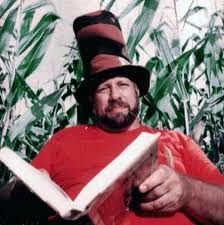 Michael Hart
The person who invented e-Books died last week, at the age of 64. His name is Michael Hart, and his little-known story shows how one person with one idea can truly change the world. *
Hart was a student at Univ. of Illinois. (Recall that this university was a major pioneer in computer science, thanks to Marc Andreesson, who thought up Mosaic while at U of Illinois, Mosaic later became Netscape, the Internet browser). He was given a user’s account on a Xerox Sigma V mainframe computer in the school’s Materials Research lab in 1971, an account worth, according to him, $100 m. at the time. He tried to think up a project that would justify the cost, even though it was free for him. On July 4, 1971, he attended an Independence Day fireworks celebration and later stopped at a grocery store. With his purchases, he received a copy of the Declaration of Independence. Hart typed the document and intended to send it as an email to all the users of ARPANET (the precursor of the World Wide Web). But a colleague said this would crash the system! (The whole Declaration is only 1,357 words!). So instead, he posted a notice saying the text could be downloaded. Hart said he wanted to “encourage the creation and distribution of e-books” in order “to help break down the bars of ignorance and illiteracy.”.
Hart’s initiative and modest idea gave birth to Project Gutenberg, which today lists more than 30,000 downloadable e-Books in 60 languages. The Project got off to a slow start. Hart created only 313 e-books by 1997. But by 2021, Project Gutenberg’s 50th anniversary, it is predicted there will be a billion e-Books available – and, said Hart in an email, “you will be able to carry them all in one hand!”.
Hart once told a magazine called Searcher: “I was just waiting for the world to realize I’d knocked it over. You’ve heard of cow-tipping? The cow had been tipped over, but it took 17 years for it to wake up and say, ‘Moo’. “
Rest in peace, Michael Hart. You’ve showed us how an idea and a very tiny initial proof-of-concept can snowball into a change-the-world industry. And best of all, you lived to see it happen.
- “Michael Hart, 64, pioneer in e-book distribution”, by William Grimes, Global NYT Sat-Sunday Sept. 10-11, 2011.
Innovation/Global Crisis Blog
How “Small Wins” Unleash Creativity: The Progress Principle
By Shlomo Maital
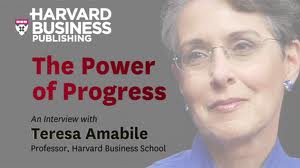
A great deal of research on creativity (e.g. neurobiology, functional MRI, etc.) is fascinating but of no immediate use. In contrast, Harvard Prof. Teresa M. Amabile’s work always leads to creativity-enhancing tools. Her new book, The Progress Principle: Using Small Wins to ignite Joy (written with her husband, Steven J. Kramer, a clinical psychologist), is among her best work. It has a clear and simple message:
Our best days at work occur when we make even small progress toward our work objectives. Our worst days at work occur when we are hindered from making such progress. The key to unleashing creativity is “a sense of making progress on meaningful work” and creating an environment in which such progress is fostered.
What is interesting is that according to Amabile, managers just don’t get it. They continue to believe the key to creativity is salaries, bonuses, incentives, rewards. Only 5 per cent of all managers she surveyed ranked ‘progress’ as the number one key motivator.
Amabile and Kramer studied 238 white-collar employees at seven large organizations, and asked each to keep a work diary, with daily entries, for about 10 weeks, in which workers “describe one event that stands out in your mind” daily. There were 12,000 diary entries in all. They define “inner work life” as “the confluence of perceptions, emotions and motivations that individuals experience as they react to and make sense of their work day”. In the diaries, salaries and bonuses barely registered! (So much for the fundamental theory of economics!). But diary entries that reported work progress often showed an “inner work life” surge that in turn increased the likelihood of creative productivity.
What I learn from this work is this: There are two types of ‘rewards’, extrinsic (money, praise, bonuses) and intrinsic (internal satisfaction). Small, frequent intrinsic rewards (“progress”) are crucial in spurring productivity, because, I believe, they build our own image of our self-effectiveness (capability), which in turn empowers and triggers creativity. Ironically, the more managers stress extrinsic rewards, the less intrinsic rewards flourish.
Managers: Give your team autonomy. Ask its members from time to time what you can do that will help them succeed. Give them resources (Amabile says cheapskate managers hurt creativity rather than spur it). Make the work, or project, itself its own reward. Find people, especially, for whom the work itself is the main reward. And, then, watch the ideas flow! Remember: “People are more creative, productive, collegial, and committed to their work when they have a positive inner work life.”
Can anything be clearer, simpler, or more obvious – and less applied in practice?
Innovation/Global Crisis Blog
The Speech Obama Won’t Make But Should: “Our Economy Will Thrive Only When We
Make What We Invent”
by Shlomo Maital
President Obama will make a key speech to the nation tomorrow night (Sept. 8), about his plans for creating jobs. Here is what he should say.
I have an announcement. I will not stand for re-election in 2012. I am taking responsibility for the mess America is now in. Instead of tackling the real issues – job creation – I wasted all my energy and political capital on health care reform, which in fact was the least of America’s worries at the time. My advisors told me not to, I didn’t listen, and so I am choosing not to run again for President. This will enable me to tackle the job issue without critics saying I am playing politics.
In the remaining days of my term of office, I will do the following. First, state the truth. America’s GDP, 80 % services, must restore manufacturing to 25% of the economy (it’s now 12 %) within a decade. America’s wealth and greatness came from inventing products, then making them. Today we do only half – we invent things, and let China make them. It isn’t working. We have a $500 b. deficit in manufactured goods. That means we have to borrow from China, to enable us to buy the goods that China makes, so China can have low unemployment. If we made these manufactured goods ourselves, we would have 10 million new well-paying jobs, directly, and 30 million more generated by the spending of the newly-employed. That is enough to wipe out unemployment and rebuild the incomes of the middle class, as well as kill the looming double-dip recession.
I will introduce legislation that eliminates all the huge tax advantages American companies enjoy by producing abroad. I will also initiate a plan to create a German-style vocational high school stream that creates a cadre of young people with skills useful in factories. I will offer a tax holiday to companies like Apple, if they bring their piles of cash home from abroad and invest it. Despite our deficits, I will double federal grants for R&D and link these grants to the condition that any devices emerging from this R&D must be made in the U.S. I will impose a tariff on all Chinese goods that brings their price to the level it would be, if the yuan were 3.5 per dollar rather than 6.8 per dollar. The World Trade Organization will scream, but its screams will be music to my ears. I will ask all Americans to buy red-white-and-blue – check the label, and buy only products that are Made in America. If you do, you create jobs for others, and ultimately for yourself.
Our economy can thrive only when we make what we invent. It’s so simple. China is working feverishly to invent what it makes. Good for them. We will work equally hard to make what we invent. May the best country win.
* this speech is based on the New York Times Op-Ed by Susan Hockfield, MIT President, “Manufacturing a recovery”, August 29, 2011.
Innovation/Global Crisis Blog
What We All Can Learn from Howard W. Lutnick:
How to Endure (Catastrophe – 9/11) and Prevail
By Shlomo Maital
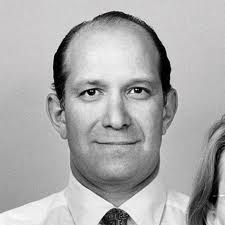 Howard Lutnick, Cantor Fitzgerald
On Sept. 8/2001, Howard Lutnick was literally on top of the world, as CEO of Cantor Fitzgerald, prince of Wall St., looking down at his rivals from his 105th floor office in the World Trade Center.
On Sept. 9, when American Airlines Flight 11 struck Tower One, 658 of his employees (including his younger brother Gary) perished, and Lutnick himself survived by a fluke (he was bringing his son Kyle to his first day of kindergarten).
Here is how Lutnick endured and prevailed. He cut off paychecks to the families of his employees on Sept. 13 – arousing huge bitterness. His London office head Lee Amaitis reconfigured Cantor’s trading systems so that trades could be processed through the London office. Lutnick moved to a windowless computer center in Rochelle Park, NJ, and shifted to eSpeed, electronic trading. He came up with a plan to give the families of those company employees who perished 25 % of Cantor’s profits over the coming five years, and appointed his sister Edie Lutnick, a lawyer, to head the charity that ran this program. Angry families said, “a quarter of nothing is nothing!”. But soon they were silent, because the checks that went out were larger than the salaries employees had earned. The bereaved families now say, Lutnick did everything he promised. Lutnick rebuilt Cantor, into two businesses – a stock and bond trading desk and an investment bank operation. Today it thrives. Before 9/11 Cantor employed 2,100 people worldwide. Today it employs 5,000! Strangely, the bulging debt America created, that led to the 2007-9 crisis, actually greatly benefited Cantor Fitzgerald, which runs nearly half of all trades in US Treasury securities.
The source of Lutnick’s resilience is perhaps his own background. He was orphaned as a teen, and worked his way up from the bottom at Cantor, in an industry where Ivy League and wealthy parents are a huge advantage. He was greatly disliked, as a ruthless competitor. He says he rebuilt Cantor mainly, even solely, to generate profits for the families of employees who died. “The only way to take care of everybody,” he said, “was to have a company”. He uses what he calls the ‘surfer’s theory’ – “you see a big wave, you keep surfing, going forward, you just don’t look back!”.
I wonder how many of us could experience 9/11 as Howard Lutnick did, then rebound and rebuild. The ability of the human spirit to bounce back from adversity and catastrophe is infinite – provided we believe in it, believe in ourselves, and work to serve others.
Based on: The New York Times: Susanne Craig, “The survivor who saw the future for Cantor Fitzgerald”, Sept. 3, 2011.


