
You are currently browsing the category archive for the ‘Innovation Blog’ category.
History Repeats Itself: Europe & the Extreme Right
By Shlomo Maital
 Nigel Farage, UK
History DOES repeat itself.
After WWI (whose centenary, 1914-2014, will soon be observed), the victors (Britain, France) punished the losers (Germany) with outrageous demands for ‘reparations’, at the Treaty of Versailles. J.M. Keynes was there; he warned, in a book The Economic Consequences of the Peace, that the ruinous reparations would lead to a new war. It did. To pay the reparations, Germany simply printed marks. This destroyed the economy through ruinous hyperinflation, and led to the rise of the Nazis and Hitler.
Today, Europe has adopted a misguided policy of austerity, forcing Greece, Spain, Ireland, and to some degree Italy, to adopt stringent spending cuts and tax hikes. True, these countries overspent. But the right way to emerge from excessive public debt is to grow the economy so the debt shrinks and so tax revenues help pay for it. The wrong way is austerity – shrinking government demand, when consumption and investment and exports are all declining. You cannot grow an economy by shrinking demand. Yet many economists support ruinous austerity. Did we forget what Depression did to Germany? Well, it is doing similar bad things to Greece, Spain and other countries.
Now, it is time to pay the Piper. The European Parliament elections have brought a huge victory for parties on the extreme right – Euroskeptics, neo-Nazi, anti-immigrant, and anti-Semitic. It was inevitable. When times are bad, people look to those who have simple remedies – blame the foreigners, the Jewish people, and Brussels.
I’m embarrassed and ashamed to admit I am an economist. Not only do we economists fail to grasp reality, we have also forgotten history, and the warnings of the man who invented macroeconomics, J.M. Keynes.
If the neo-Nazis have risen in Europe, we have nobody to blame but ourselves.
Philippines: Asian’s Next (Surprising) Tiger?
By Shlomo Maital

According to Richard Javad Heydarian, who teaches political science and international relations at the Ateneo De Manila University, “Philippines — along the likes of Mexico – has transformed into one of the most promising emerging markets in the early-21st century.”
This is astonishing, because just six months ago, Philippines was hit by a devastating typhoon. Despite this, it has averaged 7% GDP growth in the past 2 years! This is close to China’s rate.
Notes Heydarian:
“Under the stewardship of the Aquino administration, there has been greater commitment to “good governance”, as exemplified by the ongoing anti-corruption initiatives and investigations. Host to about $300 billion in untapped mineral reserves, Mindanao is poised to benefit from large-scale foreign investments amid an increasingly promising peace process, which has paved the way for the establishment of the Bangsamoro state. No wonder, given our country’s youthful population, natural resources, myriad of tourist attractions, and huge reserve of skilled labor, it has become fashionable these days to talk about the Philippines as the new tiger economy of Asia.”
Emerging market economies in China, Brazil, Russia, and India all have been grappling with inflation, slowing growth, and policy paralysis that undermine decades of robust economic expansion, Heydarian notes.
According to Bloomberg, “Gross domestic product rose 7.2 percent in 2013, the Philippine Statistics Authority said in Manila today, after gaining 6.8 percent in the previous year. That was the fastest two-year pace since 1954-1955.”
A major problem with this stellar growth is that it is not trickling down, and is not benefitting the working classes. This is a common phenomenon in emerging market countries. Heydarian writes, “Poverty and unemployment figures have hardly changed, while inequality is intensifying. Few major businesses swallow newly-generated growth, while the majority of the population is yet to benefit from the recent economic boom.”
Can Philippines sustain its growth? Many Filipinos work abroad; their remittances fuel high domestic consumption. There has been a real estate boom as well, and a boom in services. A fifth of the Philippine government’s national budget goes to debt service, leaving too little for health and education.
Philippines can leverage a pro-China strategy, pulling in investment that may leave Vietnam and Indonesia, in the wake of anti-China sentiment. Philippines too has maritime disputes with China, but seems to have handled them wisely. If other southeast Asia nations let the left-brain emotions govern their right-brain logic, Philippines stands to gain.
Could we perhaps hope that Philippines will finally build a world-class airport? Manila has been voted recently “the world’s worst airport”. Filipinos and travelers deserve better.
2013: Tough Year for Workers, Great Year for Billionaires
By Shlomo Maital

Last year, 2013, was not too great for the working people of the world. Unemployment remains high in most countries, especially the U.S. and Europe, and is highest among the youth. Economic growth is stagnant in the U.S. and EU.
But guess what. It was a GREAT great year for billionaires. According to Forbes magazine, which carefully documents (and generally worships) the super-rich, there are 1,645 dollar billionaires in the world — 268 more than the previous year, an increase of 17 per cent. The world’s billionaires owned wealth totaling $6.4 trillion, up from $5.4 trillion a year ago, a 19 per cent rise!
The total wealth held by only 1,645 persons, $6.4 trillion, is bigger than the GDP of any country, except the U.S. and China.
Who tops the list? Well, it’s Bill Gates again, with personal wealth of $76 b. (mainly through Microsoft stock). And here’s the point. Bill Gates isn’t TRYING to make money any more. In fact, he’s working very hard, with his wife Melinda, to GIVE AWAY his money effectively and impactfully.
So, to those, like Financial Times’ Chris Giles, who want to refute Thomas Piketty’s findings — answer this. How can you deny, that great wealth perpetuates itself, and grows itself, at huge rates of increase, even when the owners of that wealth aren’t even trying to add to it?
America has the most billionaires, 492 of them; China is a surprising second, with 152, and Russia, third, with 111. America has 1.55 billionaires per million people; China has 0.11 billionaires per million; and Russia has 0.77 billionaires per million. Most of Russia’s billionaires stole the assets that rightly belong to the Russian people.
So – dear Bill Gates: It certainly is true that if you’re born poor, it’s not your mistake, or your fault. And the way the world is, chances are very high, you are born poor. But Bill, if you die poor, which is what happens to most poor people, it definitely DEFINITELY is not your mistake. Because the world is enormously tilted toward those who already HAVE money. Fact. And your wealth is proof.
If you die poor, it is because those who control $6.4 trillion of the world’s wealth, which they accumulated on the backs of hard-working people, are using it to generate more and more and more wealth, and hang onto it, instead of using it to help others without money get more of it. Bill Gates and Warren Buffett are exceptions that prove the rule.
And Chris Giles? What else would you expect from the Financial Times?
How to Make Peace: Pope Francis and Rabbi Abraham Skorka
By Shlomo Maital
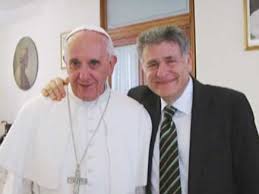
Pope Francis with Rabbi Abraham Skorka
I am writing this blog while watching on TV the arrival of Pope Francis in Jerusalem, brought by a Jordanian helicopter, greeted by our Prime Minister and President. While watching the Pope, dressed in simple white robes, I am reading On Heaven and Earth, the 2010 book recording the dialogue between Pope Francis (then Cardinal Jorge Mario Bergoglio) and Rabbi Abraham Skorka, an Argentinean Conservative Rabbi and long-time friend of Bergoglio. Skorka has come to Jerusalem to join the papal visit.
The book contains 29 dialogues on wide-ranging topics, including the Arab-Israeli conflict, money, poverty, same-sex marriage, divorce, euthanasia, divorce, abortion, the holocaust, and the future of religion.
Almost the very first passage I read, is one by the Pope about dialogue. Here is what he writes: Dialogue is born from a respectful attitude toward the other person, from a conviction that the other person has something good to say.
How sad that neither Israelis nor Palestinians can say truthfully, that they believe the other side is worthy of respect and has something good to say. We cannot make peace unless we respect each other. Will both sides listen to this good man, as a first step toward making peace?
(Dialogue) supposes that we can make room in our heart for their point of view, their opinion and their proposals.
Do Israelis and Palestinians truly understand the other side’s position? Can Israelis state the Palestinian position clearly, with understanding and empathy? Can the Palestinians? I doubt it. Will we listen to the Pope and try to do so?
Dialogue entails a warm reception and not a preemptive condemnation. To dialogue, one must know how to lower the defenses, to open the doors of one’s home and to offer warmth.
Rabbi Skorka and I have been able to dialogue and it has done us good. With Rabbi Skorka I never had to compromise my Catholic identity, just like he never had to with his Jewish identity, and this was not only out of the respect we have for each other, but also because of how we understand interreligious dialogue.
I have a radical idea. American Secretary of State John Kerry is just one of a long line of well-meaning Americans who have failed to bring Israelis and Palestinians together.
Why not let the Pope have a shot at it? Why not let the Pope teach Israelis and Palestinians how to dialogue? He certainly can’t do any worse than Obama. He might do a whole lot better. The Pope is clearly an expert at dialogue. Dialogue is how you make peace. We have had no such dialogue for years – only monologues. Let’s begin by practicing true dialogue. Let’s talk about, say, football and movies. When we learn to truly dialogue, then, we can tackle the tough issues.
We welcome the Pope to our country, and hope all our leaders will all listen to and learn from this humble and visionary good man.
Singapore’s Prime Minister Looks Ahead Two Decades
By Shlomo Maital

After many visits to Singapore, I’ve come to appreciate the highly intelligent, competent political leadership, and capable civil service, this small nation enjoys. (And, by the way — good-looking!)….
Prime Minister Lee Hsien Loong, son of founding leader Lee Kwan Yew, is a Harvard graduate and highly articulate. Recently, he delivered an address, “Scenarios for Asia in the next 20 years”; here is a summary.
“Since the end of the Cold War, Asia’s strategic weight in international affairs has grown. It is home to more than half of the world’s population, and its share of global GDP has risen from one fifth to one third. This morning I will talk about both the clear trends and the critical uncertainties in Asia over the next 20 years. The key players will still be the US, China and Japan.
“Let me begin with the US. Today it is the dominant global power. In the Asia-Pacific, US power and influence have underpinned regional security and stability since the Second World War, and enabled all countries to prosper. The US has been a benign and constructive power, which explains why it is still welcomed by countries in the region. The Obama administration’s “rebalancing” towards Asia reflects the American strategic view, that the US has been and always will be a Pacific power. Unfortunately, the strains of being the global policeman have taken their toll on the US. The wars in Iraq and Afghanistan have cost the US more than 50,000 soldiers killed or wounded . The American people are naturally war weary. They are reluctant to engage in new fights or take on fresh burdens, whether in Syria, Ukraine or Asia. Its adversaries sense this, and harbor hopes that the US has lost the will to advance its interests and defend its “red lines”.
“I believe that in 20 years’ time, the US will remain the world’s pre-eminent superpower. China’s GDP will probably exceed America’s in absolute terms, but not in per capita terms. The US will still be the world’s most advanced economy, leading the way in innovation, technology and talent. I expect the Fortune 500 global list to include many new American companies which do not yet exist today, just as neither Google nor Facebook existed 20 years ago. Shale gas will enhance the competitiveness of US industries, and could also be an additional tool of American diplomacy. The US armed forces will still be the most formidable and technologically-advanced in the world.”
“There are two key uncertainties … The first is how soon Americans get over the current mood of angst and withdrawal, and regain the confidence and will to advance American interests around the world. The second is when the US can get its politics to work. Politicians on both sides need to come together to overcome the present gridlock and forge a consensus on the way forward, rather than be mired in partisanship and fundamental disagreement.”
Lee’s key point: The U.S. must continue its role as the world’s superpower/babysitter/democracy advocate. If it turns insular and fails in this role, the world will be a mess. To succeed in this role, America must regain its self-confidence, and fix its gridlocked political system.
Keep in mind – Singapore is tightly linked to America, economically and politically, and has enormous interests in America continuing to play a key role in Asia. So part of PM Lee’s speech is wishful thinking, and part is analysis. Let’s hope his optimism is based on analysis, not just hope.
Today is Memorial Day in America. In a memorial ceremony, the names of some 50,000 American casualties since 9/11 are being read. Years ago, the names of the 58,000 U.S. soldiers killed in Vietnam were read; it took three whole days non-stop. If America is tired of policing the world, one can understand. It matters for all of us, and our children and grandchildren, whether America will have the energy and spirit to continue to act for the world’s interests, not just America’s – and whether America will have the wisdom to intervene wisely, much more wisely than its interventions in Iraq and Afghanistan.
A New Miracle Drug called “Give Thanks”
By Shlomo Maital


Mercedes Sosa
This morning, I awoke at an early hour and as I often do, I listened to one of the least popular Israeli radio stations, despite (or because) of it being the most informative.
The person interviewed was a family doctor named Dvorah. She had practiced for many years, loved what she did, but was overweight and slightly discontent. On a trip to Barcelona, to the Picasso Museum, she saw a painting of a doctor and a patient, titled something like ‘compassion’. It led her to rethink her life, and reinvent it, because she felt there were pharmacies in medicine, and ten-minute consults, but no true compassion.
The result was a book, and a method, to help people become healthy and remain healthy, in what today is known as Positive Psychology. This new discipline is built in part on two very long medical terms. One is “neuroplasticity” – the incredible ability of the brain to change itself, for the good. The second is the daunting word, “psychoneuroendocrinology”, which simply means that our thinking stimulates hormones that affect our bodies and our health.
Dvorah’s message, simplified into 15 minutes for listeners, was this: Give thanks. Each day, give thanks for your blessings. Believe it or not, it is proven medically and clinically that doing so can lower blood pressure, stress and even LDL (bad cholesterol). And we have many blessings to give thanks for, especially the ones we take for granted (like, life itself, having all our limbs, our sight, hearing, etc.).
[Do you love, as I do, the Mercedes Sosa song, Gracias a la Vida? Thank you for Life! Now, we know that it is therapeutic!]
Dvorah recommends that families have dinner together each evening, and do a small ritual. Let each person thank someone else in the family for some small kindness done during the day. The result strengthens family bonds, and family bonds simply make us all healthier and happier.
It’s that simple.
Here are the words (in English) to the last verses of Gracias a la Vida….it sounds far better in Spanish…
THANKS TO THE LIFE THAT HAS GIVEN ME SO MUCH IT HAS GIVEN STRENGTH TO MY TIRED FEET WITH THEM I WALKED CITIES AND PUDDLES BEACHES AND DESSERTS, MOUNTAINS AND PLANES AND YOUR HOUSE, YOUR STREET AND YOUR COURTYARD
THANKS TO THE LIFE THAT HAS GIVEN ME SO MUCH I GAVE MY BEATING HEART WHEN I LOOK AT THE FRUIT OF THE HUMAN BRAIN WHEN I LOOK AT THE GOOD SO FAR FROM THE BAD WHEN I LOOK INSIDE YOUR CLEAR EYES
THANKS TO THE LIFE THAT HAS GIVEN ME SO MUCH IT GAVE THE LAUGHTER AND THE CRIYING SO I CAN DISTINGUISH HAPPINESS FROM SADNESS BOTH MATERIALS THAT FORM MY SONG AND YOUR SONG THAT IS MINE TOO AND THE SONG OF ALL WHICH IS MY OWN SONG THANKS TO THE LIFE THAT HAS GIVEN ME SO MUCH
Piketty Is Alive & Well – in London:
Why the Billionaires Worry Me
By Shlomo Maital

Alisher Usmanov
Chances are, you’ve never heard of a man named Alisher Usmanov. He is an Uzbekistan-born Russian billionaire who lives in London. His fortune is estimated at $18.6 b. He built it through metal and mining operations and investments. He owns, among other things, two football clubs, Arsenal and Dynamo Moscow. Usmanov is Muslim, and is married to Irina, who is Jewish. And despite his wealth, he is only London’s second richest billionaire (the richest are the Hinduja brothers, Sri and Gopa, who have interests in oil, banking, cars, property and media).
Why London? Because London is home to more sterling (pound) billionaires than any other city in the world – 72 of them, in fact, ahead of Moscow, which has ‘only’ 48. Why? Because British tax laws are highly favorable to the super-rich, and because London, in many ways the world’s financial capital (huge forex trading volumes, for instance), attracts money like a magnet. Prime Minister Cameron fails to loudly, clearly condemn Putin’s Crimea grab? Two guesses why – Russian billionaires with piles of cash in London.
Thomas Piketty’s book (see my recent blog) has drawn attention to the enormous and growing gap between rich and poor. London, and Britain, are an extreme case. According to the London think-tank NIESR Britain’s per capita GDP is still well below its 2008 peak and won’t return to it before 2017. Yet Britain’s 104 sterling billionaires now have a total wealth of ₤ 301 billion (US $500 billion); last year there were only 88 British billionaires, and their combined wealth was ₤55 b. less. The billionaires grow richer; the poor get poorer. Piketty explained why. Billionaires double their money every decade. The poor fall behind every decade.
A British food bank network reports that nearly a million people approached it for emergency food aid in the year ending in March, more than double last year’s tally.
Why don’t the poor (whom, as the saying, God loves very much, because he made so many of them) rise up and take back their country politically, democratically, from the billionaires?
Here is why. A new study by scholars Martin Gilens (Princeton) and Benjamin Page (Northwestern) shows: *
“…. rich people and organizations representing business interests have a powerful grip on U.S. government policy. After examining differences in public opinion across income groups on a wide variety of issues [1,779 cases, from 1982 through 2001] , the political scientists Gilens and Page found that the preferences of rich people had a much bigger impact on subsequent policy decisions than the views of middle-income and poor Americans. Indeed, the opinions of lower-income groups, and the interest groups that represent them, appear to have little or no independent impact on policy.”
LITTLE OR NO INDEPENDENT IMPACT ON POLICY! In America. And doubtless, in Britain, too, and anywhere that billionaires park their yachts.
The rich are growing richer. And they are using their wealth to tilt policies in their favor, including tax breaks.
That is why the billionaires worry me. Because they are taking control of our democratic system. Perhaps it is too late – perhaps we no longer have true democracy anywhere.
Never has Edmund Burke’s dictum, “for evil to triumph, it is enough for good people to do nothing” been more poignant. We ordinary people have to take action.
But how?
Readers — ideas! Action! This is intolerable.
* See John Cassidy’s excellent New Yorker post, “Is America an Oligarchy?”, April 18, 2014
Yes, I Can! Why We Should Act, Not Gripe!
By Shlomo Maital
 Christophe & wife
In our new book Cracking the Creativity Code (forthcoming, SAGE India, late Fall), we offer 10 ‘exercises’ for stimulating the brain’s creative thinking. The very first, perhaps the most important, is “Act – don’t just Gripe!”. Once in a while, when there is a problem that angers or saddens us, we have to take action, and not just wring our hands and complain. Find a creative solution to a problem, then…do it! Adapt Obama’s slogan (which he stole from an African-American woman, who used it to empower black women) and transform it to first person SINGULAR: Yes I can! At least once in a while. A post on Facebook drew my attention to this: France’s parliament has passed a law allowing workers to give some of their days off to a colleague with a seriously ill child. The idea came from the case of a man whose colleagues donated 170 days while his son was battling cancer. The man is Christophe Germain. He works at the Badoit water plant, in France. When his son fell ill with cancer, his fellow workers ‘donated’ 170 work days to him, so he could be home with his dying son. Now, the Member of the General Assembly for Christophe’s district has sponsored a law in Parliament, to enable any worker to donate work days for a fellow worker who needs compassion leave. And the law passed! Congratulations to the French General Assembly! Congratulations to the Member of Parliament (from a right wing party, by the way!). And congratulations to France, a nation that has a heart and is unafraid to let it guide its legislation. Act, don’t just gripe. A handful of good people did, in France, and have changed their country, and perhaps the world. Yes, I can! Try it. The little boy died in 2011. Christophe attended the Assembly debate on the proposed law. The Socialists opposed it. Shame on them. If socialists oppose a law just because a right-wing party proposed it, they deserve our scorn.
Is Money the New Morality?
It is – And That’s Good!
By Shlomo Maital
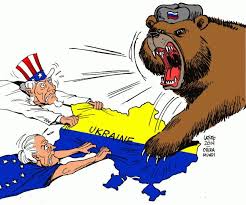
Really bad things are happening in the world today – and good people seem powerless to do anything about it. Syria’s Assad bombs civilians. Russia’s Putin grabs Crimea. Unspeakable crimes occur in Central African Republic. And that’s just a start. The United Nations? Deadlocked. Obama? Words, no deeds. European Union? Russia’s gas and Russian oligarchs’ money parked in London dominate.
But guess what. Where good people fail, money succeeds. Here is how. When countries like Russia do bad things, money flees. When money flees, the currency declines, inflation rises and economic growth plummets. This is happening to Russia, according to the World Bank. Putin is paying the price — not because of Obama sanctions, but because of market economics. Here are the figures:
“… the (World) bank said Russia’s gross domestic product (GDP) might shrink by 1.8 percent in 2014. …. The Economy Ministry estimates net capital outflow (out of Russia) at up to $70 billion in the first quarter alone, compared with $63 billion in the whole of last year. … the World Bank envisages capital outflow at $150 billion this year and $80 billion in 2015. This year’s forecast exceeds the $120 billion in capital flight that Russia saw in 2008 during the global financial crisis. … The outflow of money will put further pressure on the rouble, which despite its recent firming is still 7 percent down against the dollar this year. The weakening of the currency is likely to put upward pressure on inflation, which the World Bank sees at 5.5 percent in 2014, higher than the upper end of the central bank’s targeted range of 4.0-5.0 percent.”
So, it’s very simple. When countries’ leaders do bad things, money flees. Flight of capital trashes the economy. People suffer. They protest. And eventually, the bad leader leaves, is removed, flees, or is forced to adopt repressive measures, which ultimately fail. Russia cannot afford to lose $150 b.
This is the new morality. Money and capital keep leaders in line, not ethics, values or Obama. It’s the new ethics of globalization.
Is it so bad? The message is: Run your country properly, treat your people well, or, the money will leave and go elsewhere, where leaders are smarter and more ethical. And every country needs to keep its capital at home, rather than flee abroad.
The morality of the new global system is money. Let’s watch Russia closely to see if it really works.
Piketty: The Super-Rich Will Own Us
By Shlomo Maital

Thomas Piketty’s new book Capital in the 21st C. (Harvard/Belknap) should get him the Nobel Prize. It won’t because it is basically just carefully-built data. But the data are shocking. And it took a French economist to do it; except for Paul Krugman it seems that the collective brains of the American economic establishment have shut down for good.
Piketty’s book is 700 pages long. Few will actually read it. But the fierce and growing inequality he documents has already drawn huge media attention, and even the IMF is in on the act, with Christiane Lagarde (IMF Director-General) announcing that the IMF believes inequality is bad for growth, and pro-equality policies can actually stimulate economic growth.
I will save my readers the time and effort of reading this huge book, by summarizing it. Piketty says, there is “an oligarchic type of divergence, in which the rich countries would come to be owned by their own billionaires…or in which ALL countries would come to be owned by the planet’s multi-millionaires and billionaires…. All the ingredients are in place for the top centile and thousandth of the global wealth distribution to pull farther and farther ahead of the rest.”
This has already happened, to a large degree. Oligarchs run Russia. They own the media in my country, Israel. They are powerful in America. They are powerful in China.
Why is this happening? Simple. If you have great wealth, you can earn on average 6.8 per cent annual return (above inflation). This doubles your wealth every decade, without your having to really do anything. And you can keep the profits, because the wealthy easily find tax havens. If you have little wealth, you earn maybe 1 per cent, and then you get taxed. When the wealthy double their wealth every decade, in 30 years it is 8 times what it was at the start. Great wealth confers huge political power. You can buy the media, you can buy lobbyists, and you can, yes, you can buy politicians.
Karl Marx got one thing right, and one thing wrong. He said that wealth would become more and more concentrated, under capitalism. Right. He said that the people (the government) should confiscate national assets and run them. Wrong. Governments can’t run businesses.
Piketty’s solution is very French – perfect, optimal and utterly impractical. Impose a global wealth tax. What are the chances this will happen, when the oligarchs already wield immense political power? If one country does it, the money will flee to another, happy to welcome it by offering tax havens.
Either there will be enormous social upheaval, to bring the oligarchic wealth back to where it belongs, and decades of suffering and instability, or we the people will find some clever way to deal with this ‘doom loop’, which is leading us to destruction. The current situation cannot continue. And Occupy Wall Street was largely ineffective, like the Arab Spring, because it brought passionate protest, it brought attention to a critical problem – but offered no creative solutions.
The solution? To be presented in a future blog.


